The IDF noted that the current body count only includes those “whose names have been permitted for publication,” meaning that the true number could be significantly higher.
More than 700 Israeli troops have been killed in the country’s bloodiest conflict in five decades
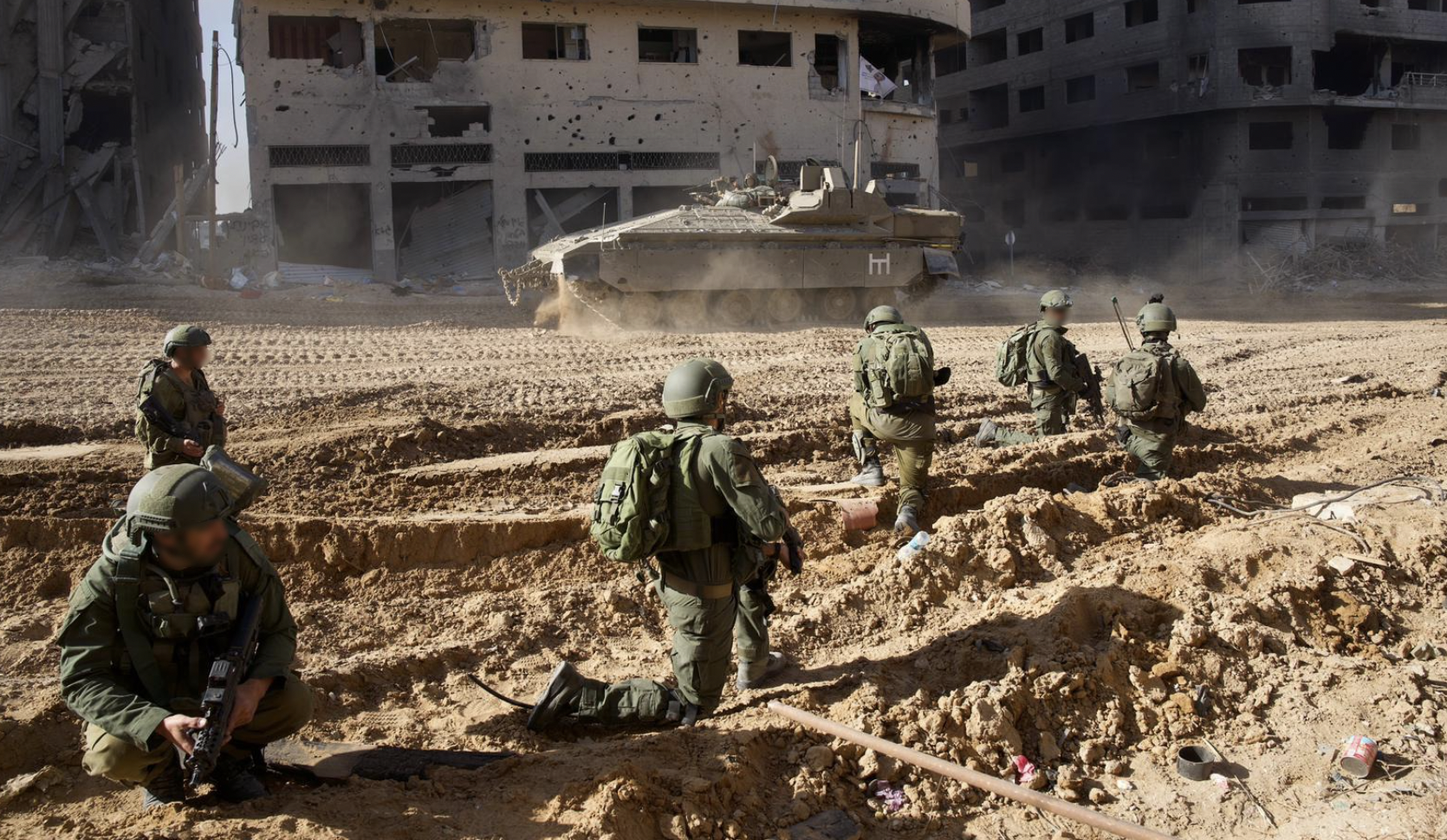
The Israel Defense Forces (IDF) has published casualty list, revealing that it has lost at least 726 troops since the war in Gaza began a year ago. More than 4,500 soldiers have been injured in the same period, the force has claimed.
Of the 726 killed, 346 died during ground operations in Gaza, which began on October 27 last year.
These losses are the highest suffered by Israel during any military conflict since the 1973 Yom Kippur War, in which more than 2,600 Israeli soldiers were killed.
Of the 726 killed, 56 died due to friendly fire or other “operational accidents,” the IDF stated. . .
A total of 4,576 Israeli troops have been injured since the beginning of the war, 2,300 of them during ground operations in Gaza, the statement continued.
Hamas launched a surprise attack on Israel on October 7, 2023, killing around 1,100 people and taking roughly 250 hostages back to Gaza. Israel responded by declaring war on the militant group and launching an intense bombing campaign in the Palestinian enclave. A ground operation followed three weeks later, and after a year of fighting, nearly 42,000 Palestinians lie dead, most of them women and children, according to Gaza’s health ministry.
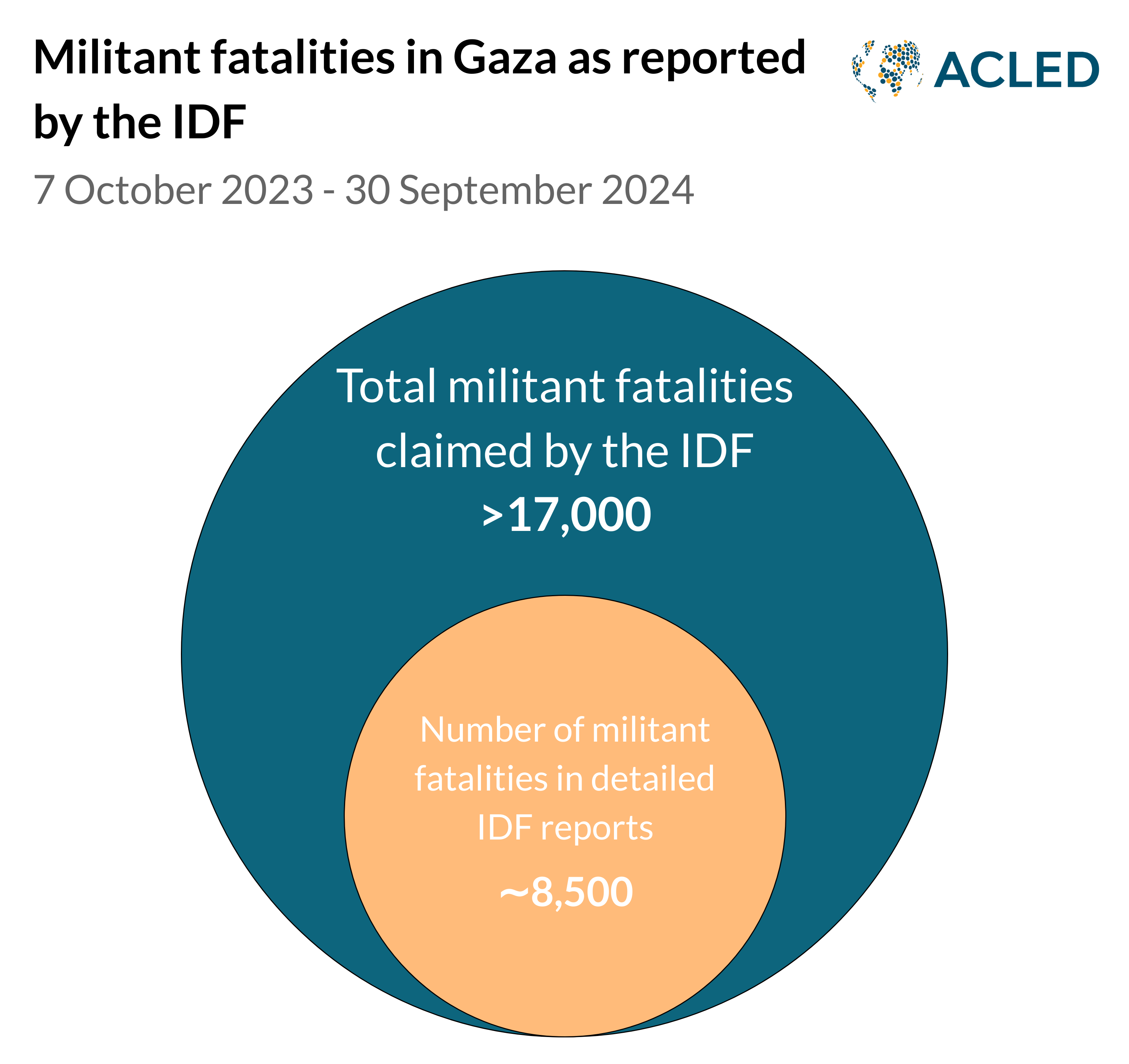
The ministry’s body count is considered accurate by the UN, but does not differentiate between civilians and militants. In Sunday’s statement, the IDF claimed that it has eliminated around 17,000 members of Hamas and other militant groups in Gaza since last October.
If this tally is accurate, the IDF has killed 2.4 civilians for every militant.
Recent data on Israel’s economy reveals a much slower growth rate of 1.2% annualized in the second quarter, missing economists' forecasts. This represents a 1.4% decline compared to the same period ...
Ukrainian official filmed lying on bed of money (VIDEO)
Ukraine’s State Bureau of Investigation (SBI) has published a video of a pension agency official lying on a bed of dollar bills, after he and his mother – also a senior government employee – were arrested with nearly $6 million in apparently illicit cash. In a statement on Friday, the SBI said its agents raided the office of the head of the Khmelnitsky Regional Center of Medical and Social Expertise, as part of an investigation into the forging of fraudulent disability certificates allowing men to avoid military conscription. The agents found $100,000 in US dollars in the office, along with lists of men with fictitious disabilities. A further search of properties belonging to the official and her son yielded more than $5.2 million in US dollars, €300,000 ($329,000), and more than 5 million Ukrainian hryvnia ($121,000). Antikor, a Ukrainian anti-corruption NGO, named the medical official as Tatyana Krupa, a member of Ukrainian leader Vladimir Zelensky’s Servant of the People party. Her son was identified as Aleksandr, who heads the Khmelnitsky branch of the Ukrainian state pension agency.
“Law enforcement officers found money in almost every corner of [Krupa’s] apartment – in closets, drawers, niches,” the SBI stated, adding that “documents confirming the illegal activities of the officials and their money laundering through various business projects were also seized.”
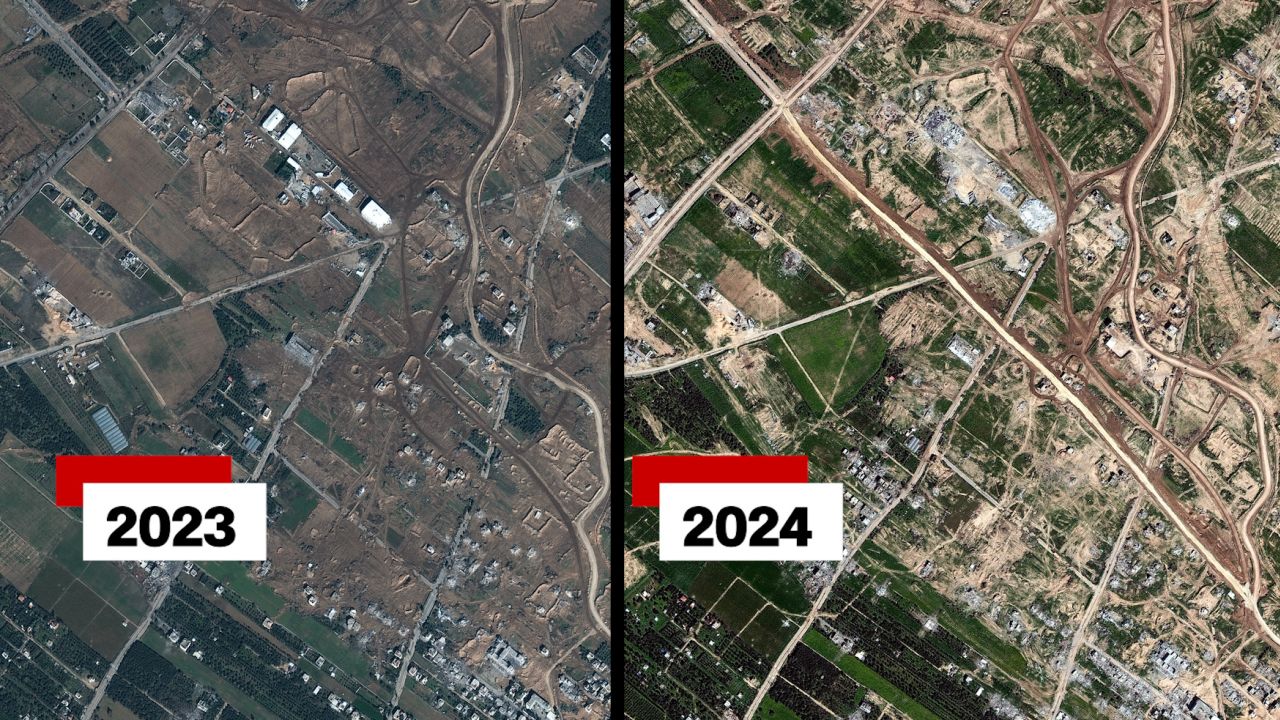
#Israel is building roads all across #Gaza, which will be fortified with watchtowers and bases, and allow the Israelis to monitor any point in #Gaza without occupying the entire territory.
Israeli road splitting Gaza in two has reached the Mediterranean coast, satellite imagery shows
The Israel Defense Forces (IDF) told CNN they were using the
route to “establish (an) operational foothold in the area” and allow
“the passage of forces as well as logistical equipment.” When asked
about the route’s completion, the IDF said the road existed before the
war and was being “renovated,” due to armored vehicles “damaging it.” It
added that there was: “No beginning and ending.”
Israeli Prime Minister Benjamin Netanyahu unveiled a plan, obtained by CNN,
to his security cabinet on February 23 for a post-Hamas future for
Gaza, including the “complete demilitarization” of the enclave, and the
overhaul of its security, civil administration and education systems.
Palestinians living in Gaza fear Israel’s post-war security plans will
further restrict their freedom of movement, remembering the days of
Israeli occupation prior to 2005, when checkpoints were placed between
neighboring villages and exclusive bypass roads were built to link
Israeli settlements to each other and to Israel.
Named after the former Israeli settlement of Netzarim in
Gaza, the “Netzarim Corridor” intersects one of Gaza’s two main
north-south roads, Salaheddin Street, to create a strategic, central
junction. It also appears to connect with Al Rashid Road, which runs
along the coast, satellite imagery shows. Palestinians told CNN that
they remember the so-called “Netzarim junction” existed before 2005;
back then, it was largely only accessible to Israeli settlers.
Israeli Minister for Diaspora Affairs Amichai Chikli told
CNN that the new road will “make it easier” for the Israeli military to
launch raids north of Gaza City and south, to the central area of the
Gaza Strip.
Satellite
images have revealed that Israel is building a road that runs across
the Gaza Strip, dividing northern Gaza, including Gaza City, from the
south of the enclave. The Israeli military says the ...
". . .The spread of wild rumors has always been a problem during major
disasters, which typically produce power outages and transportation
obstacles that interfere with the communication channels that most
people rely on from day to day. . ." {The Atlantic)
The Fog of Disaster Is Getting Worse
How
a changing media environment, worsened by intentional attempts to
deceive people, hampers the response to natural catastrophes
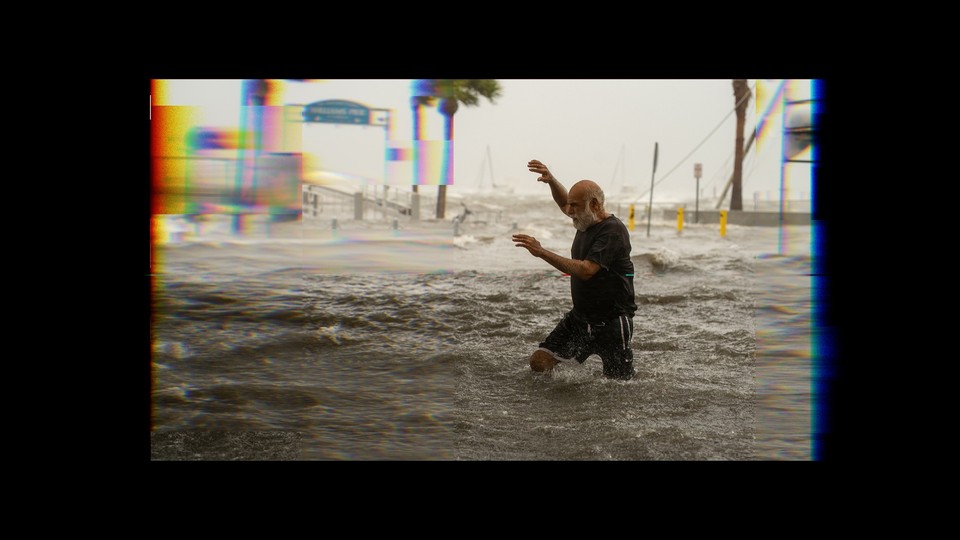
Illustration by The Atlantic. Source: The Washington Post / Getty.
Keeping
track of events during a natural disaster was hard enough in the past,
before people with dubious motives started flooding social media with
sensational images generated by artificial intelligence. In a crisis,
public officials, first responders, and people living in harm’s way all
need reliable information. The aftermath of Hurricane Helene has shown
that, even as technology has theoretically improved our capacity to
connect with other people, our visibility into what’s happening on the
ground may be deteriorating.
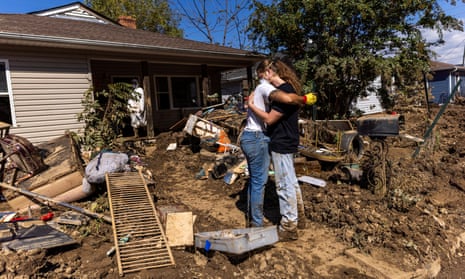
Beginning late last week, Helene’s storm surge, winds, and rains created a 500-mile path of destruction
across the Southeast. To many people’s surprise, the storm caused
catastrophic flooding well inland—including in and around Asheville,
North Carolina, a place that had frequently been labeled a “climate haven.” Pictures that many users assumed had been taken somewhere around Asheville began spreading rapidly
on social media. Among them were photographs of pets standing on the
rooftops of buildings surrounded by water; another image showed a man
wading through a flood to rescue a dog. But news outlets that took a
closer look noted that the man had six fingers and three nostrils—a sign
that the image was a product of AI, which frequently gets certain
details wrong. . .
A
surplus of housing inventory and dwindling buyer interest are slowing
sales. Hurricanes and extreme weather are making it worse.
Tampa, Orlando and much of the Space Coast are all experiencing this Florida housing reversal. Inventory for single-family homes and condominiums in these areas was up more than 50% in August from the same month last year. At the same time, demand has decreased 10% or more in these areas, according to Parcl Labs, a real-estate data and analytics firm. About half of the homes listed for sale in Tampa experienced price reductions as of Sept. 9, the third-highest share of all U.S. major metropolitan areas.
In a preliminary damage estimate released on Thursday, the private
forecaster AccuWeather pegged the financial cost of Hurricane Helene’s
damages at $225 to $250 billion, more than double what it estimated in
the first days after the storm made landfall in Florida last week — and
far more than recent major hurricanes like 2012’s Sandy and 2017’s
Harvey. That massive number includes the cost of rebuilding homes,
businesses, roads, and infrastructure in the storm’s path from Florida
to Tennessee, as well as the wages and economic output that will be lost
during the yearslong rebuild. (Grist)
Hurricane Helene could cost $200 billion. Nobody knows where the money will come from.
Almost none of the storm's devastation will be paid out by insurance
Helene will likely trigger one
of the largest FEMA flood insurance payouts in recent years, perhaps to
the tune of billions of dollars. But Swiss Re, the massive global
reinsurance company that acts as a backstop for the national program,
confirmed that most people who suffered damage during Helene won’t get
anything at all.
“Sadly much of the
damage from these devastating floods will not be covered by insurance,”
said Monica Ningen, who leads the company’s property business in the
United States. She added that the lack of coverage “will make the task
of rebuilding the communities impacted all the more difficult.”
Without insurance, which is often the
first line of defense against disaster damage, most homeowners who saw
flood damage will be on their own as they rebuild.
Some victims will
receive a few thousand dollars from FEMA for repair costs, and some
others will be able to secure low-interest rebuilding loans from the
Small Business Administration.
The Department of Housing and Urban
Development also has a track record of spending billions of dollars on
long-term recovery needs after big disasters, paying for home repairs
and new housing development.
But this aid money could take months
or years to reach hard-hit areas, . . and it won’t come close
to covering the cost of reconstruction for most people, especially those
in low-income households.. .
Monday saw a group of reporters finally rising to the occasion and embarrassing the US State Department spokesperson Matthew Miller on questions related to perceived biases for Israel in the ongoing conflict. . . . . . . . .