Federal scientists warn that Americans could feel the effects of the new administration's devastating cuts for decades to come
This is today's edition of The Download, our weekday newsletter that provides a daily dose of what's going on in the world of technology.
The foundations of America’s prosperity are being dismantled
Ever
since World War II, the US has been the global leader in science and
technology—and benefited immensely from it. Research fuels American
innovation and the economy in turn. Scientists around the world want to
study in the US and collaborate with American scientists to produce more
of that research.
These international collaborations play a
critical role in American soft power and diplomacy. The products
Americans can buy, the drugs they have access to, the diseases they’re
at risk of catching—are all directly related to the strength of American
research and its connections to the world’s scientists.
This is today's edition of The Download, our weekday newsletter that provides a daily dose of what's going on in the world of technology.
In March 2022, the U.S. Securities and Exchange Commission (SEC) introduced a climate disclosure rule requiring publicly traded companies to report on how climate change affects their business.
This includes their greenhouse gas emissions, potential financial risks from climate change, and how they plan to manage those risks.
The rule has sparked intense debate over its necessity, economic impact, and constitutionality.
The Regulatory Transparency Project’s newest short film, The SEC Disclosure Divide: The Cost of Compliance, features insights from legal scholars, policy experts, and industry leaders, such as recently confirmed Energy Secretary, Chris Wright.
Is this regulation a critical step toward corporate transparency and climate accountability, or does it place an undue burden on businesses, slowing innovation and increasing compliance costs?
As companies navigate evolving environmental regulations, this short film examines whether the SEC’s rule is a solution to climate challenges—or a costly regulatory overreach.
Film coming soon
As always, the Federalist Society takes no position on particular legal or public policy issues; all expressions of opinion are those of the speaker.
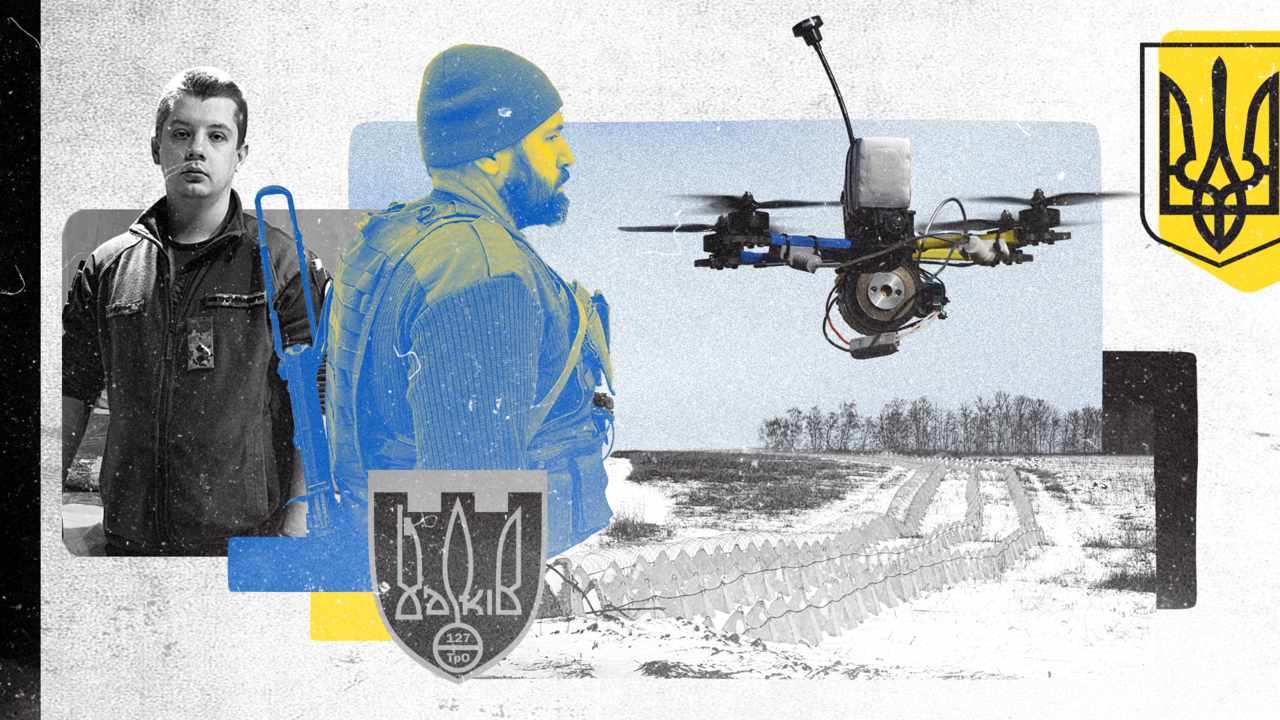
Some 35 kilometres north of
Kharkiv with the Russian army at a distance, the soldiers of the 127th
brigade are waging electronic warfare. Over three years, artillery
combat has given way to drone warfare, including troop surveillance and
the threat of kamikaze drone attacks. As a result, the front line is
frozen: Ukrainian soldiers are buried in trenches, and rotations of
personnel and medical evacuations have become extremely dangerous. Our
correspondent reports.
Some 35 kilometres north of Kharkiv and
with the Russian army at a distance, the soldiers of the 127th brigade
are waging electronic warfare. In only three years, artillery combat has
given way to drone warfare. With surveillance of enemy positions and
attacks using kamikaze drones,
now even the slightest movement can be detected by the enemy. As a
result, the front is frozen, soldiers are buried in trenches, and
rotations of personnel and medical evacuations have become perilous. . .
[...]
High-tech warfare
According to military engineers, the advent
of drones has meant that life on the front line is not unlike the
conditions experienced by infantrymen during World War I.
Stationed in the trenches for 10 to 15 days, these men endured sleeping
in an underground space heated by a kerosene stove, two black walls
between them, and frozen earth underfoot. Their only comfort came at
night when they could seek refuge in an abandoned house, build a fire in
the kitchen and drink some coffee.
Oskil, the lieutenant in
charge of the battalion's logistics and supplies, is adamant that in
just three years the face of war has changed profoundly. “At the
beginning, in 2022, there was constant artillery fire. It was simply
horrible. It was a never-ending bombardment. Now there's less artillery
fire. The threat is from drones.”
Before he leaves his station, as day breaks among the
ruins of nearby villages, a soldier shows off the drone jammer installed
on the roof of his vehicle.
“It protects us from attack by
creating an invisible dome about 200 metres in diameter. If an attack
drone approaches, radio communication is interrupted, the image is lost,
and it collapses. This jammer is in great demand. Warfare is now
electronic, and without this equipment it would be impossible to
guarantee logistics.”
Vital for survival
At the battalion
command post located in the basement of an abandoned house, the walls
are covered with screens. Filming and photography are forbidden. During
our conversation, a smiling 37-year-old lieutenant in charge of
operations confirms that one of his drone pilots shot down two Russian
soldiers.
“What you see in this room didn't exist in 2022,” said
the officer who, before the war, was an entrepreneur in commercial
franchising.
A low-ranking volunteer soldier three years ago,
Taras Shevchenko rose to become a battalion commander in record time.
Like many other young officers, he succeeded senior personnel who,
according to Shevchenko, were career soldiers with a “Soviet” mentality.
“Given the armaments our allies have provided us with,
we have been forced to resort to new technologies,” he said, without
elaborating on the devices used by his battalion.
“Hard times create strong men,” he added, quoting Winston Churchill.
“It's
not a question of merit, it's a question of survival. If we hadn't
tipped over into a technological war, we'd have lost already.”
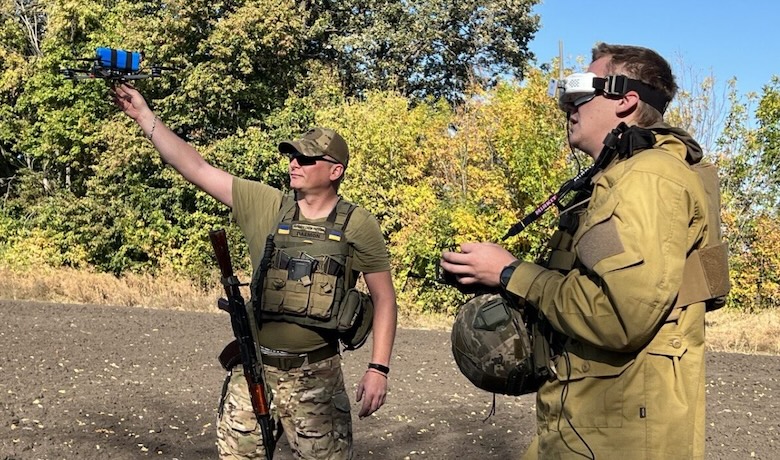
He
said that it was thanks to FPV (first-person view) surveillance and
combat drones that the 127th brigade was able to push back Russian
forces in an attack on the city of Kharkiv in May and June last year.
“Right
now, the situation is under control,” Shevchenko said. “The front is
stable. This is the result of our actions over the last eight months.
When we arrived here, the situation was completely different (Kharkiv
was then under siege by Russian forces).
"Nowadays, we’ve settled
in, and the enemy is no longer carrying out any assault operations in
our direction. That’s because they know they won’t be effective.”
Drones become the new normal
A
few kilometres away, another young lieutenant reiterates how electronic
warfare has become the new normal at the front. Most of the serious
injuries this 30-year-old surgeon has treated in recent months were
caused by kamikaze drones, which fly at 60 km/h and can carry up to a
kilo and a half of explosives.
“When they explode, pieces of metal
can reach soldiers' arms or legs. Shrapnel can pierce a helmet, and
more rarely a bulletproof vest. Sometimes the explosions also cause
burns,” Mykyta Shchetynin said.
Drone warfare kills and maims. It
also isolates soldiers, who hunker down in their positions where even
the slightest movement can expose them to harm.
“War has changed. Fewer soldiers are wounded by bullets
or artillery shells. As soon as there's a rotation, it's detected from
the air by drones, and kamikaze drone operators spring into action,” the
young surgeon said.
Another difficulty is evacuating the wounded.
Emergency workers must avoid detection by drones, so it can often take
hours to safely evacuate the wounded. Military doctors are left
powerless as they wait and watch the soldiers suffer.
In the early
part of the war, Shchetynin was still at medical school in his hometown
of Kharkiv. Russian troops were about to enter Ukraine's
second-largest city, which is largely Russian-speaking. During those
dark hours in February 2022, he barely hesitated before deciding to join
the city’s territorial defence.
After spending three years crossing the country as a
frontline combat medic, he is now in charge of a medical post 35 km from
downtown Kharkiv. Despite being closer to home, he only manages to see
his wife and son once every six months.
“My mental state was different when it was long and difficult to travel from one garrison
to another to see my family. Now I'm just a stone's throw from home and
can't get home. It's frustrating, very frustrating, but that's the
reality of this war."
Worn down and exhausted, like so many others, by three
years of war, Mykyta recalls with resignation his former university
colleagues who are pursuing their surgical careers in civilian or
military hospitals. He'd like them to be able to replace him for a few
days every now and then, so he can pause to take a breath.
But the drone war has stalled all movement and condemned him to another icy winter far from home, among the ruins of war.
This article has been translated from the original in French by Nicole Trian.
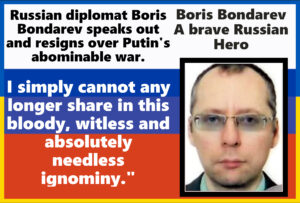
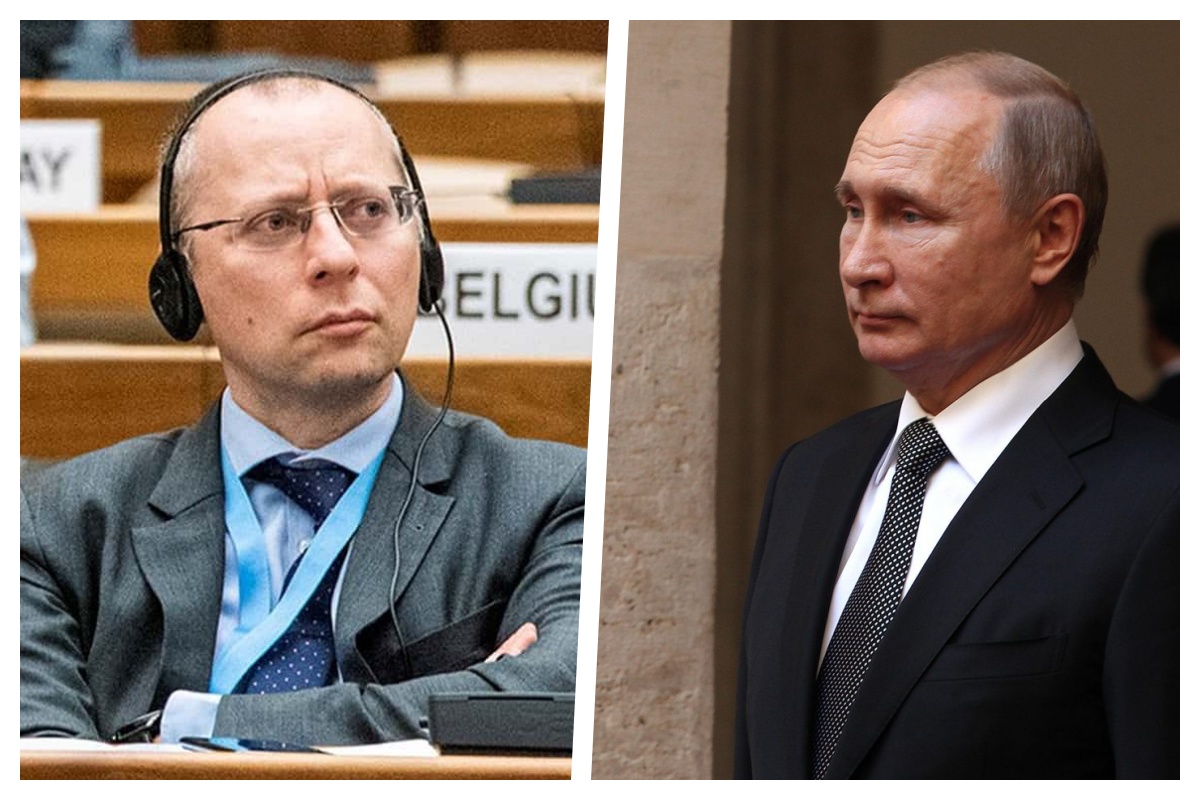
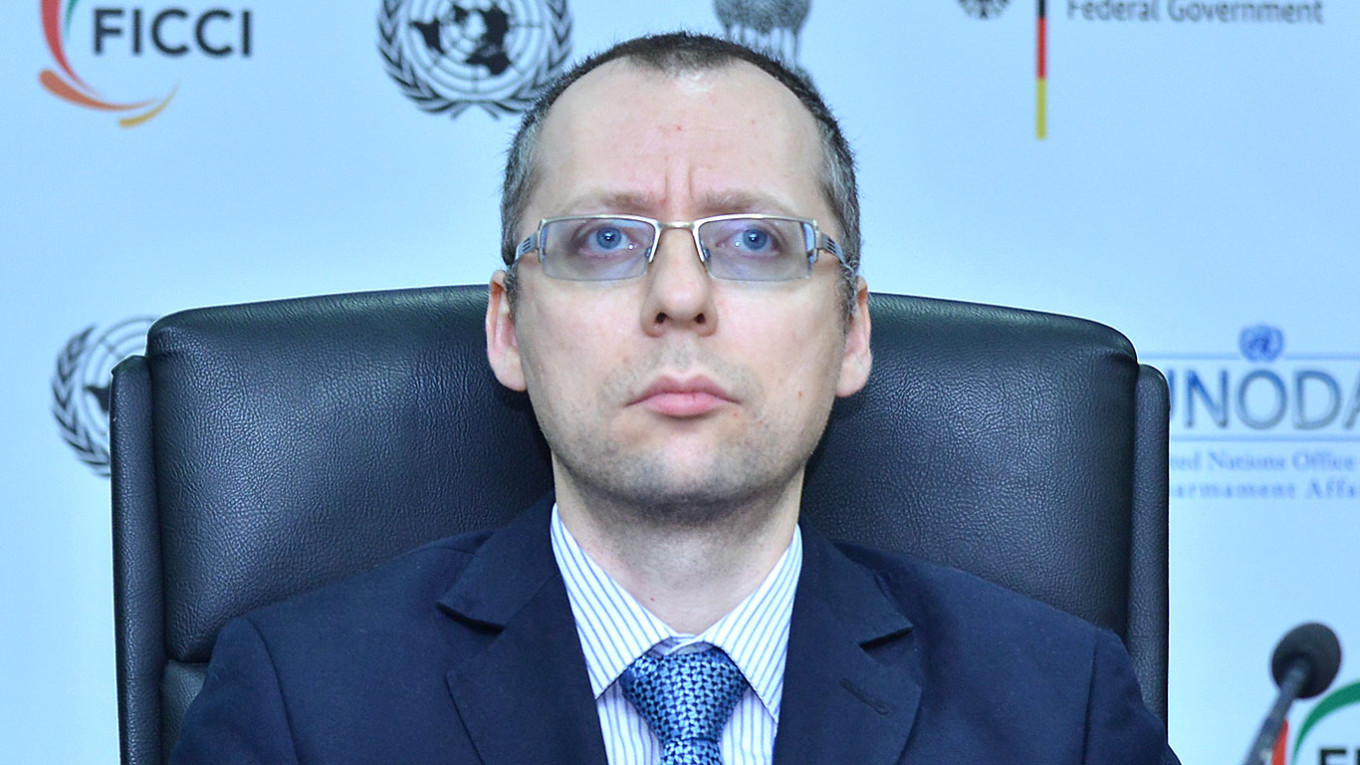
Boris
Bondarev was a diplomat who quit his post and denounced the Putin
regime after the invasion of Ukraine. He joined the show from Geneva to
give us the Russian point of view.
Ukraine has been fighting for its freedom for 1093 days and must now contend not only with Russia, but also with a reversal in U.S. foreign policy, as the United States welcomes Russia back into the fold.
Meanwhile Trump's envoy Keith Kellogg is in the Ukrainian capital meeting with Zelensky.
They were expected to give a joint press conference, but it didn't happen.
Afterwards Zelensky said the meeting was productive and repeated he is grateful for U.S. support.
He also said his team is ready to work 24/7 with the U.S. on the best way to achieve a proper peace.
Every week
political cartoonists throughout the country and across the political
spectrum apply their ink-stained skills to capture the foibles, memes,
hypocrisies and other head-slapping events in the world of politics. The
fruits of these labors are hundreds of cartoons that entertain and
enrage readers of all political stripes. Here's an offering of the best
of this week's crop, picked fresh off the Toonosphere. Edited by Matt
Wuerker.