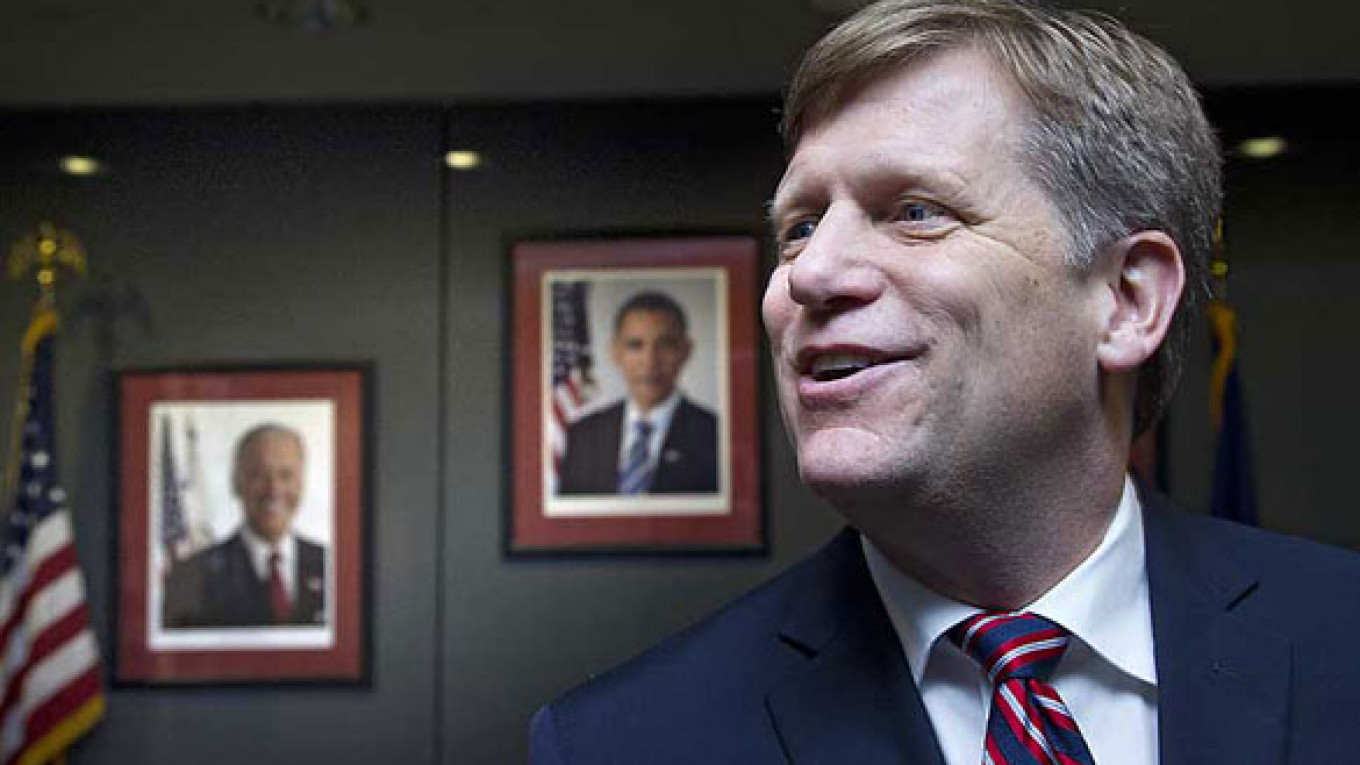
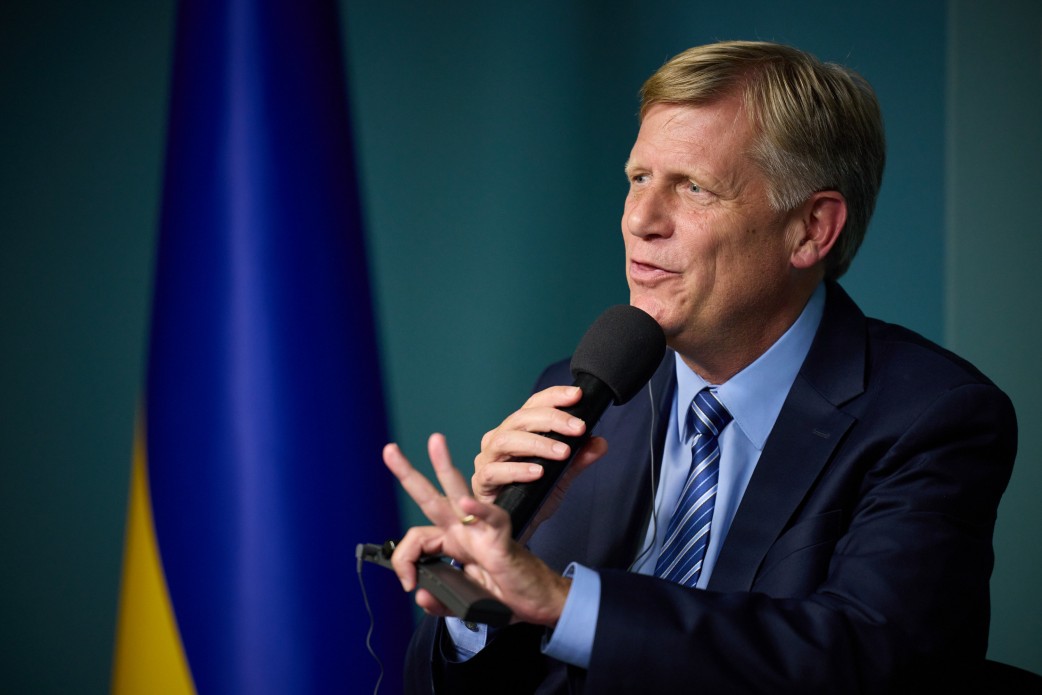
The Kyiv Independent's Chris York sits down with Michael McFaul, former U.S. ambassador to Russia and political scientist, to discuss the Ukraine-Russia peace negotiations, U.S. President Donald Trump's approach to Russian President Vladimir Putin, and the ideological parallels between Putinism and MAGA.
RELATED CONTENT
". . .The early stumbles underscored McFaul's lack of credentials as a
diplomat.
Prior to taking a job as a policy adviser to the Obama White
House in 2009, he taught political science at Stanford University and
was a long-time Russia expert, having studied in the Soviet Union in the
1980s and writing numerous scholarly papers related to Soviet and
Russian policies.
The war of words between McFaul and Kremlin allies lasted the first
five months of 2012. Then Putin retook the presidency in May after
having run a campaign in which he played on anti-American sentiment,
openly accusing the State Department of aiding the anti-Kremlin
protests.
A few months later, Russia announced it was kicking out the
Moscow office of the U.S. Agency for International Development, or
USAID, partly over accusations that it was meddling in domestic
politics.
The
International Task Force on sanctions against Russia, chaired by Head
of the Office of the President of Ukraine Andriy Yermak and Director of
the Freeman-Spogli Institute for International Studies (FSI), Ambassador
Michael McFaul, has developed new research focusing on Russia's
attempts to circumvent export control restrictions on military and
dual-use goods and software. "The
International Task Force on sanctions has indeed become a key platform
where independent experts generate ideas for new sanctions and recommend
how to implement the restrictions more effectively. I am grateful to
each expert who contributed to the development of proposals in the key
areas of export controls and IT," said Andriy Yermak.







:max_bytes(150000):strip_icc()/20250304-SEA-Colcannon-HannahHufham-Beauty1-89-fbadad3690c6446fbcc1130fc7d4c618.jpg)