Yes,
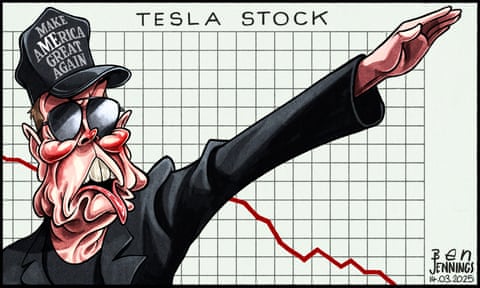
analysts are indeed expressing concerns that Elon Musk's actions and
political stances, particularly his right-leaning views, are potentially
causing lasting damage to the Tesla brand, which he built as a symbol of electric vehicles and innovation.
Here's a breakdown of the situation:
Brand Reputation at Risk:
Some
analysts believe that Musk's increasingly controversial political
activities, including his support for right-wing figures and his actions
on Twitter (now X), are alienating Tesla's traditionally left-leaning
customer base and potentially damaging the brand's reputation.
Political Polarization:
Musk's
political views have become increasingly intertwined with Tesla's
brand, leading to a situation where consumers may be hesitant to support
a company led by someone whose political stance they disagree with.
Potential for Backlash:
Some
argue that Tesla is experiencing an "anti-anti-woke" backlash, with
some traditional Tesla owners turning away from the brand due to Musk's
right-leaning political activities.
Impact on Tesla's Performance:
While
it's too early to definitively say whether Musk's actions are causing
long-term harm, some analysts suggest that his political involvement
could lead to slower growth and increased volatility in Tesla's stock
price.
Competition:
The
EV market is becoming increasingly competitive, with new models from
other manufacturers potentially eroding Tesla's market share.
Musk's Influence:
The
Guardian notes that Tesla's valuation has become inextricably tied to
his politics, with his actions having a direct impact on the company's
stock price.
Examples of Musk's Actions:
Musk
has been criticized for his right-wing communications, including his
support for Donald Trump, his embrace of far-right tropes, and his
actions on Twitter, which some view as a power trip.
The Head of State noted that this year,
the diplomatic efforts of Ukraine and its partners to advance a just and
lasting peace and guarantee security for our country, have coincided
with Ramadan. A successful meeting between Ukrainian and U.S. diplomatic
representatives was recently held in Saudi Arabia.
Ukraine is ready to work as quickly and
constructively as possible. We have discussed this with U.S.
representatives, and our European partners, as well as all our allies
worldwide, are aware of it.
One of the key topics of discussions was the outcome of the meeting between the Ukrainian and U.S. delegations in Jeddah.
ZELENSKIYY'S SCRIPT:
Mar 13, 2025
"Right now, we have all heard from Russia Putin’s highly predictable and manipulative words in response to the idea of a ceasefire on the front lines—at this moment he is, in fact, preparing to reject it.
Of course, Putin is afraid to tell President Trump directly that he wants to continue this war and keep killing Ukrainians.
That’s why, in Moscow, they are surrounding the ceasefire idea with such preconditions that it either fails or gets dragged out for as long as possible.
Putin does this often—he doesn’t say ‘no’ outright, but he drags things out and makes reasonable solutions impossible.
We see this as yet another round of Russian manipulation.
There was a U.S. proposal for an unconditional ceasefire—in the air, at sea, and on the front lines.
We in Ukraine accepted this proposal.
We have heard from the American side that there is readiness to organize monitoring and verification. And this is absolutely feasible—with American and European capabilities.
And during the ceasefire, to prepare answers to all questions about long-term security and a real, lasting peace, and to put a plan to end the war on the table.
Ukraine is ready to work as quickly and constructively as possible. We have discussed this with U.S. representatives, and our European partners, as well as all our allies worldwide, are aware of it.
We are not setting conditions that complicate the process—Russia is.
As we have always said, the only one stalling, the only one being unconstructive, is Russia.
They need this war.
Putin has stolen years of peace and continues this war day after day.
Now is the time to increase pressure on him.
Sanctions must be applied—ones that will work.
We will continue working with our American and European partners and with everyone in the world who wants peace—to force Russia to end this war."
Stock market plunges again as Trump threatens massive tariffs on European wine
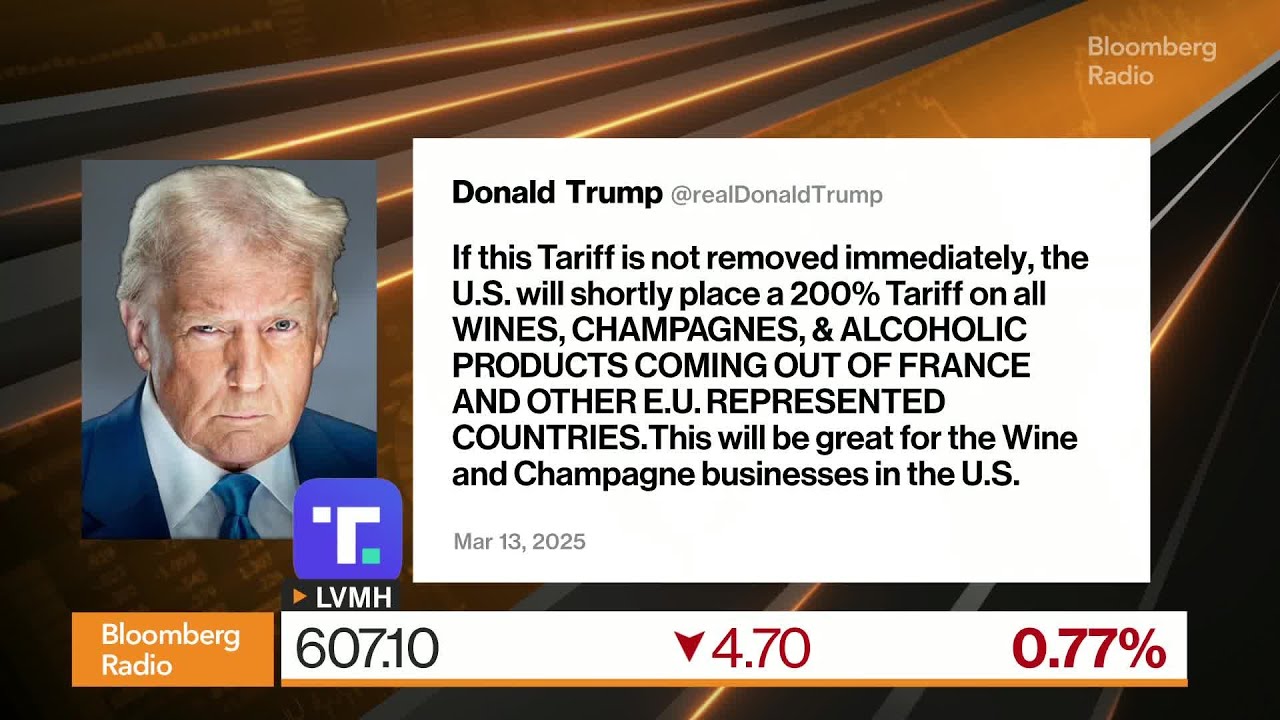
Corks were not popping on Wall Street on Thursday, as stocks plunged again following Donald Trump’s threat
to impose a 200% tariff “on all wines, Champagnes, and alcoholic
products” from European Union countries if the trading bloc makes good
on its threat to retaliate for steel and aluminum tariffs announced by
the US president by adding a 50% tariff on American products, including
Kentucky bourbon.
The sharp drop in the S&P
500 meant that a the index is now in “a correction” — a term used when
when stocks falls 10 percent or more from their peak.
While
the Wall Street Journal blamed the drop on “investors on edge over new
tariff threats”, pro-Trump media outlets further to the right, like
Newsmax, sought to play down the president’s role in the plunging
markets. “This correction is overdue”, a guest on the far-right network assured viewers on Thursday. “Nothing to do with Trump. Nothing to do with tariffs”.
As the New Yorker staff writer John Cassidy noted in a podcast interview
this week, the downturn began in the middle of February “when it became
clear that Tump was serious about these tariffs, a lot of people on
Wall Street thought he was bluffing”.
Cassidy
went on to explain that Trump appears to be wedded to a dream of undoing
globalization and returning to a period in the 19th century when the
United States was closer to being an autarky, a self-sufficient country, closed off from the rest of the world.
That
seems to jibe with Trump’s claim, in his announcement of the 200%
tariff on Champagne, a form of sparkling wine that is only produced in
the Champagne region of France, “This will be great for the Wine and
Champagne businesses in the US”.
US Central Command has released official footage for the first time of the use of the AGM-114R9X missile with its distinctive blades.
The attack was carried out on February 23 in the Syrian province of Idlib against a high-ranking member of the Hurras al-Din group, Mohammed Yusuf Ziya Tala.
The strike was the fourth in Syriain the past month, three of which used AGM-114R-9X missiles.
On February 16, a similar missile struck an ISIS vehicle in Somalia.