US trade team will meet Chinese officials in two or three months, Bessent says
U.S. trade officials will meet again with their Chinese counterparts within the next two or three months to discuss the future of the economic relationship between the two countries, Treasury Secretary Scott Bessent said on Tuesday.



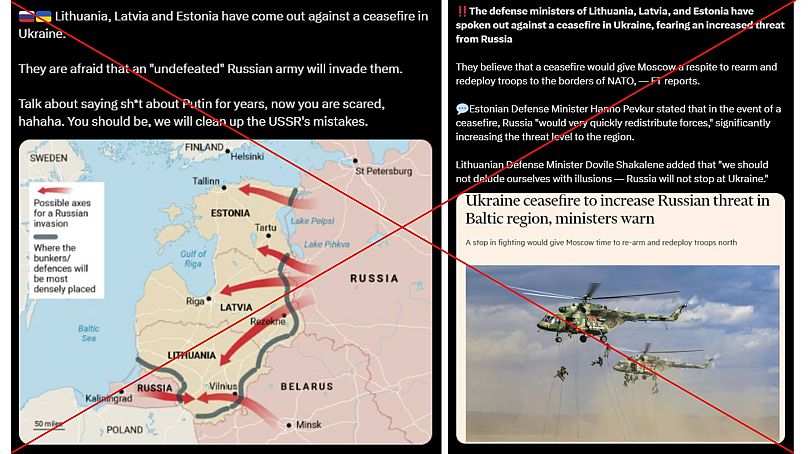


It is therefore very regrettable that the three Baltic states of Estonia, Latvia and Lithuania, which have been even further ahead of the curve in sounding the alarm about Mr Putin, were not invited to London. This comes on top of the Paris Summit last week, to which they were not invited either.
The exclusion is the more unfortunate because we Europeans (rightly) objected to the Trump’s administration’s exclusion not only of the Ukrainians but also of “Europe” at the discussions in Saudi Arabia which sparked the current crisis. Unsurprisingly, all three leaders of the Baltic states were reported to be “very upset” at their treatment.Of course, not all European countries could be invited. It made little sense, for example, to bring in neutral Malta, Austria and the Republic of Ireland. It would also have been silly to have Hungary’s Victor Orban who is effectively a Russian ally. But why have Spain, which spends well short of the Nato target of 2 per cent of GDP on defence, and has shown relatively little interest in confronting Russia? Why the Czechs, who do contribute a lot to Ukraine, but are less significant than the Baltics?
The offense is compounded by the fact that the UK knows the Baltic states well. British troops have been deployed in Estonia as part of the deterrence mission ever since Putin’s illegal annexation of Crimea. The Baltic is literally Britain’s front line in the east under the NATO Article Five guarantee.Ever since 1940, when Estonia, Latvia and Lithuania were occupied by the Soviet Union, following the Hitler-Stalin pact, the three Baltic States have feared abandonment by the West. This is not what is happening here, but if we want to avoid giving that impression greater sensitivity will be required in the future.
The whole episode shows that not only the British public but also the British national security establishment needs more knowledge and more understanding of the Baltic. It is a region with which Britain has been closely connected for hundreds of years and with which we are now bound up in a community of fate. The United Kingdom is right to captain the defence of Europe, but we need to bring our best players with us.
Brendan Simms, together with Rt Hon Charles Clarke, heads the Baltic Geopolitics Programme at the Centre for Geopolitics, University of Cambridge