Sunday, April 19, 2026

πŸ‡ΊπŸ‡Έ Arizona City Defies Big Tech Lobbying, Rejects Major AI Data Center Project | The Daily Note

In a unanimous 7-0 vote, the Chandler City Council has blocked a massive AI data center proposal, signaling a major victory for local control over Silicon Valley interests. 

The decision came despite a high-pressure lobbying campaign from former U.S. Senator Kyrsten Sinema, who warned that local authority to regulate these "server cities" could soon be stripped away by federal intervention.

A new global ranking reveals how many sexual partners people report over their lifetime and the results are… interesting πŸ‘€ | Facebook The World in Maps

 https://scontent-phx1-1.xx.fbcdn.net/v/t51.82787-15/670529376_18077452862449614_125622918242612388_n.jpg?stp=dst-jpg_s640x640_tt6&_nc_cat=1&ccb=1-7&_nc_sid=13d280&_nc_ohc=Kt0khswucSIQ7kNvwEUtjiX&_nc_oc=AdpohwTovGV8l20kuvrjiU7ASZ1YCKXMI_vjdoKrP-w7Dl7mm4GK4R-kYCuq19VCNQE&_nc_zt=23&_nc_ht=scontent-phx1-1.xx&_nc_gid=heNILU7gn_SAJaAg1vVmNQ&_nc_ss=7a3a8&oh=00_Af3DkIcv5rfXPASPpn4GKwN7YriDmEkXM-WSaf1zDRn8XA&oe=69EAD0C5

Science News

  https://science.nd.edu/images/publications/phys-org.png 
 
  Phys.org


AI Experts are Quietly Admitting This…


AI Experts are Quietly Admitting This…

BIG VISUAL

https://media.licdn.com/dms/image/v2/D4E12AQEKZ7flL7RgHw/article-cover_image-shrink_600_2000/B4EZ2lIzblI0AU-/0/1776592042355?e=2147483647&v=beta&t=QpbkmzRvnhaG2dhpFsAzmvqRljMPePAqPVr22XnnmVo 

ANALYTICAL CONCLUSION: The Old World Order Is Dead


Iran, Hungary, Ukraine: The World Is Running on Legacy Software

The old world order is dead. The new one hasn’t been written yet. And the people currently in charge — on both sides of the Atlantic — are structurally incapable of writing it.
That’s not a provocative opinion. It’s an analytical conclusion, and few people are better positioned to make it than Bianka Banova. Bulgarian-born, Switzerland-based, she runs the Waronomics Substack with what she calls Balkan candor and systems thinking — no institutional affiliations, no ideology to protect, and two decades of pattern recognition developed by someone who grew up watching history happen to her country.


In this conversation, she tells you things you won’t hear anywhere else.

Listen to the full podcast here.


-- 

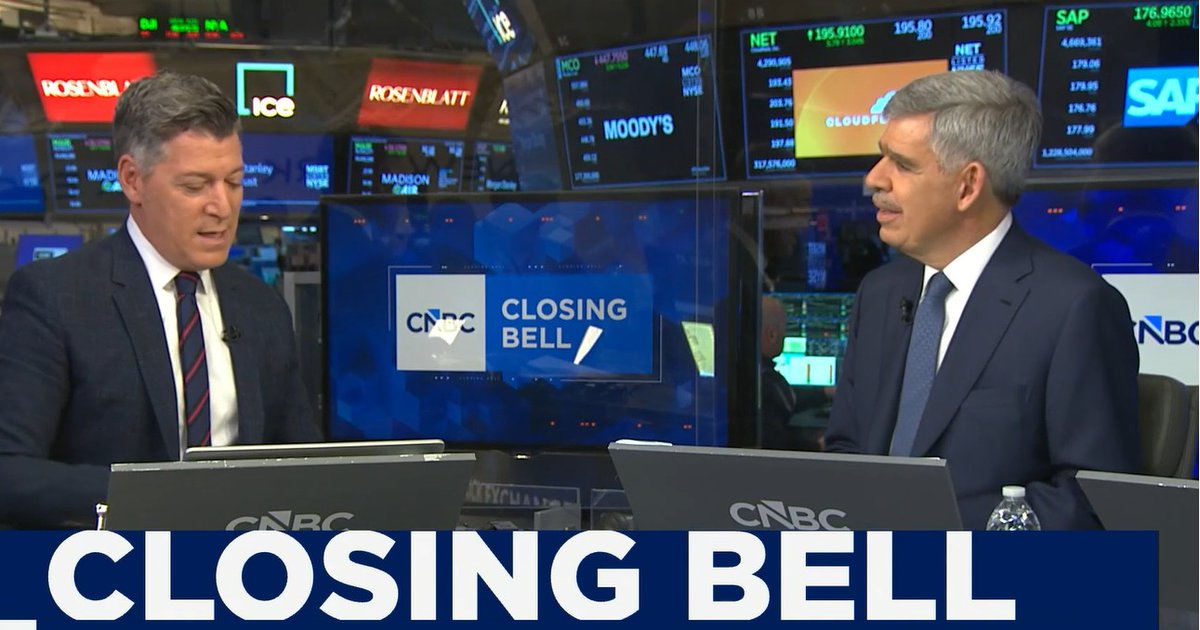
Mohamed El-Erian says there's a troubling supply and demand problem brewing in the US bond market

Mohamed El-Erian has warned investors of problems in private credit, but he also sees trouble brewing in the market for US government debt. 

Famed economist Mohamed El-Erian says there's a troubling supply and demand problem brewing in the US bond market

https://i.insider.com/69e22817367066d7c296ddab?width=1000&format=jpeg&auto=webp
 
AI Overview
Mohamed El-Erian warned of a growing, fundamental imbalance in the US Treasury market, driven by high supply due to a 6%-7% GDP deficit and reduced foreign buyer demand. In his CNBC interview, he noted this imbalance puts immense pressure on bond prices, increasing yields and risking further market volatility, despite calling other market warnings "alarmist".
Key Takeaways from El-Erian's Views:
  • Supply/Demand Imbalance: El-Erian highlighted that while the US government is ramping up debt issuance for refinancing, the pool of investors, particularly foreign buyers, is shrinking.
  • Declining Foreign Interest: He noted weakening demand from foreign buyers, specifically referencing reports of Chinese banks scaling back US debt holdings.
  • Fundamental Disconnect: El-Erian argued that the market does not fully realize the severity of this structural imbalance, which could lead to significant "market malfunction".
 
Mohamed A. El-Erian (@elerianm) / Posts / X

Mohamed A. El-Erian (@elerianm) / Posts / X


  • Downside Pressure on Bonds: The combination of high supply and low demand is applying consistent downward pressure on bond prices, forcing yields up.
Henry Paulson has blunt message on potential Treasury market shock. Henry  Paulson thinks this is very important
Compared to Paulson's Warnings: While former Treasury Secretary Henry Paulson predicted a "vicious" crash, El-Erian described such claims as "alarmist," preferring to focus on the long-term structural supply-demand shift. 
RELATED 
The $39 trillion national debt could break the all-important U.S. bond  market, sparking a 'vicious' emergency, former Treasury secretary warns -  AOL

The $39 trillion national debt could break the all-important U.S. bond market, sparking a 'vicious' emergency, former Treasury secretary warns 

Henry Paulson has blunt message on potential Treasury market shock 

https://s.yimg.com/lo/mysterio/api/F9BFBA8926FEBB14F33FB8D1CBABC9335B82411D7D45B13643DD2E4984996C93/subgraphmysterio/resizefit_w960_h640;quality_80;format_webp/https:%2F%2Fmedia.zenfs.com%2Fen%2Faol_thestreet_articles_772%2F54828145788e68f51d2e546d3df91e0b 

Hillary Remy
The man who managed the 2008 financial crisis says the next one could be harder to stop. And he wants a plan ready before it starts.

Former Treasury Secretary Henry Paulson appeared on Bloomberg Television's Wall Street Week with David Westin on April 16, urging U.S. authorities to prepare a contingency plan for a potential collapse in demand for government bonds.

His warning was direct. "We need an emergency break-the-glass plan, which is targeted and short-term, on the shelf, so it's ready to go when we hit the wall," he said, according to Bloomberg.

On timing, Paulson was candid about the limits of prediction. "People say, 'When are you going to hit the wall?' I obviously don't know; it's impossible to know. When we hit it, it will be vicious, so we have to prepare for that eventuality," he told Bloomberg.

The national debt now stands at $38.9 trillion, underscoring what Paulson called an increasingly fragile starting point.

Why Paulson says today's economy is worse than 2008

Paulson led the Treasury Department through the 2008 financial crisis, arguably the most severe since the Great Depression. He does not think that experience would be a useful playbook for a Treasury market breakdown.

"As bad as it was," the 2008 crisis still left the government with fiscal firepower to act. "You can come in and clean up the mess," he said, as Bloomberg reported.

MoreEconomy:

A public debt crisis would be fundamentally different. If confidence in government bonds breaks down, the very tools the government would need to respond become harder to use.

"When you hit the wall and you're trying to issue Treasuries and the Fed is the only buyer and the prices of the Treasuries are going down and interest rates are up, that's a dangerous thing," he said, according to Benzinga.

The sovereign debt doom loop Paulson is warning about

Budget experts have warned for years about a potential doom loop in U.S. sovereign debt. The scenario works like this:

  1. Investors begin demanding higher yields to compensate for rising fiscal risk.

  2. Higher yields increase the government's interest payments, which widens the deficit.

  3. A wider deficit makes investors more nervous, which drives yields even higher.

Paulson's warning is that the U.S. is now in a position where that loop is more plausible than ever. The U.S. national debt stood at $38.9 trillion as of April 16. The 10-year Treasury yield was running at approximately 4.3%, according to GNCrypto.

What Paulson's warning of Treasury market vulnerability means for investors

Paulson's warning is not a prediction that a Treasury market collapse is imminent. He is explicit that timing is impossible to know. But the message for investors is that the risk is structural, not theoretical.

A Treasury market that loses investor confidence does not just affect government borrowing. It reprices every other asset in the global financial system. Mortgages, corporate bonds, equities, and emerging market debt would all feel the consequences of a sustained spike in U.S. Treasury yields.

What Paulson is asking for is simpler than it sounds: a plan on the shelf before the emergency arrives. His experience in 2008 taught him that the plans that work are the ones written before the panic, not during it.

The concern is that in a fiscal crisis, unlike a credit crisis, the government's ability to act may itself be the thing that is compromised.


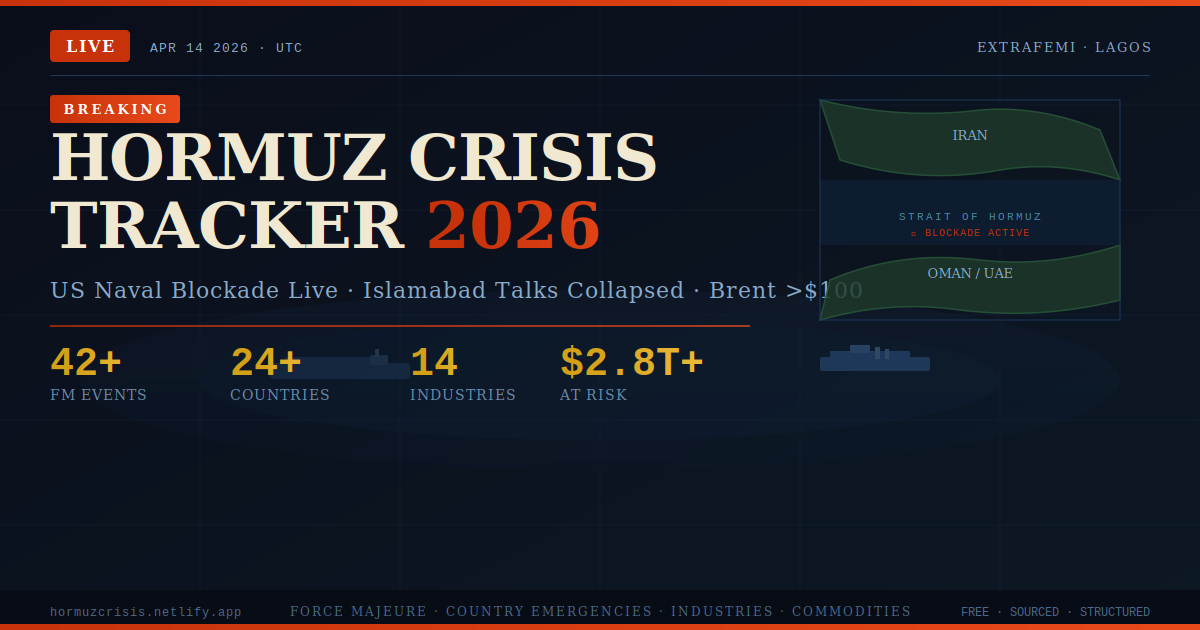
U.S. Opens Fire, Disables & Seizes an Iranian Ship Attempting to Break the Blockade | 19 April 2026 | What's Going on With Shipping - Maritime Industry Today

April 19, 2026  The US conducts the first boarding and seizure of an Iranian ship attempting to break the blockade, MV Touska. The US destr...