Famed economist Mohamed El-Erian says there's a troubling supply and demand problem brewing in the US bond market

- Supply/Demand Imbalance: El-Erian highlighted that while the US government is ramping up debt issuance for refinancing, the pool of investors, particularly foreign buyers, is shrinking.
- Declining Foreign Interest: He noted weakening demand from foreign buyers, specifically referencing reports of Chinese banks scaling back US debt holdings.
- Fundamental Disconnect: El-Erian argued that the market does not fully realize the severity of this structural imbalance, which could lead to significant "market malfunction".
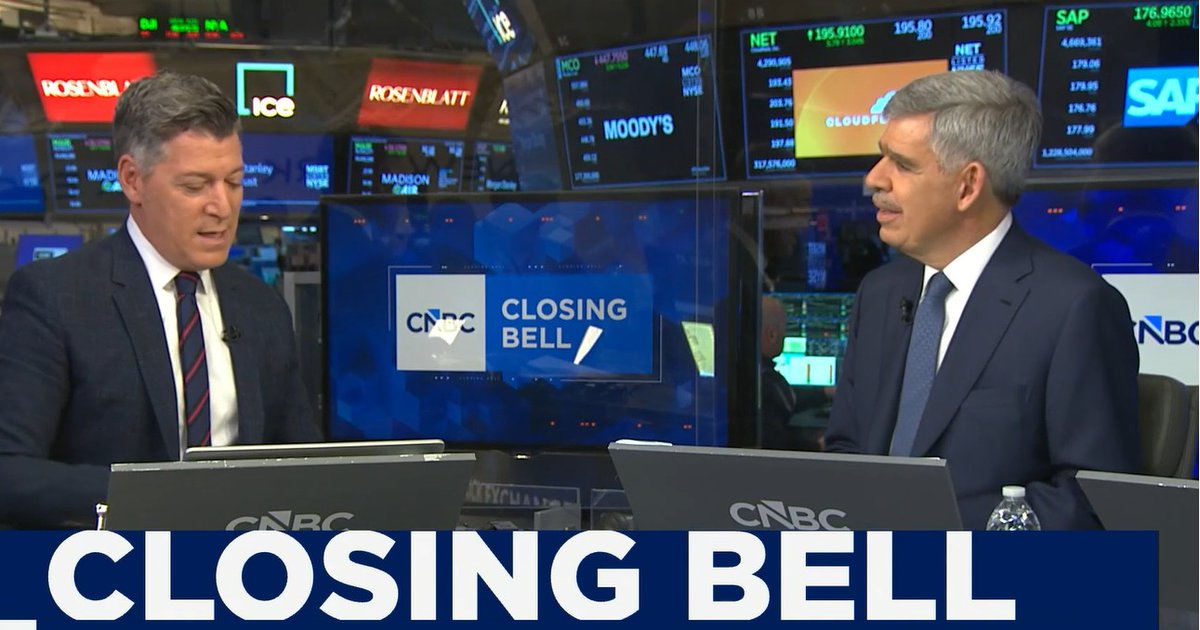
Mohamed A. El-Erian (@elerianm) / Posts / X
- Downside Pressure on Bonds: The combination of high supply and low demand is applying consistent downward pressure on bond prices, forcing yields up.

The $39 trillion national debt could break the all-important U.S. bond market, sparking a 'vicious' emergency, former Treasury secretary warns
Henry Paulson has blunt message on potential Treasury market shock
Former Treasury Secretary Henry Paulson appeared on Bloomberg Television's Wall Street Week with David Westin on April 16, urging U.S. authorities to prepare a contingency plan for a potential collapse in demand for government bonds.
His warning was direct. "We need an emergency break-the-glass plan, which is targeted and short-term, on the shelf, so it's ready to go when we hit the wall," he said, according to Bloomberg.
On timing, Paulson was candid about the limits of prediction. "People say, 'When are you going to hit the wall?' I obviously don't know; it's impossible to know. When we hit it, it will be vicious, so we have to prepare for that eventuality," he told Bloomberg.
The national debt now stands at $38.9 trillion, underscoring what Paulson called an increasingly fragile starting point.
Why Paulson says today's economy is worse than 2008
Paulson led the Treasury Department through the 2008 financial crisis, arguably the most severe since the Great Depression. He does not think that experience would be a useful playbook for a Treasury market breakdown.
"As bad as it was," the 2008 crisis still left the government with fiscal firepower to act. "You can come in and clean up the mess," he said, as Bloomberg reported.
MoreEconomy:
A public debt crisis would be fundamentally different. If confidence in government bonds breaks down, the very tools the government would need to respond become harder to use.
"When you hit the wall and you're trying to issue Treasuries and the Fed is the only buyer and the prices of the Treasuries are going down and interest rates are up, that's a dangerous thing," he said, according to Benzinga.
The sovereign debt doom loop Paulson is warning about
Budget experts have warned for years about a potential doom loop in U.S. sovereign debt. The scenario works like this:
Investors begin demanding higher yields to compensate for rising fiscal risk.
Higher yields increase the government's interest payments, which widens the deficit.
A wider deficit makes investors more nervous, which drives yields even higher.
Paulson's warning is that the U.S. is now in a position where that loop is more plausible than ever. The U.S. national debt stood at $38.9 trillion as of April 16. The 10-year Treasury yield was running at approximately 4.3%, according to GNCrypto.
What Paulson's warning of Treasury market vulnerability means for investors
Paulson's warning is not a prediction that a Treasury market collapse is imminent. He is explicit that timing is impossible to know. But the message for investors is that the risk is structural, not theoretical.
A Treasury market that loses investor confidence does not just affect government borrowing. It reprices every other asset in the global financial system. Mortgages, corporate bonds, equities, and emerging market debt would all feel the consequences of a sustained spike in U.S. Treasury yields.
What Paulson is asking for is simpler than it sounds: a plan on the shelf before the emergency arrives. His experience in 2008 taught him that the plans that work are the ones written before the panic, not during it.
The concern is that in a fiscal crisis, unlike a credit crisis, the government's ability to act may itself be the thing that is compromised.



No comments:
Post a Comment