
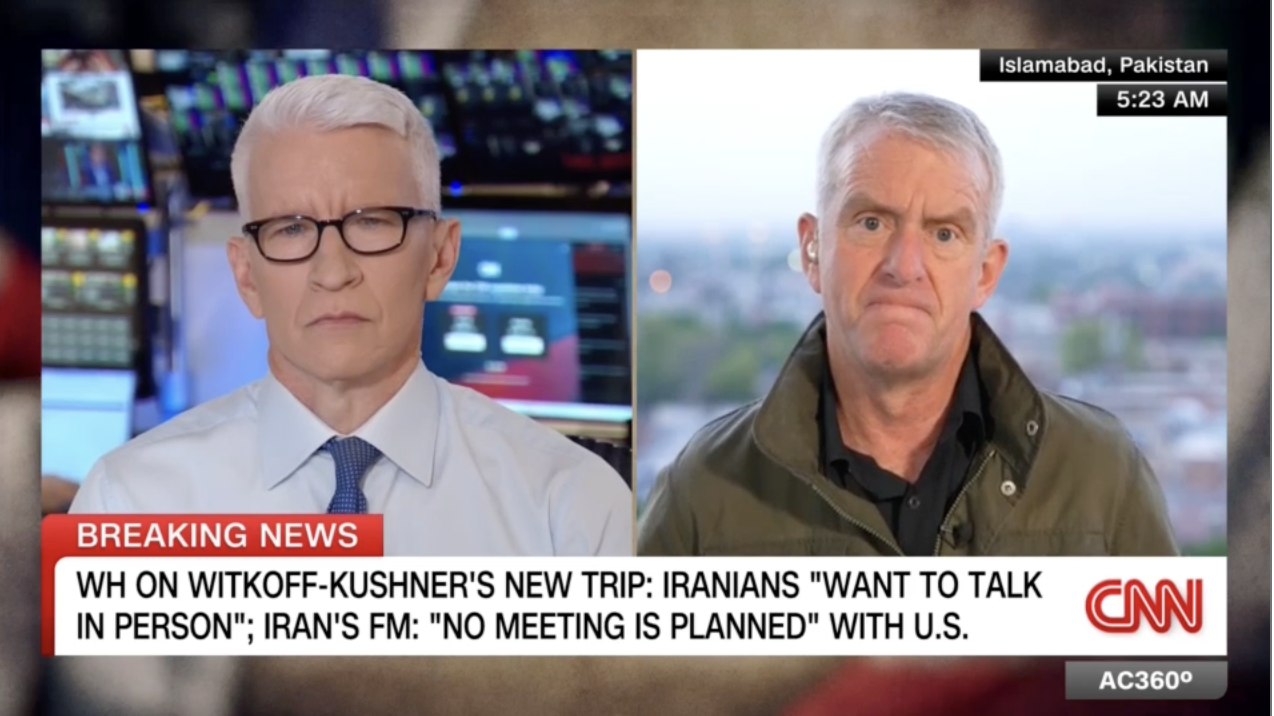
Iranian Foreign Ministry spokesman Esmaeil Baqaei said in a post on X early Saturday morning that “no meeting is planned to take place between Iran and the US” during the visit and that Tehran’s views would instead be conveyed to Pakistan.
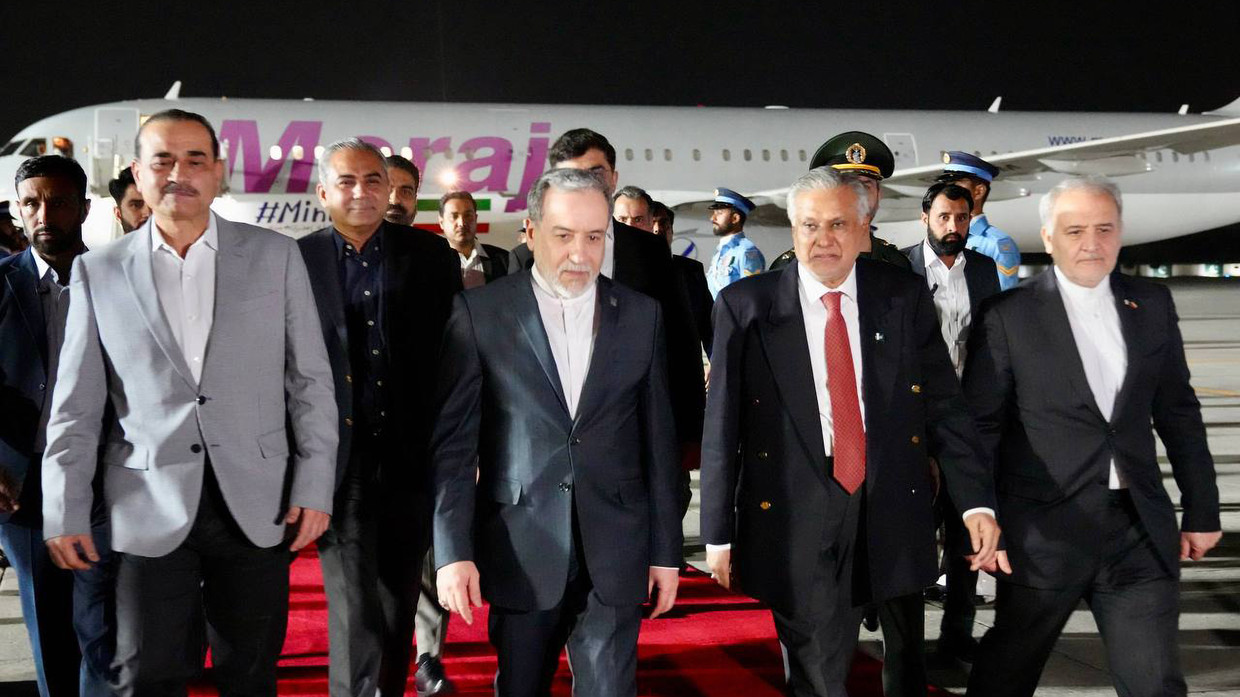
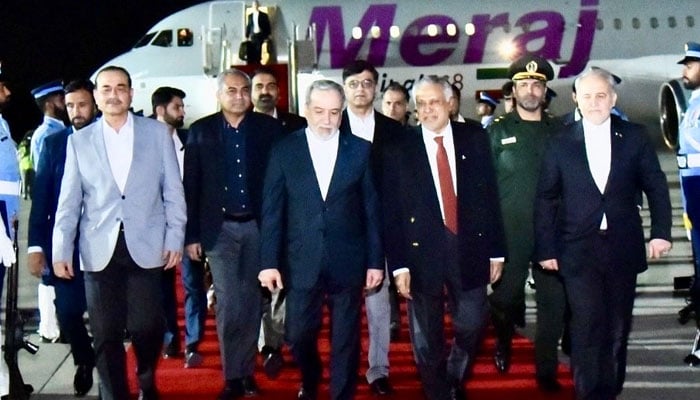
Tehran has denied that Iranian Foreign Minister Abbas Araghchi’s trip to Islamabad will include new talks with Washington, pushing back on reports that US President Donald Trump is dispatching envoys Steve Witkoff and Jared Kushner to Pakistan to restart negotiations.
Iranian Foreign Ministry spokesman Esmaeil Baqaei said in a post on X early Saturday morning that “no meeting is planned to take place between Iran and the US” during the visit and that Tehran’s views would instead be conveyed to Pakistan.
Araghchi himself said he was embarking on a “timely tour” of Islamabad, Muscat, and Moscow in order to “closely coordinate” with partners on bilateral issues and consult on regional developments. Iranian state media said the three-leg trip is part of Tehran’s ongoing diplomatic effort to secure an end to US-Israeli aggression.
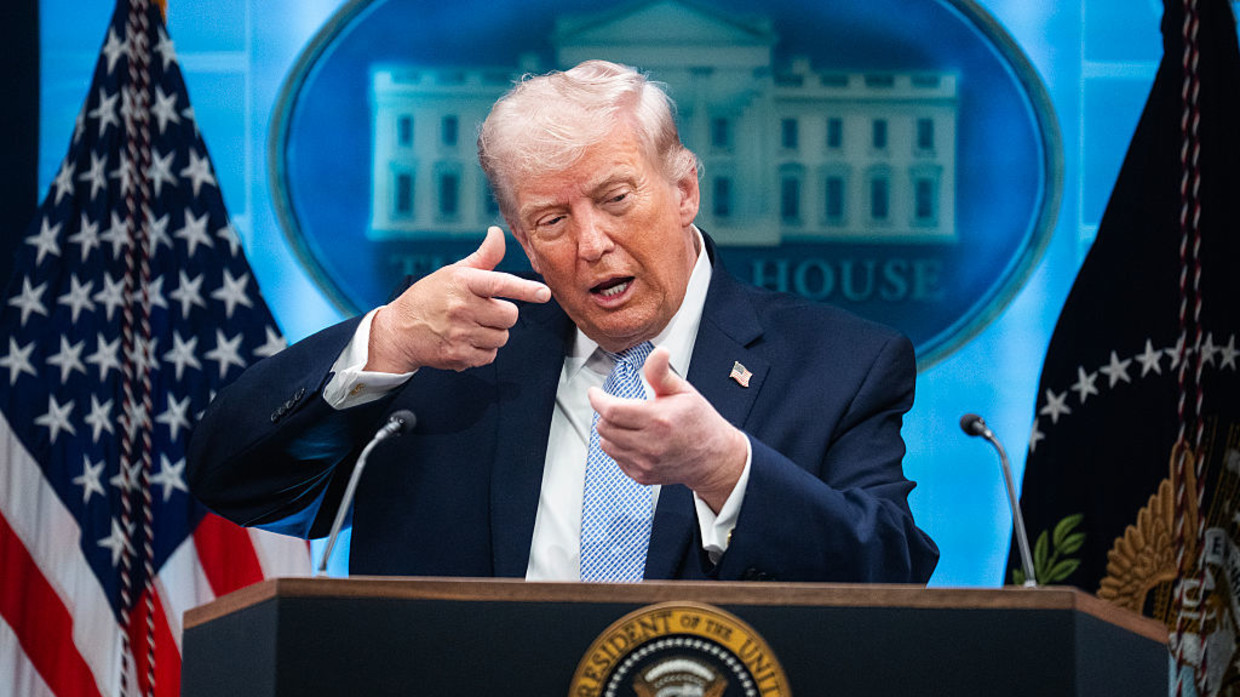
The denial came after the White House announced that Trump’s envoys Steve Witkoff and Jared Kushner would travel to Islamabad for a new round of talks, while Vice President J.D. Vance would remain on “standby” and could still be dispatched if negotiations progress far enough to justify his involvement.
While Tehran has insisted that no new US talks are on the agenda for this visit, AP reported that the sides could still hold indirect discussions through Pakistani mediation rather than direct face-to-face negotiations.
Washington indefinitely extended the ceasefire with Iran earlier this week, expecting a “unified” proposal from Tehran while keeping the US blockade of Iranian ports in place. The standoff around the Strait of Hormuz has rattled global markets, pushing Brent crude above $100 per barrel, while Trump has made clear that there is no firm timeline for ending the war.
The US president further raised the stakes by saying he had ordered the US Navy to “shoot and kill” any Iranian boats found laying mines in the waterway. Tehran considers the blockade a direct breach of the ceasefire and has argued that any talks are pointless as long as it remains in place.
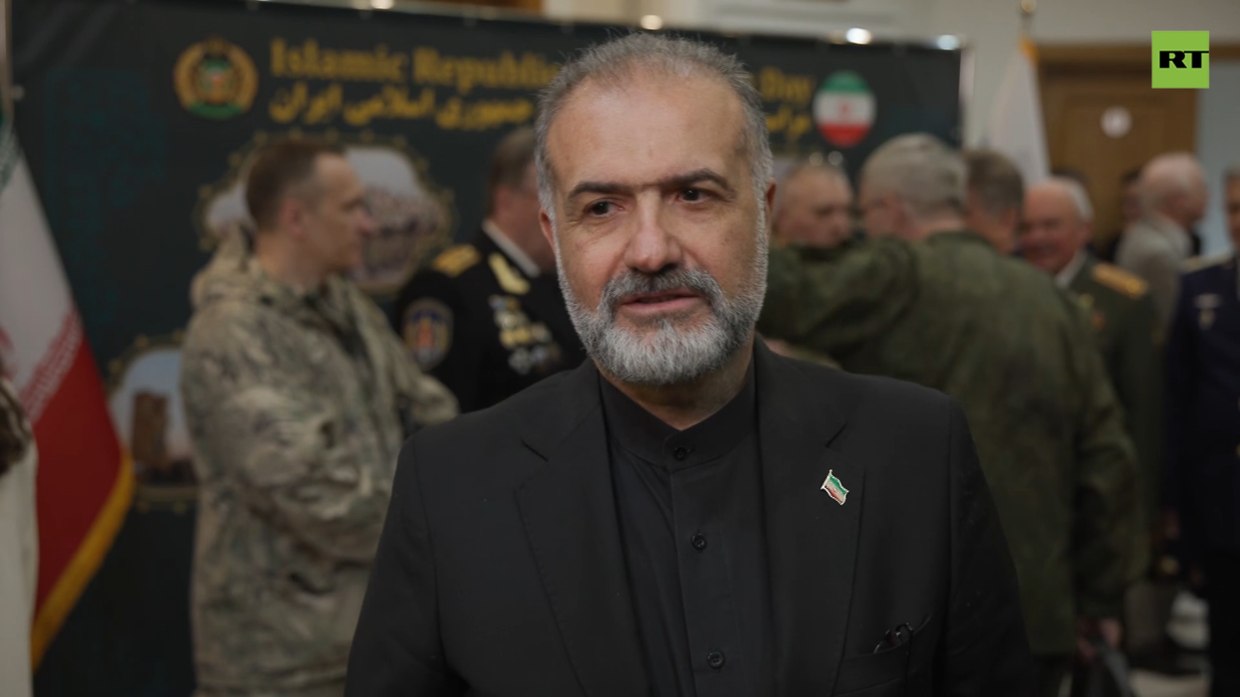
Tehran’s ambassador to Moscow, Kazem Jalali, told RT that Iran is not seeking war but is ready to respond, insisting the country remains open to diplomacy if Washington abandons its bullying. Iranian officials, including Parliament speaker Mohammad Bagher Ghalibaf, have previously accused the US of trying to turn negotiations into “a table of surrender” after failing to achieve victory on the battlefield.

By Matthew Guariglia and India McKinney - April 24, 2026
Section 702 is a controversial program where the government conducts mass collection of Americans’ communications inside the U.S. The ostensible reason is to target communications by and with foreigners outside the U.S., but we know that purely domestic communications get swept in too. And of course, Americans’ privacy rights don’t evaporate when they talk to people abroad.
These communications are put into databases that the Federal Bureau of Investigation searches — and even reads — without a warrant. There is a long history of this tremendous power and related databases being abused to search for communications of protesters across the political spectrum; members of Congress; a congressional chief of staff; a state court judge; multiple U.S. government officials, journalists, and political commentators; and 19,000 donors to a political campaign.
For small business owners, contractors, and professionals across the Grand Canyon State, this is not an abstract threat. If you communicate with a supplier overseas, correspond with an international client or conduct any business across borders, those communications can end up in a government database that law enforcement can search without ever obtaining a warrant.
Warrant requirements for domestic surveillance have not always been a partisan issue. They are an American one. But even partisan voters know that, the moment you make surveillance exceptions out of political loyalty to your own party, you’ve handed future administrations — including ones you don’t like — a weapon with no safety.

Biggs has been a champion of the Fourth Amendment. In early 2025, he said, “We cannot continue to provide our government with clandestine spying powers that violate the Fourth Amendment rights of American citizens.”
To that end, he introduced H.R. 7816, the Protect Liberty and End Warrantless Surveillance Act of 2026, which would provide many changes to the law, including a requirement that law enforcement get a warrant before querying Americans’ communications collected under FISA Section 702. House leadership denied consideration of his bill.
Additionally, he tried to offer an amendment to require a warrant for domestic law enforcement use of 702 data. House leadership also denied consideration of his amendment.
Unfortunately, last week, at the end of a series of votes in the dark of the night and facing enormous pressure from President Donald Trump and Republican House leadership, Biggs voted to reauthorize the surveillance authority with no meaningful changes.


 Because all views matter, Euronews is All Views


Kazakhstan, Kyrgyzstan and Uzbekistan are set to launch a joint hydropower plant with a capacity of nearly 2,000 MW.

Catch up with the most important stories from around Europe and beyond this April 25th, 2026 - latest news, breaking news, World, Business, Entertainment, Politics, Culture, Travel.

A rare copy of Pablo Neruda’s “Spain in the Heart”, written during the Spanish Civil War and possibly printed on cotton made from military uniforms, is set to go on public display in Chile for the first time.

Municipal elections in the West Bank and central Gaza mark the first vote since the Gaza war, with Fatah-linked lists dominant and Hamas absent from the race.


US special envoys Steve Witkoff and Jared Kushner are expected to arrive in Pakistan on Saturday ahead of a second round of peace talks between the US and Iran. Tehran, however, has ruled out direct talks.

Nearly 100 years after his death, Euronews Culture revisits Catalan architect Antoni Gaudí's most stunning creations.

Siemens warned that EU regulations are driving industrial giants toward the US and China. As the "Trump Effect" lures factories away with tax cuts and deregulation, Europe faces a high-stakes choice regarding data rules and the chip dilemma of speed vs. sovereignty.

These European stays put a fresh spin on the traditional hotel, with immersive escapes that bring travellers closer to the great outdoors.

Scientists have developed a new model purporting to skillfully predict El Niño and La Niña 15 months ahead of time.


Taking into account nominal growth and inflation, real hourly wages declined by 3% in the EU over the past five years. Wage growth was stronger in non-euro area countries and in those with lower wage levels.

Catch up with the most important stories from around Europe and beyond this April 25th, 2026 - latest news, breaking news, World, Business, Entertainment, Politics, Culture, Travel.

A new study suggests that a pint fo beer contains a surprisingly meaningful amount of vitamin B6 – and that an alcohol-free version may actually be one of the better options for getting it.


Italy is trialling the R1 robot guide at Turin’s Palazzo Madama to ease crowding and improve access, explaining centuries-old artworks to visitors.


EU Trade Commissioner Maroš Šefčovič said that with the Memorandum of Understanding, "we will be delivering on our goals much faster than before."

Leaders from Lebanon, Egypt, Syria and Jordan as well as the secretary general of the Gulf Cooperation Council, were in Nicosia to meet their European Union counterparts on the sidelines of an EU summit.
Event Highlights (Before Cancellation) Host: Mentalist Oz Pearlman headlined the event, a departure from the traditional choice of a come...