U.S. Reinforces Middle East with 3 Aircraft Carrier Strike Groups as Pressure on Iran Builds
- With USS Gerald R. Ford joining USS Abraham Lincoln in the broader theater, the U.S. gains greater deck-based strike capacity to support combat sorties, missile defense, and maritime security missions simultaneously.
- The deployment reflects a wider shift toward flexible, high-end force projection built to respond fast to regional crises and operate across multiple fronts.
 |
U.S. Navy sailors conduct flight deck operations aboard USS Gerald R. Ford (CVN-78) in the Eastern Mediterranean Sea on March 22, 2026, illustrating the high-tempo air operations capability supporting U.S. multi-carrier deployments. (Picture source: U.S. Department of War) |
U.S. forces seized an Iranian-flagged cargo vessel in the Gulf of Oman, directly testing the limits of a fragile regional ceasefire and raising the risk of naval escalation.
The boarding signals Washington’s willingness to enforce sanctions at sea, with immediate implications for maritime security and freedom of navigation in a critical choke point.
The operation demonstrated the ability to intercept and control suspect shipping in contested waters, reinforcing U.S. maritime interdiction and deterrence capabilities.
Such actions highlight the growing role of naval power in economic warfare and crisis management, where control of sea lanes can quickly translate into strategic leverage. Read more.
 |


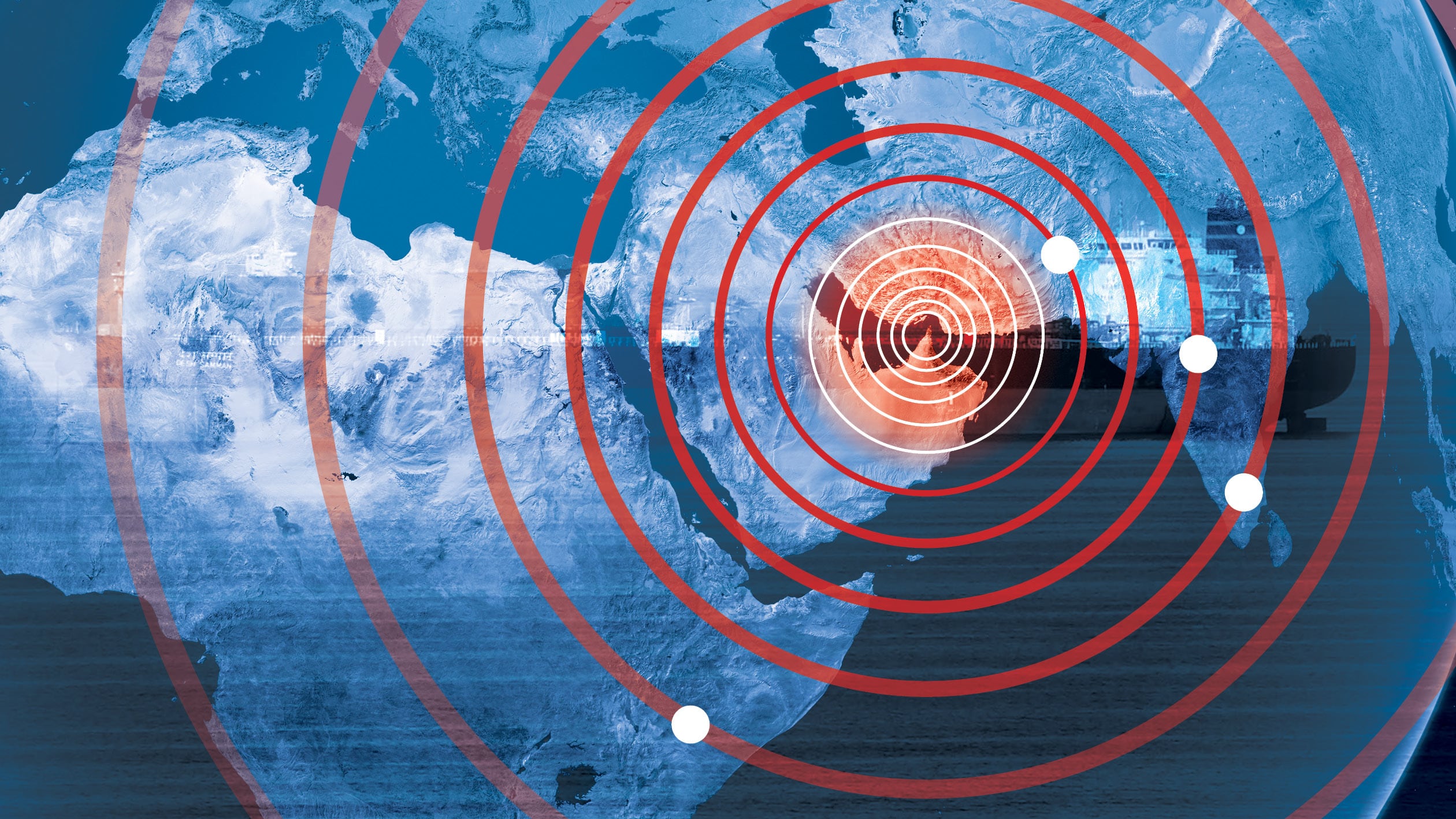


- Global Impact: Nearly 25% of global seaborne oil trade traverses this strait, mostly to Asian markets.
- 2026 Crisis: Following US-Israel airstrikes on Iran in late February 2026, Iran threatened the strait and, along with a subsequent US blockade on Iranian ports, caused a near-halt in traffic, leading to extreme global supply chain, energy market, and shipping industry disruptions.
- Alternative Routes: Options to bypass the strait are limited, mostly consisting of pipelines in Saudi Arabia and the UAE, but these are insufficient to replace all tanker traffic.
- Military Presence: The US Navy's 5th Fleet patrols the area to keep the lanes open, while Iran has threatened to use mines and target ships to assert control.
- Location: Separates the Persian Gulf and the Gulf of Oman.
- Narrow Passageway: The shipping lanes are extremely narrow (miles each way) with a-mile buffer zone, making it a "shooting gallery" for ships during conflict.
- Economic Risk: Disruptions historically drive up oil prices significantly, with potential for long-term global economic damage if permanently restricted.


No comments:
Post a Comment