No Escape From a Heat Wave Everyone Saw Coming
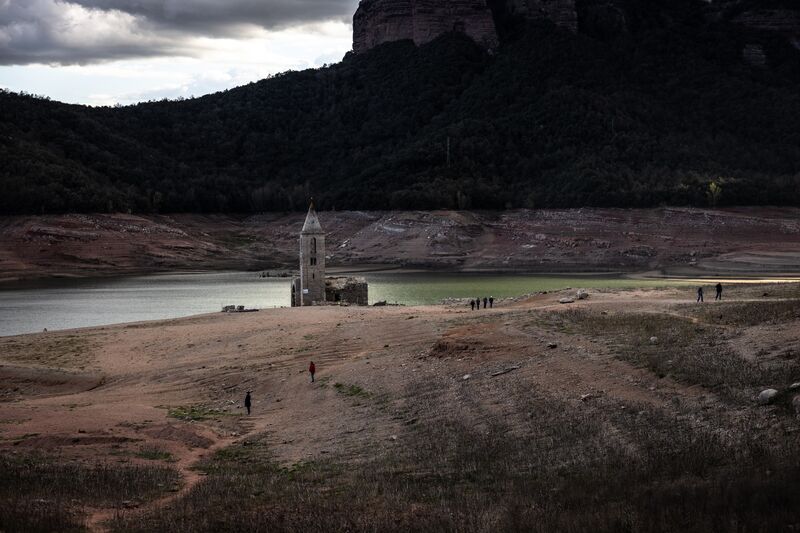
The ruins of the Sant Romà de Sau church in Spain, exposed by low water levels in the Sau reservoir.
Photographer: Àngel García/Bloomberg
Scorching temperatures and an unusual absence of rain are disrupting lives across the planet and testing the limits of human survival.
These events aren’t just abstract numbers on weather forecasts or scientific reports – they’re forcing people to change their daily habits, from washing dishes to raising cattle and going on holiday.
They’re also claiming lives by exacerbating existing infirmities and disease and inflicting heat stroke even in healthy people.
Key Reading:
In Pictures: Europe’s Extreme Drought Is Wreaking Havoc in Spain
Heat Stress Deaths Show Europe Isn’t Ready for Climate Change
How Extreme Heat and Humidity Test Survival Limits
World’s Biggest Climate Fund Makes Its Largest Water Investment
‘Hot Continent’ Perception Downplays Africa's Heat Wave Dangers
Record-breaking temperatures caused the deaths of more than 60,000 people in Europe last summer, according to a report this week that said at least some could have been avoided.
Catalonia in northeastern Spain is among the hardest hit regions in Europe’s driest period in at least 500 years. There, empty reservoirs have forced authorities to pay for water trucks in at least 80 villages.
In Africa, heat waves reaching 50 degrees Celsius (122F) are going underreported, and studies on health impacts are limited. In Somalia alone, at least 43,000 people died last year as a result of the worst drought in four decades.
Nearly a quarter of the US population this week is facing high temperatures that show no sign of abating.
Global Temperatures Hit Another Record
The average worldwide temperature set another new record on Thursday, hitting 17.23C. That topped the 17.18C recorded on Tuesday and Wednesday.
Source: Climate Change Institute, University of Maine
Note: Data not shown for Feb. 29 on leap years
Overall, governments have failed to act. It’s likely that “in the near term” the world will exceed the 1.5 degree Celsius limit of warming that countries pledged to try to keep to under the 2015 Paris agreement, the Intergovernmental Panel on Climate Change said in March. Global greenhouse gas emissions need to be cut to 60% below 2019 levels by 2035, it said.
Worldwide, the first week of July was the hottest ever recorded. With the onset of the El Niño weather phenomenon, signs are that it’s only going to get worse.
Listen to our Twitter Space discussion on NATO and its long-term future.
And if you are enjoying this newsletter, sign up here.


No comments:
Post a Comment