On
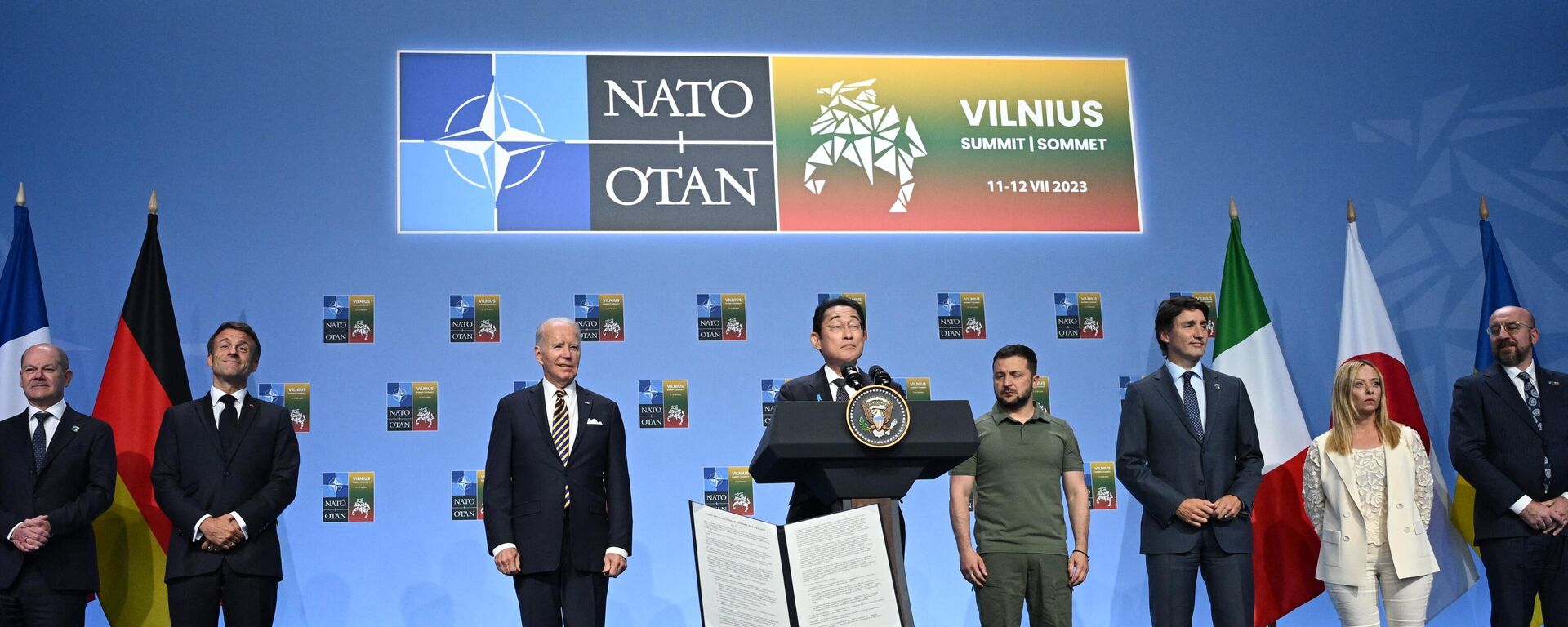
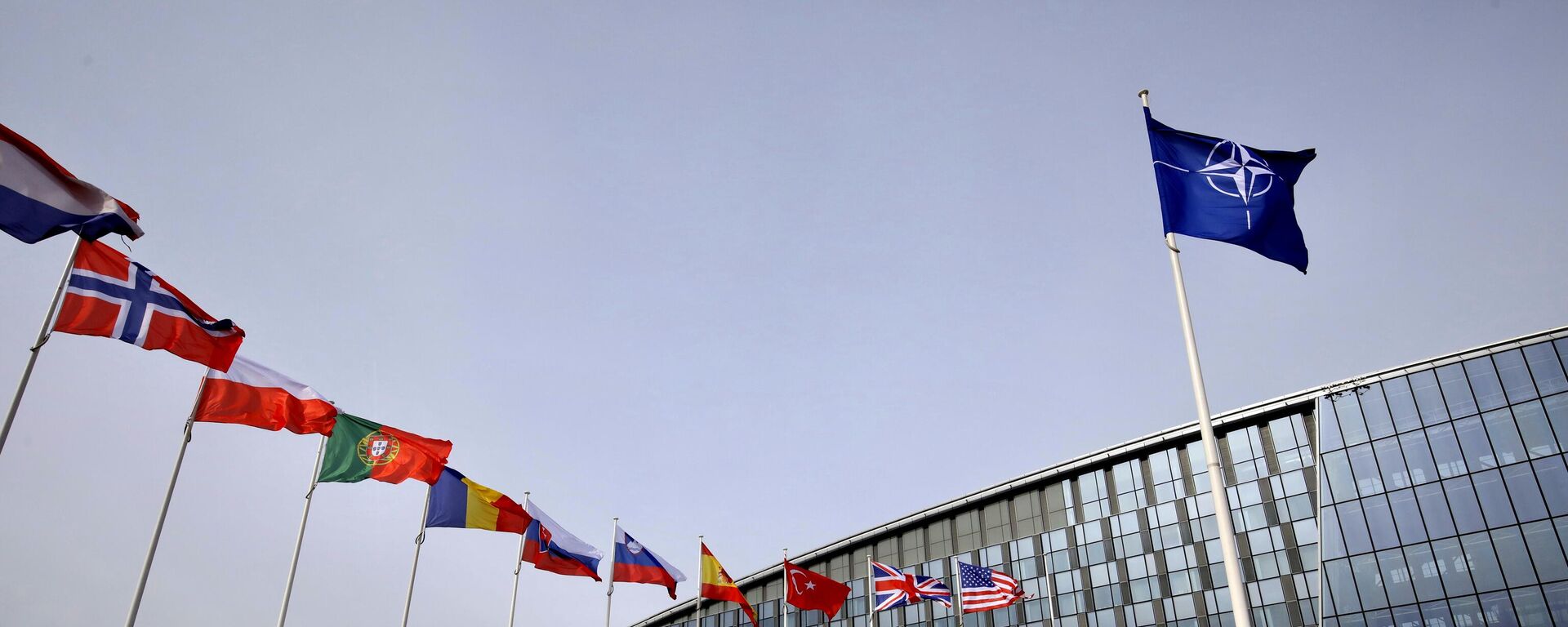
July 11 through 12, the Lithuanian capital of Vilnius hosted the NATO
summit that was attended by leaders of the military bloc’s member states
as well as by Kiev regime head Volodymyr Zelensky who acquired a habit as of late to ask for military and financial aid at various high-profile events around the globe.
The
participants of the summit discussed, among other things, the current
situation in Ukraine and their efforts to aid the regime in Kiev.
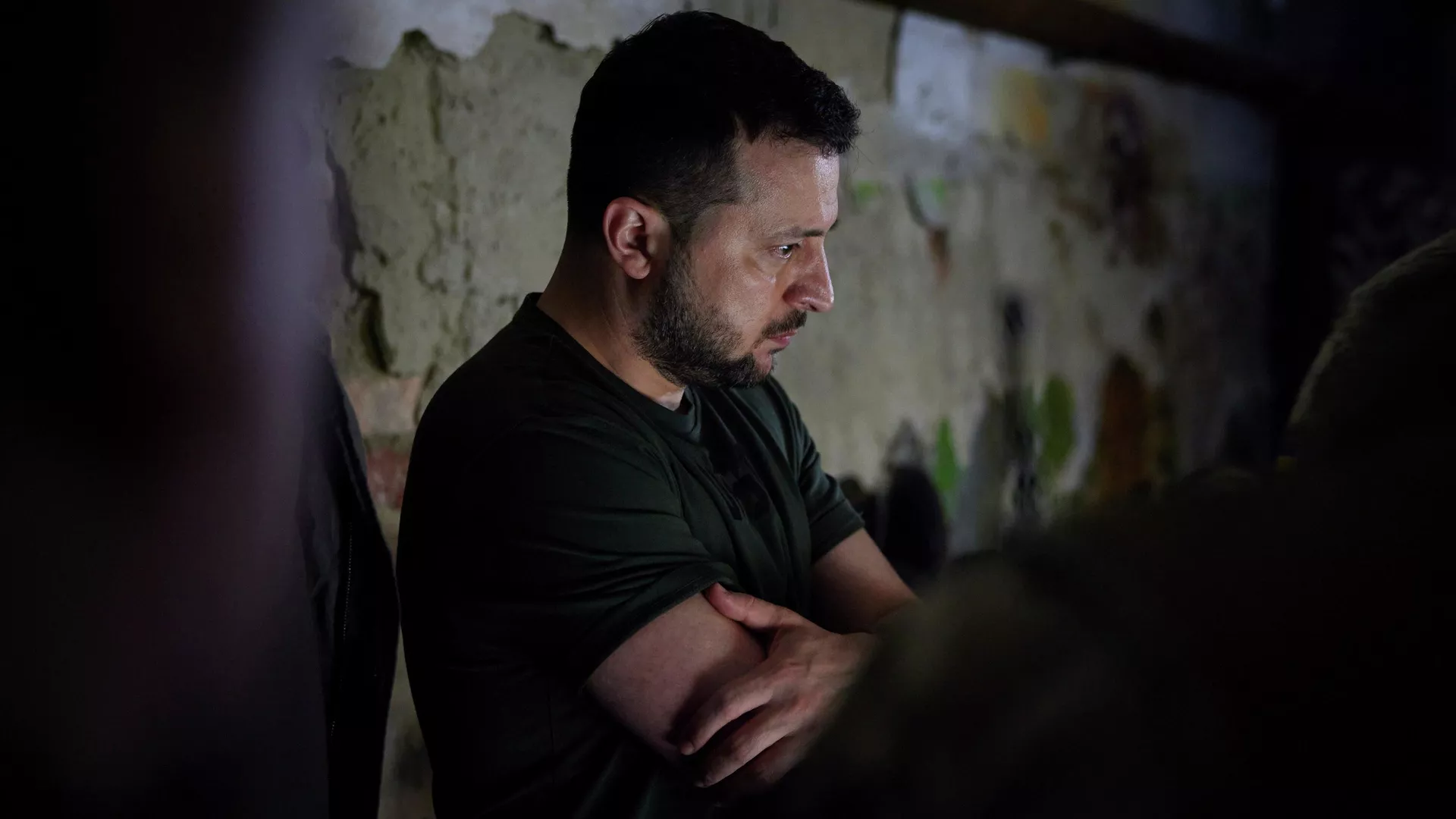
What Lies Behind Zelensky's 'Nervous Response' to NATO Summit?
© AP Photo / Ukrainian Presidential Press Office
The
results of the NATO summit in Vilnius this week were apparently not to
the Ukrainian leadership’s satisfaction, as Kiev essentially received
only vague promises to maybe join the alliance sometime in the future.
Volodymyr Zelensky has complained about the NATO summit on Twitter, lamenting that the lack of a timeframe for Ukraine’s admission to NATO was “unprecedented and absurd.”
Commenting on this situation, Tiberio Graziani,
chairman at Vision & Global Trends International Institute for
Global Analyses, told Sputnik that one should look “beyond the
skirmishes between the statements of the representatives of the various
countries, the NATO secretariat and Zelensky,” as everyone involved
essentially “plays their role.”

World
Get the latest news from around the world, live coverage, off-beat stories, features and analysis.
What Lies Behind Zelensky's 'Nervous Response' to NATO Summit?
© AP Photo / Ukrainian Presidential Press Office
Subscribe
The
results of the NATO summit in Vilnius this week were apparently not to
the Ukrainian leadership’s satisfaction, as Kiev essentially received
only vague promises to maybe join the alliance sometime in the future.
Volodymyr Zelensky has complained about the NATO summit on Twitter, lamenting that the lack of a timeframe for Ukraine’s admission to NATO was “unprecedented and absurd.”
Commenting on this situation, Tiberio Graziani,
chairman at Vision & Global Trends International Institute for
Global Analyses, told Sputnik that one should look “beyond the
skirmishes between the statements of the representatives of the various
countries, the NATO secretariat and Zelensky,” as everyone involved
essentially “plays their role.”
“The
representatives of the member countries, as well as those in charge of
NATO, aware that giving timescales for Kiev's entry into the Alliance -
in wartime - would constitute a mortgage on the future of the course of
the ongoing conflict, try to postpone time for a certain decision,”
Graziani explained.
At
the same time, he added, “Zelensky's nervous response is a due act: he
must in fact give a signal of coherence to his own leadership group and
to his Armed Forces.”
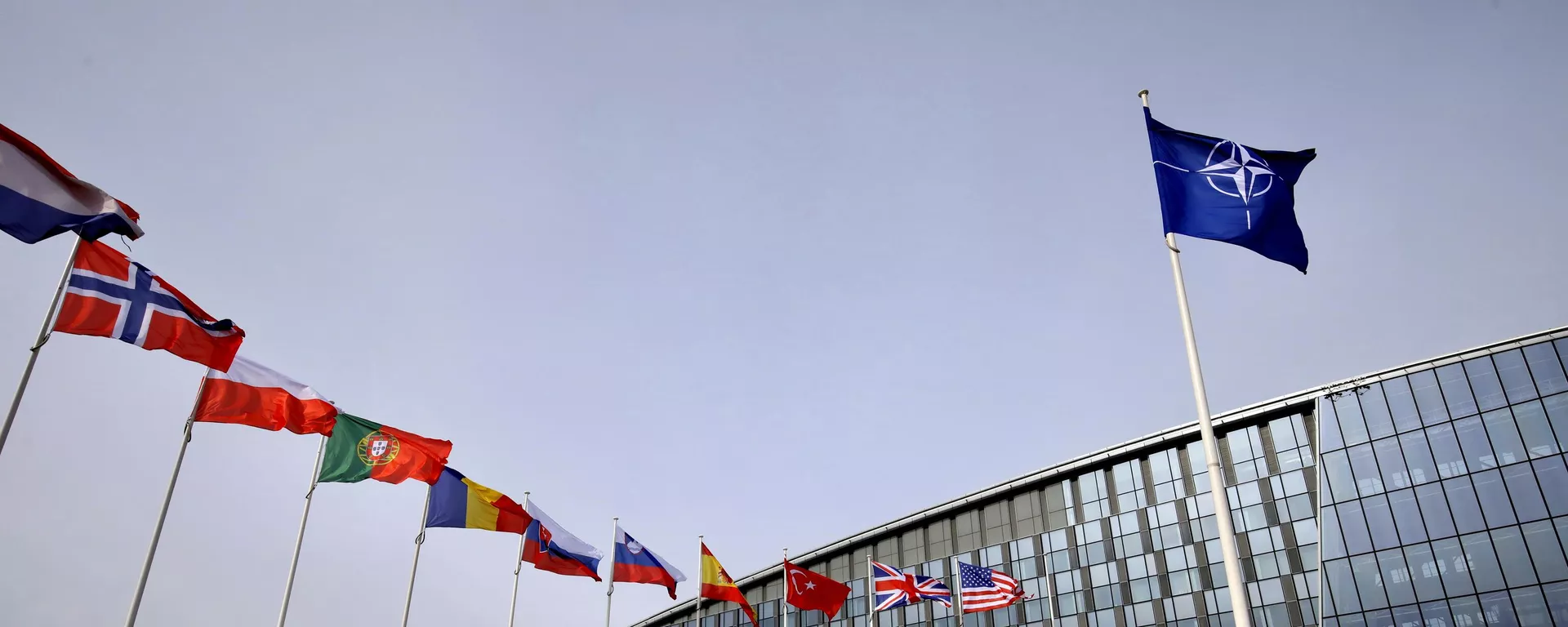
Graziani
also argued that any concerns about how much unity there may be within
NATO – seeing how no joint agreement on security guarantees has emerged
by the summit’s end – are irrelevant since that military bloc is
“hegemonic” in nature, with all of its members – except for the UK,
Australia and Canada – having an “ancillary role” with respect to the
“hegemonic role of Washington.”
“Internal NATO problems disappear instantly if and when the US wants it,” Graziani surmised.
He also addressed the remarks made recently by UK Defense Secretary Ben Wallace
who complained about Ukraine’s apparent lack of gratitude for the
weaponry it receives from abroad, reminding Kiev that London is “not
Amazon.”
“It
seems to me that Wallace posed the problem at NATO level to push other
countries to increase the amount of military aid with the consequence of
further depleting the military arsenals of the Old Continent,” Graziani
mused. “In the long run, the only countries that will strengthen in
terms of their armaments capacity will be the USA and Great Britain.”

Analysis
Enjoy in-depth, acute analysis of the most pressing local, regional and global trends at Sputnik!
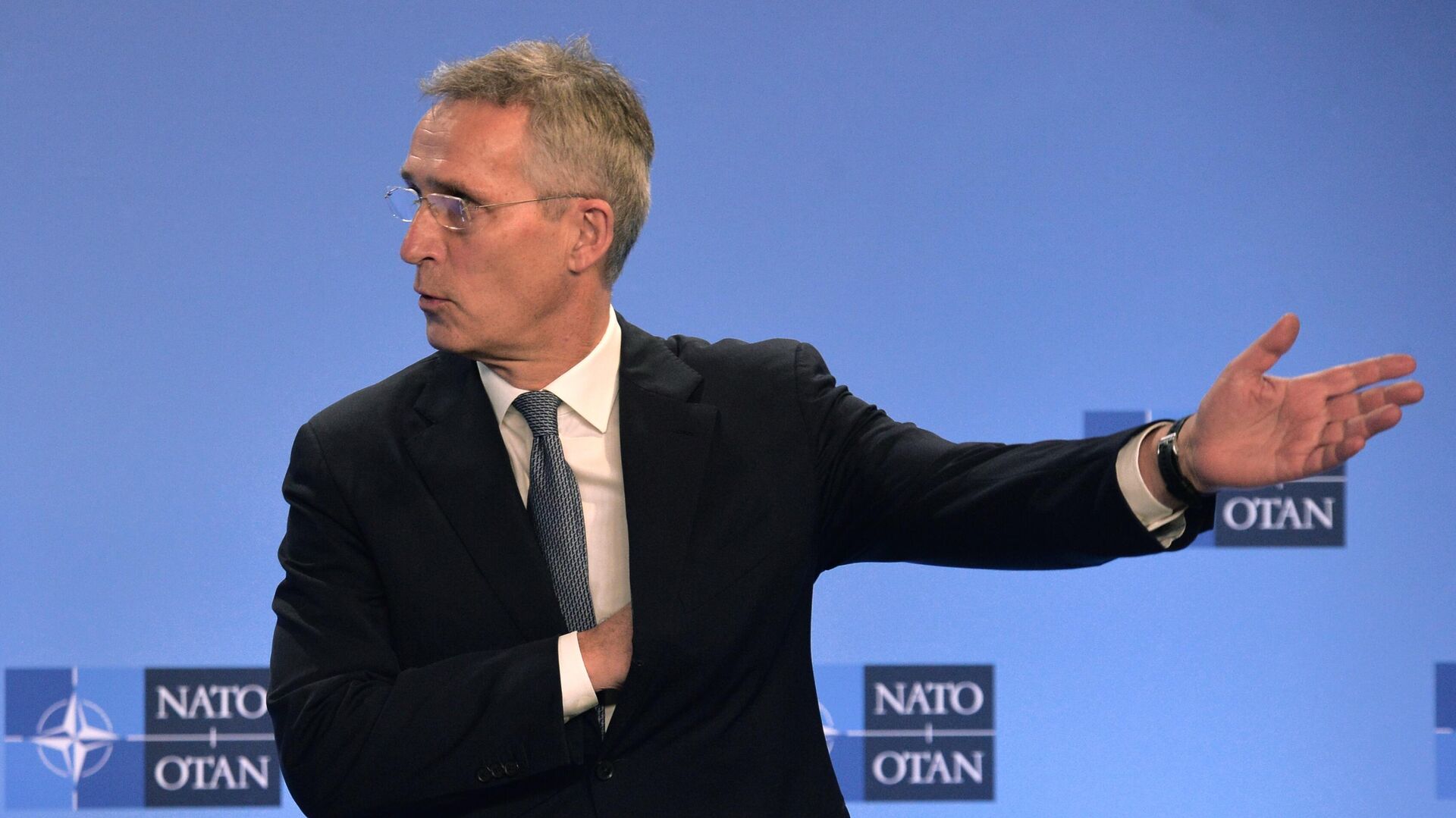
Scott Ritter: NATO Summit Serves Up Cringe Nothing-Burger
© Sputnik
/ Subscribe
Back
in 1984, Wendy’s (an American fast-food chain) released an
advertisement starring an elderly actress named Clara Peller. The
premise of the ad had Peller ordering a hamburger from an unnamed
competitor, only to receive a very large bun containing a very small
beef patty on the inside.
Upon examining the burger, Peller looks up in exasperation, and proclaims “Where’s the beef?”
In
the aftermath of the Vilnius-hosted NATO Summit, a two-day affair
spanning July 11-12, one cannot help but feel that the spirit of Clara
Peller was channeled into the President of Ukraine, Volodymyr Zelensky,
as he pored over the results of the event, and contrasted them with the
expectations that existed going into the summit. I don’t know how to say
“Where’s the beef” in Ukrainian, but something like that phrase had to
be coursing through the mind of the Ukrainian President as he examined
the big “nothing burger” that NATO had delivered up for him.
The
Vilnius Summit was intended to showcase the alliance’s unity and
resolve in the face of the challenges presented by Russia and the
ongoing conflict in Ukraine. There had been a great deal of discussion
prior to the summit about the prospects of Ukrainian membership in NATO.
It was understood by all parties that, while the conflict between
Ukraine and Russia remained in an active phase, Ukrainian membership was impossible,
if for no other reason that, under Article 5 of the NATO charter, NATO
would immediately find itself in a war with Russia which had a good
chance of going nuclear.
The working premise going into the Vilnius Summit was that NATO would empower Ukraine to carry out a massive counteroffensive
designed to break through the Russian defenses and drive to the Sea of
Azov, thereby severing the land bridge between Crimea and Russia,
forcing Russia to negotiate an end to the conflict. At that juncture,
having “frozen” the conflict on terms that would be unfavorable to
Russia, NATO would extend an invitation to Ukraine for membership,
thereby shrouding Ukraine’s gains with Article 5 protections while
effectively checking any future Russian offensive operations.
In
the weeks leading up to the summit, Ukraine was desperately trying to
do its part, throwing its newly constituted NATO-trained and equipped
assault brigades at prepared Russian defenses in actions which made the
infamous “Charge of the Light Brigade” seem like the epitome of military
planning and execution by comparison. With much of its NATO-provided
weaponry, including the much-touted Leopard tanks and Bradley infantry
fighting vehicles, destroyed or damaged without ever reaching the main
Russian defensive positions, and some 20,000 Ukrainian casualties, the
Ukrainian counteroffensive fizzled out. Instead of presenting his NATO
partners with a decisive Ukrainian victory, Zelensky confronted his
erstwhile allies with the harsh reality that not only would the conflict
with Russia not be ending any time soon, but also the growing
realization that, when it did end, it would be as a decisive Russian
military victory.
Confronted
with this reality, NATO sought to soften expectations about Ukrainian
membership. Rather than provide Ukraine with a concrete road map to
membership, NATO declared that it would extend an invitation to Ukraine
when “conditions are met”, one of which is that the conflict with Russia
must be over. NATO offered up as a consolation prize the establishment
of a NATO-Ukraine Council “to advance political dialogue, engagement,
cooperation, and Ukraine’s Euro-Atlantic aspirations for membership in
NATO,” and promised to “continue our support for as long as it takes.”
For
Zelensky, these words ring hollow in the face of a deteriorating
situation on a battlefield largely defined by the previous support of
NATO. And the harsh reality of the battlefield looms large as Zelensky
departs Vilnius with little more than assurances that NATO will continue
to support Ukraine along the lines of what it has done to date. But all
that this support has done is condemn hundreds of thousands of
Ukrainian soldiers to death, while stripping bare both the armories and
coffers of Ukraine’s NATO partners.
Zelensky
must likewise reflect on the words of President Joe Biden who, in an
interview with CNN, noted that Ukraine was “not ready for membership in
NATO,” adding that any such dialogue was “premature” while Ukraine was
in the middle of a conflict. Biden also stated that he did not “think
there is unanimity in NATO about whether or not to bring Ukraine into
the NATO family now, and that the process could take place only after a
peace agreement with Russia was in place.”
But
to achieve a peace that created the conditions favorable to Ukraine
joining NATO meant that Ukraine must first defeat the Russian army on
the field of battle. To do that, Ukraine would need NATO to radically
alter the formulation upon which current levels of military assistance
were being calculated, if for no other reason that the current
formulations were, simply put, not working. But NATO is neither inclined
nor capable of changing this formulation. Its goal has never been to
defend Ukraine, but rather defeat Russia, a cause it is willing to
pursue to the last Ukrainian.

Zelensky
came to Vilnius like customers flock to fast food restaurants, full of
expectations about the delicious burger they are going to order and
consume, only to find himself cast in the role of Clara Peller, shouting
out in exasperation, “Where’s the beef?”
It's
not the role Zelensky wanted or expected rolling into the Vilnius
Summit. For more than 500 days he had been cast as the modern-day
incarnation of Winston Churchill, a heroic figure standing firm against
the forces of evil. But Zelensky operates in the theater of the absurd,
where perception trumps reality until which time reality hits hard, and
the script changes. The narrative has flipped, with Ukraine transformed
from the leading character into part of the supporting cast. Zelensky
the politician must be disappointed by this turn of events. But Zelensky
the actor simply looks down at the words put before him, written by
others, takes his cue, and reads aloud.
“Where’s The Beef?”



No comments:
Post a Comment