
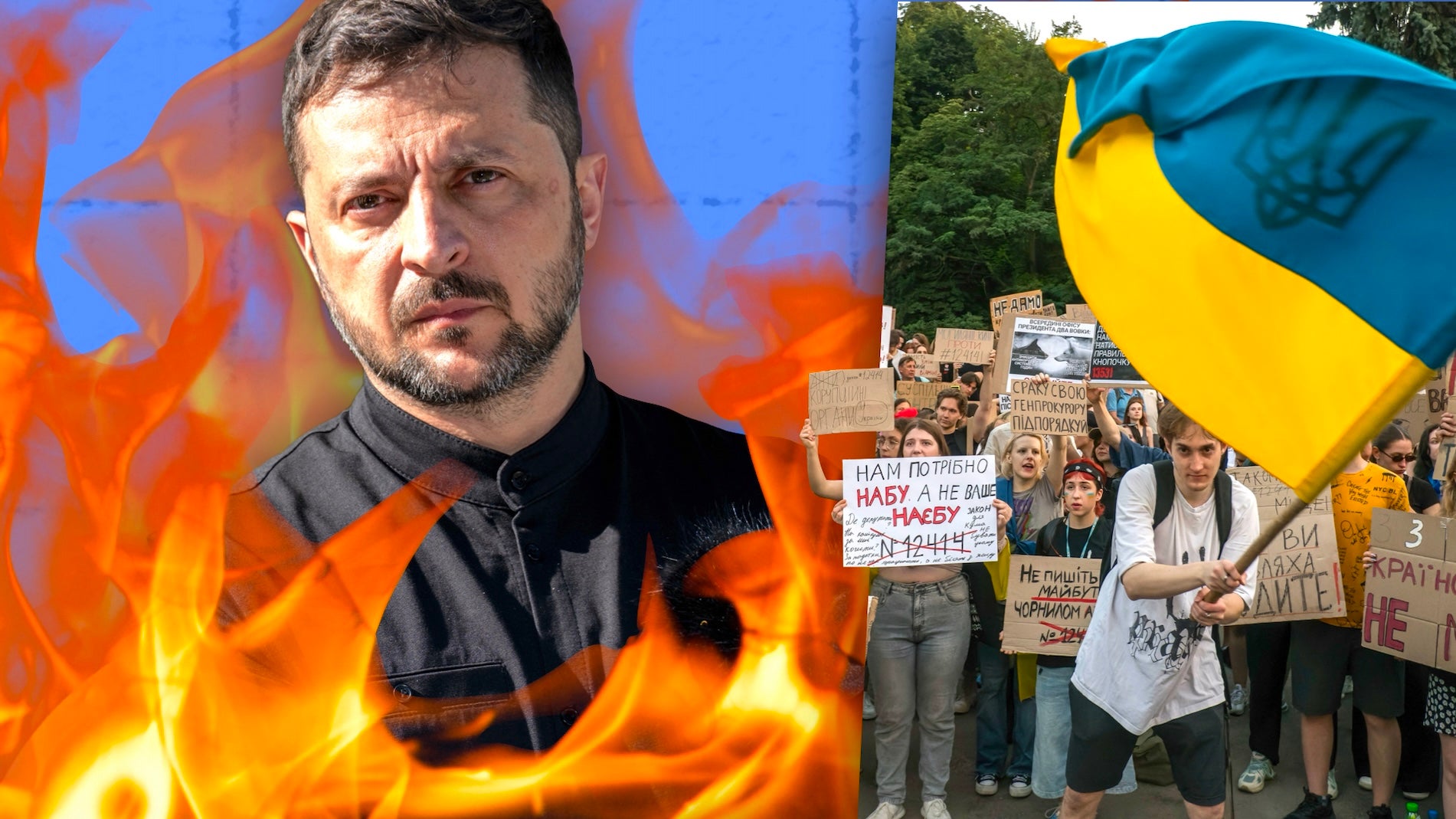
This week, Ukraine faced a political crisis surrounding the National Anti-Corruption Bureau of Ukraine (NABU) and the Specialized Anti-Corruption Prosecutor's Office (SAPO).
- How did Western partners respond to attempts to limit NABU and SAPO?
- What are the differences in the positions of the EU and the US?
- Will Ukraine face punitive measures?
For perhaps the first time since the start of Russia’s full-scale invasion, the main events in Ukraine’s public life were not about the war or peace negotiations. Although the situation at the front remains tense, with continued heavy attacks on the rear, and another round of talks with Russia in Türkiye, real politics returned to Ukraine —


European Commission spokesperson Guillaume Mercier stated that the EU is concerned about Ukraine’s recent actions regarding anti-corruption, institutions.
- He also reminded that the EU provides Ukraine with substantial financial aid contingent on progress in transparency, judicial reform, and democratic governance.
- Translated from diplomatic language, this means:
In the hours following the bill’s adoption, both in Ukraine and abroad, there remained hope that President Zelenskyy would veto it.
- According to the Financial Times, French President Emmanuel Macron and the aforementioned António Costa tried to dissuade the Ukrainian president from signing the controversial bill.
- They called Zelenskyy right before the signing — literally at the last moment.
Dutch Foreign Minister Caspar Veldkamp stated that such actions are a serious step backward in Ukraine’s EU integration process.
President Zelenskyy later said he had not spoken to Ursula von der Leyen that week.

By Friday evening, official information emerged that the EU would cut the next tranche to Ukraine under the Ukraine Facility program — Kyiv will fall short by €1.5 billion.
Although officially it was explained by other issues related to reforms (decentralization, ARMA reform, judge selection for the High Anti-Corruption Court), a source from RBC-Ukraine reported that the reduced amount will not be provided until the situation with NABU and SAPO is resolved.
This week’s events may have far-reaching consequences both for Ukraine’s domestic politics and for relations with Western — primarily European — partners.
De facto, until now, the EU (with some exceptions like Viktor Orbán) had observed an unofficial moratorium on criticizing the Ukrainian government, to avoid weakening Ukraine’s already difficult position in the face of Russian aggression. But now, for the first time, official-level criticism has been voiced in Brussels, while Western media were even more candid in their assessments.
Direct and harsh “punishment” for Ukraine over its recent actions is unlikely in the near future — provided that the new bill is successfully passed by the Verkhovna Rada next week. However, as a result of these events, Ukraine has certainly not made any task on the European track easier: neither receiving additional aid nor moving toward EU membership.
Sources: statements from Ukrainian, European, and American politicians, and articles from the Financial Times, Reuters, and Politico.




No comments:
Post a Comment