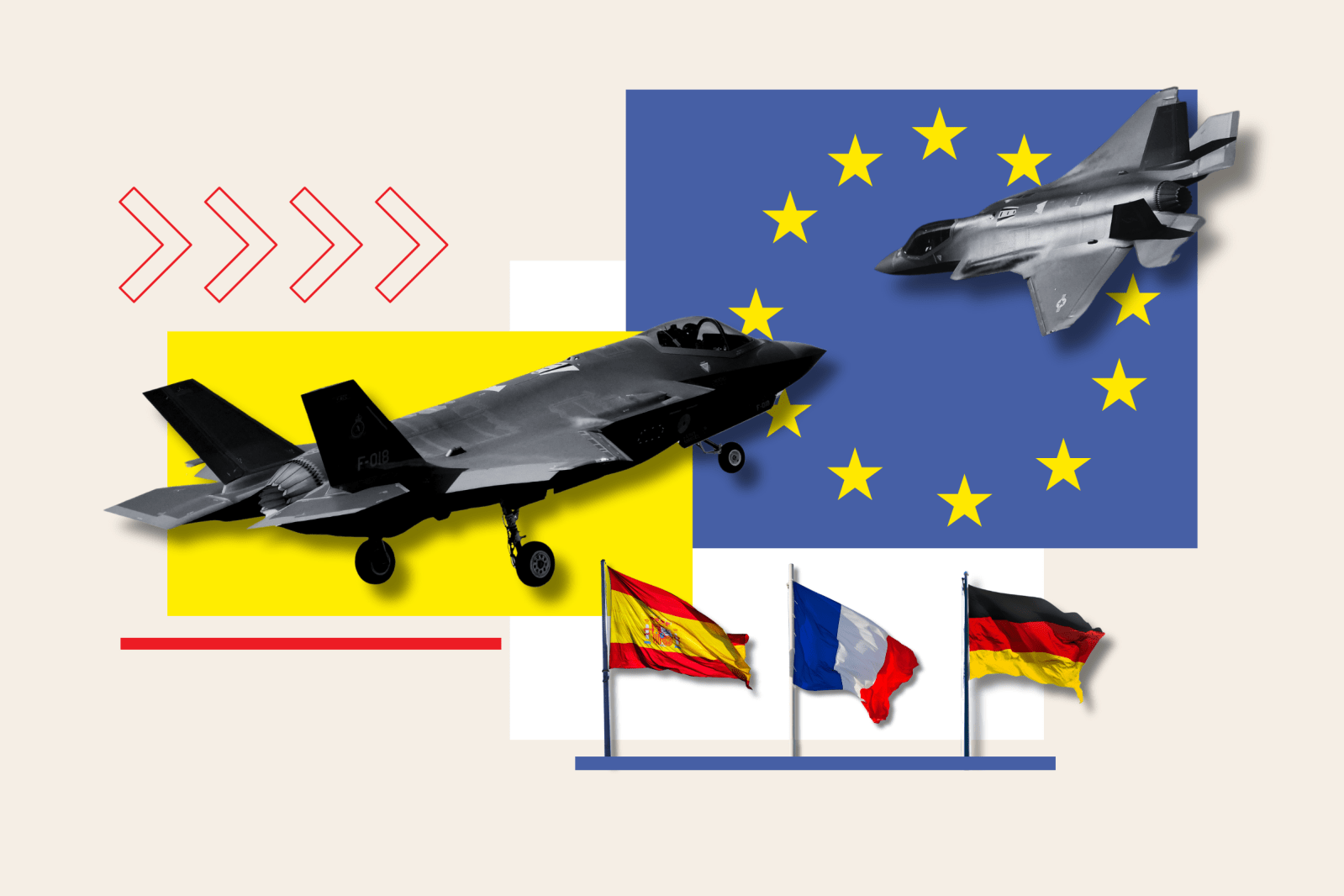


Future fighter jet: France and Germany edge toward a split over the SCAF

The next generation of European combat aircraft, once sold as a symbol of unity, now risks turning into a textbook case of strategic divergence between France and Germany.
The SCAF dream on the brink
The Future Combat Air System (SCAF in French, FCAS in English) was launched in 2017 with great fanfare. Paris and Berlin promised a shared system that would replace France’s Rafale and Germany’s Eurofighter from the 2040s. Spain joined later, bringing extra funding and industrial heft.
At its core, SCAF is not just a single jet. It is a family of systems: a manned “new generation fighter”, armed drones, swarms of smaller remote carriers, and a combat cloud linking everything together. The idea is to match, or at least not fall too far behind, the United States’ and China’s advances in networked air warfare.
The manned fighter, the political symbol of the programme, has become its main fault line.
French and German defence staffs still agree on the need to modernise. They do not agree on how radical the new plane should be, who should lead design work, or how to share the industrial cake. That disagreement has now put the entire project in a new “major crisis”, according to officials familiar with the talks.
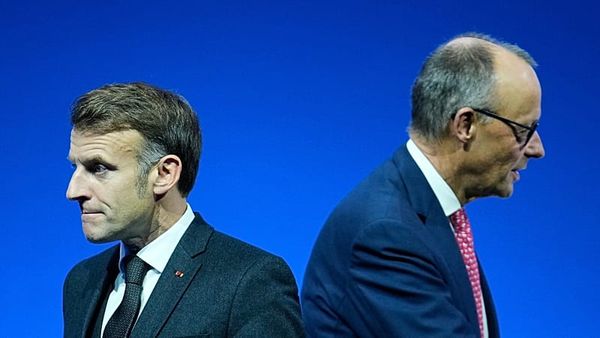
Macron and merz hold the keys
Decisions on SCAF are no longer just about engineers and generals. They rest squarely with two political figures: French president Emmanuel Macron and German conservative leader Friedrich Merz, tipped as a possible future chancellor.
Both men are expected to clarify their positions around a European Council meeting in Brussels or early in 2026. The calendar is tight: contracts for the next phase, involving billions of euros and thousands of jobs, cannot be kicked down the road forever.
For Macron, SCAF has been a flagship for his push toward “strategic autonomy” in Europe. Turning his back on it would be an admission that visions of a unified European defence industry still run into hard national reflexes.
For Merz and the German political class, the stakes are different. Berlin has already committed huge sums to buying US F‑35s to carry NATO’s nuclear weapons. That purchase, pushed through after Russia’s invasion of Ukraine, underlined Germany’s reliance on Washington and aggravated doubts in Paris about Berlin’s long-term commitment to a joint jet.
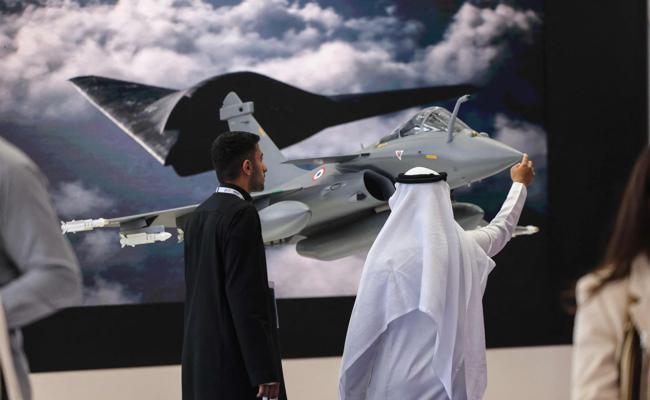
➡️ [Analysis] Why the Rafale F5 is becoming India’s decisive card in the MRFA fighter competition
➡️ US Air Force needs 500 next-gen fighters, bombers to beat China, think tank says

With the looming failure of the Franco-German fighter jet, Airbus may have found a more “flexible” partner: Sweden
Dassault versus Airbus: two industrial cultures collide
The heart of the dispute lies between two industrial giants. On one side, Dassault Aviation in Saint‑Cloud, west of Paris, the cradle of French combat aircraft since the era of the Mirage. On the other, Airbus Defence and Space, headquartered in Germany and accustomed to transnational projects like the Eurofighter Typhoon and A400M transport plane.
Dassault wants a clear prime role and design authority on the fighter; Airbus wants genuine co‑leadership and access to critical know‑how.
Dassault built the Rafale largely on its own terms and argues that such a model delivered a highly capable, exportable fighter. The company fears that a “management by committee” structure would slow decision-making, blur responsibilities and weaken the final aircraft.
Airbus counters that a joint European programme funded by three states cannot just be a French-led project with subcontractors. German officials press for more access to sensitive technologies and equal status in key work packages such as flight controls, stealth shaping and mission systems.

Diverging military needs
Industrial disputes mask deeper strategic differences. French air forces operate worldwide, often at short notice, from the Sahel to the Middle East, and maintain a nuclear deterrent carried by aircraft. They want a fighter optimised for high-end missions, with a strong focus on autonomy, long range and the ability to strike independently without US support.
The German armed forces, historically more focused on territorial defence and NATO missions, emphasise interoperability with allied systems, especially American ones. Berlin also faces tighter budget pressures after its one-off “special fund” for defence starts to run dry.
- France pushes for a stealthy aircraft tailored to national nuclear and expeditionary missions.
- Germany seeks broader industrial returns and closer links to NATO-standard equipment.
- Spain aims to secure roles for its industry and replace ageing Eurofighters in the 2040s.
A risk of parallel fighters in europe
The prospect of failure is no longer theoretical. French officials speak more openly about a “plan B”: continuing a purely national fighter programme building on Rafale technologies. Berlin, in turn, has strengthened ties with other European and US projects.
A messy divorce could leave Europe with several rival fighter programmes, each more expensive and less competitive.
The UK-led Global Combat Air Programme (GCAP), involving Italy and Japan, already sits next door. If SCAF collapses and Paris goes it alone, Europe could see two separate sixth-generation jets in development, plus lingering fleets of F‑35s and Eurofighters.
That fragmentation would weaken bargaining power on the export market and raise long-term support costs for smaller air forces. It would also send a political message: when strategic pressure rises, national reflexes still prevail over coordinated planning.
Key scenarios on the table
| Scenario | What happens | Main consequence |
|---|---|---|
| Compromise deal | France, Germany and Spain agree on shared leadership and funding for the fighter | SCAF moves forward, but with delays and trimmed ambitions |
| Soft split | Joint work continues on drones and combat cloud; fighter design diverges | Partial cooperation, higher total costs, mixed political signal |
| Full rupture | France and Germany walk away; each backs different jets | Deeper divide in European defence and greater reliance on US tech |
Why this matters beyond defence geeks
The SCAF debate is not just about radar cones and stealth coatings. It goes to the heart of how Europe intends to protect itself in the 2040s and 2050s, when current fighters reach the end of their life.
Modern air combat relies on networks, artificial intelligence and data fusion as much as on raw engine power. The “combat cloud” planned for SCAF is meant to share information between jets, drones, satellites and ground stations in real time. That requires highly secure data links, cloud-like computing and resilient command systems resilient to cyber attacks.
Walking away from SCAF would likely push European countries to buy more off-the-shelf US systems or plug into American-led architectures. That might provide cutting-edge capability in the short term but reduce European freedom to act independently.
Explanations and concrete examples
Two notions shape the argument: “strategic autonomy” and “design authority”. Strategic autonomy, often championed in Paris, means being able to plan and conduct major military operations without depending on another country’s political green light or software upgrades.
Design authority refers to who holds the final say on the aircraft’s architecture and critical software. For example, if Dassault keeps design authority over flight controls and mission computers, it can rapidly modify the jet to integrate new missiles, sensors or electronic warfare pods without waiting for a multinational committee.
Imagine a crisis in North Africa in the 2040s in which France wants to deploy its air force quickly while Germany prefers a limited role. With a French-controlled SCAF variant, Paris could update mission packages and rules on its own. With a fully shared, tightly integrated design, changes might require German and Spanish approval or at least coordination, slowing the response.
On the other hand, a fully joint design would spread costs, pool innovation and create a larger export base. Smaller nations buying the future jet could rely on three support networks instead of one, and pilot training could be standardised, easing coalition operations.
Risks and potential benefits ahead
The immediate risk is delay. Every year of political hesitation pushes SCAF’s entry into service further back, stretching Rafale and Eurofighter fleets beyond their optimal lifespan. That can drive maintenance costs up and limit upgrades.
There is also a political risk. A failed SCAF would undercut arguments for deeper industrial integration in fields like missiles, drones or space, where similar joint projects are needed to stay competitive with the US and China.
There are potential benefits if negotiators manage a controlled reset. A narrower, more realistic SCAF focused on core shared needs could avoid the over-ambition that plagued earlier European projects. France and Germany could agree to cooperate on drones and digital infrastructure while accepting that some fighter features stay national.
For now, the future hangs on whether Macron and Merz decide that the political cost of compromise is lower than the strategic price of going separate ways. The window for that calculation is narrowing.




No comments:
Post a Comment