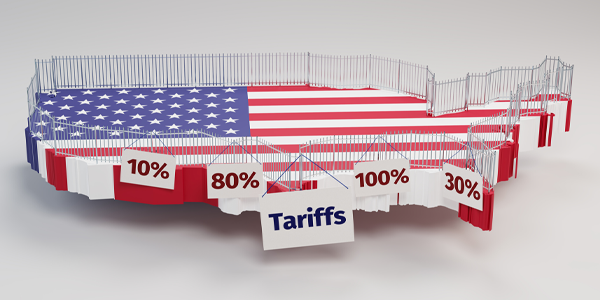
On February 21, 2026, President Donald Trump announced he is raising a new global tariff to 15%, effective immediately.
- Legal Basis: The 15% tariff is being imposed under Section 122 of the Trade Act of 1974, a never-before-used provision that allows the president to address "large and serious balance-of-payment deficits".
- Duration: This authority is temporary, lasting for a maximum of 150 days unless Congress authorizes an extension.
- Scope: The tariff applies to nearly all imports from all countries, though specific exemptions include goods from Canada and Mexico (under USMCA), as well as certain pharmaceuticals, electronics, and agricultural products like beef.
- Effective Date: The new global tariff regime is scheduled to take effect at 12:01 a.m. on Tuesday, February 24, 2026.
- Legal Basis: The 15% tariff is being imposed under Section 122 of the Trade Act of 1974, a never-before-used provision that allows the president to address "large and serious balance-of-payment deficits".
- Duration: This authority is temporary, lasting for a maximum of 150 days unless Congress authorizes an extension.
- Scope: The tariff applies to nearly all imports from all countries, though specific exemptions include goods from Canada and Mexico (under USMCA), as well as certain pharmaceuticals, electronics, and agricultural products like beef.
- Effective Date: The new global tariff regime is scheduled to take effect at 12:01 a.m. on Tuesday, February 24, 2026.
Trump says he’ll raise tariffs to 15% after Supreme Court ruling
Donald Trump announced he is raising a new global tariff to 15%, effective immediately.
This decision comes less than 24 hours after he initially proposed a 10% rate in response to a major legal setback from the U.S. Supreme Court.
WASHINGTON (AP) — President Donald Trump said Saturday that he wants a global tariff of 15%, up from 10% he had announced a day earlier after the U.S. Supreme Court struck down many of the far-reaching taxes on imports that he had imposed over the last year.
After the Supreme Court decision, Trump made an unusually personal attack on the justices who ruled against him in a 6-3 vote, including two of those he appointed during his first term, Justices Neil Gorsuch and Amy Coney Barrett. Trump, at a news conference on Friday, said that the situation is “an embarrassment to their families.”
He was still seething Friday night, posting on social media complaining about Gorsuch, Coney Barrett and Chief Justice John Roberts, who ruled with the majority and wrote the majority opinion. On Saturday morning, Trump issued another post declaring that his “new hero” was Justice Brett Kavanaugh, who wrote a 63-page dissent. He also praised Justices Clarence Thomas and Samuel Alito, who were in the minority, and said of the three dissenting justices: “There is no doubt in anyone’s mind that they want to, MAKE AMERICA GREAT AGAIN!”
- He’s already signed an executive order
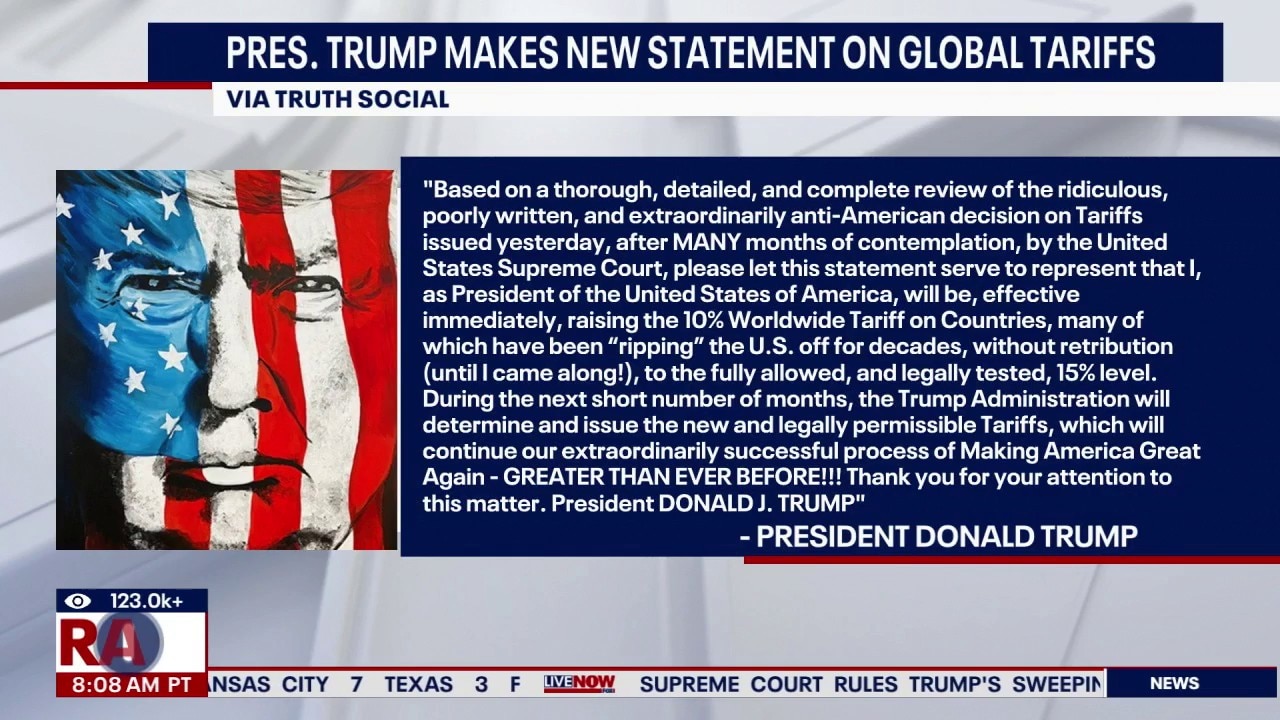
- He wrote on social media that he was making the announcement “based on a thorough, detailed, and complete review of the ridiculous, poorly written, and extraordinarily anti-American decision on Tariffs issued yesterday.”
In addition to the temporary tariffs that Trump wants to set at 15%, the president said Friday that he was also pursuing tariffs through other sections of federal law which require an investigation by the Commerce Department.
He wrote on Saturday that “during the next short number of months, the Trump Administration will determine and issue the new and legally permissible Tariffs, which will continue our extraordinarily successful process of Making America Great Again.”
- The Supreme Court decision did not address what happens to the funds that have already been collected from tariffs.

The Justice Department said in court filings last year that the government would provide refunds if the tariffs were struck down. But following the Supreme Court ruling, which provided no guidance on the issue, Trump warned that importers and the government “will end up being in court for the next five years” haggling over it.
That’s hardly the only legal question. On Saturday, Neal Katyal, the attorney who helped win the Supreme Court challenge, questioned the validity of Trump’s new 15 percent global rate, saying any “sweeping tariffs” should first be approved by Congress.


- Refund Battles: The ruling has triggered a massive legal dispute over approximately $142 billion to $170 billion in duties collected in 2025 that companies are now seeking to have refunded.
- Market Impact: Analysts from The Budget Lab at Yale suggest these tariffs could increase consumer prices by 0.6% in the short run and lead to a 0.3 percentage point rise in unemployment by the end of 2026.
- International Reaction: Global trade partners have expressed concern, with German Chancellor Friedrich Merz describing the "constant uncertainty" as "poison" for the European and U.S. economies.


No comments:
Post a Comment