Friday, June 16, 2017

The Final Global Open Data Index 2016/17

The Final Global Open Data Index 2016/17 is now published
The updated Global Open Data Index has been published today, along with our report on the state of Open Data this year.


The report includes a broad overview of the problems we found around data publication and how we can improve government open data.
You can download the full report here.
Updated: Tracking the state of open government data > https://index.okfn.org/ 

Five findings from this year’s GODI

  • GODI highlights data gaps. Open data is the final stage of an information production chain, where governments measure and collect data, process and share data internally, and publish this data openly. While being designed to measure open data, the Index also highlights gaps in this production chain.
  • Does a government collect data at all?
  • Why is data not collected? Some governments lack the infrastructure and resources to modernise their information systems; other countries do not have information systems in place at all.
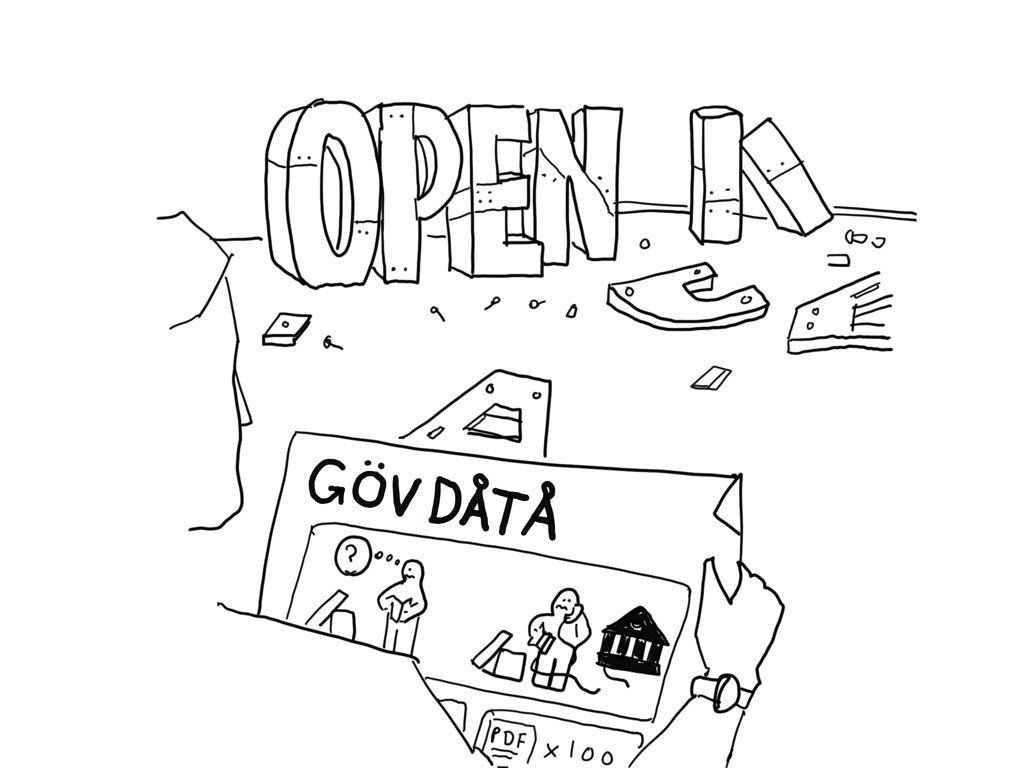
Findabillity
  • Data findability is a major challenge. We have data portals and registries, but government agencies under one national government still publish data in different ways and different locations. Moreover, they have different protocols for license and formats. This has a hazardous impact - we may not find open data, even if it is out there, and therefore can’t use it. Data findability is a prerequisite for open data to fulfill its potential and currently most data is very hard to find.
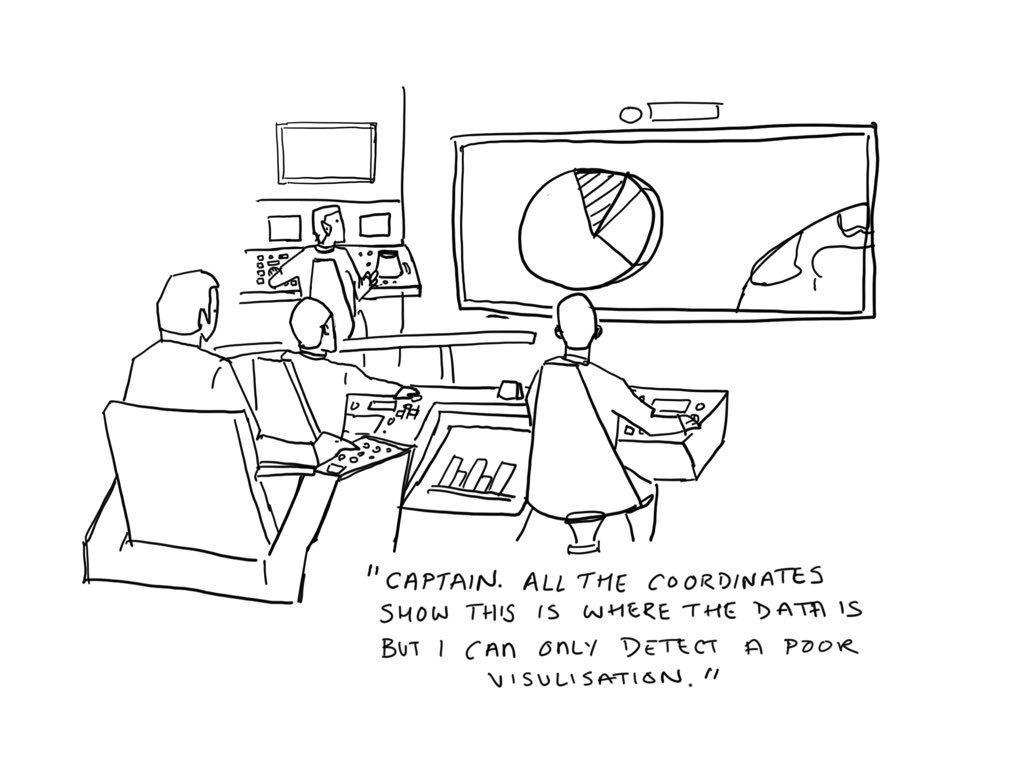
  • A lot of ‘data’ IS online, but the ways in which it is presented are limiting their openness. Governments publish data in many forms, not only as tabular datasets but also visualisations, maps, graphs and texts. While this is a good effort to make data relatable, it sometimes makes the data very hard or even impossible for reuse. It is crucial for governments to revise how they produce and provide data that is in good quality for reuse in its raw form. For that, we need to be aware what is best raw data required which varies from data category to category.
Findabillity
  • Open licensing is a problem, and we cannot assess public domain status. Each year we find ourselves more confused about open data licences. On the one hand, more governments implement their unique open data license versions. Some of them are compliant with the Open Definition, but most are not officially acknowledged. On the other hand, some governments do not provide open licenses, but terms of use, that may leave users in the dark about the actual possibilities to reuse data. There is a need to draw more attention to data licenses and make sure data producers understand how to license data better.
  • GODI is a platform to spark debate about open data. Ultimately, the Index is only relevant and actionable if it resonates with civil society and government. Thus, the Index seeks to enable meaningful dialogue about government data publication. Which regulations and laws prevent data from being published? Which government procedures block open data release? Why does individual data matter for different publics? And how to align the priorities of the public with those of government? More than being a poor ranking, the Index is a unique platform for citizens and governments to get into dialogue with one another.                         


Dangerous Zone-Out: High Ozone Air Pollution Exceeding Federal Standards

The Arizona Department of Environmental Quality (ADEQ) is extending the ozone High Pollution Advisory (HPA) for Maricopa County, effective through Monday, June 19, 2017. This HPA is due to ozone levels expected to accumulate enough to exceed the federal health standard for ozone.
People most affected by ozone include children, senior citizens, people who work or exercise outdoors and people with pre-existing respiratory disease. Ozone can irritate the respiratory system, aggravate asthma and reduce the immune system’s ability to fight off respiratory infections. Ozone-related health problems include shortness of breath, coughing, wheezing, headaches, nausea, and throat and lung irritation.
BACKGROUND
  • High Pollution Advisory (HPA): Notifies the public that the level of an air pollutant is expected to exceed the federal health standard
  • Health Watch: Notifies the public that the level of an air pollutant is expected to approach the federal health standard
  • Ozone: Ground level ozone is formed by a chemical reaction among sunlight, nitrogen oxides (NOx) and VOCs
CONTACTS
The Arizona Department of Environmental Quality (ADEQ) provides a daily forecast for air quality and issues HPAs or Health Watches when these conditions exist. Please visit azdeq.gov/environ/air/ozone/ensemble.pdf for tomorrow’s forecast or SUBSCRIBE to receive air quality forecasts via email and/or text message.
CONTACT: Caroline Oppleman – (602) 771-2215 desk/(602) 540-8072 cell 
CONTACT: Bob Huhn – (602) 506-6713 desk/(602) 526-7307 cell
The Maricopa County Air Quality Department (MCAQD) is a regulatory agency whose goal ?????? is to ensure federal clean air standards are achieved and maintained ????????  for the residents and visitors of Maricopa County. The department is governed by the Maricopa County Board of Supervisors and follows air quality standards set forth by the federal Clean Air Act.
 

Jonathan Pie Down-Under In Oz > The Weekly


Published on Jun 16, 2017
Views: 17,792
Duration: 4:19
Jonathan Pie give his take on the UK General Election on The Weekly, for ABC Australia

Fourth Annual "Building a Competitive U.S.-Mexico Border" Conference pt1

Thank you, Marco Lopez for bringing this important event to attention.
Economics and Globalization Fourth Annual "Building a Competitive U.S.-Mexico Border" Conference
 - See more at: https://www.wilsoncenter.org/event/fourth-annual-building-competitive-us-mexico-border-conference#sthash.2toJlSYD.dpuf
Webcast available > Wilson Center
The Wilson Center's Mexico Institute and the Border Trade Alliance were pleased to host our fourth annual high-level "Building a Competitive U.S.-Mexico Border" conference, which focused on improving border management in order to strengthen the competitiveness of both the United States and Mexico. Specific emphasis was put on a cooperative bilateral framework, border and transportation infrastructure, binational economic development, and the need for efforts that simultaneously support security and efficiency in border management. - See more at: https://www.wilsoncenter.org/event/fourth-annual-building-competitive-us-mexico-border-conference#sthash.2toJlSYD.dpuf

From Wilson Center website:

Agenda

 8:00-8:30 Registration and Coffee
8:30-8:35 Welcome Remarks
Christopher Wilson, 
Deputy Director, Mexico Institute, Wilson Center

8:35-9:50 At the Intersection of Local and National Politics: Creating Border Policy in a Complex Political Environment
Congressman Henry Cuellar (TX- 28th)

Governor Doug Ducey, Governor of the State of Arizona
Christopher Wilson, Deputy Director, Mexico Institute, Wilson Center
Russell Jones, Chair, Border Trade Alliance
Moderator: Duncan Wood, Director, Mexico Institute, Wilson Center
9:50-10:05 U.S.-Mexico Collaboration in Border Management
Amb. Gerónimo Gutiérrez, 
Ambassador of Mexico to the United States

Introduction: Christopher Wilson, Deputy Director, Mexico Institute
10:05-11:00 Bilateral Cooperation for Security, Safety, and Efficiency at the Border
Randi Hutchinson, 
Chief Counsel, Federal Motor Carrier Safety Administration

David Aguilar, Principal, GSIS, Former Chief, U.S. Border Patrol
José Martin García, Representative of the Mexican Finance Ministry and Customs Administration at the Mexican Embassy in Washington, DC
Moderator: E. Anthony Wayne, Fellow and Board Member, Mexico Institute, Wilson Center and Former U.S. Ambassador to Mexico
11:00-11:15 Networking Coffee Break
11:15-12:00 The Dual Mission: Safeguarding America's Borders While Enhancing Global Competitiveness
Commissioner Kevin McAleenan (Acting), 
U.S. Customs and Border Protection

Introduction: Christopher Wilson, Deputy Director, Mexico Institute
12:00-1:30 Lunch
Cities and States Working Across the Border

Welcome: Duncan Wood, Director, Mexico Institute, Wilson Center
Opening Remarks: Kevin Faulconer, Mayor of San Diego
Juan Manuel Gastélum, Mayor (Presidente Municipal) of Tijuana

Lunch Keynote: Strengthening the Arizona-Mexico Relationship
Governor Doug Ducey, 
Governor of the State of Arizona

Moderator: Amb. Jim Jones, Chairman, ManattJones Global Strategies, and former U.S. Ambassador to Mexico
1:40-2:45 Connecting our Economies and Communities: Building Border Infrastructure and Managing Cross-Border Transporation
Patrick Ottensmeyer, 
President and CEO, The Kansas City Southern Railway Company

Derek Leathers, President and CEO, Werner Enterprises
Hillary Quam, Border Coordinator, U.S. Department of State
Moderator: Alan Bersin, Global Fellow, Mexico Institute, Wilson Center and former Commissioner, U.S. Customs and Border Protection
2:45-3:45 Cross-Border Cooperation for Development: Megaregions, Clusters, and Binational Economic Development
Gabriel Gonzalez Konig 
(COLEF) and Melissa Floca (UCSD), Calibaja Binational Supply Chain Mapping

Carlos Marin, CEO, Ambiotec Group and Board Member, United Brownsville
Barrett Haga, Senior Administrator for Economic Engagement, Economic Development Administration, U.S. Department of Commerce
Moderator: Paola Avíla, Vice President, International Business Affairs, San Diego Regional Chamber of Commerce
3:45-4:00 Closing Remarks
Britton Clarke, President, Border Trade Alliance
Christopher Wilson, Deputy Director, Mexico Institute, Wilson Center
 

Key Quotes

Congressman Henry Cuellar
“When we see Russia as a friend and Mexico as an enemy, we know that the world has been turned upside down, literally. If you think about it, there are many countries out there in the world that are not as lucky as the United States to have a friend to the North and a friend to the South.”
“Some people feel that Mexico’s not doing anything for our security… If you look at the visa system that they have, it’s set up to help the U.S. in so many ways. Imagine if one day Mexico woke up and said, ‘You know, we’re going to start letting all the North Koreans come into Acapulco or all the Iranians into Cancun.’”
Governor Doug Ducey
“Trade is not a problem to solve; it’s an issue to focus on and expand.”
“I will say that we couldn’t get that audience [and attention to the border] with the previous administration. Our border counties were ignored and neglected and that caused real damage. So I’m very hopeful for what’s possible with this relationship.”
Duncan Wood
“The volatility [and] the turbulence of the first six months of this year have had a silver lining, which is that – probably better than anything we’ve done in our existence – they have shown the importance of Mexico to the United States, of the bilateral relationship.”
“Ultimately, every state in the United States is a border state, because every state depends on what happens at the border.”
“In a very short period of time, Mexico has become not only a friend and a partner, but also an ally on the security front.”
Russell Jones
“Regardless of the negotiating style of our president… it wasn’t too long ago that NAFTA – and we’re talking in the last couple of years – NAFTA was a bad word… That’s why we’d set our hopes on the TPP and fixing NAFTA through the TPP, because then we could kind of do it clandestinely and not have to talk about it.”
“[NAFTA] has been an incredibly valuable document, but it’s not as flexible and nimble as it should be.”
Christopher Wilson
“There may be one or two other relationships around the world that are as important or more important in broad foreign policy terms, but in terms of the way that people in their day-to-day lives are impacted by another country and a relationship with another country, there’s no country in the world that impacts us on a day-to-day basis as much as Mexico.”
“There are absolutely people… who’ve lost out due to trade, due to globalization, due to technological changes that are under way. We need to be aware of that and not just gloss over that. We need to understand that these are real people and real communities that are hurting and we need to find real solutions for them.”
Ambassador Geronimo Gutierrez
“Border modernization is really a way to kill two birds with one stone. It basically allows us to boost and improve trade and also to address security.”
“The bilateral relationship as a whole is often seen through the lens of what happens at the border – and what happens at the U.S.-Mexico border is also frequently informing the world about the U.S.-Mexico relationship.”
On the Trump administration’s border wall proposal: “We have agreed to disagree. We are in the midst of a learning curve, the new administration here and the Mexican government.” 
David Aguilar
“The border is not international [and] the border is not domestic. It is ‘intermestic.’ There is that co-relation that we’ve been very good at co-creating over these years… We need to expand that. How do we go from ‘intermestic’ to more interdependency of not only our border communities, but our states?”
“There are walls that need to be built, but there are walls that need to be built in a very calculated fashion. There are still some areas where we need to build some infrastructure. Any border patrol agent will tell you that. Any law enforcement agent, regardless of what side of the wall they reside on, will tell you that, yes, there is need for infrastructure. Do we need 2,200 miles, 50-foot walls, solar-powered or otherwise? The answer is no. We need to do it smartly.”
Randi Hutchinson
“When I talk about my job, I tell people that I work for the agency that keeps America’s economy running. And I do, because, as you know, the vast majority of goods and services that are shipped across this country go by trucks.”
“We’re working together to build a safe and efficient highway network that spans North America. We all share a common interest in making sure that freight moves seamlessly and safely to help power our modern economies.”
Jose Martin Garcia
“Forty-one percent of Mexican exports to the U.S. are CTPAT-AEO-certified. Just to put things in perspective, 41% of Mexican exports to the U.S. accounts for more than what the U.S. imports from Germany, more than what the U.S. imports from the U.K., France, and Spain, combined."
Kevin McAleenan
“While that vast majority of all crossings remain lawful and beneficial, we do face dedicated transnational criminal organizations that are seeking to exploit the flow of commerce, but also cross between our ports of entry on our shared, almost 2000-mile, border.”
“I know that, publicly, there’s a lot of concern that the relationship with Mexico is strained. From my experience, from the cabinet level down, we are working as close as ever and have a tremendous opportunity ahead. And part of that [appearance of strain] is driven by the political calendar; our partners in Mexico are getting ready for a presidential election next year and in the U.S., we’re in a transition.”
“Instead of looking across our shared border and pointing at each other to do more, we are now looking south together and talking about joint planning and joint action.”
Mayor Kevin Faulconer
“This is a relationship that we are so very, very proud of, between San Diego and Tijuana. And I think that those of you who have heard us speak before know that we don’t really talk in terms of two cities; we talk in terms of one region.”
“Our department directors get together on a monthly basis to talk about key issues of concern, whether that’s public safety, whether that’s environment, whether that’s, of course, business. And we are united on growing good-quality jobs on both sides of the border. And it’s working.”
Mayor Juan Manuel Gastelum
“We are here together in D.C. because we want to highlight the importance of our binational economy and our community, especially at this critical time… It will [involve] reviewing the renegotiation of NAFTA to benefit the two countries… We can do it…Whatever is going to be renegotiated can be done.”
“Together, Tijuana [and] San Diego have brought good jobs to Mexico and the United States. Together, we have made our cities safer... And together, we have shown why our region is [a] successful example, that building bridges [of] understanding is beneficial for our communities.”
Governor Doug Ducey
“There is no shortage of opportunities around economic growth and development. And we’ve had some successes along the way, too, and real, tangible results and victories that have been able to communicate to the people of Arizona why this relationship is important.”
“We all know the difference between a growing, vibrant, dynamic economy and an economy that’s barely in the positive territory. Mexico, when we have had that vibrant, growing economy, has been a part of that, and so is North American free trade… These are not partisan issues; these are good policy issues.”
 

  Thanks to Our Partners 

- See more at: https://www.wilsoncenter.org/event/fourth-annual-building-competitive-us-mexico-border-conference#sthash.2toJlSYD.dpuf


Published on Jun 15, 2017
Views: 37
The Wilson Center's Mexico Institute and the Border Trade Alliance are pleased to invite you to our fourth annual high-level "Building a Competitive U.S.-Mexico Border" conference, which will focus on improving border management in order to strengthen the competitiveness of both the United States and Mexico. Specific emphasis will be put on a cooperative bilateral framework, border and transportation infrastructure, binational economic development, and the need for efforts that simultaneously support security and efficiency in border management.

THOU SHALT NOT > The Seven Deadly Sins

For every Holier-than U Hypocrite
Published on Jun 16, 2017
Views: 46,584
The Seven Deadly Sins were a list of psychological flaws first identified by Christianity in the 4th century. Christianity was wise in spotting the errors, but rather ungenerous in explaining why they existed. Given that we are all, in a sense, ‘sinners’, we need to find better explanations for our bad behaviour. If you like our films, take a look at our shop (we ship worldwide): https://goo.gl/00FWLc
Join our mailing list: http://bit.ly/2e0TQNJ
Or visit us in person at our London HQ
https://goo.gl/PImkZb

FURTHER READING

“Christianity has, traditionally, spoken a lot about sinners. In the fourth century, the Church identified ‘seven deadly sins’: failings of character that were to be particularly condemned and avoided by all righteous people. They were...”

You can read more on this and other subjects on our blog, here:
https://goo.gl/TMR7E1

LIVE FROM MESA ARIZONA! Kmart Video Tour | Retail Archaeology

Way-over Prime Time
Streamed live on Jun 14, 2017
Views: 10,080
This footage is from a live video tour of the Kmart in Mesa, AZ conducted on 6/14/2017.

WARNING: Mute the audio from
30:00 - 31:28. Trust Me.

Retail Archaeology Social Media Links:
Twitter: @Ret_Archaeology
Instagram: @Retailarchaeology
Facebook: @RetailArchaeology
Patreon:
https://www.patreon.com/RetailArchaeo...

Check out my retro video game and toy channel!https://www.youtube.com/user/hectorig...

Atlantic Storm Strengthens/Yellowstone Quake/Stocks

This guy is also selling Survival Food Kits - what's with that? ....and he's also been watching the stock market
Published on Jun 16, 2017
Views: 3,030
All Links at Our Website, http://www.BPEarthWatch.Com
2 for 1 Survival Food Kit Sale http://www.mypatriotsupply.com/Four_W...

NYT Columnist Thomas Friedman: “The World Will Push Back” Against Trump ...

    Jan 27, 2026 #amanpourpbs From ICE's violent crackdown in Minneapolis to President ...