Sunday, January 06, 2019

Updates On Opportunity Zones 2019

The hot topic of OZones has been featured multiple times of this blog for months, as faithful readers this site know well.
However, there's always more information to put in front of your eyes all the time.
Highlighted today are two reports from 03 January 2019, backed up with inserts of streaming vids [Trump signing the Opportunities & Jobs Act on December 12, 2017] + an audio to save you time on what is a lengthy and detailed post today that also features links to what the City of Mesa has published online with an excellent aerial Map.
Tomorrow's Mesa City Council Study Session at 5:15 pm starts off with a look at the City's Annual Financial Review for the fiscal years ending June 30, 2018.
The regular meeting will be presenting and discussing various ordinances and resolutions about more proposed real estate developments downtown that are within the OZone. 
Where Opportunity Zones stand, heading into 2019
The stage is set for Sean Parker’s pet project—now it’s time for the money to start rolling in
"When Trump’s tax overhaul became law a year ago, the real estate industry’s attention was focused on caps to the mortgage-interest deduction, plus state and local tax deductions—which the industry predicted would put the housing market in peril. (It didn’t.)
After the dust settled in the spring, the industry realized a hidden gem had been tucked away in the law: Opportunity Zones.
The brainchild of Silicon Valley financier Sean Parker,
Opportunity Zones allow investors to obtain massive tax advantages if they invest capital gains—money made on the sale of assets like a home, a business, or a piece of art—into “distressed” areas of the country where the post-financial crisis recovery passed by.
While the provision theoretically allows investors to put money into any type of project so long as it’s in a designated zone—a business, infrastructure, whatever—most observers believe it is especially attractive to real estate developers, partly because the largest tax benefits go to those who stay invested in the zone for at least 10 years.
Advocates for the program believe this could be a game-changing community development tool.
Given the horizon for these investments is quite far off, where do things currently stand?
While the Treasury guidance was mostly inside baseball for financial professionals, it seemed to open the flood gates for activity around Opportunity Zones, as firms announced their intention to jump into the space en masse. The firms interested tend to be private equity firms, which have experience in raising money for long-term financial projects—many of which already specialize in real estate development.
If the pitches arriving in the reporter's inbox are any indication, firms have been awfully busy making slide decks to pitch their Opportunity Zone projects to investors. Some ahead-of-the-curve outfits have already raised money, for example, private equity firm Virtua Partners, which is close to breaking ground on three Opportunity Zone projects in Arizona.
________________________________________________________________________
One Opportunity Zone Fund Breaks Out Investor Participation
Penciling In Affordable
For many institutional funds ESG may translate into affordable housing.
One investment Virtua has made via one of its Opportunity Zone funds suggests that such investment opportunities could increase under the program.
Uldricks tells of an apartment building it is developing in Tempe, AZ, which is next to Arizona State University. There is an allocation to affordable housing within the apartment, which both Tempe and the university encouraged.
As it happened, Virtua already had this transaction in its pipeline but when it became clear that it qualified under the Opportunity Zone guidelines, “it became much quicker for us to raise the capital for that transaction,” Uldricks says. Also, he adds, without the Opportunity Zone qualification it is debatable whether the company would have been able to pencil in the affordable component.

The floodgates opened when the US Treasury Department released long-awaited proposed rules regarding the Opportunity Zones established under last year’s tax overhaul earlier this year.
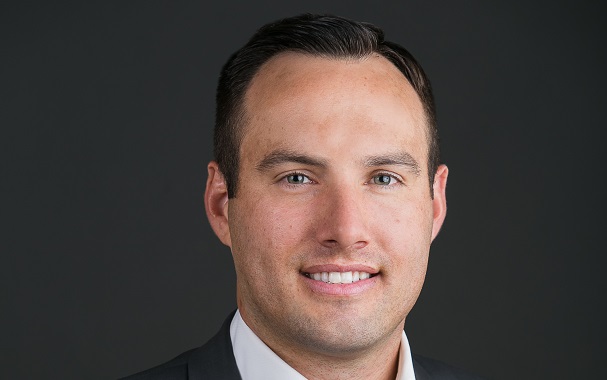
“Investor interest has been, we’ll call it insatiable,” says Derek Uldricks, president of Virtua Capital Management, which launched one of the first Opportunity Zone funds earlier this year, even before the proposed clarifications were released . . .

Others were taking a wait-and-see approach but are now getting organized, such as Anthony Scaramucci, the short-lived communications chief for President Trump. His SkyBridge Capital firm hopes to raise money to invest in hotels in Oakland, industrial real estate, and a mixed-use multifamily/retail development in Washington, D.C.
Jared Kushner, the president’s son-in-law, has also been linked to Opportunity Zones through a private equity firm he holds a passive stake in called Cadre, although he holds no operational role at the company.
. . . Which brings us the primary criticism of the program.
because these projects will take years to build and more years for their impact to play out, we won’t know how Opportunity Zones affected people one way or the other for potentially another decade. Right now, investors and developers are still just getting organized.
________________________________________________________________________
From Bloomberg News 
Will ‘Opportunity Zones’ Help the Rich, the Poor or Both?
2. Why so many?
Economic growth in the U.S. has been uneven. A handful of cities are booming, while much of the country -- from rural counties to aging Rust Belt towns -- get left behind. Giving investors an incentive to plow some of their $6 trillion in unrealized capital gains into these distressed communities could help jump-start growth, create jobs and lift incomes. Nearly all of the opportunity zones have poverty rates north of 20 percent or family incomes that are lower than 80 percent of the state or metro median. 
3. What’s the problem?
There’s a debate over whether investors will pile into places that were already seeing development. An analysis by the Urban Institute found that most of the zones are in fact hurting -- fewer than 4 percent had experienced an influx of wealthier, college-educated people that would signal gentrification . . .
> CRITICS also note that there’s no requirement that investments in opportunity zones benefit the community.
4. Whose idea is this?
It was hatched in a 2015 white paper by Jared Bernstein, who was an economic adviser to Joe Biden when he was vice president, and Kevin Hassett, who is now chairman of the Council of Economic Advisers for U.S. President Donald Trump. They wrote it for the Economic Innovation Group, a think tank co-founded by Sean Parker, the Napster creator and first president of Facebook Inc. A group of Republicans and Democrats introduced bills in the House and Senate to create opportunity zones in 2016, but the measures never reached a floor vote. One of the sponsors, Senator Tim Scott, a Republican from South Carolina, successfully pushed for a modified version that was tucked into the tax overhaul.
5. What are the tax breaks?
How Profits Grow in an Opportunity Zone
If a $100,000 capital gain is invested in an Opportunity Zone project, the amount subject to tax falls if the owner waits before selling

Source: Congressional Research Service
Assumes project value grows at 7 percent per year
8. What will the zones cost?
When the bill was being considered, the Joint Committee on Taxation told Congress that the opportunity zone tax breaks would cost about $1.6 billion through 2027. But the figure would rise after that, as developers claim capital-gains exemptions on the sale of projects in opportunity zones held for more than a decade. Since the program is open-ended, the final tally will ultimately depend on how much money investors plow into opportunity zones and the gains that they realize.
The Reference Shelf
  • FAQ from the IRS on opportunity zones and a report from the Congressional Research Service.
  • Federal Reserve Bank of St. Louis’s Opportunity Zone Explorer.
  • A Pew report on how investment may bypass rural communities.
  • Bloomberg Businessweek on the potential and peril of opportunity zones.
  • Forbes cover story on how opportunity zones became law.
________________________________________________________________________

Dec 12, 2018 - Uploaded by PBS NewsHour
The Opportunity Zone program promoted by Ivanka Trump and her husband Jared Kushner — both senior ...
________________________________________________________________________
Where to Find Investment Opportunities in 'Opportunity Zones ...
https://www.bloomberg.com/.../where-to-find-investment-opportunities-in-opportunity-z...
Dec 27, 2018
Charles Clinton, EquityMultiple chief executive officer, discusses where the firm is finding opportunity in the

________________________________________________________________________

3 days ago
After the dust settled in the spring, the industry realized a hidden gem had been tucked away in the law ...
________________________________________________________________________________
Opportunity Zones
                    
OppZonePPTphotoForWeb
The Opportunity Zones program is a federal program designed to spur community investment by providing tax benefits to investors. The City of Mesa has 11 census tracts that have been designated Opportunity Zones by the U.S. Department of the Treasury.
The map below highlights these tracts within the city boundaries.
Image result for opportunity zones
Mesa’s designated Opportunity Zones are anchored by four [six] central business districts:
  • Downtown Mesa
  • the Fiesta District
  • the Falcon District
  • the Gateway Area [Gateway Area North and Gateway Area South]
  • the Riverview District [added below]
The Aerial Mesa tool showcases what makes each district an ideal place to locate and grow a business, including the location of Opportunity Zones, Major Employers and Assets, New Development and Investments, and Development Opportunities.
To visit the Aerial Mesa tool and explore Mesa’s Opportunity Zones visit the links below.
__________________________________________________________________________________
DOWNTOWN MESA Link > https://aerialsphere.com/city-of-mesa/downtown-mesa/

Source:
https://www.selectmesa.com/business-environment/incentives-programs/opportunity-zones

OPPORTUNITY ZONES:
A NEW INCENTIVE FOR INVESTING IN LOW-INCOME COMMUNITIES
________________________________________________________________________________

Saturday, January 05, 2019

A Quick Hand-Off: John Giles The Disruptor > Thought Leader-of-the-Year 2018

A Lifetime Achievement Award from the East Valley Partnership to honor one of their own.
Your MesaZona blogger just cannot let go of this as one of the outstanding photo opps from the year gone-bye.
On 06 December 2018 the EVP at its annual Thought Forum honored Mayor John Giles with the Dwight Patterson Lifetime Achievement Award/
He is truly one of a kind,” Barney said of Giles.
"I am the luckiest guy that any of you guys know,” Giles said.

“I get to work for Mesa, Arizona, which is such a wonderful opportunity.
It’s a group of talented, motivated, dedicated people that make me look really, really good and as of a result of that I get to come and pick up awards.
So, I can’t thank them enough for making this possible.”


EQUAL TIME: Roger Stone Takes Your Calls

2-Way Dialog with Alex Jones . . . did U forget to call-in? What does he call Mitt Romney? Roger Stone speaks for all red-blooded Americans, and needs money contributions for his legal defense fund.
Published on Jan 4, 2019
Views-to-date: 50
Roger Stone has been in the crosshairs of Robert Mueller since the beginning of the Russia investigation. That has not slowed him down from exposing the globalist agenda and now he takes your calls.

Don’t forget the fungi | Rachel Warmington | TEDxTruro

What do you know?
Published on Jan 5, 2019
Views: 1,113
Plant pathologist Rachel Warmington argues that we should not overlook fungi, explaining the many ways they can improve our lives, from life saving drugs to getting rid of plastics.
Rachel is the plant pathologist at Cornwall’s award-winning Eden Project, where she is responsible for detection and control of plant diseases, as well as keeping an eye on soil health. She completed a PhD at Warwick University, working on a fungal pathogen that affects more than 400 plant species, for which she was awarded the Marsh Horticultural Science Award in 2013.

This talk was given at a TEDx event using the TED conference format but independently organized by a local community. Learn more at https://www.ted.com/tedx

9/11 Hackers: Much More To-Know

More to know about the truth and questions that go un-answered after 17 years. Insurance issues and pay-outs.
One fact you might not know: Silverstein Properties signed the lease on the 2 The World Trade Centers just the day before . . .  
Published on Jan 4, 2019
Views-to-date: 44,292
Manila Chan reports on the hacker group asking for $2 million in bitcoin for a full leak of so-called 9/11 papers. The group ‘Dark Overlords’ has been responsible for previous hacks. Manila Chan speaks with Investigative Journalist Ben Swann about this group, whether or not they are credible and how much the leaks would intrigue the public.

Find RT America in your area:
http://rt.com/where-to-watch/
Or watch us online: http://rt.com/on-air/rt-america-air/

Like us on Facebook http://www.facebook.com/RTAmerica
Follow us on Twitter http://twitter.com/RT_America
kkk


The day before:
https://youtu.be/Ved-8TPaCCM

Are Gated Communities Bad For Cities?

All about exclusivity if you can afford it and local government encourages them:
For instance, here in Mesa we have two - Eastmark and Cadence at Gateway
[both "Community Facilities Districts"]
Published on: 03 January 2019
Views: 43,335
Please note there are over 590 comments reacting to this upload of YouTube in just one day

Sources:
Thumbnail photo: Wikipedia user Parihav
A. Sanchez, Thomas, Robert Lang, and Down Dhavale. 2005. “Security versus status? A first look at the census's gated community data.” Journal of Planning Education and Research.
https://journals.sagepub.com/doi/abs/...

B. Ben-Joseph, Eran. 2005. “The Code of the City: Standards and the Hidden Language of Place Making.”

C. Goodyear, Sarah. 2013. “The Threat of Gated Communities.” CityLab.
https://www.citylab.com/equity/2013/0...

D. Low, Setha. 2001. “The Edge and the Center: Gate Communities and the Discourse on Urban Fear.” American Anthropologist. https://www.jstor.org/stable/pdf/6839...

E. Goodyear, Sarah. 2013. “The Threat of Gated Communities.” CityLab. https://www.citylab.com/equity/2013/0...

World’s longest-running eVTOL aircraft meeting to be held in Mesa, Jan 29-31, 2019

The Sheraton Mesa Hotel at Wrigleyville West [@ Riverview] will be hosting the World’s longest-running eVTOL aircraft meeting where more than 100 technical experts will speak at the Vertical Flight Society’s (VFS) 6th Annual Electric Vertical Takeoff and Landing (eVTOL) Aircraft Symposium and 8th Biennial Autonomous VTOL Technical Meeting in Mesa, Arizona, Jan. 29 to 31, 2019.
_________________________________________________________________________
References:
1. https://vtol.org/events
2. https://www.verticalmag.com/press-releases
_________________________________________________________________________
The conference features technical paper presentation related to autonomous VTOL aircraft, while the Symposium will feature invited presentations, panel sessions and discussions on electric and hybrid electric VTOL aircraft, with a focus on urban air mobility.
Information is available at www.vtol.org/autonomous.
The Vertical Flight Society is holding the 6th Annual eVTOL Symposium concurrently with its 8th Biennial Autonomous VTOL Technical Meeting in Mesa, which will feature more than 40 technical papers on eVTOL technologies, unmanned VTOL aircraft (aka “drones”), and various levels of autonomy for manned/unmanned civil/military helicopters and eVTOL aircraft.
In addition, VFS is hosting two new eVTOL short courses in conjunction with the event, taught by experts in their fields: 
“Electric VTOL Design”
“Electric VTOL Aeromechanics & Acoustic Prediction Software.”
The Society has led an extensive effort to educate and inform the community of the promise and challenges of eVTOL and has 50 hours of video lectures and presentations available online.
Overview:
6th Annual eVTOL Symposium
Electric and hybrid-electric propulsion is an exciting new approach to vertical flight aircraft design and the 6th Annual eVTOL Symposium is a unique opportunity for designers, developers, innovators, investors, regulators, infrastructure providers, end users, media and key influencers to share knowledge and work towards realizing the eVTOL revolution. This is also a tremendous networking opportunity for those new to the VTOL industry.
The 6th Annual eVTOL Symposium will feature 60 speakers over 10 sessions covering all aspects of transformative electric and hybrid-electric VTOL aircraft, including: 
  • Progress in Electric VTOL
  • Challenges in Electric VTOL
  • System Safety
  • Standards/Regulations
  • Vehicle Technologies; Missions and Applications
  • eVTOL Opportunities
  • Infrastructure/Passenger Experience
  • Autonomy and Air Operations
  • eVTOL for Good.
Recent urban air mobility market reports commissioned by NASA and analytic companies (e.g. Morgan Stanley and Roland Berger) suggest that up to 100,000 such eVTOL aircraft could be flying commercially in 20 to 30 years time as part of an emerging $500 billion to $2 trillion eVTOL market. 
The Vertical Flight Society has been leading efforts in electric VTOL with workshops starting in 2014, and the Electric VTOL News website, featuring the World eVTOL Aircraft Directory .
 
8th Biennial Autonomous VTOL Technical Meeting
This biennial meeting is an excellent opportunity to learn about and discuss with academic, industry, and military engineers from around the world the latest advancements in manned/unmanned, electric/hybrid/turboshaft-powered, and civil/military autonomous VTOL aircraft technology.
The 8th Biennial Autonomous VTOL Technical Meetingwill feature almost 40 speakers over five sessions covering UAV Design, Analysis and Testing, UAV Aerodynamics and Noise, UAV Controls, Flight Dynamics and Navigation, and eVTOL and VTOL Design.
The 21st century has seen a continued emphasis on Unmanned Air Systems (UAS) and greater autonomy and automation for both military and civilian applications.
Unmanned aircraft are in varying stages of development all over the world, and continue to expand into the civil and military sectors for a variety of uses. Autonomy is being used to unmanned versions of manned helicopters for dull, dirty and dangerous military cargo missions. In addition, the operator-interface and human factors can be one of the most significant contributions to UAS safety and successful operations. Correspondingly, technologies and regulation are being developed to safely operate UAS, and integrate them into commercial and military airspace.
Meanwhile, automation and various levels of autonomy are being used in modern civil helicopter cockpits, while the military’s Future Vertical Lift (FVL) aircraft will need to be optionally-manned or optimally-manned.
Autonomy is also a key enabler for new classes of vehicles for civil missions — such as personal air vehicles, urban air mobility and air taxi missions — using electric or hybrid-electric propulsion (eVTOL).
_________________________________________________________________________
DETAILS:
Invited Presentations (Subject to Change)
Banquet Keynote: "Autonomy at Bell," Michael Thacker, Executive VP for Technology & Innovation, Bell
Plenary Presentations: Needs for Future Autonomous VTOL Aircraft [Tues. Jan. 29 - 8:00 AM to 12:00 noon]
Moderator: Dr. Ram JanakiRam, Boeing
  • “Autonomy for Next Generation VTOL Systems,” Dr. Bill Lewis, Aviation Development Director, US Army
  • “The Electric VTOL Revolution,” Mike Hirschberg, Vertical Flight Society
  • Mark Jordan, Boeing Autonomous Systems
  • “Army VTOL UAS Development Efforts,” LTC Mike Osmon, US Army, Aviation Development Directorate
  • “Agility, Cyber and Emerging Technologies for Naval UAS,” Dr. Robert Ernst, NAVAIR PMA-266 
  • "NASA Research Supporting Vertical Flight and UAM," Dr. Colin Theodore, NASA Ames
  • "Needs for the Uber Elevate Ecosystem," Mark Moore, Uber
eVTOL Session 1: Progress in Electric VTOL [Tues. Jan. 29 - 1:30 to 3:30 PM]
Moderator: Mike Hirschberg, Vertical Flight Society
  • Bob Labelle, CEO, XTI Aircraft
  • Zach Lovering, Vahana Project Executive, A³ by Airbus
  • Ben Tigner, President, Karem Aircraft
  • Troy Rutherford, Senior Director for eVTOL, Boeing NeXt
eVTOL Session 2: Challenges in Electric VTOL [Tues. Jan. 29 - 4:00 to 5:30 PM]
Moderator: Chris Silva, NASA
  • "Observations from Exploration of VTOL Urban Air Mobility Designs," Chris Silva, NASA Ames
  • "UAM Propulsion," Dr. Paula Dempsey, NASA Glenn
  • "Distributed Electric Propulsion (DEP) Failure Modes," Patrick Darmstadt, Boeing
  • "Gust Rejection," Nick Brake, Emperical Systems Aerospace
  • "VTOL Flight Control for Safety," Justin Paines, Chief Test Pilot, Joby Aviation
eVTOL Session 3: System Safety [Wed. Jan. 30 - 8:00 to 10:00 AM]
Moderator: Dan Newman, Boeing
  • Chris van Buiten, VP Innovations, Sikorsky, a Lockheed Martin Company
  • Starr Ginn, Deputy Aeronautics Research Director, NASA Armstrong
  • Kyle Heironimus, Innovation Engineer, Bell
  • Ife Ogunleye, Acting Manager, Policy and Regulation Section, FAA
  • Clément Audard, Rotorcraft Safety Coordinator, European Aviation Safety Agency
eVTOL Session 4: Standards/Regulations [Wed. Jan. 30 - 10:30 AM to 12:00 noon]
Moderator: Tom Gunnarson, Lead of Regulatory Affairs, Kitty Hawk
  • Anna Dietrich, Co-Founder, Terrafugia
  • Ajay Sehgal, Chief Engineer, KBRWyle
  • Dr. Mark D'Angelo, Aerospace Standards Engineer, SAE International
  • Greg Bowles, VP, Global Innovation & Policy, GAMA
  • Andy Supinie, Aircraft Certification Office, FAA
eVTOL Session 5: Vehicle Technologies [Wed. Jan. 30 - 1:30 to 3:30 PM]
Moderator: Johnny Doo, International Vehicle Research
  • “Hybrid Electric Propulsion System Advantages And Disadvantages Compared To All Electric Propulsion And All Traditional Engine-Driven Propulsion,” Eric Blumer, Director of Advanced Technologies, Honeywell
  • "New Lithium Sulfur Battery Development," Bill Andrews, CEO, Nextech Batteries
  • "Fuel Cell Technology," Rick Sickenberger, Teledyne Energy Systems
  • “Development and Demonstration of an Autonomous Optical Launch and Recovery System,” Avinash Gandhe, Scientific Systems Company, Inc.
  • "A Multi-Physics Prognostics Framework for Urban Mobility Operations," Dr. Amine Chigani, CTO & VP Engineering, Sentient Science
eVTOL Session 6: eVTOL Missions and Applications [Wed. Jan. 30 - 4:00 to 5:30 PM]
Moderator: Michael Dudley, NASA Ames
  • Michael Dudley, NASA Ames: eVTOL Roadmapping
  • Candice Carter: Group 2 – Intracity Missions
  • Seren Webber: Group 3 – Intercity Missions
  • Johnny Doo, IVR: Group 4 – Public Service Missions
eVTOL Session 7: eVTOL Opportunities [Thurs. Jan. 31 - 8:00 to 10:00 AM]
Moderator: Mike Hirschberg, Vertical Flight Society
  • “A Review of Current Technology and Research in Urban On-Demand Air Mobility Applications,” Nicholas Polaczyk and Enzo Trombino, Iowa State University
  • "Enabling Urban Air Mobility (UAM) and eVTOL Operations," Steve Jacobson, Autonodyne
  • "A Venture Capitalist's Perspective on eVTOL," Peter Shannon, Levitate Capital
  • Carl Dietrich, Co-Founder/CTO, Terrafugia
  • Francesco Giannini, Aurora Flight Sciences
eVTOL Session 8: Infrastructure/Passenger Experience [Thurs. Jan. 31 - 10:30 AM to 12:00 noon]
Moderator: Michael Dyment, Managing Partner, NEXA Advisors
  • “Global Vertiport Infrastructure Opportunities,” Michael Dyment, NEXA Advisors
  • “Vertiport Integration Constraints,” Rex Alexander, 5 Alpha
  • "Vertiport Design Possibilities," Mark Pilwallis, Gannett Fleming
  • "eVTOL Noise Considerations, Dr. Ken Brentner, Penn State University
  • "Air Vehicle Factors Affecting Occupant Health, Comfort, and Productivity," Bernard D. Adelstein, NASA Ames Research Center
eVTOL Session 9: Autonomy and Air Operations [Thurs. Jan. 31 - 1:00 to 3:00 PM]
Moderator: Bruce Holmes, SmartSky Networks
  • "NASA UTM," Parimal Kopardekar, NASA
  • “Collaborative Autonomy for VTOL Operations,” Bimal Aponso, Associate Division Chief for Aeronautics, Intelligent Systems Division, NASA Ames Research Center
  • Frank Matus, Director, Digital Aviation Market Development – Americas, Thales 
eVTOL Session 10: eVTOL for Good [Thurs. Jan. 31 - 3:30 to 5:30 PM]
Moderator: Johnny Doo, International Vehicle Research
  • "Distributed On-Demand TVF Search & Rescue & Disaster Relief Network," Johnny Doo, IVR
  • "eVTOL for Search & Rescue," Eddie Bennet, The Ripper Group, Australia
  • "eVTOL applications for Fire Fighting," Michael Ralston, Menlo Fire District, California
  • "Traffic Management and Drones/eVTOL for Good," Jessie Mooberry, A³ by Airbus
  • "A Unique eVTOL Concept and Applications," Arnaud Didey, Neoptera

NO CAPTAIN ONBOARD