Monday, January 27, 2020
The lost neighborhood under New York's Central Park
Things we never knew about . . . .
Before Central Park was built, a historically black community was destroyed. Become a Video Lab member! http://bit.ly/video-lab
If you’ve been to New York, you’ve probably visited Central Park. But there’s a part of its story you won't see. It’s a story that goes back to the 1820s, when that part of New York was largely open countryside. Soon it became home to about 1,600 people. Among them was a predominantly black community that bought up affordable plots to build homes, churches and a school. It became known as Seneca Village. And when Irish and German immigrants moved in, it became a rare example at the time of an integrated neighborhood. Everything changed on July 21, 1853. New York took control of the land to create what would become the first major landscaped park in the US -- they called it “The Central Park.” In the Vox series Missing Chapter, Vox Senior Producer Ranjani Chakraborty revisits underreported and often overlooked moments from the past to give context to the present. Join her as she covers the histories that are often left out of our textbooks. Our first season tackles stories of racial injustice, political conflicts, even the hidden history of US medical experimentation. Have an idea for a story that Ranjani should investigate for Missing Chapter? Send it to her via this form! http://bit.ly/2RhjxMy Sign up for the Missing Chapter newsletter to stay up to date with the series: https://vox.com/missing-chapter Explore the full Missing Chapter playlist, including episodes, a creator Q&A, and more! https://www.youtube.com/playlist?list... The Institute for the Exploration of Seneca Village History website: http://projects.mcah.columbia.edu/sen... The exhibit on Seneca Village through the Central Park Conservancy: https://www.centralparknyc.org/progra... Check out the 1856 before and after Central Park plans at the New York Public Library, as well as dozens of other Central Park maps and archives: https://digitalcollections.nypl.org/i... Read the full report on the 2011 Seneca Village excavations: http://s-media.nyc.gov/agencies/lpc/a... Read the New York Times’ coverage of Seneca Village: https://www.nytimes.com/2019/11/28/op...
Before Central Park was built, a historically black community was destroyed. Become a Video Lab member! http://bit.ly/video-lab
If you’ve been to New York, you’ve probably visited Central Park. But there’s a part of its story you won't see. It’s a story that goes back to the 1820s, when that part of New York was largely open countryside. Soon it became home to about 1,600 people. Among them was a predominantly black community that bought up affordable plots to build homes, churches and a school. It became known as Seneca Village. And when Irish and German immigrants moved in, it became a rare example at the time of an integrated neighborhood. Everything changed on July 21, 1853. New York took control of the land to create what would become the first major landscaped park in the US -- they called it “The Central Park.” In the Vox series Missing Chapter, Vox Senior Producer Ranjani Chakraborty revisits underreported and often overlooked moments from the past to give context to the present. Join her as she covers the histories that are often left out of our textbooks. Our first season tackles stories of racial injustice, political conflicts, even the hidden history of US medical experimentation. Have an idea for a story that Ranjani should investigate for Missing Chapter? Send it to her via this form! http://bit.ly/2RhjxMy Sign up for the Missing Chapter newsletter to stay up to date with the series: https://vox.com/missing-chapter Explore the full Missing Chapter playlist, including episodes, a creator Q&A, and more! https://www.youtube.com/playlist?list... The Institute for the Exploration of Seneca Village History website: http://projects.mcah.columbia.edu/sen... The exhibit on Seneca Village through the Central Park Conservancy: https://www.centralparknyc.org/progra... Check out the 1856 before and after Central Park plans at the New York Public Library, as well as dozens of other Central Park maps and archives: https://digitalcollections.nypl.org/i... Read the full report on the 2011 Seneca Village excavations: http://s-media.nyc.gov/agencies/lpc/a... Read the New York Times’ coverage of Seneca Village: https://www.nytimes.com/2019/11/28/op...
WEIRD BUT DANGEROUS, RUSSIAN KAMOV KA-50 AND KA-52 HELICOPTERS #WARTHOGD...
27 Jan 2020 648+ Views
The Kamov Ka-50 "Black Shark" (Russian: Чёрная акула, romanized: Chyornaya akula, English: kitefin shark, NATO reporting name: Hokum A) is a Russian single-seat attack helicopter with the distinctive coaxial rotor system of the Kamov design bureau. It was designed in the 1980s and adopted for service in the Russian army in 1995. It is manufactured by the Progress company in Arsenyev. It is used as a heavily armed scout helicopter. It is the world's first operational helicopter with a rescue ejection system. During the late 1990s, Kamov and Israel Aerospace Industries developed a tandem-seat cockpit version, the Kamov Ka-50-2 "Erdogan" (Russian: Эрдоган, Turkish: Erdoğan), to compete in Turkey's attack helicopter competition. Kamov also designed another two-seat variant, the Kamov Ka-52 "Alligator" (Russian: Аллигатор, NATO reporting name: Hokum B).
Hizzoner John Giles Has Raised $250K To Finance A Run For 2nd Term As Mayor


His campaign committee had $1,482 when the campaign finance reporting period began."
BLOGGER NOTE: Readers of this blog can access and view all the public documents, and required financial disclosure statements and campaign information mesaaz.gov
Office of The City Clerk
__________________________________________________________________________
INSERT FROM AN EARLIER POST ON THIS BLOG
> Details of Giles’s fundraising
This fund-raiser is from 2018 when Giles was in-office, half-way through his first term.
Please Note: Members of the Host Committee
Karen Taylor Robson, Jeff Barney, Lori & Jeff Branford, Craig & David Krumwiede, Amy & Sean Lake, Jordan Rose, Dea McDonald, Shirley & Tony Wall ....
 _________________________________________________________________________
BLOGGER NOTE: Readers of this blog can access and view all the public documents, and required financial disclosure statements and campaign information mesaaz.gov
Office of The City Clerk
__________________________________________________________________________
INSERT FROM AN EARLIER POST ON THIS BLOG
> Details of Giles’s fundraising
This fund-raiser is from 2018 when Giles was in-office, half-way through his first term.
Please Note: Members of the Host Committee
Karen Taylor Robson, Jeff Barney, Lori & Jeff Branford, Craig & David Krumwiede, Amy & Sean Lake, Jordan Rose, Dea McDonald, Shirley & Tony Wall ....

 Developers,
attorneys and
real estate investors dominated the individual donations, which is common although not without criticism in municipal races. Of the more than 60 people who donated between $1,000 and $6,450, the vast majority listed those occupation.


________________________________________________
INSERT
29 May 2019
City of Mesa Sold-Off 132 Acres of Land Long-Promised For A Public Park

It might have been the traditional value-issue of "Promises Made Are Promises Kept" for him. For the City of Mesa it's a wind-fall $21-Million profit to pay-off some major debt . . .

They expected a park made in a promise by the city in the original intent.

_________________________________________________________________________
District 3: Francisco Heredia, who was appointed to the council in 2017 and won election to complete the term in 2018, Jacob Martinez and Christopher Bown
Have a story about Mesa or Gilbert?
Reach the reporter at
Alison.Steinbach@arizonarepublic.com
or at 602-444-4282.
Follow her on Twitter @alisteinbach.
Reach the reporter at
Alison.Steinbach@arizonarepublic.com
or at 602-444-4282.
Follow her on Twitter @alisteinbach.
Cognizant: The American Dream’s Promise of A Better Life ..."If You Work Hard Enough" Is Fracturing
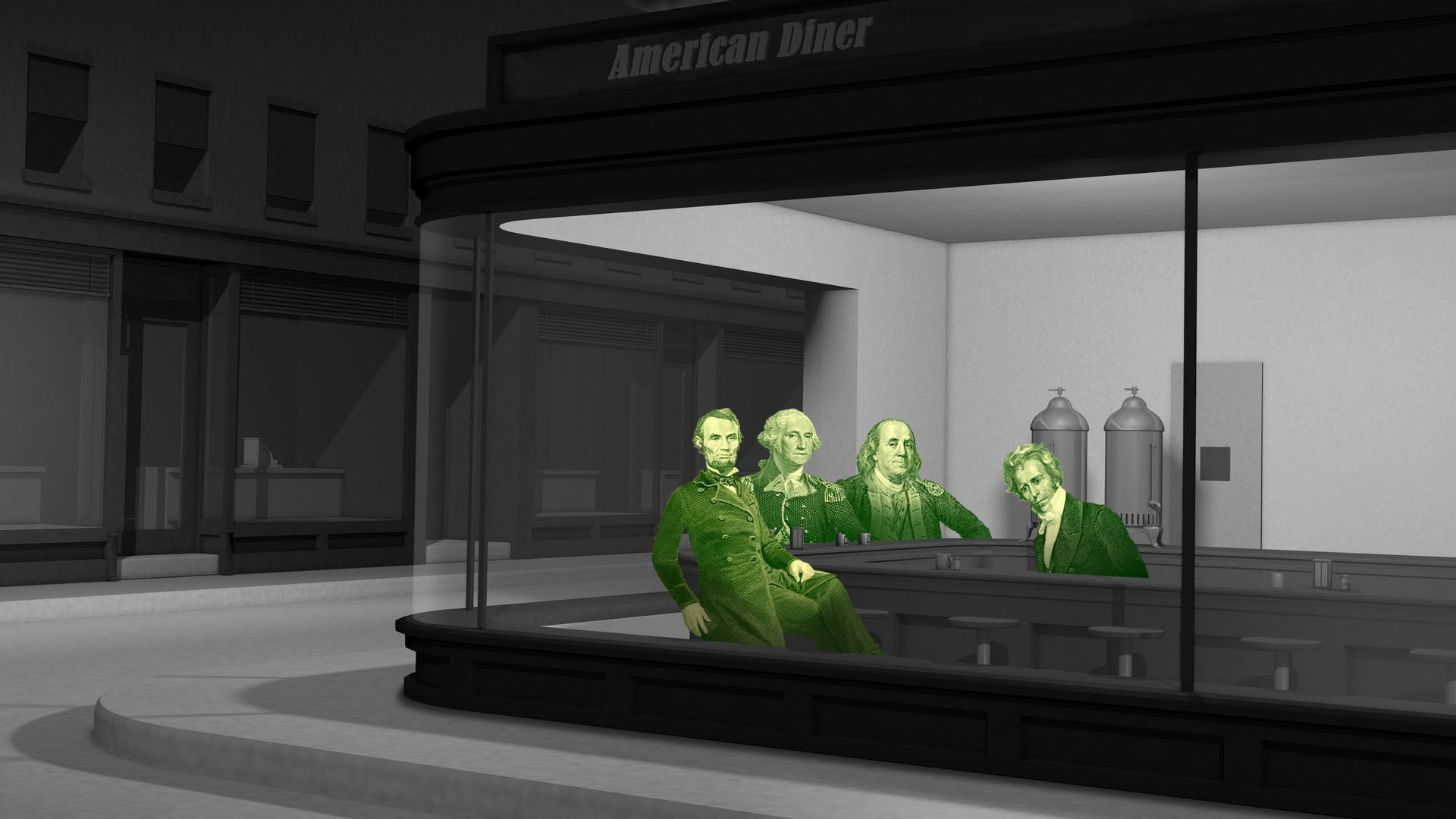

The big picture:
"Socioeconomic mobility in the U.S. is at its most sluggish in history. Not only are fewer Americans living better than their parents, but there’s also a growing number of people doing worse than their parents. . ."
A surge in the "jobs of the future"
Why it matters: "The notion that there's gonna be a jobs apocalypse has been with us for the last decade, but the data shows that's not coming to pass," says Rob Brown, VP of Cognizant's Center for the Future of Work.
Subscribe to:
Posts (Atom)
TOMORROW > Angel Robles
ANGEL ROBLES is k nown for an eclectic set list t hat spans multiple genres, . . He utilizes loop pedals, acoustic guitars, and backing...

-
 Flash News: Ukraine Intercepts Russian Kh-59 Cruise Missile Using US VAMPIRE Air Defense System Mounted on Boat. Ukrainian forces have made ...
 -
A nor’easter is about to hit the Northeast in May. That’s very unusual.

