Saturday, September 26, 2020

Arizona Troll Farm Caught Up In A Social Media Dragnet of Domestic Dis-Information

Not by any Arizona-based independent media  group or center for investigative reporting but by the reliable  

Friday, September 25, 2020

BEA News: Personal Income by State, 2nd Quarter 2020

BEA News: Personal Income by State, 2nd Quarter 2020


The U.S. Bureau of Economic Analysis (BEA) has issued the following news release today:
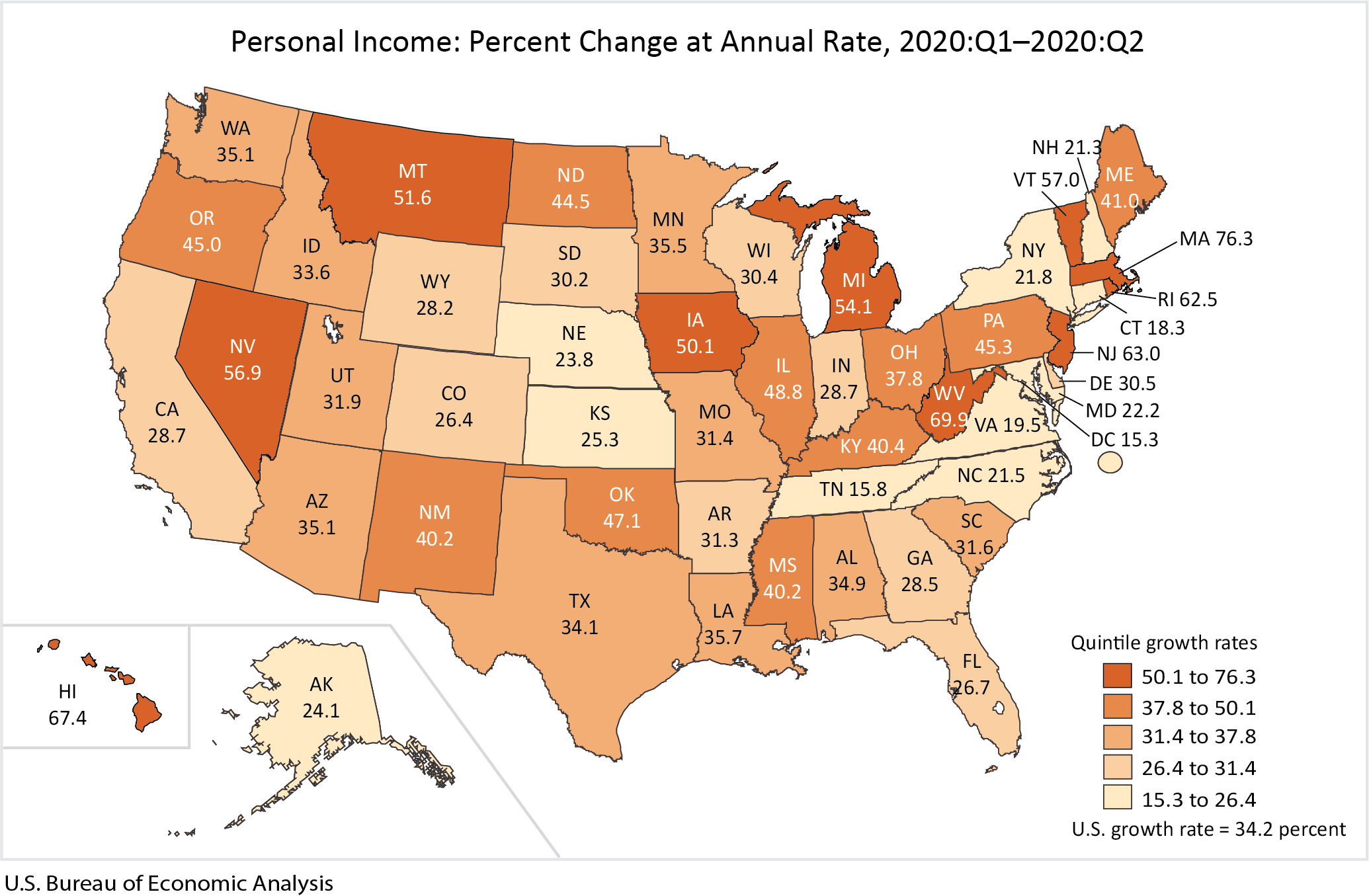
State personal income increased 34.2 percent at an annual rate in the second quarter of 2020, an acceleration from the 4.1 percent increases in the first quarter. Personal income increased in every state and the District of Columbia ranging from 15.3 percent in the District of Columbia to 76.3 percent in Massachusetts.
The full text of the release on BEA's website can be found at: www.bea.gov/news/2020/personal-income-state-2nd-quarter-2020 
___________________________________________________________________________________________

News Release

EMBARGOED FOR RELEASE: 8:30 A.M. EDT, Thursday, September 24, 2020
BEA 20—45

Personal Income by State, 2nd Quarter 2020

State personal income increased 34.2 percent at an annual rate in the second quarter of 2020, an acceleration from the 4.1 percent increases in the first quarter, according to estimates released today by the Bureau of Economic Analysis (table 1). Personal income increased in every state and the District of Columbia ranging from 15.3 percent in the District of Columbia to 76.3 percent in Massachusetts.

 Personal Income: Percent Change at Annual Rate, 2020:Q1-2020-Q2

Increases in personal current transfer receipts more than offset decreases in earnings and in property income (chart 1). The increase in transfer receipts includes new government relief payments provided by the Coronavirus Aid, Relief, and Economic Security (CARES) Act of 2020.
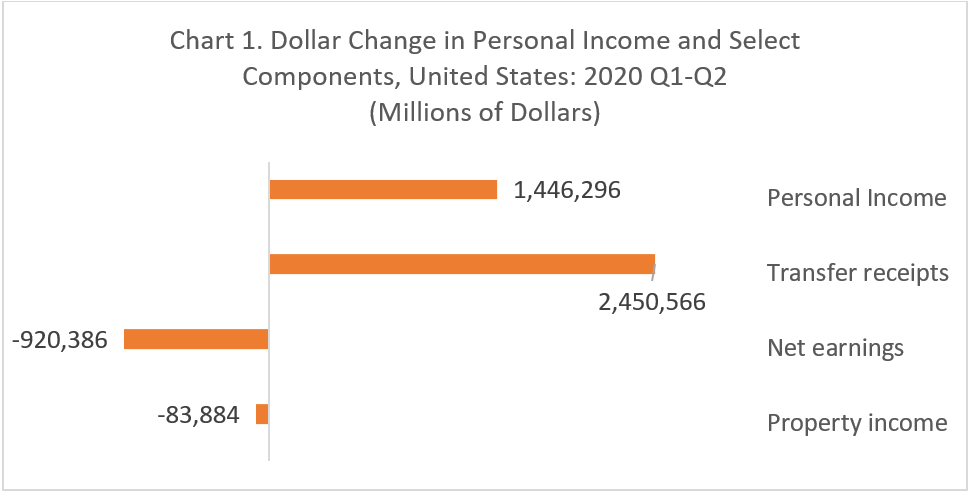
Chart 1. Dollar Change in Personal Income and Select Components, US: 2020 Q1-Q2

Transfer receipts. Transfer receipts increased $2.5 trillion for the nation in the second quarter of 2020, after increasing $80.3 billion in the first quarter. The increase in transfer receipts reflected increases in state unemployment insurance compensation, all other transfer receipts and Medicaid benefits (chart 2). Transfer receipts increased in every state, ranging from $3.8 billion in Wyoming to $342.6 billion in California (table 2).

State unemployment compensation was boosted by a $600 increase in weekly benefits provided by the CARES Act, as well as an expansion of eligibility of workers not previously covered by state unemployment compensation programs. The increase in all other transfers reflected $1,200 economic impact payments to individuals, as well as provider relief funds for nonprofit institutions, such as hospitals and health care providers, serving individuals.
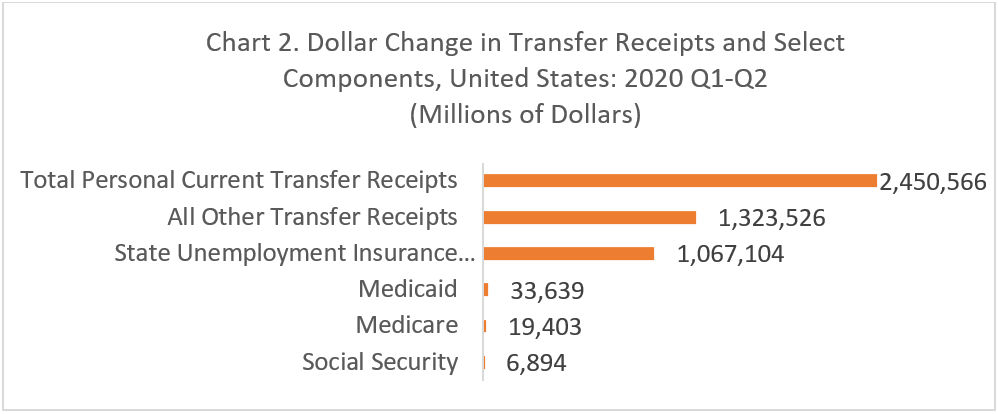
Chart 2. Dollar Change in Transfer Receipts and Select Components, US: 2020 Q1-Q2
Coronavirus (COVID-19) Impact on the Second-Quarter 2020 State Personal Income

The 2020 Q2 estimates of state personal income were impacted by the response to the spread of COVID-19, as governments issued and lifted "stay-at-home" orders, and government pandemic assistance payments were distributed to households and businesses. The full economic effects of the COVID-19 pandemic cannot be quantified in the state personal income estimates because the impacts are generally embedded in source data and cannot be separately identified. For more information, see the Technical Note.

Tables showing the Effects of Selected Federal Pandemic Response Programs on State Personal Income for every state and the District of Columbia will be made available on October 15, 2020.

Earnings. For the nation, earnings decreased 27.5 percent in the second quarter of 2020, after increasing 3.4 percent in the first quarter (table 2). The declines were moderated by Paycheck Protection Program (PPP) loans to proprietors. The decrease in earnings reflected the partial economic shutdown following the outbreak of the COVID-19 pandemic in the first quarter of 2020.

Earnings decreased in 20 of the 24 industries for which BEA prepares quarterly estimates (table 4). Accommodations and food services, and healthcare and social assistance were the leading contributors to the overall earnings decrease. The percent change in earnings across all states ranged from -14.0 percent in Utah to -38.1 percent in Nevada.

Property income. Property income decreased 8.6 percent for the nation in the second quarter of 2020, after increasing 1.1 percent in the first quarter. Property income decreased in every state, ranging from -4.8 percent in West Virginia to -12.1 percent in Utah.

Annual Update of State Personal Income

The estimates of 2020:Q2 personal income incorporate the results of BEA's annual update of state personal income that was also released today. The annual estimates of state personal income for 2013 to 2019, and quarterly estimates of state personal income for 2013:Q1 to 2020:Q1 were revised. The update incorporates revised source data that are more complete and more detailed than previously available, updates to seasonal factors, and the results of the July 2020 annual update of the National Income and Product Accounts.

Today, BEA also released revised estimates of real state personal income for 2013 to 2018 that incorporate the results of the annual update to state personal income and revised experimental state-level statistics describing the transactions of state and local government defined benefit pension plans for 2015-2018 and new estimates for 2019.

Next release: December 17, 2020 at 8:30 A.M. EST
State Personal Income, 3rd Quarter 2020

From USA Facts > Coronavirus, football, and colleges' bottom lines


The financial side of football


As college football resumes at some institutions and is still in question at others, the COVID-19 pandemic continues to endanger the safety of sports, its athletes, and college communities alike. For many colleges and college towns, the loss of football means more than just a lost community activity—it may mean the loss of tens of millions of dollars. Take a look at the data and see how every Power Five school stacks up both by conference and overall


  • Athletics constitutes a small portion of revenue for most colleges, however, football profits often comprise a large portion of an institution’s revenue. At Texas Christian University, football revenue totaled $65.4 million in the 2017-18 school year, nearly 10% of the intuition’s $684 million overall revenue that year.
     
  • Football revenue is typically equivalent to an average of 3.5% of all institution revenue at the 64 Power Five schools — colleges and universities that make up conferences in the highest level of Division I athletics. Revenue may be spent on improved resources for football or other athletic programs, or on more comprehensive, university-wide programs.
     
  • The Big Ten conference, which includes the University of Michigan and the Ohio State University, has the highest average net football profit of any league. After previously postponing football and other fall sports, the Big Ten is now moving forward with plans for the 2020 football season. The second-most profitable league, the SEC, has already begun its modified 2020 season.
     
  • For schools with large programs, the loss of football may constitute drops in both revenue and expenses, on top of other changes in room and board, and food services, endangering some colleges’ financial futures. The impact of postponed and canceled fall seasons are likely to extend beyond campuses, meaning lost revenue for college town businesses.

See more about college football revenue here.


Who gets flu shots?

While the nation discusses the need for a coronavirus vaccine, flu season is also fast approaching. The federal government’s goal is to vaccinate 70% of the public against the flu; the latest data shows that less than half of Americans get vaccinations


  • Children are more likely to be vaccinated than adults. During the 2018-19 season, 62.6% of children between six months and 17 years got a flu shot, while only 45.3% of adults did.
     
  • According to the Centers for Disease Control and Prevention, the flu vaccine prevented an estimated 4.4 million influenza cases in the 2018-19 season.
     
  • That same flu season, 60.4% of Rhode Islanders were vaccinated, the highest rate of any state. Nevada had the lowest rate at 37.8%.

How does your state compare? See the report, including a map tracking vaccinations by state, to understand how rates have changed since 2011.


Who has health insurance? 

Newly released Census Bureau data shows that 21.6 million Americans did not have health insurance in 2019. Last year was also the first without an individual mandate penalty for not having health insurance.  

  • An estimated 68% of Americans had private health insurance at some point in 2019, while 34.1% had public insurance, and 8% had none. This adds up to more than 100% because people might have several forms of insurance over the year. Employment-based insurance, used by nearly 183 million people, was the most common form of insurance coverage.
     
  • The state uninsured rate varied from a low of 3% in Massachusetts to a high of 18.4% in Texas. Between 2018 and 2019, the uninsured rate increased in 19 states and remained the same in 30 states. Only Virginia had a decrease.
     
  • The coronavirus pandemic has caused record unemployment and many Americans have likely lost their employment-based health insurance

EQUAL TIME > Aging and Healthcare Committee w/ special guest Senator Kyrsten Sinema

Just a handful of members for this ...
6 views
Sep 24, 2020

Tutorial: using filters in the Flightradar24 app

Check this >
Get the most out of filters in the Flightradar24 app! See how you can add, edit, and save filters. Learn how to combine multiple filters. And get some tips and tricks to make your filters work for you. You can download the free Flightradar24 flight tracker app at fr24.com/apps. Have more questions about filters? Get in touch! Twitter: https://twitter.com/flightradar24/ Facebook: https://www.facebook.com/flightradar24 Instagram: https://www.instagram.com/flightradar24/ We're always available via email at support@fr24.com.

What Is Love?

Ocean Shutdown from the South, Cosmic Ray Volcanos | S0 News Sep.25.2020

Way better than those local 'weather reports" that's for sure!
7,099 views
Sep 25, 2020
Daily Sun, Earth and Science News COSMIC DISASTER 2020 Playlist: ...