Wednesday, March 24, 2021

Scientists Discover "Super Earth"

Blondie - Heart Of Glass (Official Music Video)

Our Cyber Defense Is Too Weak: IronNet Founder

Retired 4-Star General Keith Alexander - the longest serving head of the the U.S. government's National Security Agency (NSA) and founder of US Cyber Command - two of the federal government's main cybersecurity agencies - has formed a start-up enterprise with plans to capitalize on his years in public service.................................... Ensign and IronNet partner to create cyber analytics capabilities

Startup IronNet is going public via a $1.2 billion SPAC deal, and its founder says it's to accelerate the development of its cybersecurity tools to protect America

  • Former head of the NSA and Cyber Command Keith Alexander says the US must reorganize cybersecurity. 
  • Alexander is CEO of cybersecurity startup IronNet, which announced it is going public via SPAC.
  • Alexander believes the US needs one official to oversee all of cybersecurity for the nation. 
  • "If the SolarWinds cyberattacks had sought to destroy US networks rather than just spy on them, "the financial impact on this country would have been huge, . ." Former NSA chief's startup IronNet Cybersecurity raises $78 million to help  defend U.S. power grid | Tech News | Startups News
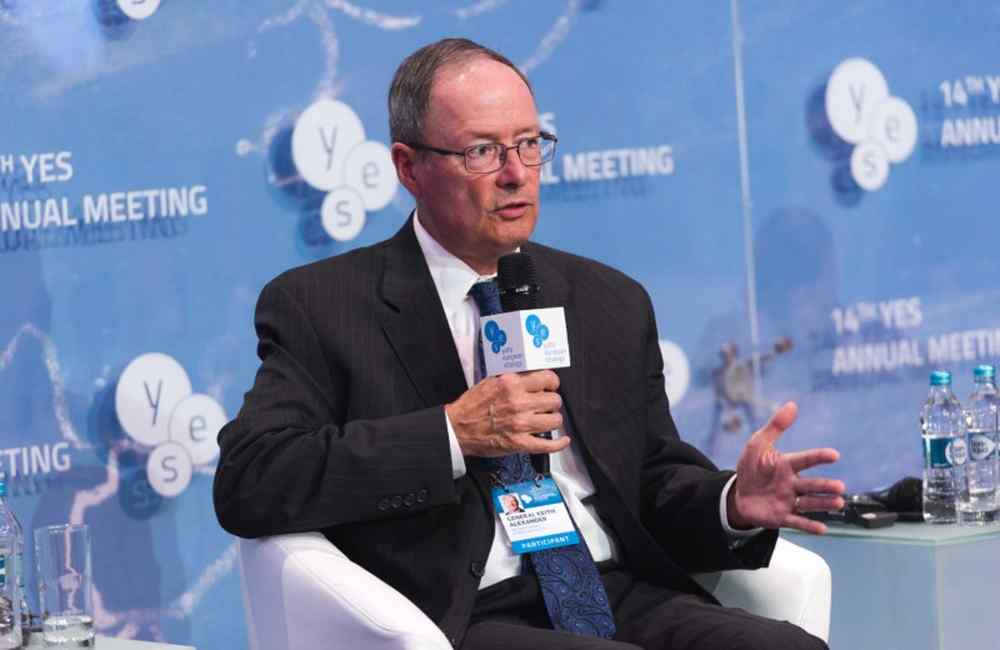
     Such attacks are coming, and America is unprepared, says Alexander, who may be uniquely qualified to assess the government and industry sides of American cybersecurity. . . Raytheon Collaborates With IronNet on Cyber Defense for Crit

    This week IronNet announced it is going public with special purpose acquisition company LGL Systems Acquisition Corp. at a valuation of approximately $1.2 billion. IronNet, a Washington, DC, area company of 250 people, previously raised nearly $282 million in venture capital from investors including Bridgewater Associates, ForgePoint Capital, and Kleiner Perkins.

    The deal makes it the latest startup opting to go public via SPACa company created to merge or acquire another business and take it public quickly and on a budget — rather than a traditional IPO.

    Alexander said the urgent need for cybersecurity innovation was the reason to go public via this route. Alexander is now shopping the IronNet tools to some of the same military personnel who once worked for him – reluctantly, he says. "I didn't want to, initially," he told Insider, sensitive to selling something to his former staff

    ............................................................................................... IronNet Cybersecurity - DCD      

    "Everyone worked for me. After six years some of them came to me and said, 'hey, what you're doing is what our nation needs. Get over it.'"

    Alexander says he believes there should be better collaboration between government and industry, but that federal organization is a priority. "There is no collective defense in the government," he says.

     "Think about that. We should fix that."

    ----------------------------------------------------------------------------------------------------------------------------

    IronNet Co-CEO Gen. Keith Alexander (Ret.) On Importance Of Cybersecurity |  TD Ameritrade Network


    Covid-19 Pill a ‘Hopeful’ Treatment Option: Johns Hopkins

    Repealing Section 230 Could Completely Change the Internet

    Facts USA: COVID-19 Pandemic Impacts on Stimulus Spending, Changes to Higher Ed, and Women Elected to Congress

    Easy to see:

    How might Americans spend their next stimulus?

    The recently passed American Rescue Plan Act comes with a new round of stimulus checks. People making less than $75,000 a year are eligible for up to $1,400 in this third round of pandemic relief. How might they spend the checks? The Census Bureau's Household Pulse Survey offers some insight based on how people used the $600 stimulus checks sent earlier this year.
    • In the February 3–15 Household Pulse Survey, just over half of all adults said they live in households where someone received a stimulus payment within the previous week.
       
    • In the survey, 57% of respondents said at least part of the checks were used to pay for food, while 44% said part or all of the check would be used to pay for utilities.
       
    • About 62% of both Hispanic and non-Hispanic Black recipients used the money for paying down debt compared with 42% of Asian and 46% of white recipients.
    See more data about the pandemic nearly three months into 2021.

     
    Women in Congress

    Last week’s newsletter shared that more women are serving in Congress than ever. USAFacts has additional context behind that number, including stats on representation dating back to the first woman in Congress 104 years ago. Read it all in this new report.
    • Jeannette Rankin was the first woman in Congress, serving as a representative from Montana from 1917 to 1919. Since then, 393 more women have served in either the House of Representatives or the Senate. That's 3% of the 12,415 people who have served since 1789.
    • The first woman elected to the Senate was Hattie Wyatt Caraway of Arkansas. She served two full terms after initially being appointed in 1931.
       
    • The total share of women in Congress doesn't match that of the US population (which is 51%), but it's increased in recent years. Today's Congress has more than double the number of women who served between 1999 and 2001.
       
    • Every state has sent a woman to Congress but one: Vermont.

    Track the upward trajectory of women representatives starting in the early 1990s and learn about the House's longest current woman rep at USAFacts.org.


    College education by the numbers

    The State of the Union in Numbers helps Americans understand the nation from several angles, including the state of US education before and during the pandemic. How has COVID-19 altered college attendance? How are costs increasing for college students? Get the metrics here. 
    • The average college tuition was $23,902 in 2016, a more than 80% increase since 1993 (adjusting for inflation).
       
    • Governments and institutions awarded students an average of $19,397 in grant aid in 2016 — almost twice the 1993 average.
    • About 59 million adults lived with someone who planned to attend college in fall 2020, with over a third of them reporting that the student ultimately canceled their plans.

    Get additional context behind the history of US education, from reading proficiency to spending per student, with the State of the Union in Numbers


    And finally...

    Want to more on education in the US? Join USAFacts Founder Steve Ballmerand Research Manager Olivia Martin for a panel discussion with the McCourt School of Public Policy at Georgetown University on March 18. They'll discuss how COVID-19 has disrupted schooling and how data science will play an integral role in understanding the pandemic's short and long-term impacts. Register for the event here

    GO AHEAD MAKE MY DAY! >> Powell Is Acting Like Dirty Harry With Bond Market: Grisanti