Wednesday, August 11, 2021

Bloomberg Study: Tracking Delayed and Uneven Relief and Recovery In Late COVID CARES Loans

Good-to-Know The latest data highlight how patchy the economic rebound has been in the U.S., where GDP growth is roaring nationally but many are left behind, including in minority neighborhoods from Los Angeles to Houston. The uneven recovery is a central reason why Federal Reserve Chairman Jerome Powell says the economy still has a ways to go.

Late Covid Loans Hurt Recovery in Chicago’s Minority Neighborhoods

Bloomberg is tracking the economic recovery in minority communities across the country

‎August‎ ‎10‎, ‎2021
 
NOTE: This insert from an earlier blog post
PRESS RELEASE from City of Mesa Newsroom MesaNow 
Mesa launches Opportunity Zone Prospectus to spotlight notable investment opportunities across the City
December 12, 2018 at 3:12 pm
Today the City of Mesa announced the launch of the Mesa Opportunity Zone Investment Prospectus located at www.MesaAzOpportunityZones.com.
 
The Prospectus provides important information for potential investors regarding Mesa's Opportunity Zones:
Gateway Area
Falcon District
Main Street Corridor
Fiesta District
and the key geographic, demographic, infrastructure, and market advantages of Mesa's OZones.
 
Blogger Notes:
1. What is covered in the city's press release are four of 11 pre-designated areas that qualified for being low-income neglected, distressed neighbors or were contiguous to those census tracts here in Mesa. The Gateway Area and The Falcon District qualified for being contiguous to distressed census tracts. BY ZIPCODE THEY ARE HIGH-INCOME
2. Here in the image above right and a week after the monthly Economic Development Advisory Board meeting on 04 Oct 2018 are Mesa's EconDev Director Bill Jabjiniak flanked by other city officials and a consultant making a pitch for RDAs.
NOTE: This insert from an earlier blog post
Here are the pre-designated 11 Opportunity Zones in the City of Mesa. Note the areas to the left that are on the Valley Metro Light Rail lines. At the same time you can see that two large areas in Northeast Mesa and Southeast Mesa - in "The Outer Loops" where there's the most investments in just these two Opportunity Zones for commercial real estate [tech, industrial, and residential] and growth in job creation. Growth in the car-driven commuter culture expanding Suburbia reflects land-use planning.
____________________________________________________________________________


Here's a map of income distributions in the city of Mesa that needs some up-dating to fill-in the data gaps, especially in Southeast Mesa.
The color codes in the red-orange-yellow spectrum show higher-income areas concentrated in north and northeast Mesa. The darker-blue areas show lower-income areas.
[This is zip code data from the 2010 U.S. Census, It may or may not show the census tracts chosen as pre-designated Opportunity Zones, with the exceptions that qualify the NE and SE areas with higher-than-median-income levels but are nonetheless contiguous with distressed and neglected areas.
There are some areas and neighborhoods with a diverse mix.
____________________________________________________________________________
 
". . .This year billions of dollars in U.S. pandemic relief for small businesses finally made it to minority neighborhoods, reaching hair salons, daycares and restaurants in some of the poorest and most-segregated urban areas of the nation.
So far the infusion of Paycheck Protection Program funds has failed to translate into a meaningful economic recovery in many of these neighborhoods, data compiled by Bloomberg show. . .

NOTE: Windy City Wealth Gap
Chicago is roughly evenly split between White, Black and Hispanic people, but their economic situation is anything but equal.

Majority racial/ethnic group by zip code:

Median household income (2019)

Black

White

Hispanic

40K

80K

120K

$160K

Rogers

Park

Chicago

Forest

Glen

Edgewater

Jefferson

Park

Lake View

Belmont

Cragin

Logan

Square

Lincoln

Park

Humboldt

Park

Austin

Garfield

Park

Near

West Side

Loop

Lake

Michigan

Lower

West Side

Brighton

Park

Bronzeville

New City

Garfield

Ridge

Englewood

West

Lawn

South

Shore

Grand

Crossing

Ashburn

Calumet

Heights

Roseland

Morgan

Park

West

Pullman

5 miles

Hegewisch

5 km

Note: Since ethnicity is separate from race, a zip code can be both majority-Hispanic as well as majority-Black or majority-White. In such cases, if a zip code’s Hispanic share of the population is more than 50% and greater than the Black and White population share, then it’s colored as majority-Hispanic.
Small businesses in majority-Black areas of the city ultimately got $355.4 million for every 100,000 residents, compared with $347.5 million in White communities and $163.3 million in Latino neighborhoods, according to the data.
But Black neighborhoods of metro Chicago received 72% of their PPP funds this year, in the final round of the $800 billion program, while majority-White parts of the city got 65% of their loans last year, government data show. That means that by the time significant PPP money arrived in some minority neighborhoods, they’d already lived through the months of shutdowns and the worst of the pandemic’s economic impact.
The delays in securing federal relief when local economies needed it most threaten to further widen the racial wealth gap in the third-largest U.S. city, where 30% of the population is Black and 29% is Latino.
Early PPP Rounds Favored Richer, Whiter Areas
Later PPP Loans Were Smaller Smallest Businesses Dominated Final PPP Round
Some Minority Areas Were Overlooked in 2020
Hispanic Areas Received the Least of All

By the time the Biden administration made changes to the final round of PPP loans in February 2021, focusing on minority-owned and smaller businesses, this area had already received almost all of its relief money—$149 million. Those changes proved more meaningful to non-White zip codes, many of which saw a bump in funds.

One long-running problem for smaller and minority-owned businesses is the lack of established relationships with banks that distributed the PPP forgivable loans. A similar lag in federal aid can be seen in U.S. metro areas including Dallas, Houston, Los Angeles and Philadelphia, data show.

How PPP Reached Minority Areas Differently

Majority-White zip codes received more money early in 2020

Actual loan amount per 100k people

Chicago

Houston

Los Angeles

$200M

150

100

50

0

5/21

4/20

Month loan funded

Miami

New York

Washington, DC

$200M

Peak total loan amount

150

100

50

0

Actual loan amount per 100k people

Chicago

Houston

Los Angeles

$200M

150

Peak total loan amount

100

50

0

5/21

4/20

Month loan funded

Miami

New York

Washington, DC

$200M

150

100

50

0

Actual loan amount per 100k people

Chicago

Houston

Los Angeles

$200M

150

100

50

0

5/21

4/20

Month loan funded

Miami

New York

Washington, DC

$200M

Peak total loan amount

150

100

50

0

Note: Data are population-weighted averages for all zip codes in the above metro areas where the relevant race or ethnicity is the majority. Loan money listed under a borrower’s provided zip code may ultimately have gone to locations or payroll in other zip codes. . .
This is decades in the making and that’s true across many other cities. So we have to close that gap,” Samir Mayekar, deputy mayor for economic and neighborhood development, said in an interview. “We are focused on wealth building in our Black and Brown communities especially.”
================================================================

Tuesday, August 10, 2021

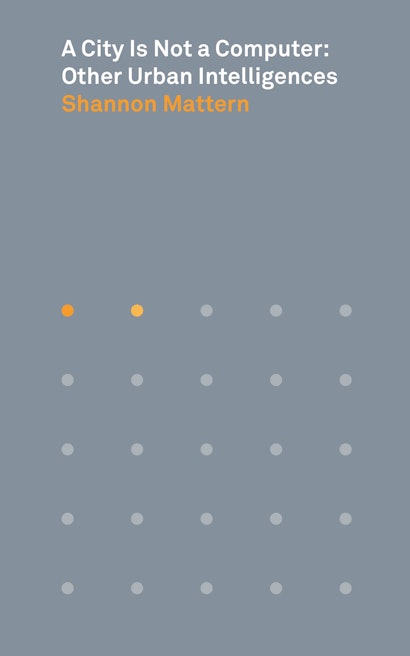
New Book Released Today: A City Is Not a Computer: Other Urban Intelligences

The city is a computer, the streetscape is the interface, you are the cursor, and your smartphone is the input device. This is the user-based, bottom-up version of the city-as-computer idea, but there's also a top-down vision that is systems-based ...it could be more efficient if they were "smart" ============================The idea of the city as an information-processing machine has in recent years manifested as a cultural obsession with urban sites of data storage and transmission. Scholars, artists, and designers write books, conduct walking tours, and make maps of internet infrastructures. We take pleasure in pointing at nondescript buildings that hold thousands of whirring servers, at surveillance cameras, camouflaged antennae, and hovering drones. . .Urban intelligence involves experience, observation, sensory engagement.
We need new models for thinking about cities that do not compute.
A BOLD REASSESSMENT OF 'SMART CITIES' THAT REVEALS WHAT IS LOST WHEN WE CONCEIVE OF OUR URBAN SPACES AS COMPUTERS 

=========================================================================================

"Smart City" Agenda For Mesa City Council Meeting Tomorrow Thu 28 March 2019

Looks like it was published late in the day yesterday, but at least it's available to the public ahead of time. . . and the same day the public also gets the agenda for the April Fools Day City Council Meeting on April 1st. Ready, willing and able to hear a presentation, discuss, and provide direction on the City’s SmartCity Master Plan and the use of technologiesand data-driven insights to improve the quality of life, civic engagement, economic development, service delivery, and community vibrancy?????
__________________________________________________________ 
QUESTION: When if ever before was 
Mesa A Smart City?
TIME TO RE-BRAND THAT! Hire a consultant 
In 2018, the City of Mesa engaged ThinkBig Partners, LLC to assist in the development of a Smart City Master Plan. Most importantly, this effort included engaging our citizens, businesses and the public as we identified the key strategies & priorities for building a smarter Mesa!
https://www.mesaaz.gov/about-us/smart-city-draft-2 .....

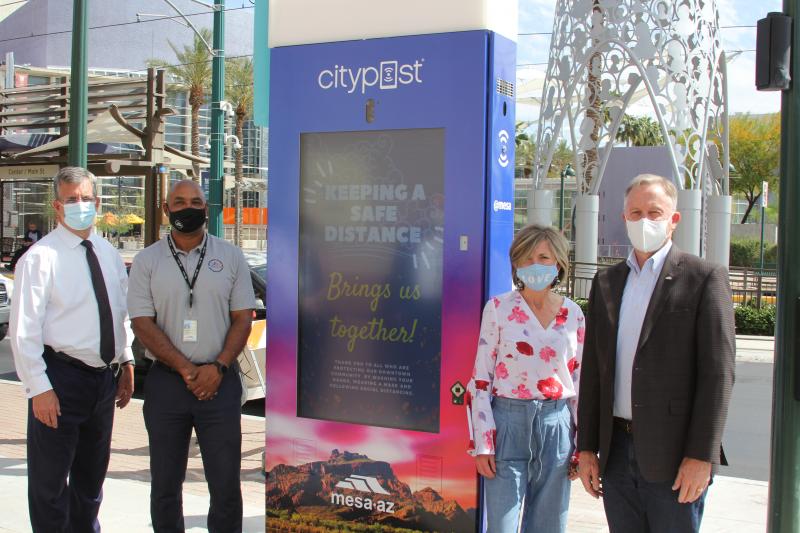
Mesa installing downtown kiosks as key part of dynamic citizen engagement platform

April 1, 2021 at 3:09 pm    

As part of the City of Mesa's Smart City strategic plan, the City has partnered with Smart City Media to install ten dual screen smart digital kiosks throughout downtown Mesa and along the light rail corridor east to Gilbert Road. The digital kiosks will each offer two 55-inch touch screen displays with "way finding" functionality for people to locate specific businesses or receive Mesa focused content such as event promotions and safety alerts. . .

==========================================================================

Computational models of urbanism—smart cities that use data-driven planning and algorithmic administration—promise to deliver new urban efficiencies and conveniences. Yet these models limit our understanding of what we can know about a city.

A City Is Not a Computer reveals how cities encompass myriad forms of local and indigenous intelligences and knowledge institutions, arguing that these resources are a vital supplement and corrective to increasingly prevalent algorithmic models.
Shannon Mattern begins by examining the ethical and ontological implications of urban technologies and computational models, discussing how they shape and in many cases profoundly limit our engagement with cities.

> She looks at the methods and underlying assumptions of data-driven urbanism, and demonstrates how the “city-as-computer” metaphor, which undergirds much of today’s urban policy and design, reduces place-based knowledge to information processing.

> Mattern then imagines how we might sustain institutions and infrastructures that constitute more diverse, open, inclusive urban forms. She shows how the public library functions as a steward of urban intelligence, and describes the scales of upkeep needed to sustain a city’s many moving parts, from spinning hard drives to bridge repairs.

Incorporating insights from urban studies, data science, and media and information studies, A City Is Not a Computer offers a visionary new approach to urban planning and design.

____________________________________________________________________________
Insights curated by Experientia, the international UX consultancy

A City Is Not a Computer | Princeton University Press[Book] A City Is Not a Computer


<div class=__reading__mode__extracted__imagecaption>
					Insights curated by Experientia, the international UX consultancy

NO CAPTAIN ONBOARD