Sunday, August 15, 2021
Saturday, August 14, 2021
Look Who's Back Post-911 and 20 Years of Endless Wars in Afganistan & The Mid-East
Patraeus Trashes Biden Decision to Quit Afghanistan
Pulling out now is an “unforced error,” the former commander of U.S. troops in Afghanistan said. Other former war leaders say the threat can be managed

Kevin Baron | April 14, 2021
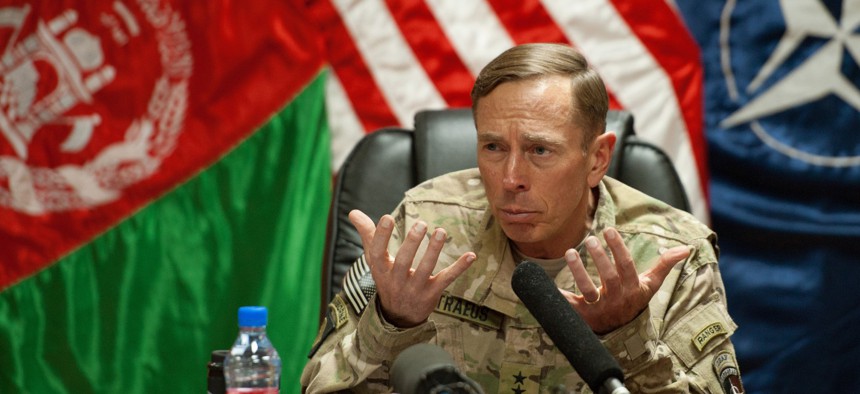
David Petraeus sharply criticized President Joe Biden’s decision to remove U.S. troops there, saying he worries that the “endless war” will only worsen.
“I'm really afraid that we're going to look back two years from now and regret the decision,” said Petraeus, former commanding general of U.S. and NATO troops in Afghanistan and former CIA director.
He spoke on a conference video call originally intended to promote a new book from retired admiral William McRaven, who oversaw the 2011 mission to find Osama bin Laden.
Petraeus warned that the pullout would create potentially destabilizing refugee flows.
“We are going to see an exodus out of this country of anybody who has an option to leave,” he said. And of those who lack that option? “I would not, certainly, want to be part of the 50 percent of Afghans that are female.”
On the call, McRaven and other leaders of that mission, including then-CIA Director Leon Panetta, were split in their support for Biden’s decision to reposition U.S. troops to support counterterrorism missions from elsewhere in the region. But Petraeus delivered a sharper rebuke . . .
> McRaven said any decision incurs risks. He added that if the U.S. military is still tasked to respond to terrorism inside Afghanistan, he hopes the U.S. will retain the necessary capabilities in the country and the region.
“If you gave me the resources, I could figure out how to do this,” McRaven said, adding that he has spoken to key players close to the president about it.
“I will tell you from all my conversations with folks that are kind of in the inner circle, they have considered all of those problems,” he said. “All of the warts have been exposed to the president. He understands the risk that he’s taken.”
> Other Obama-era officials weighed in with support. James Clapper, former director of national intelligence, said, “I do have a lot of confidence in the growing capabilities that we have — that we didn’t have 10 or 20 years ago.”
> "We are at a different level of capability" with intelligence and have "a lot of over-the-horizon" capability now, said Tom Donilon, former national security advisor. . .And he noted that the White House is facing new global needs and changing priorities. . ."It's not just a phrase,” said Donilon. “Endless wars without specific goals in mind is not...healthy for the United States."
> "If we don’t get out now, we'll never get out,” said Jane Harman, president emerita of the Wilson Center and former ranking Democrat on the House intelligence committee. She said the country hates “this endless war thing” and that Biden’s decision does play well, in part because Congress, which is supposed to speak for the people, has been absent from the conversation. “We are taking the high ground.”
> Said John Brennan, former CIA director: “I do think we are going to have some challenging times ahead…but I do think that Joe Biden, at the end of the day, felt that 20 years was enough.”
> In a separate event with CQ Roll Call on Wednesday, former Afghanistan War commander Stanley McChrystal said that he spent a decade in or around Afghanistan and while its security remains important to the United States, he sounded resigned to the end of the war era
> McChrystal, who was fired from his command by Obama in 2010, said he keeps mounted on wall an old British musket given to him in Afghanistan, leftover from "one of their failed efforts to control Afghanistan." He pointed it out because, he said, "it's possible for nations, to include our own, to have a certain amount of hubris on what we can and are willing to accomplish."
_____________________________________________________________________________
TOP STORIES

Brain-Farts Over 'Zero-Carbon' Portfolio Calculations from New Study of Natural Gas dba Renewable Energy
“Blue” hydrogen is worse for the climate than coal, study says
Findings could throw national climate policies into disarray.
Gas companies and utilities are in a pickle. Their entire business model relies on the extraction, transport, and combustion of methane, one of the most potent greenhouse gases known to humankind. With many countries aiming to reach net-zero emissions by 2050, these companies face an uncertain future.
One solution they’ve proposed is slipping hydrogen into their distribution lines, either partially or fully replacing natural gas, so that people can burn it to heat their homes or generate electricity. When produced using solar and wind power, hydrogen is a zero-carbon fuel, and while refitting natural gas infrastructure would be expensive, it would give gas-only utilities a reason to exist.
The problem is that producing so-called “green” hydrogen is expensive and will remain so for a decade or more, according to forecasts. . .
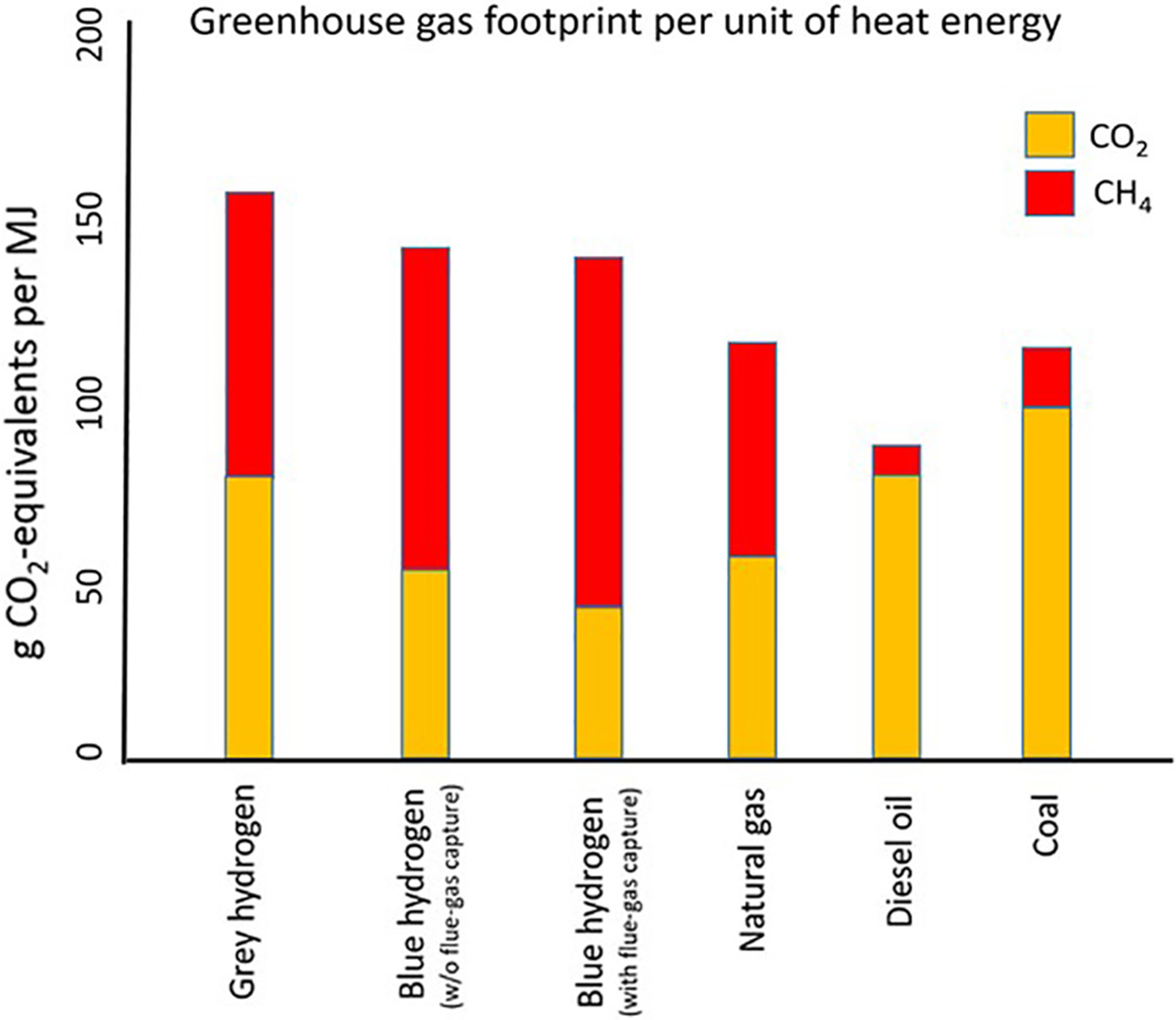
 To buy themselves time, utilities and oil and gas companies have proposed producing hydrogen from natural gas. Most hydrogen today is made by exposing natural gas to high heat, pressure, and steam in a process that creates carbon dioxide as a byproduct. In what’s called “gray” hydrogen, all that carbon dioxide is released into the atmosphere.
In “blue” hydrogen, facilities capture the carbon dioxide and sell it or store it, usually deep underground.
Blue hydrogen is viewed by some as a bridge fuel, a way to build the hydrogen economy while waiting for green hydrogen prices to come down. In the meantime, blue hydrogen is also supposed to pollute less than gray hydrogen, natural gas, or other carbon-intensive fuel sources.
Except blue hydrogen may not be low-carbon at all, according to a new peer-reviewed study.
In fact, the study says the climate may be better off if we just burned coal instead. Now that is something to ruminate about __________________

Questionable policies
The new carbon accounting may undermine some countries' climate plans, . .

The new study also casts doubt on some plans to shift transportation to hydrogen.
Some sectors, like freight and aviation, may end up requiring hydrogen for certain routes.
But cars and trucks, which many countries say must be zero-emitting by 2035 or sooner, will have a harder time justifying a switch to hydrogen over straight electrification.
Companies that have bet their future on hydrogen, like Toyota, are in a tight spot as their bridge to a truly zero-carbon portfolio takes a hit.
Not all hydrogen suffers from these problems, of course. Green hydrogen, which is made by splitting water using wind or solar power, doesn’t suffer from the same carbon accounting issues.
> But neither does it reuse oil and gas companies’ existing infrastructure.
So while this new study seems to be a pretty damning indictment of blue hydrogen, it’s unlikely to be the final nail in its coffin."
RELATED CONTENT ON THIS BLOG from June 13, 2019
Embedding Sustainability in Real Estate Transactions
"Acquisitions and dispositions present a significant opportunity to create value through investments in energy efficiency, health, and building resilience. Understanding the potential value of a high-performing, sustainable building allows buyers and sellers to better assess and price the deal going in, to underwrite sustainability investments to drive higher returns, to market the value created by these investments to tenants, and to communicate this value to buyers when buying or selling an asset.

The potential value at stake for embedding sustainability is significant, and in some cases can represent a 50 percent–plus increase in asset value over the lifetime of an investment.
This ULI toolkit provides guidelines on how to incorporate the value of sustainability in transactions.
It includes best practices from more than 30 ULI real estate leaders actively involved in real estate transactions."
READ MORE > Urban Land Institute
_______________________________________________________________________
Blogger Note: Keep in Mind F.I.R.E
- Finance
- Insurance
- Real Estate
============================
Further Reading
THE DAILY BEAST
'King' Trump, 79, Suffers Another Worldwide Humiliation 'WE CAN'T STAND HIM EITHER' Protesters all over the globe ha...

-
 Flash News: Ukraine Intercepts Russian Kh-59 Cruise Missile Using US VAMPIRE Air Defense System Mounted on Boat. Ukrainian forces have made ...

