Thursday, August 19, 2021
Religion & Government Here In Mesa: Latter-Day Saint Wards and Stakes / 2 Followers of The Faith


From The Verge: Water shortages loom over future semiconductor fabs in Arizona
In Arizona: Maricopa, northern Pinal, southern Gila, La Paz, and Yuma counties
:no_upscale()/cdn.vox-cdn.com/uploads/chorus_asset/file/22649983/usdroughtmonitor_weekly_ndmc__web__2021_06_01.png)
Water shortages loom over future semiconductor fabs in Arizona
Chipmakers are setting up shop in Arizona as drought worsens
Industries in the state used up 6 percent of Arizona’s water in 2019, but that could grow as chipmakers and other manufacturers move in. In March, Intel announced that it will spend $20 billion to build two new semiconductor factories in Chandler, Arizona, an expansion of its existing campus there.
Last year, the company pledged that by 2030 it will restore and return more freshwater than it uses. It’s nearing that benchmark in Arizona, where Intel says it cleaned up and returned 95 percent of the freshwater it used in 2020. It has its own water treatment plant at its Ocotillo campus in Chandler that’s similar to a municipal plant. There’s also a “brine reduction facility,” a public-private partnership with the city of Chandler, that brings 2.5 million gallons of Intel’s wastewater a day back to drinking standard. Intel uses some of the treated water again, and the rest is sent to replenish groundwater sources or be used by surrounding communities.
Chip manufacturing giant TSMC also has its eye on Arizona. In May 2020, the company announced plans to build a $12 billion new fab near Phoenix, which would be its first in Arizona and its second in the US (its first is in Washington state). TSMC could be planning to build up to six new fabs in Arizona over the next 10 to 15 years, Reuters reported earlier this year.
TSMC said in an email to The Verge that for now it doesn’t expect the water shortage to have “any impact” on its plan to build a new fab in Arizona, although it says it will “continue to monitor the water supply situation closely.”
Most of TSMC’s fabs are in Taiwan, where earlier this year the worst drought in more than 50 years threatened the already stressed supply chain for chips. TSMC plans to finish construction this year of a new water treatment plant in Taiwan that could eventually recycle enough water to supply half of the company’s daily needs, Nikkei Asia reported in April.
While Taiwan still dominates semiconductor manufacturing, Arizona is emerging as a new hub. The Biden administration has prioritized building up a domestic supply of semiconductor chips as the current shortage affects everything from cars to phones and game consoles. Two other companies, NXP and Microchip Inc., have fabs in the state also. NXP didn’t immediately respond to a request for comment from The Verge, and Microchip declined to comment.
While Intel recycles much of its water, more fabs will mean it will need to send even more water through its systems. The company says that Arizona has been “vital” to Intel’s operations for more than four decades. The state is already home to its first “mega-factory network” and its newest semiconductor fab. Intel used more than 5.2 billion gallons of water in Arizona in 2020 — roughly 20 percent of which was reclaimed water, according to its most recent corporate responsibility report.
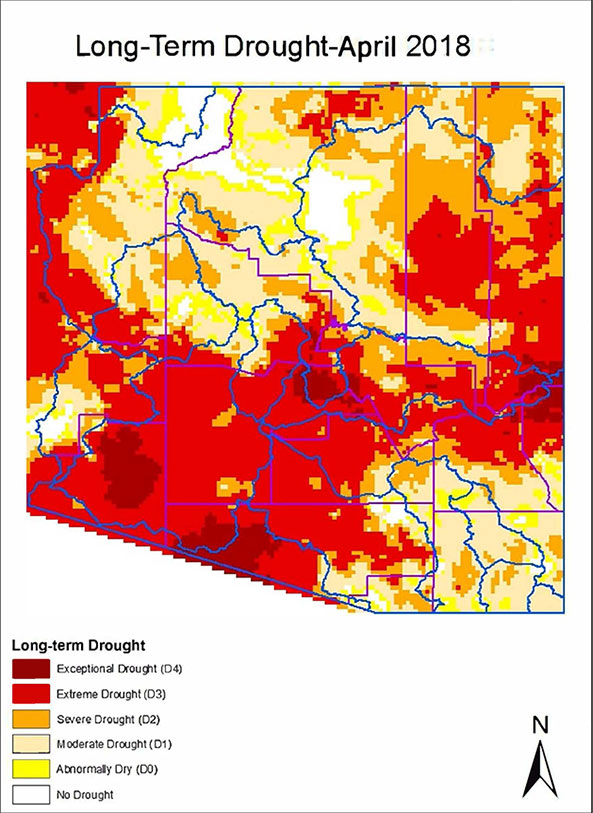
Arizona is notoriously dry, which leaves it dependent on water-sharing agreements with other states. Arizona gets a hefty 38 percent of its water from the Colorado River, and with water from the river running low, the state is expected to face some tough choices in the future. The state has been in a drought since 1994, and climate change is making things worse. Now, the vast majority of Arizona faces a “severe” drought, according to the US Drought Monitor. "
Wednesday, August 18, 2021
WITHOUT PREJUDICE: Willful Ignorance + The Inability To Abide By The Rules of Their Own Law Licenses
Judge Says Voting Machine Company Can Continue To Sue Trump's Buddies Over Bogus Election Fraud Claims
from the but-will-they-be-judgment-proof-by-the-time-judgment-arrives? Department

Powell has claimed her allegations against Dominion -- repeated in press conferences and court filings -- were just the heated rhetoric that often accompanies "disputed" elections (even if the Kraken was doing most of the disputing). While that may be a decent defense against defamation allegations (i.e., "no reasonable person would take my partisan shit-talking as statements of fact"), it kind of falls flat when the same allegations are presented as sworn allegations in court filings attempting to challenge the election outcome.
Powell's assertions that the alleged defamation was just crazy talk have dead-ended in federal court. As the court sees it, Dominion should be allowed to move forward and dig into the "these are/aren't facts" assertions by Sidney "Krack Happens" Powell. (h/t Brad Heath)
The court's dismissal [PDF] of Powell's motion to dismiss is this summer's best beach read because it casts so much shade it makes the heat waves tolerable. And while it's casting a long, low-key snarky shadow over Powell's attempt to escape a billion-dollar judgment, it refuses to let any of her co-conspiracy theorists off the hook, like Rudy Giuliani and one of the weirdest symptoms of late-stage capitalism, hyper-partisan bedding manufacturer, MyPillow.
How far away from facts did these defendants get (allegedly)? Welp:
........................................................................................................................................................
All three defendants want out of this lawsuit.
> Powell raises jurisdictional counterarguments as well as her patented "but I was just talking out of my ass!" defense.
> Giuliani asserts that Dominion's claims for damages are improper.
> And Lindell claims his company hasn't actually made any statements about the election, even if he's been using the company's money (and social media accounts) to make claims about the election.
None of this matters, at least as this point. Dominion's lawsuits can continue, says the court, while taking some shots at the attempting-to-flee defendants. As for Powell, the former Trump lawyer, there's this opening admonishment:
......................................................................................................................................................
......................................................................................................................................................
Lindell and MyPillow get slapped even harder. The court notes that Lindell claims he can back up his statements with verifiable facts but has yet to present any evidence that supports his claims that Dominion "flipped" votes and conspired to throw the election for Biden. This sets the table for this amazing sentence by the court -- one that should make Lindell fear for his finances.
As a preliminary matter, a reasonable juror could conclude that the existence of a vast international conspiracy that is ignored by the government but proven by a spreadsheet on an internet blog is so inherently improbable that only a reckless man would believe it.
If Lindell isn't staggered by this sentence, he's stupider than he appears. And this gets added on top of that:
Dominion also alleges that Lindell was made aware of that countervailing evidence in Dominion’s retraction letters, id. ¶¶ 63, 69, but—instead of reconsidering his claims in light of the mountain of evidence against them—doubled down and “dare[d] Dominion to sue [him],” id. ¶ 160.
Lindell must love compounding his mistakes.
> While this was being written, Lindell was in South Dakota hosting a 72-hour conspiracy theory-laden "cyber symposium" where he made additional claims about evidence he apparently doesn't possess that cannot possibly back the claims about Dominion he continues to make.
Giuliani's procedural motions are also tossed, allowing Dominion to continue to sue all three defendants. While it's unlikely Dominion will extract more than a billion dollars from any of the individual defendants, it seems unlikely any of these Trump-toadying loudmouths will escape the lawsuits unscathed.
> They played to Trump's base and are now in danger of losing.
And it's guaranteed the man they idolize will do nothing to save them from the consequences of their Trump-enabled actions. When you're winning, Trump is willing to take part of the credit. But when you're losing, you're on your own.

-
 Flash News: Ukraine Intercepts Russian Kh-59 Cruise Missile Using US VAMPIRE Air Defense System Mounted on Boat. Ukrainian forces have made ...

