Wednesday, November 17, 2021

ARIZONA'S 'FORENSIC' AUDIT: The Staying Power of The Big Lie and Claims of Election Fraud Claims Persist

Looks like bogus claims of rigging elections have proliferated into what Republicans believe.

Poll: Majority of Republicans falsely believe Arizona ‘audit’ found fraud

 
A majority of Republican respondents in a recent poll wrongly believe that the so-called “audit” of the 2020 election in Maricopa county definitely or probably found evidence of fraud.
Monmouth University polled 811 people across the United States earlier this month, asking a series of questions about the state of the country, the Jan. 6 insurrection at the U.S. Capitol, government regulation of Facebook and fraud allegations surrounding the 2020 election. The poll included a question about the election review in Maricopa County.
> According to the live-caller poll, 62% of Republicans falsely believed the “audit” discovered fraud — 32% of Republican respondents said the audit found evidence, and another 30% aren’t sure but believe it probably found such evidence. Only 23% of Republicans said the audit found that President Joe Biden won or probably won the state fairly.
> By contrast, 89% of Democrats said Biden won the state fairly, while 55% of independents say Biden won fairly and 27% said the audit uncovered fraud. In total, 57% said the audit showed that Biden fairly won Arizona, while 29% said it found or probably found fraud in the 2020 election. 
[. . .] Maricopa County officials denied the allegations and provided explanations for many of the issues the audit team raised. The county, the Arizona Mirror and others have proven some, such as claims surrounding signature verification on early ballot affidavits, to be false. 
> The partisan split among respondents on the audit question largely mirrored attitudes toward the bogus election fraud allegations that Trump and many of his supporters have spread since Biden defeated him last year.
While 73% of Republicans told the pollster that Biden won through fraud and only 22% say he won fairly, 97% of Democrats and 63% of independents said Biden’s victory was legitimate.
> In all, 32% of respondents said Biden won through voter fraud.
[. . .]
During a conference call with reporters on Tuesday, David Becker, executive director of the Center for Election Innovation & Research, expressed concerns about the staying power of the false election fraud claims, which he said have created a “toxic environment” for Republican voters who have lost faith in elections.

THE WAY OF DAO: A Super-Charged Internet Collective Ups The Ante To Buy A Rare Artifact of the U.S. Constitution

Bidding for a rarity like this will likely put the collective up against some of the world’s richest people, collectors who may have the opposite intentions of the DAO: to buy the Constitution and display it privately.

What Is A DAO—And Why Is One Trying To Buy The U.S. Constitution?

In 1787, drafting the U.S. Constitution required the work of 55 delegates to the Constitutional Convention. They hailed from 11 states—Rhode Island sent no one, the only original colony to do so—and the gathering lasted nearly 4 months, concluding on Sept. 15 after a brutally hot summer. An ailing Benjamin Franklin rode to and from the meetings in a sedan chair carried by four convicts from the local Walnut Street Jail.

By contrast, it has taken less than 48 hours for an internet collective, Constitution DAO, to raise $5 million in an attempt to buy a rare copy of the Constitution coming up for auction at Sotheby’s on Thursday. The document is one of only thirteen surviving copies out of 500 originally made for the Constitutional Congress, and the only one in private hands.

“I’ve found it increasingly fascinating to watch this Cambrian explosion of cool web projects over the last year. The opportunity to actually build one out was something unique,” says Graham Novak, 25. Novak is one of Constitution DAO’s organizers and an associate at 28th Street Ventures, an Atlanta venture capital firm. “The Constitution is incredible,” he says, bidding for it “is this once-in-a-lifetime thing.”

2021 has been marked by a head-turning convergence of social media and finance, on overlap made apparent by the explosion in interest around meme stocks, online communities like the Reddit forum WallStreetBets, cryptocurrencies that are as much as internet memes as stores of value and a soaring market for the digital art and collectibles known as NFTs. These assets are bought online, discussed online and coveted by a swath of young investors whose time is ever increasingly spent online, especially during the past 20 months of the pandemic.

Their exuberance has produced an array of jarring financial figures: One popular meme stock, AMC, for instance, trades for nearly 10 times the movie-theater chain’s sales, triple the average valuation among S&P 500 companies—suggesting that AMC investors see the company’s future growth far outpacing the broader market’s despite the obvious challenges that movie theaters face. Meanwhile, NFTs racked up nearly $11 billion in trading volume last quarter, a 700% increase from the previous one, as investors eagerly bought JPEGs of cartoon apes and video trading cards of basketball stars. The art market’s biggest sale of the year was an NFT, a digital collage by the artist Beeple sold at Christie’s for $69.3 million.

Groupslike Novak’s—DAOs or digital autonomous organizations—are the latest thing. Two months ago, another such group, PleasrDAO, purchased the Wu-Tang album formerly owned by Martin Shkreli for $4 million. Given that acquisition and the internet’s continued ability over the past year to quickly steer great sums of money toward novel goals and products, Constitution DAO’s hastily orchestrated plan to buy the Constitution on Thursday doesn’t seem nearly as trifling as it might’ve a year ago.

How does this all work? A DAO (pronounced “dow” like the stock exchange) records its membership on the digital ledger system known as the blockchain, and those members do things like vote to govern the group’s decisions. They meet not in person but through chat apps like Discord and other messaging platforms. Joining one often requires a monetary buy in: To do so, you use cryptocurrencies to buy blockchain-based assets called tokens, digital chits that entitle their owners to voting power within the group. The more tokens you own, the more voting power you have. In Constitution DAO, one Ether (roughly $4,600) buys 1 million tokens. Constitution DAO calls its tokens “People,” just as we refer to the legal tender in America as “dollars.”

In many ways, a DAO is a super-charged mix of the elements that have recently interwoven finance and the internet: A previously unknown group of young people are today able to raise millions of dollars overnight, a task that would’ve once fallen to pedigreed financiers embarking on a multi-week, if not multi-month, sales trip.

The collectives at once representative an revolutionary force—rewriting some of business’ oldest rules prioritizing age, safety and experience—and a disruptive danger in equal measure. Prone to volatile price swings, cryptocurrencies are inherently more risky than traditional investments even when you personally manage the purchases. It is dicier still to turn over the decision to someone else, particularly when trusting funds to a massive investment committee like a DAO, which often operate semi or fully anoymously. DAOs purposefully operate purposefully outside of traditional financial structures, unbeholden to any government regulations. Their investors don’t have even the limited protections carried by other high-risk pooled investments like hedge funds.

Some of this stuff has gone up in smoke. In 2016, one of the earliest DAOs suffered a hack with the attackers absconding with $50 million, none of it recovered. A more recent example from the crypto world: In October, a new cryptocurrency floated onto the market called Squid, designed to capture the attention of fans of the hit Netflix show Squid Game. It was pretty apparent that Squid had no underlying value and no formal connection to the TV series. Nonetheless, people spent weeks bidding up the tokens’ price, raising it from fractions of a penny to nearly $600 a token.

Then, earlier this month, the anonymous issuers of Squid disappeared, apparently making off with $2.5 million in investors’ money.

By all appearances, Novak and the other leaders of Constitution DAO are operating with the best of intentions. They’ve listed themselves publicly on Twitter, and they hope that tying their names to the project in a high-profile fashion will encourage investor confidence in their project.

The idea for Constitution DAO arose last Thursday in a text-message exchange between Novak and a friend, Austin Cain, a 25-year-old financial advisor in Atlanta. Novak had noticed earlier news coverage of the Sotheby’s auction and thought the irony of purchasing a document that outlined America’s democracy would appeal to an investment fund designed to be as democratic as possible.

They put out a call for help on Twitter, leading to a “spontaneous combustion” of interest from across the site, says Cain. “We needed to get this in the hands of as many smart as possible. It got retweeted. People started collaborating.” Novak, Cain and some of the other initial organizers met on a Zoom call Thursday evening. The assembly included people like Julian Weisser, 31, a cofounder of recruiting startup On Deck. “People have a very distinct relationship with America and the Constitution, why wouldn’t you want to be part of a collective experience of purchasing it?” he says. Another participant: Anisha Sunkerneni, 26, an investor at a small crypto-focused VC firm, Cyphr. “I wanted to build something fun with my friends,” she says. “I joined, and it kind of snowballed from there.”

On Thursday, the organizers launched a Twitter page for Constitution DAO, which has been a key fundraising platform. Further coordination came through a Discord group as they settled into roles—marketing, PR, website development—over the weekend. A webpage for Constitution DAO went up on Sunday, allowing people to purchase People tokens using Ether. Within a day, it had raised over $3 million, By Tuesday morning, it crossed the $5 million threshold. Over 11,000 people have joined its Discord group.

They’ll need considerably more to win Thursday’s auction. Sotheby’s expects the Constitution could fetch as much as $20 million. It was last sold for $165,000 in 1988 to S. Howard Goldman, a New York real estate developer. He died in 1997, and the document has remained with his widow, Dorothy. She plans to donate the proceeds to her foundation, which supports constitutional scholars.

If Constitution DAO wins, its organizers plan to let its members vote on what to do with the artifact, though generally speaking, the prevailing idea is to make it publicly viewable. Some DAO members have already been in touch with museums about displaying the document. The final decision may be out of the hands of the people who got this going. The DAO’s initial organizers—a collection of more than a dozen people—didn’t grant themselves any tokens at the beginning, a common move in other DAOs.

“We may ask for the community to vote on granting the core team tokens as a sign of gratitude if we win,” says Weisser. “They seem to be very appreciative of all the hard effort we're putting in to coordinate, you know, 11,000 people.”

Winning the auction will take a bit of gamesmanship. It’ll be clear to other prospective buyers exactly how much the DAO can spend, while those rival bidders can keep their intentions and purchasing power obscured. If Constitution DAO comes up short, the organizers say they’ll refund the money entirely.

Bidding for a rarity like this will likely put the collective up against some of the world’s richest people, collectors who may have the opposite intentions of the DAO: to buy the Constitution and display it privately.

“Candidly, it’ll be fun to be bidding against those people,” says another Constitution DAO organizer, Brian Wagner, 30. As a day job, Wagner is cofounder of Roadtrip FM, a music streaming startup. “They’re billionaires—old collectors who just want to lock this stuff away and keep it to themselves. That’s why everyone wants to get involved with this because people can actually collectively own this and decide what to do with it.”

Follow me on TwitterSend me a secure tip

New Auction Record Set For Latin American Art

Frida Kahlo Self-Portrait Sells For $34.9 Million
—The Most Ever For A Latin American Artist

Topline

One of Mexican painter Frida Kahlo’s final self-portraits broke several art market records Tuesday when it sold for $34.9 million, the highest price ever realized for artwork by a Latin American artist at auction. . .The last time “Diego y yo” went to auction in 1990, it sold for $1.4 million in a historic auction that made Kahlo the first Latin American artist to sell a work for seven-figures at auction, according to Sotheby’s. . .

Key Background

Kahlo is one of the most recognizable female painters of all time. Though she died in 1954, her work surged in popularity decades later along with the advent of the feminist movement in the 1970s. Kahlo lived most of her life in chronic pain rooted in a childhood case of polio and surviving a horrific bus wreck as a teenager. Kahlo completed roughly 200 paintings during her lifetime. Many of them deal with pain, along with how Mexican culture and the country’s indigenous traditions intersect with colonialism, gender and class.

PROVENANCE

(Source: https://www.sothebys.com/en/buy/auction/2021/modern-evening-auction/diego-y-yo-2 )

Sam Williams & Florence Arquin, Chicago (acquired directly from the artist) 

Sotheby’s, New York, 2 May 1990, lot 18 (consigned by the above) 

Mary-Anne Martin Fine Art, New York (acquired from the above)

Private Collection, Texas (acquired from the above)

Private Collection, New York (acquired from the above circa 1995)

Acquired by descent to the present owner 

Literature

Raquel Tibol, Frida Kahlo: Crónica, testimonios y aproximaciones, Mexico City, 1997, n.p., illustrated 

Hayden Herrera, Frida: A Biography of Frida Kahlo, New York, 1983, pl. XXVI,

illustrated in color 

Rauda Jamis, Frida Kahlo: Autoportrait d’une femme, Paris, 1985, n.p., illustrated

Araceli Rico Cervantes, Frida Kahlo: Fantasia de un cuerpo herido, Mexico City, 1987, p. 67, illustrated 

Martha Zamora, Frida, El Pincel de la angustia, Mexico City, 1987, p. 351, illustrated in color 

Helga Pringnitz Poda, Salomon Grimberg & Andrea Kettenmann, Frida Kahlo, Das Gesamtwerk, Frankfurt, 1988, no. 119, p. 164, illustrated in color 

Hayden Herrera, Frida Kahlo: The Paintings, New York, 1991, pp. 172-73, illustrated in color 

Andrea Kettenmann, Frida Kahlo: 1907-1954, Cologne, 1993, pp.78-79, illustrated in color 

Robin Richmond, Frida Kahlo in Mexico, San Francisco, 1994, pp. 8-9 & 135, illustrated in color 

Salomon Grimberg, Frida Kahlo, Greenwich, 1997, pp.114-15, illustrated in color 

Luis-Martín Lozano, ed., Frida, Colima, 2000, p. 207, illustrated in color 

Helga Prignitz-Poda, Frida Kahlo: The Painter and Her Work, New York, 2003, no. 40, pp. 244-45, illustrated in color 

Exh. Cat., Hamburg, Bucerius Kunst Forum, Frida Kahlo, 2006, fig. 5, p. 44, illustrated in color 

Exh. Cat., Munich, Martin-Gropius-Bau, Frida Kahlo—Retrospective, 2010, fig. 14, p. 51, illustrated in color 

Luis-Martín Lozano, ed. 

The Complete Paintings of Frida Kahlo, Taschen 2021, pp. 288-289, illustrated in color

Exhibited

Mexico City, Palacio de Bellas Artes, Frida Kahlo: Exposicion Nacional de Homenaje, 1977

Mexico City, Museo Nacional de Arte, Frida Kahlo, Tina Modotti, 1983, no. 53

Madrid, Salas Pablo Ruiz Picasso, Frida Kahlo, (1907-1954), 1985, no. 41, illustrated in color 

Dallas, The Meadows Museum, Frida Kahlo, 1989, n.p., illustrated in color

Frankfurt, Schirn Kunsthalle & Houston, Museum of Fine Arts, The World of Frida Kahlo, 1993, no. 66, illustrated in color

Martigny, Fondation Pierre Gianadda, Diego Rivera, Frida Kahlo, 1998, no. 46, n.p., illustrated in color & on the cover

_____________________________________________________________________________

Tearful Frida Kahlo Self-Portrait Could Topple Multiple Records

A self-portrait by Frida Kahlo is estimated to fetch $30 million at auction in November.

Slated for Sotheby's Modern Evening sale, the painting Diego y yo ("Diego and I") is expected to reach far above the artist's auction record of $8 million, set in 2016, the auction house said in a statement. Diego y yo previously sold at Sotheby’s in 1990, for $1.4 million, securing then-record prices for the artist and Latin American art.

The auction price record for a female artist is $44.4 million set by Georgia O’Keeffe’s Jimson Weed/White Flower No.1 (1932) in 2014

Diego y yo is expected to exceed the current $9.8 million auction record for a work by a Latin American artist, set by a work by Kahlo's husband, Diego Rivera, in 2019. 

Rivera looms large in Kahlo's oeuvre, along with symbols representing her personal struggles and the tumult of their relationship. Diego y yo features Rivera's portrait bust with a third eye placed on his forehead, superimposed on Kahlo's forehead. 

With tears streaming down her flushed face, and her usually tightly braided hair wrapped wildly around her neck, Kahlo's "emotionally bare and complex portrait Diego y yo is a defining work," a Sotheby's statement reads. 

Painted in 1949, five years before her death, Kahlo's final bust-portrait coincides with Rivera's affair with her friend, María Félix, according to Sotheby's. 

“I adore Frida," Rivera was quoted as saying, "but I think my presence is very bad for her health.”

_____________________________________________________________________________

INSERT: Top stories

MORE BAD NEWS HAS ARRIVED: Supreme Court has chosen to abdicate its obligations to the Bill of Rights.

What have we here from Tim Cushing writing on TechDirt  
"After taking some positive steps towards trimming the growth of qualified immunity it had itself encouraged for years, the Supreme Court decided to reverse course.
Two more cases on the court's "shadow docket" were sent back to the appellate levels with instructions to reverse the stripping of qualified immunity from government employees accused of rights violations."
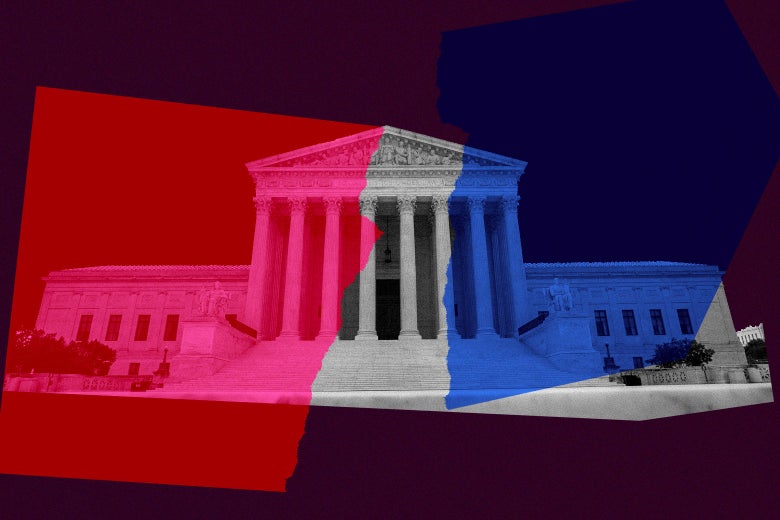
Supreme Court building with red and blue shapes superimposed on it to suggest partisanship

Supreme Court Takes A Pass On A Chance To Firmly Establish A Right To Record Police Officers

from the I-guess-try-to-exercise-your-rights-in-circuits-where-they're-respected dept

". . .Note that refusing to grant qualified immunity does not guarantee a win for the plaintiff. All the removal of this immunity does is allow the court to consider more facts and place unresolved questions in front of a jury… you know, the sort of thing courts are supposed to be doing fairly often. Qualified immunity invocations short circuit the process, allowing courts to arrive at conclusions without further fact-finding by giving law enforcement officers the benefit of a doubt.
___________________________________________________________________
The shadow docket is the use of emergency orders and summary decisions by the Supreme Court of the United States without oral argument. ... Shadow docket cases receive very limited briefings and are typically decided a week or less after an application is filed. The process generally results in short, unsigned rulings.
___________________________________________________________________
More bad news from the nation's highest court has arrived.
As Radley Balko puts it in his editorial for the Washington Post, the Supreme Court has chosen to abdicate its obligations to the Bill of Rights. (non-paywalled link here)
The Supreme Court, having created the problem of qualified immunity to shield police from being held liable for their misconduct, keeps refusing to fix it.
This week, the court declined to review an especially outrageous ruling by the U.S. Court of Appeals for the 10th Circuit involving a Denver man who was detained for recording a traffic stop, then had his computer confiscated and searched.
 
> The Tenth Circuit Court of Appeals clearly blew that decision earlier this year. Despite multiple appellate courts having established or upheld a First Amendment right to record police officers, the Appeals Court decided there wasn't enough circuit precedent to put Denver, Colorado police officers on notice that arresting a man and seizing his device simply because he was recording them was unconstitutional.
> Additionally, the Tenth Circuit declared the cops could not have known this was unconstitutional despite having received specific training from their police department that explicitly said citizens have the right to record police and should not be prevented from doing so, much less arrested for doing so.
The objective standard the Appeals Court applied said reasonable officers with this specific training would not have known that contradicting that training would result in rights violations.
The Supreme Court's rejection of this case is inexcusable.
It's pretty difficult to generate a solid case that persuasively argues for an establishment of a right by the nation's top court. This was one of the better ones. > The Supreme Court had a chance to clearly establish a right to record government employees but chose to ignore it. That means cops in this circuit -- even ones who have received explicit training advising them there's an assumed right to record -- can continue to harass and arrest people for filming them.

Radley Balko is right: this is an abdication of its responsibility to uphold the rights of citizens and act as a check against the government's desire to see those rights curtailed."

Filed Under: 10th circuit, civil rights, free speech, recording police, shadow docket, supreme court

WHOA! Rebirth of The Newly Reformed Emotet Botnet Via TrickBot

Lawrence Abrams: Unfortunately, the new Emotet infrastructure is growing rapidly, with over 246 infected devices already acting as command and control servers.

Network administrators are strongly advised to block all associated IP addresses to prevent their devices from being recruited into the newly reformed Emotet botnet.

Update 11/16/21: Updated to include source of Operation RA.

"The Emotet malware was considered the most widely spread malware in the past, using spam campaigns and malicious attachments to distribute the malware.

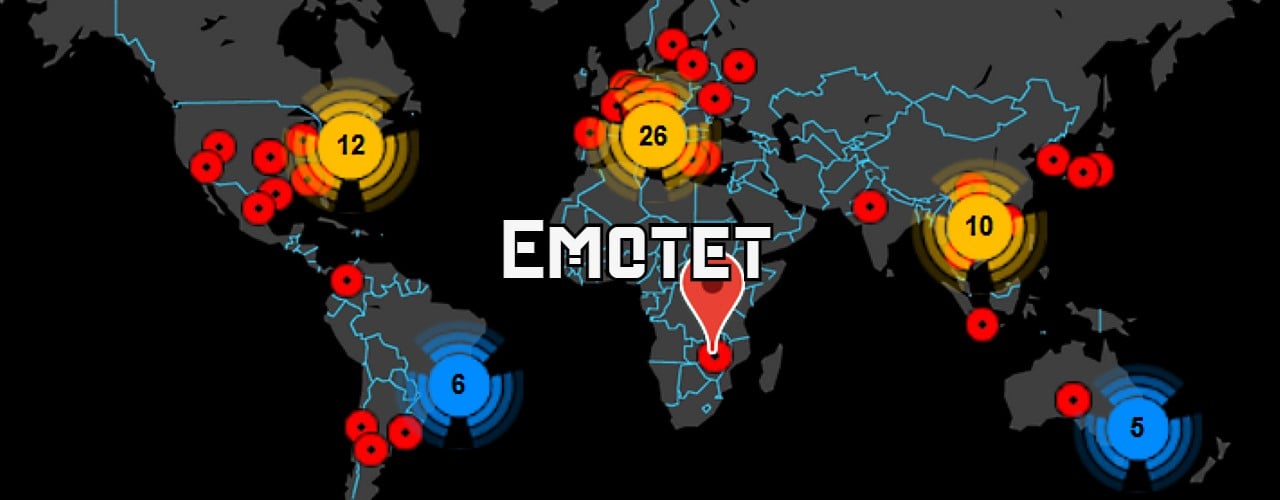
Emotet malware is back and rebuilding its botnet via TrickBot

Emotet

By November 15, 2021 03:04 PM

Emotet would then use infected devices to perform other spam campaigns and install other payloads, such as the QakBot (Qbot) and Trickbot malware. These payloads would then be used to provide initial access to threat actors to deploy ransomware, including Ryuk, Conti, ProLock, Egregor, and many others.

At the beginning of the year, an international law enforcement action coordinated by Europol and Eurojust took over the Emotet infrastructure and arrested two individuals.

German law enforcement used the infrastructure to deliver an Emotet module that uninstalled the malware from infected devices on April 25th, 2021.

Emotet returns after law enforcement operation

Today, Emotet research group Cryptolaemus, GData, and Advanced Intel have begun to see the TrickBot malware dropping a loader for Emotet on infected devices.

While in the past Emotet installed TrickBot, the threat actors are now using a method that the Cryptolaemus group calls "Operation Reacharound," which rebuilds the botnet using TrickBot's existing infrastructure

Emotet expert and Cryptolaemus researcher Joseph Roosen told BleepingComputer that they had not seen any signs of the Emotet botnet performing spamming activity or found any malicious documents dropping the malware.

This lack of spamming activity is likely due to the rebuilding of the Emotet infrastructure from scratch and new reply-chain emails being stolen from victims in future spam campaigns.

Cryptolaemus has begun analyzing the new Emotet loader and told BleepingComputer that it includes new changes compared to the previous variants.

"So far we can definitely confirm that the command buffer has changed. There's now 7 commands instead of 3-4. Seems to be various execution options for downloaded binaries (since its not just dlls)," Cryptolaemus researchers told BleepingComputer.

Advanced Intel's Vitali Kremez has also analyzed the new Emotet dropper and warned that the rebirth of the malware botnet would likely lead to a surge in ransomware infections.

"It is an early sign of the possible impending Emotet malware activity fueling major ransomware operations globally given the shortage of the commodity loader ecosystem," Kremez told BleepingComputer in a conversation.

"It also tells us that the Emotet takedown did not prevent the adversaries from obtaining the malware builder and setting up the backend system bringing it back to life."

Samples of the Emotet loader dropped by TrickBot can be found at Urlhaus.

Kremez told BleepingComputer that the current Emotet loader DLL has a compilation timestamp of "6191769A (Sun Nov 14 20:50:34 2021)."

Defending against the new Emotet botnet

Malware tracking non-profit organization Abuse.ch has released a list of command and control servers utilized by the new Emotet botnet and strongly suggests network admins block the associated IP addresses. . ."

READ MORE

https://www.bleepingcomputer.com/news/security/emotet-malware-is-back-and-rebuilding-its-botnet-via-trickbot/ 

RELATED CONTENT

Lock up your Office macros: Emotet botnet back from the dead with Trickbot links

Nice to have nearly a year off from that malspam threat, but now it's returned

The Emotet malware delivery botnet is back, almost a year after law enforcement agencies bragged about shutting it down and arresting the operators.

The SANS Institute's Internet Storm Centre (ISC) was one of many organisations to confirm overnight that the spam-based malware delivery network was back online following police raids in January 2021 targeting its command and control infrastructure.

Detailing emails the ISC had seen circulating in the wild with malicious Word, Excel, and .zip archive files attached, the org's Brad Duncan blogged: "These emails were all spoofed replies that used data from stolen email chains, presumably gathered from previously infected Windows hosts."

The revival of Emotet is serious because in its final form the Windows malware network was increasingly being used to deliver ransomware, as well as the traditional online banking credential-stealing code it was previously best known for. Typically spam emails sent by Emotet contain a document in a common file format with embedded macros.

The messages involve references to current news events, fake invoices, or memos from corporate superiors, and suchlike, to deceive users into opening the attached file and running the macros, which drop the Emotet malware itself onto the host computer. In the past Emotet has been seen delivering ransomware from well-known criminal gangs such as Conti, Ryuk, and more. . .

NO TIME TO DIE Clip - "Chase Through Matera" (2021) James Bond

Libya's eastern commander (U.S.-trained General) Haftar announces election bid • FRANCE 24 English