Zachary Leeman is the author of the novel Nigh and journalist who covers art and culture.
He has previously written for outlets such as Breitbart, LifeZette, and BizPac Review among others. Follow him on Twitter @WritingLeeman
The Emotet botnet is back by popular demand, resurrected by its former operator, who was convinced by members of the Conti ransomware gang

READ MORE
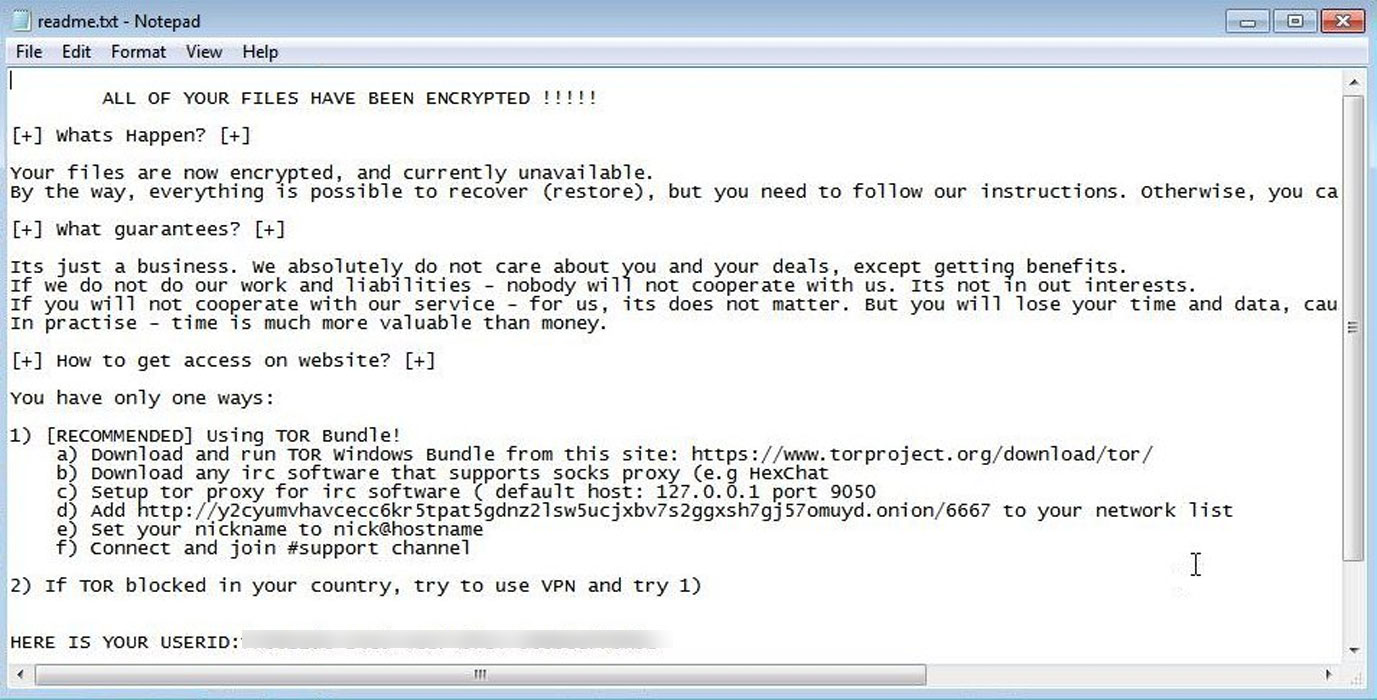
dnwls0719 found a new ransomware that appends the .dst extension and expects users to use IRC over Tor to negotiate.
The US Department of Education and Department of Homeland Security (DHS) were urged this week to more aggressively strengthen cybersecurity protections at K-12 schools across the nation to keep up with a massive wave of attacks.
Amigo-A found a new ransomware in our forums called RansomNow that drops the HELP - README TO UNLOCK FILES.txt ransom note and does not append a new extension.
A new hacker group named Moses Staff has recently claimed responsibility for numerous attacks against Israeli entities, which appear politically motivated as they do not make any ransom payment demands.
PCrisk found a new STOP ransomware variant that appends the .futm extension.
Cryptomixers have always been at the epicenter of cybercrime activity, allowing hackers to "clean" cryptocurrency stolen from victims and making it hard for law enforcement to track them.
A new wave of attacks starting late last week has hacked close to 300 WordPress sites to display fake encryption notices, trying to trick the site owners into paying 0.1 bitcoin for restoration.
Many of the people on the FBI's cyber most wanted list are Russian. While some allegedly work for the government earning a normal salary, others are accused of making a fortune from ransomware attacks and online theft. If they left Russia they'd be arrested - but at home they appear to be given free rein.
Today, Carolyn B. Maloney, Chairwoman of the Committee on Oversight and Reform, released a supplemental memo providing new insights into how the high-profile ransomware attacks on CNA Financial Corporation (CNA), Colonial Pipeline Company (Colonial), and JBS Foods USA (JBS) unfolded, and how legislation and policies responses may be developed to counter the threat of ransomware.
dnwls0719 found a new ransomware that appends the .chichi extension.
PCrisk found a new STOP ransomware variant that appends the .utjg extension.
??? There's some unusual activity brewing on Russian-speaking cybercrime forums, where hackers appear to be reaching out to Chinese counterparts for collaboration
PRODAFT Threat Intelligence (PTI) Team has obtained valuable insights on the inner workings of the Conti ransomware group. The PTI team accessed Conti’s infrastructure and identified the real IP addresses of the servers in question. This report provides unprecedented detail into the way the Conti ransomware gang works, how they select their targets, how many targets they’ve breached, and more.
A new ransomware group called Memento takes the unusual approach of locking files inside password-protected archives after their encryption method kept being detected by security software.
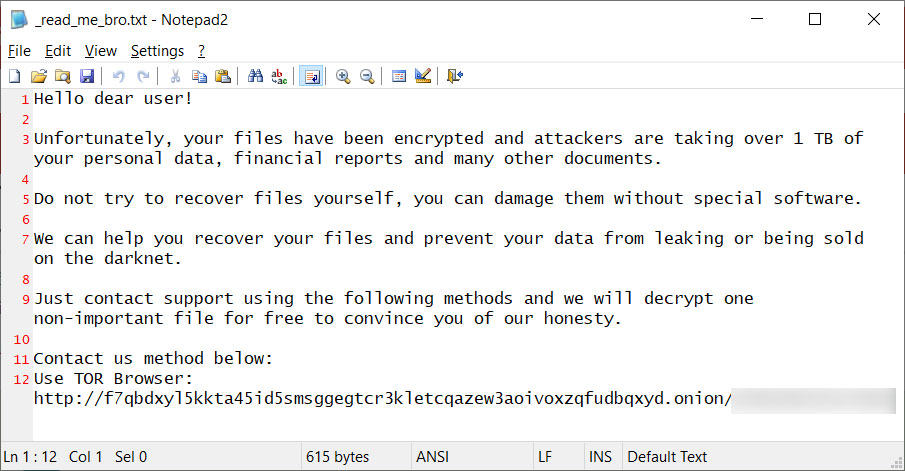
S!Ri found a new HelloKitty ransomware variant that appends the .boombye extension and drops a ransom note named _read_me_bro.txt.
US federal bank regulatory agencies have approved a new rule ordering banks to notify their primary federal regulators of significant computer-security incidents within 36 hours. . ."
/cdn.vox-cdn.com/uploads/chorus_image/image/70167732/530884400.0.jpg)
The document sold for $43 million on Thursday night

Intro: from ArsTechnica
"PyPI—the open source repository that both large and small organizations use to download code libraries—was hosting 11 malicious packages that were downloaded more than 41,000 times in one of the latest reported such incidents threatening the software supply chain.
JFrog, a security firm that monitors PyPI and other repositories for malware, said the packages are notable for the lengths its developers took to camouflage their malicious code from network detection. Those lengths include a novel mechanism that uses what’s known as a reverse shell to proxy communications with control servers through the Fastly content distribution network. Another technique is DNS tunneling, something that JFrog said it had never seen before in malicious software uploaded to PyPI.
“Package managers are a growing and powerful vector for the unintentional installation of malicious code, and as we discovered with these 11 new PyPI packages, attackers are getting more sophisticated in their approach, Shachar Menashe, senior director of JFrog research, wrote in an email. “The advanced evasion techniques used in these malware packages, such as novel exfiltration or even DNS tunneling (the first we’ve seen in packages uploaded to PyPI) signal a disturbing trend that attackers are becoming stealthier in their attacks on open source software.”
The researchers said that PyPI quickly removed all malicious packages once JFrog reported them.
> Use of open source repositories to push malware dates back to at least 2016, when a college student uploaded malicious packages to PyPI, RubyGems, and npm. He gave the packages names that were similar to widely used packages already submitted by other users.
> Over a span of several months, his imposter code was executed more than 45,000 times on more than 17,000 separate domains, and more than half the time, his code was given all-powerful administrative rights. Two of the affected domains ended in .mil, an indication that people inside the US military may have run his script.
In July, JFrog found malicious PyPI packages, downloaded more than 30,000 times, that carried out a range of nefarious activities, including stealing credit card data and injecting malicious code on infected machines.
Earlier this year, a researcher developed a new type of supply chain attack that can have serious consequences. The so-called “dependency confusion attacks” work by uploading malicious packages to public code repositories and giving them names that are identical to legitimate packages stored in the internal repository of Microsoft, Apple, or another large software developer. Developers’ software-management apps often favor external code libraries over internal ones, so they download and use the malicious package rather than the trusted one.
Now, these types of attacks are getting harder to detect.
> The biggest advance in subterfuge the researchers found was in two packages, one called “importantpackage” (or alternatively “important-package”) and the other called “10Cent10” (or “10Cent11”). The packages use the Fastly CDN to disguise communications between the infected machine and a control server.
The malicious code hiding in the packages causes an HTTPS request to be sent to pypi.python.org in a way that’s indistinguishable from a legitimate request to PyPI. The requests eventually are rerouted by Fastly as an HTTP request to the control server psec.forward.io.global.prod.fastly.net. The server then sends replies through the same setup, allowing for two-way communication. Fastly makes it easy for people to register their domains with the service. In many cases, registration can even be done anonymously.

JFrog researchers Andrey Polkovnychenko and Menashe explained:
The PyPI infrastructure is hosted on the Fastly CDN. This hosting uses the Varnish transparent HTTP proxy to cache the communication between clients and the backend. The traffic first goes into a TLS terminator for decryption, so the Varnish proxy can inspect the contents of the HTTP packet. The proxy analyzes the HTTP headers from the user’s request and redirects the request to the corresponding backend according to the
Hostheader. The process then repeats itself in the reverse direction, allowing the malware to imitate duplex communication with PyPI.As a result, the command-and-control (C2) session is encrypted and signed with a legitimate server certificate, making it indistinguishable from communicating with legitimate PyPI resources.
DNS tunneling, the other advanced evasion technique the researchers found, works using a DNS channel—normally reserved for mapping domain names to IP addresses—to send communications between an infected computer and a control server. DNS tunneling isn’t new, but the researchers said it’s the first time they have seen the technique used in malware uploaded to PyPI.
The growing sophistication of the malicious code being sneaked into PyPI, and presumably other repositories, is an indication that its use in spreading malware is likely to continue. Developers who rely on public repositories should take extra care to ensure there are no typos or stray letters in the package name they’re downloading