Monday, December 20, 2021
Sunday, December 19, 2021
IT HAPPENED IN VERMONT: Beta Technologies | VTOL "Unicorn Tango"
Beta Technologies, founded by Harvard grad and former pro hockey player Kyle Clark, is on the verge of bringing workhorse battery-powered cargo planes to America’s skies that can take off and land like helicopters.
Amazon And UPS Are Betting This Electric Aircraft Startup Will Change Shipping

...Beta Technologies is valued at a billion dollars and is on the cusp of making the major leagues with Alia, a potentially groundbreaking electric aircraft.
Alia, whose gracefully angled 50-foot wingspan Clark says was inspired by the long-flying Arctic tern, is one of a slew of novel electric aircraft that aviation upstarts are building that take off and land vertically like a helicopter. Virtually all of Beta’s competitors, including billionaire Larry Page’s Kitty Hawk and the SPAC cash-rich Joby Aviation, aim to transport people, enabling urbanites to hopscotch over traffic-snarled city streets. But Clark designed Alia primarily as a cargo aircraft, betting that a big market will develop for speeding ecommerce to and from suburban warehouses long before air taxis are considered safe to allow over city streets.
“We’re actually going to win at the passenger game because by the time others are doing passenger missions we will have thousands of aircraft, millions of flight hours and a safe, reliable, vetted design,” says the 41-year-old Clark, whose company is based in his hometown of Burlington, Vermont.
Clark is also spooling up what he thinks will be a lucrative second business: charging stations for electric aircraft of all types that he plans to dot around the country to create the aviation equivalent of Tesla’s supercharger network. There are nine up and running already, in a line from Vermont to Arkansas, with another 51 under construction or in the permitting process. Most will contain banks of used batteries from Alia aircraft, removed when their capacity has declined about 8%, giving them a profitable second life while Beta sells Alia owners replacement packs at about a half a million a pop. Equipping the charging stations with battery storage will avoid the need for expensive upgrades to the local power grid: Clark’s plan is for them to fill slowly at off-peak times, while unneeded power can be sold back at peak to utilities. . .
[...]
Clark follows two unusual strategies in running Beta: he’s aiming for a flat structure without titles where young engineers feel free to challenge older ones – and he wants everyone to learn to fly.
He gives his 350 employees free lessons in Beta’s motley fleet of 20 airplanes and helicopters, including humdrum Cessna 172 trainers, an Extra aerobatic plane, a World War II Boeing-Stearman biplane and a 1940 Piper Cub.
Many employees have no prior aerospace experience. Getting familiar with aircraft through flying helps them better design aircraft systems, as well as fosters a love of flight that Clark says is more motivating than bonuses. Investors have questioned the expense, but Clark is standing firm. “The sheer passion of when people give a shit is worth more than anything,” he says.
READ MORE: https://www.forbes.com/sites/jeremybogaisky/2021/12/16/beta-technologies-amazon-ups-evtol/
MULTIPOLAR INTERNATIONAL FINANCIAL ARCHITECTURE
China & Russia are ready to end US dominance of global finance
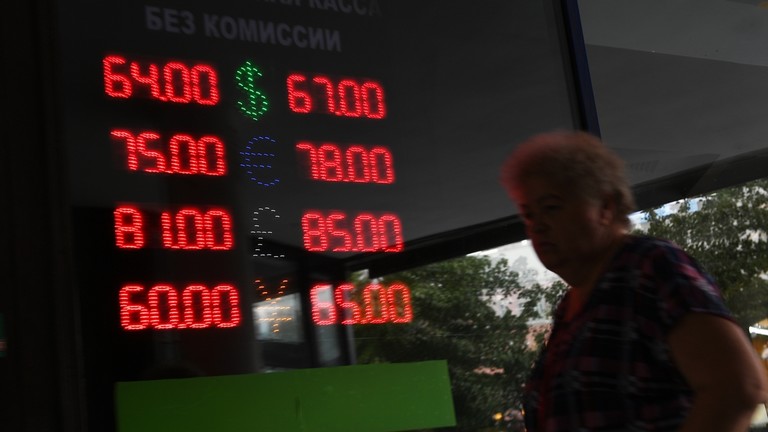
By Glenn Diesen, Professor at the University of South-Eastern Norway and an editor at the Russia in Global Affairs journal. Follow him on Twitter
China and Russia have been gradually moving towards such an arrangement since the Global Financial Crisis of 2008 revealed the risks of excessive reliance on the US. However, American economic sanctions against both Moscow and Beijing appear to have intensified the search for alternatives.
Banking on Washington
The American-centric financial architecture is an immense source of power. Most international trade is conducted in US dollars, the transfer of payments goes through the SWIFT transaction system in which the country has immense sway, while financing derives from US-led investment banks, debt is ranked by US rating agencies, and even the main credit cards are American. These economic instruments of power enable Washington to run an empire – it can manage huge trade deficits, collect data on its adversaries, give favourable treatment to allies, and crush its adversaries with sanctions.
The US-centric financial architecture is no longer sustainable. The White House has lost control over its negative trade imbalance, debt is spiralling out of control, and rampant inflation is destroying the currency. Making matters worse, Washington is using its financial architecture as a foreign policy tool by imposing sanctions on its adversaries. US security strategy confirms that China and Russia are the main two states in Washington’s crosshairs, which makes it imperative for Moscow and Beijing to establish an alternative financial architecture decoupled from the US.
De-dollarization
De-dollarisation, the reduced reliance on the US dollar as a reserve and transaction currency, is immensely challenging as the dominant role of the US dollar has defined the international financial system for more than 75 years. The dollar has continued its strong position for three main reasons: the huge size of the US economy, the preservation of the dollar’s value by keeping inflation low, and the open and liquid financial market. As the US economy is in relative decline, inflation is out of control, and its financial markets are used as a weapon – the foundations for the enduring role of the dollar are quickly coming to an end.
A financial partnership between China and Russia, the world’s largest energy importer and the world’s largest energy exporter, is an indispensable instrument for dethroning the petrodollar. In 2015, approximately 90% of trade between Russia and China was settled in dollars, and by 2020, dollar-denominated trade between the two Eurasian giants had almost reduced by half, with only 46% of trade in dollars. Russia has also been leading the way in cutting the share of US dollars in its foreign reserves. The mechanisms for de-dollarizing China-Russia trade are also used to end the use of the greenback with third parties – with advancements being seen in places such as Latin America, Turkey, Iran, India, etc. The US has been pumping out dollars to the entire world for decades, and at some point, the tide will change as the sea of dollars return home with increasingly diminished value.
Financial transactions
The SWIFT system for financial transactions between banks worldwide was previously the only system for international payments. This central role for SWIFT began to erode when the US used it as a political weapon. The Americans first expelled Iran and North Korea, and in 2014, Washington began threatening to expel Russia from the system as well. Over the past few weeks, the threat of using SWIFT as a weapon against Russia has intensified.
China has responded by creating CIPS and Russia developed SPFS, both being alternatives to SWIFT. Even several other European countries have banded together with an alternative to SWIFT to curb Washington’s extra-territorial jurisdiction and thus continue trading with Iran. A new China-Russia financial architecture should integrate CIPS and SPFS, and make them more available to third parties. If the US expels Russia, then the decoupling from SWIFT would intensify further.
Development banks
The US-led IMF, World Bank and Asian Development Bank are renowned instruments of US economic statecraft. The launch of the Chinese-led Asian Infrastructure Investment Bank (AIIB) in 2015 became a watershed moment in the global financial architecture, as all the major allies of the US (except Japan) signed up in defiance of American warnings.
The New Development Bank, formerly referred to as the BRICS Development Bank, was a further step towards decoupling from the US-led development banks. The Eurasian Development Bank and future SCO Development Bank are more nails in the coffin of US-controlled development banks.
Synergy effects
> China and Russia have also developed their own rating agencies and replaced the dominant position of Visa and Mastercard in their respective countries. This new financial architecture is complemented with an energy partnership and a technological partnership as neither China nor Russia wants to be reliant on American high-tech industries as they move into the fourth industrial revolution.
> Furthermore, China and Russia seek to avoid US-dominated transportation corridors. China has invested trillions of dollars into its Belt and Road Initiative for new land- and sea corridors, while Russia has advanced a similar but more modest program that includes developing the Arctic as a maritime route in partnership with China. Funding and managing these high-tech programs and transportation corridors will have positive synergy effects for the further development of a new international financial architecture.
The US can use more sanctions to oppose the development of a multipolar international financial architecture, although continued economic coercion will only increase the demand for decoupling from America. The first rule of sanctions is that when they are enduring, the targets of sanctions will learn to live without the belligerent power. What began as an effort to weaken and isolate Washington’s adversaries eventually ends up isolating the US.
The statements, views and opinions expressed in this column are solely those of the author and do not necessarily represent those of RT.
UPDATE: New data: Mesa rents increased 0.2% in September | Apartment List Research
October 2026 Rent Report Your monthly rental market update f rom the Apartment List Research Team Hi Tim, Our Mesa Rent Report has be...

-
 Flash News: Ukraine Intercepts Russian Kh-59 Cruise Missile Using US VAMPIRE Air Defense System Mounted on Boat. Ukrainian forces have made ...
 -
A nor’easter is about to hit the Northeast in May. That’s very unusual.

