Wednesday, April 27, 2022

30-YEAR INSIDER APPOINTED BY MARICOPA COUNTY BOARD OF SUPES AS NEW INTERIM COUNTY ATTORNEY

Supervisors took a 15-minute executive session last Wednesday morning to hear legal advice on the appointment. Then they voted in an open meeting. The vote was unanimous. . .
Mitchell has long been a powerful figure in the Maricopa County Attorney’s Office, where she has worked for more than 30 years. She served for years as the head of the agency’s sex crimes division, handling some high-profile sex abuse cases.
 
Rachel Mitchell Appointed Interim Maricopa County Attorney, Reaction Mixed 
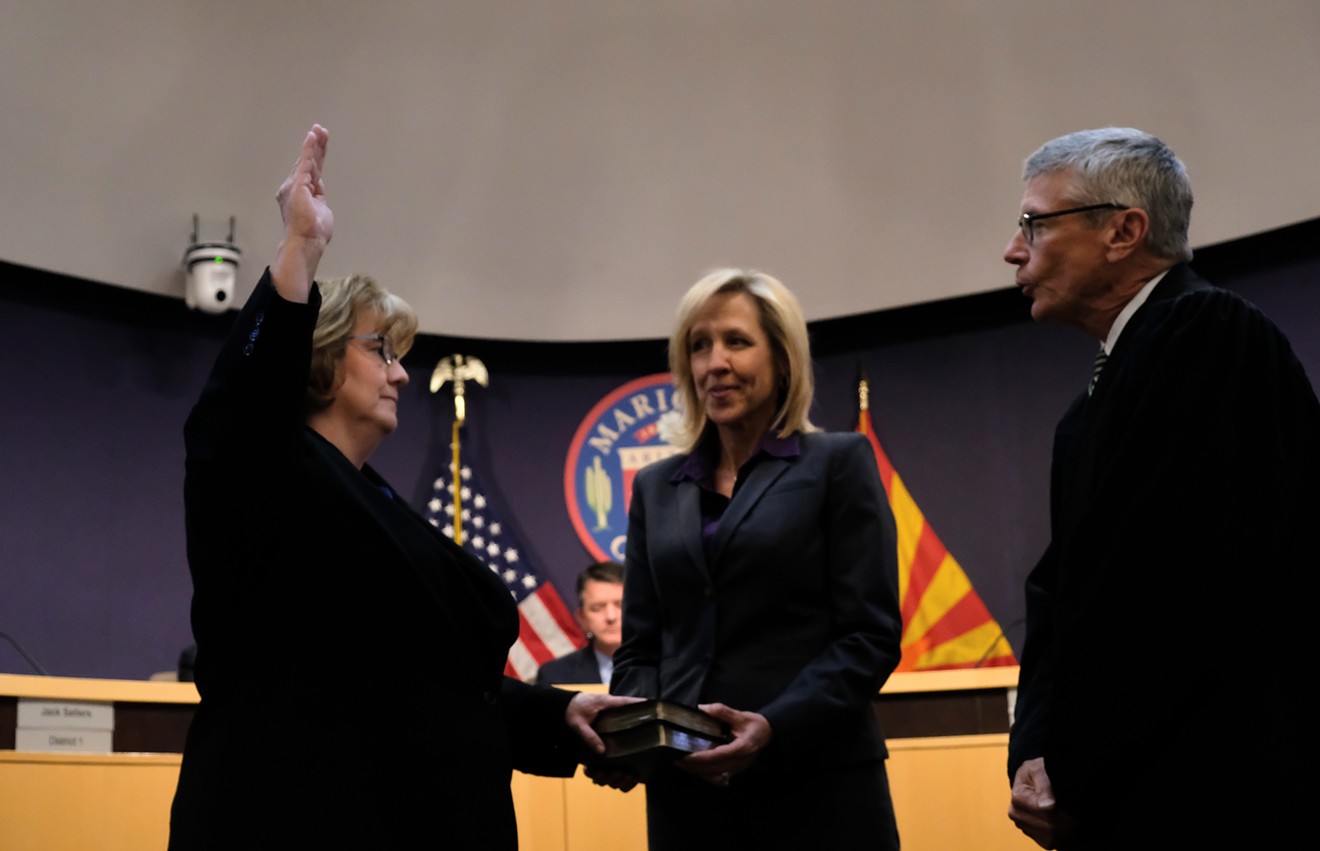
Rachel Mitchell is sworn in as Maricopa County Attorney. 

"In a statement, the Arizona branch of the American Civil Liberties Union expressed frustration that there was little public involvement in the appointment process, saying that the board had “ignored community demands to make the appointment process transparent.”

“Voters must be allowed to decide who the next Maricopa County Attorney will be — without the huge advantage that incumbency provides,” wrote K.M. Bell, a campaign strategist with the ACLU.

As of this morning, however, it is too late. Mitchell will head into the August primary as the incumbent.

Supervisors expressed their feelings of urgency over the appointment at the special meeting Wednesday. Supervisor Thomas Galvin, congratulating Mitchell, said the office had fallen into “disarray” in recent months.

“It needs a lot of help, and it needs a lot of restoration, immediately,” he said.

After the board voted on the position, Mitchell was sworn in officially and took questions from reporters.
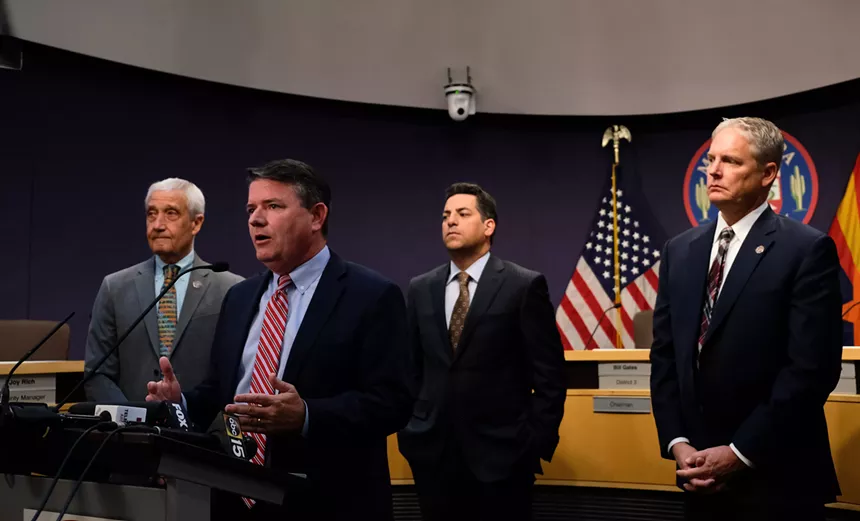
"Maricopa County has appointed Rachel Mitchell as interim county attorney.
. . .Mitchell is one of three Republican candidates for the office to qualify for the ballot this fall. This means that she will now run for that office with a significant advantage as the incumbent.
The Maricopa County Board of Supervisors decided to choose from among three Republican candidates bidding to replace former County Attorney Allister Adel, who resigned last month.

 >

CANCEL CULTURE WARS-OF-ANOTHER-KIND: Censorship for Marvel Studios' "Multiverse of Madness"

Intro: “Doctor Strange in the Multiverse of Madness” - the highly anticipated sequel to Marvel’s mind-bending blockbuster starring Benedict Cumberbatch is said to be related to LGBTQ representation - now faces a ban in Saudi Arabia, per The Hollywood Reporter

‘Doctor Strange’ Sequel Banned In Saudi Arabia Reportedly Over LGBTQ Character

Other Disney productions recently hit the same snag
By Jazmin Tolliver
Trends Reporter, HuffPost

Homosexuality is officially illegal across the Gulf, which means films featuring any LGBTQ references or issues often fail to overcome censorship.

“Doctor Strange in the Multiverse of Madness” was set to be released across the Gulf on May 5. However, advance tickets can no longer be purchased in Saudi Arabia, Kuwait or Qatar.

Advance tickets still appear to be available in the United Arab Emirates, a hint the film may still be released there.

IMAX Egypt also announced a ban for the theatrical release of the film, which is scheduled to premiere across most of the world on May 6.

Watch the trailer here:

FACTS USA Updates: Changing Marriage Household Demographics, Largest Sources of U.S. Emissions, Federal Debt

Intro: Most important from a global perspective is this ---
Key learnings from the new State of the Earth report
This new report features data from government agencies responsible for safeguarding and measuring the nation's air, land, and water conservation, and energy production
 
AMERICANS ARE LESS LIKELY TO BE MARRIED IN THE PAST
You can easily see the downward trend lines in the past 80 years
Americans are less likely to be married than in years past. In 1949, 78.8% of all households had married couples. By last year, 47.3% had married couples. 
What else is new at USAFacts?
 
1 The Federal Debt
The current federal debt is $30.3 trillion. The federal debt increased at an annual average rate of 5.6% from 1980 to 2019. In 2020, it increased by 18% compared to the year before. Learn more about how pandemic spending impacted the federal debt here.  
2 Eviction Moratoriums
 The federal government imposed eviction moratoriums via the Coronavirus Aid, Relief and Economic Security Act and through the Centers for Disease Control and Prevention (CDC), preventing landlords from evicting tenants during the pandemic. The Supreme Court ruled the CDC's ban unconstitutional on August 26, 2021.

====

Key learnings from the new State of the Earth report

Between Earth Day last Friday and Arbor Day on April 29, the last full week of April has many opportunities for Americans to reflect on the environment. The third-annual State of the Earth report is here to aid in that. This new report features data from government agencies responsible for safeguarding and measuring the nation's air, land, and water conservation, and energy production. What do the numbers say? Here's a preview:  
  • Last year, Mississippi and Massachusetts had 10+ inches of precipitation above their 20th century averages. Meanwhile, Montana and Oregon had the largest drops in average annual precipitation.
     
  • The federal government owned 28% of American land as of 2018, down 5% since 1990.
  • Transportation has been the largest source of emissions since 2017. Electricity generation and transportation create more than half of all US emissions, almost entirely through carbon dioxide-producing fossil fuel combustion. 
     
  • Together, the Bureau of Land Management and the Forest Service operate 71% of federal lands, with the National Park Service operating 13%.
  • All states contended with warmer temperatures than usual in 2021. Minnesota had the biggest difference: its average annual temperature was 4.2 F° above its 20th century average. Maine and North Dakota's averages were 4.1 F° higher. 
The report also has an interactive spotlight on air quality. See how conditions in your state stack up against the rest of the nation. Compare different regions by population density or location for a sense of where air quality is trending up or down. Visit the State of the Earth to get started.


How much carbon do US forests store?
The United States is home to 8% of the world's forestland. And though centuries of deforestation had diminished US forests, recent protection efforts have reversed this trend somewhat. Data on the country's forests dates back to 1630, more than a hundred years before the nation's founding; here are the facts on how forests offset greenhouse gases, where they're growing, and more.
  • Between 1987 and 2017, forestland grew by 52,000 square miles, which is about the size of Louisiana. 
     
  • Alaska is home to the country's largest national forest: Tongass National Forest. As for percentage of land covered by forest, the top state is Maine, with 89% of its land forested.
     
  • US forests stored 58.7 billion metric tons of carbon in 2020, offsetting 14% of carbon dioxide emissions and 11% of greenhouse gases nationwide. The amount of carbon that forests can store fluctuates due to wildfires, timber harvesting, and newly added forestland.  
     
  • Acreage burned in wildfires increased in recent decades. The average from 1983 to 1992 was 2.7 million acres. From 2011 to 2020, the average was 7.5 million.
Click here to see three additional charts on forests' role in absorbing carbon dioxide and much more. 


The Outer Limits intro