Thursday, May 26, 2022

SOCIAL LEARNING THEORY: J.B. Rotter "The Locus of Control"

Intro: Rotter (1966) defines locus of control as the degree to which a person perceives an outcome as being contingent on their own actions or those of external forces, existing along a continuum from a more internalized orientation to a more externalized orientation.
The concept of locus of control LOC has attracted the attention of researchers and practitioners for over 40 years, and its relevance to a broad array of life domains has been explored.
Locus of Control
>>Functions of Locus of Control
Locus of control has been implicated as playing an important role in a variety of areas in people’s lives, including their health, general well-being and happiness, satisfaction with their jobs and lives overall, and (to some extent) their careers and vocational aspirations and choices.
... Overall,..research has illustrated that people who are high on internal control often exhibit higher motivation and hence performance (e.g., on the job) and that internal control is frequently associated with overall better adaptation.
High-internal-control individuals are more likely to change their behavior and seem to be more adaptive. Similarly, internal control has been linked with greater persistence, which can enable the individual to persevere in the face of adversity.

The Social Learning Theory of

Julian B. Rotter

(1916 - 2014)

Rotter youngest photo Rotter middle photo Rotter oldest photo


Biographical Note

Julian B. Rotter was born in October 1916 in Brooklyn, NY, the third son of Jewish immigrant parents. Rotter's father ran a successful business until the Great Depression. The Depression powerfully influenced Rotter to be aware of social injustice and the effects of the situational environment on people. Rotter's interest in psychology began when he was in high school and read books by Freud and Adler. Rotter attended Brooklyn College, where he began attending seminars given by Adler and meetings of his Society of Individual Psychology in Adler's home.

After graduation, Rotter attended the University of Iowa, where he took classes with Kurt Lewin. Rotter minored in speech pathology and studied with the semanticist Wendell Johnson, whose ideas had an enduring influence on Rotter's thinking about the use and misuse of language in psychological science. Upon finishing his master's degree, Rotter took an internship in clinical psychology -- one of the few available at the time -- at Worcester State Hospital in Massachusetts. In 1939, Rotter started his Ph.D. work at Indiana University, one of the few programs to offer a doctorate in clinical psychology. There, he completed his dissertation on level of aspiration and graduated in 1941. By earning his Ph.D. in clinical psychology after having done a predoctoral internship, Rotter became one of the very first clinical psychologists trained in what is now the traditional mode.

After service in the Army and Air Force during World War II, Rotter took an academic position at Ohio State University. It was here that he embarked on his major accomplishment, social learning theory, which integrated learning theory with personality theory. He published Social Learning and Clinical Psychology in 1954. Rotter also held strong beliefs about how clinical psychologists should be educated. He was an active participant in the 1949 Boulder Conference, which defined the training model for doctoral level clinical psychologists. He spoke persuasively that psychologists must be trained in psychology departments, not under the supervision of psychiatrists. His ideas are still influential today (Herbert, 2002).

In 1963, Rotter left Ohio State to become the director of the clinical psychology training program at the University of Connecticut. After his retirement, he remained professor emeritus there.

Rotter served as president of the American Psychological Association's divisions of Social and Personality Psychology and Clinical Psychology. In 1989, he was given the American Psychological Association's Distinguished Scientific Contribution award.

Rotter was married to Clara Barnes, whom he had met at Worcester State, from 1941 until her death in 1985. They had two children. He later married psychologist Dorothy Hochreich. Rotter died January 6, 2014, at the age of 97 at his home in Connecticut.

[The above information is based on a biographical essay written by Julian Rotter: Rotter, J. B. (1993). Expectancies. In C. E. Walker (Ed.), The history of clinical psychology in autobiography (vol. II) (pp. 273-284). Pacific Grove, CA: Brooks/Cole. Photos courtesy of University of Connecticut.]

BASIC INFORMATION from Wikipedia

Reference: https://en.wikipedia.org/wiki/Locus_of_control

Locus of control is the degree to which people believe that they, as opposed to external forces (beyond their influence), have control over the outcome of events in their lives. The concept was developed by Julian B. Rotter in 1954, and has since become an aspect of personality psychology. A person's "locus" (plural "loci", Latin for "place" or "location") is conceptualized as internal (a belief that one can control one's own life) or external (a belief that life is controlled by outside factors which the person cannot influence, or that chance or fate controls their lives).[1]

Individuals with a strong internal locus of control believe events in their life are primarily a result of their own actions: for example, when receiving exam results, people with an internal locus of control tend to praise or blame themselves and their abilities. People with a strong external locus of control tend to praise or blame external factors such as the teacher or the exam.[2]

Locus of control has generated much research in a variety of areas in psychology. The construct is applicable to such fields as educational psychology, health psychology, industrial and organizational psychology, and clinical psychology. Debate continues whether domain-specific or more global measures of locus of control will prove to be more useful in practical application. Careful distinctions should also be made between locus of control (a personality variable linked with generalized expectancies about the future) and attributional style (a concept concerning explanations for past outcomes), or between locus of control and concepts such as self-efficacy.

Locus of control is one of the four dimensions of core self-evaluations – one's fundamental appraisal of oneself – along with neuroticism, self-efficacy, and self-esteem.[3] The concept of core self-evaluations was first examined by Judge, Locke, and Durham (1997), and since has proven to have the ability to predict several work outcomes, specifically, job satisfaction and job performance.[4] In a follow-up study, Judge et al. (2002) argued that locus of control, neuroticism, self-efficacy, and self-esteem factors may have a common core.[5]

KEEP IN MIND: Regarding locus of control, there is another type of control that entails a mix among the internal and external types.

People that have the combination of the two types of locus of control are often referred to as Bi-locals. People that have Bi-local characteristics are known to handle stress and cope with their diseases more efficiently by having the mixture of internal and external locus of control.[9] People that have this mix of loci of control can take personal responsibility for their actions and the consequences thereof while remaining capable of relying upon and having faith in outside resources; these characteristics correspond to the internal and external loci of control, respectively.

KEEP IN MIND: Rotter (1975) cautioned that internality and externality represent two ends of a continuum, not an either/or typology.

Internals tend to attribute outcomes of events to their own control. People who have internal locus of control believe that the outcomes of their actions are results of their own abilities. Internals believe that their hard work would lead them to obtain positive outcomes.[8] They also believe that every action has its consequence, which makes them accept the fact that things happen and it depends on them if they want to have control over it or not. Externals attribute outcomes of events to external circumstances.

Externals, with an external locus of control tend to believe that the things which happen in their lives are out of their control,[9] and even that their own actions are a result of external factors, such as fate, luck, the influence of powerful others (such as doctors, the police, or government officials) and/or a belief that the world is too complex for one to predict or successfully control its outcomes. Such people tend to blame others rather than themselves for their lives' outcomes. It should not be thought, however, that internality is linked exclusively with attribution to effort and externality with attribution to luck (as Weiner's work – see below – makes clear).

This has obvious implications for differences between internals and externals in terms of their achievement motivation, suggesting that internal locus is linked with higher levels of need for achievement. Due to their locating control outside themselves, externals tend to feel they have less control over their fate. People with an external locus of control tend to be more stressed and prone to clinical depression.[10]  

Stress[edit]

The previous section showed how self-efficacy can be related to a person's locus of control, and stress also has a relationship in these areas. Self-efficacy can be something that people use to deal with the stress that they are faced within their everyday lives. Some findings suggest that higher levels of external locus of control combined with lower levels self-efficacy are related to higher illness-related psychological distress.[74] People who report a more external locus of control also report more concurrent and future stressful experiences and higher levels of psychological and physical problems.[55] These people are also more vulnerable to external influences and as a result, they become more responsive to stress.[74]

Veterans of the military forces who have spinal cord injuries and post-traumatic stress are a good group to look at in regard to locus of control and stress. Aging shows to be a very important factor that can be related to the severity of the symptoms of PTSD experienced by patients following the trauma of war.[76] Research suggests that patients with a spinal cord injury benefit from knowing that they have control over their health problems and their disability, which reflects the characteristics of having an internal locus of control . . .

Organizational psychology and religion[edit]

Other fields to which the concept has been applied include industrial and organizational psychology, sports psychology, educational psychology and the psychology of religion. Richard Kahoe has published work in the latter field, suggesting that intrinsic religious orientation correlates positively (and extrinsic religious orientation correlates negatively) with internal locus.[38] Of relevance to both health psychology and the psychology of religion is the work of Holt, Clark, Kreuter and Rubio (2003) on a questionnaire to assess spiritual-health locus of control. The authors distinguished between an active spiritual-health locus of control (in which "God empowers the individual to take healthy actions"[39]) and a more passive spiritual-health locus of control (where health is left up to God). In industrial and organizational psychology, it has been found that internals are more likely to take positive action to change their jobs (rather than merely talk about occupational change) than externals.[40][33] Locus of control relates to a wide variety of work variables, with work-specific measures relating more strongly than general measures.[41] In Educational setting, some research has shown that students who were intrinsically motivated had processed reading material more deeply and had better academic performance than students with extrinsic motivation.[42]

Consumer research[edit]

Locus of control has also been applied to the field of consumer research. For example, Martin, Veer and Pervan (2007) examined how the weight locus of control of women (i.e., beliefs about the control of body weight) influence how they react to female models in advertising of different body shapes. They found that women who believe they can control their weight ("internals"), respond most favorably to slim models in advertising, and this favorable response is mediated by self-referencing. In contrast, women who feel powerless about their weight ("externals"), self-reference larger-sized models, but only prefer larger-sized models when the advertisement is for a non-fattening product. For fattening products, they exhibit a similar preference for larger-sized models and slim models. The weight locus of control measure was also found to be correlated with measures for weight control beliefs and willpower.[43]

Political ideology[edit]

Locus of control has been linked to political ideology. In the 1972 U.S. presidential election, research of college students found that those with an internal locus of control were substantially more likely to register as a Republican, while those with an external locus of control were substantially more likely to register as a Democratic.[44] A 2011 study surveying students at Cameron University in Oklahoma found similar results,[45] although these studies were limited in scope. Consistent with these findings, Kaye Sweetser (2014) found that Republicans significantly displayed greater internal locus of control than Democrats and Independents.[46]

Those with an internal locus of control are more likely to be of higher socioeconomic status, and are more likely to be politically involved (e.g., following political news, joining a political organization)[47] Those with an internal locus of control are also more likely to vote.[48][49]

Familial origins[edit]

The development of locus of control is associated with family style and resources, cultural stability and experiences with effort leading to reward.[citation needed] Many internals have grown up with families modeling typical internal beliefs; these families emphasized effort, education, responsibility and thinking, and parents typically gave their children rewards they had promised them. In contrast, externals are typically associated with lower socioeconomic status. Societies experiencing social unrest increase the expectancy of being out-of-control; therefore, people in such societies become more external.[50]

The 1995 research of Schneewind suggests that "children in large single parent families headed by women are more likely to develop an external locus of control"[51][52] Schultz and Schultz also claim that children in families where parents have been supportive and consistent in discipline develop internal locus of control. At least one study has found that children whose parents had an external locus of control are more likely to attribute their successes and failures to external causes.[53] Findings from early studies on the familial origins of locus of control were summarized by Lefcourt: "Warmth, supportiveness and parental encouragement seem to be essential for development of an internal locus".[54] However, causal evidence regarding how parental locus of control influences offspring locus of control (whether genetic, or environmentally mediated) is lacking.

Locus of control becomes more internal with age. As children grow older, they gain skills which give them more control over their environment. However, whether this or biological development is responsible for changes in locus is unclear.[50]

Age[edit]

Some studies showed that with age people develop a more internal locus of control,[55] but other study results have been ambiguous.[56][57] Longitudinal data collected by Gatz and Karel imply that internality may increase until middle age, decreasing thereafter.[58] Noting the ambiguity of data in this area, Aldwin and Gilmer (2004) cite Lachman's claim that locus of control is ambiguous. Indeed, there is evidence here that changes in locus of control in later life relate more visibly to increased externality (rather than reduced internality) if the two concepts are taken to be orthogonal. Evidence cited by Schultz and Schultz (2005) suggests that locus of control increases in internality until middle age. The authors also note that attempts to control the environment become more pronounced between ages eight and fourteen.[59][60]

Health locus of control is how people measure and understand how people relate their health to their behavior, health status and how long it may take to recover from a disease.[9] Locus of control can influence how people think and react towards their health and health decisions. Each day we are exposed to potential diseases that may affect our health. The way we approach that reality has a lot to do with our locus of control. Sometimes it is expected to see older adults experience progressive declines in their health, for this reason it is believed that their health locus of control will be affected.[9] However, this does not necessarily mean that their locus of control will be affected negatively but older adults may experience decline in their health and this can show lower levels of internal locus of control.

Age plays an important role in one's internal and external locus of control. When comparing a young child and an older adult with their levels of locus of control in regards to health, the older person will have more control over their attitude and approach to the situation. As people age they become aware of the fact that events outside of their own control happen and that other individuals can have control of their health outcomes.[9]

A study published in the journal Psychosomatic Medicine examined the health effect of childhood locus of control. 7,500 British adults (followed from birth), who had shown an internal locus of control at age 10, were less likely to be overweight at age 30. The children who had an internal locus of control also appeared to have higher levels of self-esteem.[61]

Cross-cultural and regional issues[edit]

The question of whether people from different cultures vary in locus of control has long been of interest to social psychologists.

Japanese people tend to be more external in locus-of-control orientation than people in the U.S.; however, differences in locus of control between different countries within Europe (and between the U.S. and Europe) tend to be small.[67] As Berry et al. pointed out in 1992, ethnic groups within the United States have been compared on locus of control; African Americans in the U.S. are more external than whites when socioeconomic status is controlled.[68][67] Berry et al. also pointed out in 1992 how research on other ethnic minorities in the U.S. (such as Hispanics) has been ambiguous. More on cross-cultural variations in locus of control can be found in Shiraev & Levy (2004). Research in this area indicates that locus of control has been a useful concept for researchers in cross-cultural psychology.

On a less broad scale, Sims and Baumann explained how regions in the United States cope with natural disasters differently. The example they used was tornados. They "applied Rotter's theory to explain why more people have died in tornado[e]s in Alabama than in Illinois".[37] They explain that after giving surveys to residents of four counties in both Alabama and Illinois, Alabama residents were shown to be more external in their way of thinking about events that occur in their lives. Illinois residents, however, were more internal. Because Alabama residents had a more external way of processing information, they took fewer precautions prior to the appearance of a tornado. Those in Illinois, however, were more prepared, thus leading to fewer casualties.[69]


BOOZY BOJO: The Utter Rot Inside No.10 Downing Street

Findings of the Sue Gray Report have been released; however, Gray revealed she had not properly investigated the gathering held in Johnson’s flat, where five special advisers attended and alcohol was provided. . .When Scotland Yard’s inquiry ended, Gray said she considered continuing to look into the event “but concluded it was not appropriate or proportionate to do so”.
> Many Conservative MPs had said they were waiting for Gray’s full report to be published before deciding whether the prime minister should face a vote of no confidence in his leadership. A handful of backbenchers have already said publicly that Johnson should step down.
Here are a few reports:
Bloomberg:

Boris Johnson Defends British Boozing With a Nod to Churchill and the War

Prime minister seeks to rouse his embattled MPs after a bruising day of revelations about the drinking culture in Downing Street

British Prime Minister Boris Johnson had spent all day apologizing for the drinking culture at the heart of his administration, but there was one thing he wasn’t going to give up on: the right of Members of Parliament to drink at work. 

Johnson was huddled with his Tory MPs in a closed-door meeting when the suggestion was made that it might be a good idea for drinking to be banned in Parliament and at the prime minister’s offices at No. 10 Downing Street, according to a Conservative party official who briefed reporters afterward. . .

Listen to this article

1:37
 

Partygate live: Boris Johnson says no plan to resign over Sue Gray report despite Tory MP calling for him to step down – as it happened


'It's my job to get on': Boris Johnson says he will not resign after Sue Gray report release – video


Vomiting and partying until 4am: Sue Gray delivers damning verdict on Boris Johnson’s No 10


Wed 25 May 2022 09.22 EDT First published on Wed 25 May 2022 06.30 EDT

"Sue Gray has issued a damning verdict on the party culture in Boris Johnson’s Downing Street, in a 37-page report that includes nine photographs and names a string of senior civil servants.

Gray sets out in embarrassing detail how each event unfolded, including a leaving party on 18 June 2020 at which “one individual was sick” and “there was a minor altercation between two other individuals”.

“Whatever the initial intent, what took place at many of these gatherings and the way in which they developed was not in line with Covid guidance at the time,” the report says. . .
“Even allowing for the extraordinary pressures officials and advisers were under, the factual findings of this report illustrate some attitudes and behaviours inconsistent with that guidance.”
In his first public reaction to Gray’s report, Johnson issued a qualified apology for the boozy culture that developed in Downing Street during the pandemic, saying he took “full responsibility”.
Speaking to MPs, the prime minister said he was “renewing my apology to the house, to the whole country”, for the birthday gathering in June 2020 for which he was fined, and took “full responsibility for everything that took place on my watch”.
Boris Johnson takes 'full responsibility' for his failings over Partygate – video

However, he insisted he regarded it as “one of the essential duties of leadership” to “briefly” attend leaving events and thank departing staff, because “it was appropriate to recognise and to thank them for the work that they had done”.

He claimed he had been “appalled” on learning how some of these events had subsequently developed. At one point, Johnson said: “We are humbled,” but after being jeered by MPs, corrected himself to say: “I am humbled.”

The Labour leader, Keir Starmer, responding to Johnson, dismissed his partial apology, saying: “When the dust settles and the anger subsides, this report will stand as a monument to the hubris and arrogance of a government that believed it was one rule for them, and another rule for everyone else.”

In what appears to be an indictment of the prime minister, as well as senior civil servants, Gray says: “The senior leadership at the centre, both political and official, must bear responsibility for this culture.”

> Details of the gatherings include security logs revealing some staff carried on partying until 4am after the leaving do for the director of communications, James Slack, cleaners giving evidence of spilled wine over the walls, and messages warning drunken staff to leave via the back entrance.

She also highlights a number of occasions on which members of No 10 staff raised questions about whether events should go ahead, or about drunkenness in Downing Street, and had their concerns dismissed.

The nine photographs relate to two gatherings – the June 2020 birthday party for which Johnson, Rishi Sunak and the prime minister’s wife, Carrie Johnson, were fined; and a leaving do for director of communications, Lee Cain.

> Officials in No 10 were given the opportunity to read printed copies of the report in a locked room before it was published on Wednesday morning.

Gray sets out the context in which the gatherings took place, saying: “No 10 Downing Street and the Cabinet Office were at the centre of the government’s response to the pandemic. Tight-knit groups of officials and advisers worked long hours under difficult conditions in buildings that could not be easily adapted as Covid-secure workplaces.” . . The report includes details of a drinks event in the No 10 garden on 20 May 2020, organised by Johnson’s principal private secretary, Martin Reynolds, who urged anyone working in Downing Street that day to “bring your own booze!”

> An unnamed special adviser sent Reynolds a WhatsApp message praising his “lovely idea” but pointing out a Covid press conference would just be finishing, so those attending should avoid “walking around waving bottles of wine”.

> After the party, Reynolds messaged one adviser saying: “Best of luck – a complete non-story but better than them focusing on our drinks (which we seem to have got away with).”

The prime minister attended eight of the events described in detail by Gray. . .

REFERENCE: https://www.theguardian.com/politics/2022/may/25/sue-gray-law-breaking-no-10-parties-published-boris-Johnson 


The Daily Deal (and more) from Techdirt...

Intro: If you hadn’t noticed, the U.S. doesn’t give much of a shit about this whole privacy thing______________________________________________

Our privacy regulators are comically and intentionally understaffed and underfunded, we still have no meaningful privacy law for the Internet era, and when regulators do act, it’s generally months after the fact with penalties that are easily laughed off by companies rich from data over-collection.

FTC Politely Asks Education Companies If They Would Maybe Stop Spying On Kids
Wed, May 25th 2022 06:28am -

"...That apathy extends to kids’ privacy, of course. For years, online education software vendors have engaged in just an absurd level of data over-collection and monetization, with massive data repositories culled via everything from facial recognition to keystroke tracking and deep packet inspection.
During COVID, it became increasingly clear that many of these companies were blocking students from participating in online education if they weren’t willing to agree to extensive monitoring and monetization. In direct response, the FTC last week announced the agency had issued a new policy statement reminding these companies that COPPA still exists.
In short, the FTC warned educators and companies about collecting more data than they need, implementing some basic levels of privacy and security standards, [..] selling data they collect, and restricting privacy conscious student and parent access to educational software:
acy conscious student and parent access to educational software:

“Students must be able to do their schoolwork without surveillance by companies looking to harvest their data to pad their bottom line,” said Samuel Levine, Director of the FTC’s Bureau of Consumer Protection.

Parents should not have to choose between their children’s privacy and their participation in the digital classroom. The FTC will be closely monitoring this market to ensure that parents are not being forced to surrender to surveillance for their kids’ technology to turn on.”

Unlike the broader dumpster fire that is adult data collection and monetization on the Internet, kids are at least semi-protected by the sloppy mess that is COPPA, a law that was intended to protect kids’ privacy, but was so poorly written as to create all manner of unintended consequences. .."

Techdirt

TAKE YOUR TIME TO READ MORE >> https://www.techdirt.com/2022/05/25/ftc-politely-asks-education-companies-if-they-would-maybe-stop-spying-on-kids/

 
New Daily Deal Date: Fri May 27 2022
Daily Deal: The GameCreators Mega Maker Pack Bundle

from the good-deals-on-cool-stuff dept

The GameCreators Mega Maker Pack Bundle will help you develop your own dream video game, and publish it on multiple platforms with thousands of royalty-free, 2D and 3D assets. You get AppGameKit Studio, a fully featured game development toolset with two asset packs. The bundle also has GameGuru, a non-technical and fun game maker that offers an easy, enjoyable and comprehensive game creation process that is designed specifically for those who are not programmers or designers/artists plus 9 of their asset packs. It’s on sale for $80.

Note: The Techdirt Deals Store is powered and curated by StackCommerce. A portion of all sales from Techdirt Deals helps support Techdirt. The products featured do not reflect endorsements by our editorial team.

Filed Under:


Daily Deal: The A to Z Data Science And Machine Learning Bundle

from the good-deals-on-cool-stuff dept

Take a deep dive into Machine Learning and Data Analysis across 7 courses for only $39 for a limited time. The A to Z Data Science and Machine Learning Bundle will introduce you to Python, NumPy, and Keras. You’ll learn the basics of the Matplotlib library, statistics techniques, how to build and share data applications using Streamlit, and more.

Note: The Techdirt Deals Store is powered and curated by StackCommerce. A portion of all sales from Techdirt Deals helps support Techdirt. The products featured do not reflect endorsements by our editorial team.

Filed Under:  

RECENT STORIES
__________________________________________________________________________
 

Wednesday, May 25, 2022

LEXICON DU JOUR: "Creating a Porcupine" in Taiwan...More 'Strategic Ambiguity' Brisling with More American Armaments

Intro: President Biden’s strong language during a visit to Tokyo this week tiptoed up to provocation, . .
U.S. officials are taking lessons learned from arming Ukraine to work with Taiwan in molding a stronger force that could repel a seaborne invasion by China, which has one of the world’s largest militaries.
The aim is to turn Taiwan into what some officials call a “porcupine”— a territory bristling with armaments and other forms of U.S.-led support that appears too painful to attack. . .
> The president asserted on Monday that the United States had a “commitment” to get involved militarily to defend Taiwan — the third time he has made such remarks during his presidency. And he explicitly said he would take measures that go beyond what the United States has done in Ukraine. While Beijing could see the words as belligerent, they are consistent with the new emphasis in Washington on forceful deterrence.
> On Tuesday, Mr. Biden said in Tokyo that the decades-old policy of “strategic ambiguity” — leaving open whether the U.S. military would fight for Taiwan — still stands. “The policy has not changed at all,” he said.
. . .The United States has been urging allies to speak up on Taiwan in an effort to show Beijing that Washington can rally other nations against China if it attacks the self-governing democratic island. On Monday, Prime Minister Fumio Kishida of Japan said at a news conference with Mr. Biden that the two leaders had affirmed “the importance of peace and stability of the Taiwan Strait.”

U.S. Speeds Up Reshaping of Taiwan’s Defenses to Deter China

May 24, 2022, 8:02 p.m. ET May 24, 2022, 8:02 p.m. ET

Source: https://www.nytimes.com/2022/05/24/us/politics/china-taiwan-military.html

WASHINGTON — The Biden administration has accelerated its efforts to reshape Taiwan’s defense systems as it projects a more robust American military presence in the region to try to deter a potential attack by the Chinese military, current and former U.S. officials say.

F-16 fighter jets in Chiayi, Taiwan. Chinese leaders face a complicated calculus in weighing whether their military can seize Taiwan without incurring an overwhelming cost.
Credit...Ann Wang/Reuters

Russia’s war in Ukraine has made American and Taiwanese officials acutely aware that an autocrat can order an invasion of a neighboring territory at any moment. But it has also shown how a small military can hold out against a seemingly powerful foe. . .

Taiwan has long had missiles that can hit China. But the American-made weapons that it has recently bought — mobile rocket platforms, F-16 fighter jets and anti-ship projectiles — are better suited for repelling an invading force. Some military analysts say Taiwan might buy sea mines and armed drones later. And as it has in Ukraine, the U.S. government could also supply intelligence to enhance the lethality of the weapons, even if it refrains from sending troops.

American officials have been quietly pressing their Taiwanese counterparts to buy weapons suitable for asymmetric warfare, a conflict in which a smaller military uses mobile systems to conduct lethal strikes on a much bigger force, U.S. and Taiwanese officials say.

www.plenglish.com/wp-content/uploads/2021/07/Taiwa...

...In ramping up its posture and language, the United States is trying to walk a fine line between deterrence and provocation. The actions risk pushing President Xi Jinping of China to order an attack on Taiwan, some analysts say.

A Chinese offensive against Taiwan could take many forms, such as a full-scale sea and air assault on the main island with missile barrages, an invasion of small islands closest to China’s southeast coast, a naval blockade or a cyberattack.

“Are we clear about what deters China and what provokes China?” said Bonnie S. Glaser, director of the Asia program at the German Marshall Fund of the United States. “The answer to that is ‘no,’ and that’s dangerous territory.”“We need to think long and hard on how to strengthen deterrence,” she said.

[    ] “I want P.L.A. officers to wake up each day and believe they cannot isolate Taiwan in a conflict and must instead face the decision of initiating a costly, wider conflict where their objectives are beyond their reach,” said Eric Sayers, a former senior adviser to the U.S. Pacific Command who is a fellow at the American Enterprise Institute, referring to China’s military, the People’s Liberation Army, by its initials.

U.S. intelligence analysts have been studying the evolving relationship between China and Russia and the lessons Beijing might be drawing from Ukraine.

PLEASE NOTE: A Pentagon report released last year said China’s military modernization effort continued to widen the capability gap between the country’s forces and those of Taiwan. But the Chinese military has not fought a war since 1979, when it attacked Vietnam in an offensive that ended in a strategic loss for China

[.    ] American officials...have pressed Taiwan to buy weapons systems that they deem suitable for asymmetric warfare against China. The Biden administration recently told the Taiwanese Defense Ministry not to order MH-60R Seahawk helicopters made by Lockheed Martin, and it has also discouraged orders for more M1A2 Abrams tanks.

> Admiral Stavridis said the United States needed to get weapons into the hands of the Taiwanese quickly if an invasion looked imminent, with a focus on systems that would wear down Chinese offensive capabilities.

> ...The pace of Taiwan’s weapons purchases has increased.

Since 2010, the United States has announced more than $23 billion in arms sales to Taiwan, according to the Pentagon report from last year.

In 2020 alone, authorizations totaled more than $5 billion. The sales included advanced unmanned aerial systems, long-range missiles and artillery, and anti-ship missiles.

“That would include smart mines, anti-ship cruise missiles, cybersecurity capability and special forces who can neutralize Chinese advance teams, and air defense systems,” he said.  

> Both U.S. and Taiwanese officials say Taiwanese troops need better training, but each government wants the other to take more responsibility. . .

“The U.S. has encouraged Taiwan’s military for years to talk to countries with a robust defense force,” she said. “Taiwan has sent delegations to Israel, Singapore, Finland, Sweden, some of the Baltic States. Now the situation is far more serious and far more urgent. There’s a lot more pressure.”

John Ismay and Julian E. Barnes contributed reporting from Washington, and Amy Chang


DISAPPOINTED ANGRY + FRUSTRATED: When are we going to stand up to the gun lobby?”

Intro; Tuesday’s massacre is the deadliest school shooting in Texas history, and it’s the deadliest at a U.S. elementary school since late 2012, when 27 people were killed at Sandy Hook Elementary School in Connecticut.

19 Children Killed In Texas Elementary School Shooting As Biden Urges Americans To ‘Stand Up’ To Gun Industry

"President Joe Biden called on lawmakers to pass “common-sense gun laws” in an impassioned address Tuesday evening, after a shooting at a Texas elementary school left 19 children dead, saying, “as a nation we have to ask: When in God’s name are we going to stand up to the gun lobby?”

. . .The president specifically cited the Federal Assault Weapons Ban—which took effect in 1994 but expired a decade later—as an example of a “common-sense” policy. Senate Majority Leader Chuck Schumer (D-N.Y.) has also called on Congress to pass a bill requiring universal background checks for firearm purchases, but the legislation appears unlikely to attract the 10 Republican Senate votes required to break the filibuster.

Shortly after the shooting, Sen. Ted Cruz (R-Texas) called the incident “horrific” but warned against Congress taking up gun control legislation, telling CNN: “You see Democrats and a lot of folks in the media whose immediate solution is to try to restrict the constitutional rights of law abiding citizens.”

> Cruz, Abbott and Sen. John Cornyn (R-Texas) were all slated to speak at the National Rifle Association’s annual meeting in Houston on Friday, though Cornyn’s office told local media outlets he canceled his appearance due to a preexisting schedule conflict."


Robert Reich Opinion: Billionaire donors are pushing an unsettling agenda for America

Intro: If we want to guard what is left of our freedom, we will need to meet today’s anti-democracy movement with a bold pro-democracy movement that protects the institutions of self-government from authoritarian strongmen like Trump and his wannabes, and from big money like Peter Thiel’s.

America’s billionaire class is funding anti-democratic forces

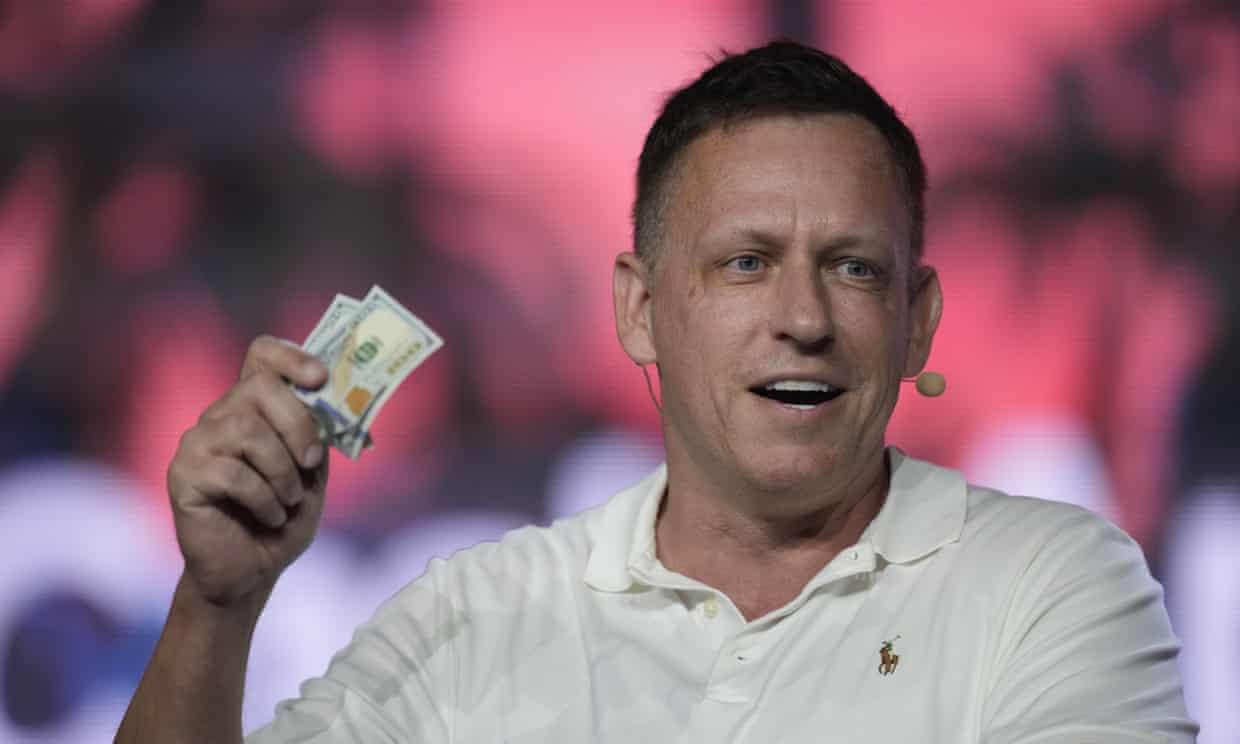
<div class=__reading__mode__extracted__imagecaption>‘Peter Thiel, the billionaire tech financier who is among those leading the charge, once wrote, “I no longer believe that freedom and democracy are compatible.”’Photograph: Rebecca Blackwell/AP<br>‘Peter Thiel, the billionaire tech financier who is among those leading the charge, once wrote, “I no longer believe that freedom and democracy are compatible.”’Photograph: Rebecca Blackwell/AP</div>

Billionaire donors are pushing an unsettling agenda for America – backing Trump’s lie that the 2020 election was stolen, calling for restrictions on voting and even questioning the value of democracy itself

Decades ago, America’s monied interests bankrolled a Republican establishment that believed in fiscal conservatism, anti-communism and constitutional democracy.

Today’s billionaire class is pushing a radically anti-democratic agenda for America – backing Trump’s lie that the 2020 election was stolen, calling for restrictions on voting and even questioning the value of democracy.

Peter Thiel, the billionaire tech financier who is among those leading the charge, once wrote, “I no longer believe that freedom and democracy are compatible.”

Thiel is using his fortune to squelch democracy. He donated $15m to the successful Republican Ohio senatorial primary campaign of JD Vance, who alleges that the 2020 election was stolen and that Biden’s immigration policy has meant “more Democrat voters pouring into this country.”

Thiel has donated at least $10m to the Arizona Republican primary race of Blake Masters, who also claims Trump won the 2020 election and admires Lee Kuan Yew, the authoritarian founder of modern Singapore.

The former generation of wealthy conservatives backed candidates like Barry Goldwater, who wanted to conserve American institutions.

Thiel and his fellow billionaires in the anti-democracy movement don’t want to conserve much of anything – at least not anything that occurred after the 1920s, which includes Social Security, civil rights, and even women’s right to vote. As Thiel wrote:

The 1920s were the last decade in American history during which one could be genuinely optimistic about politics. Since 1920, the vast increase in welfare beneficiaries and the extension of the franchise to women – two constituencies that are notoriously tough for libertarians – have rendered the notion of “capitalist democracy” into an oxymoron.

Rubbish. If “capitalist democracy” is becoming an oxymoron, it’s not because of public assistance or because women got the right to vote. It’s because billionaire capitalists like Thiel are drowning democracy in giant campaign donations to authoritarian candidates who repeat Trump’s big lie.. .

If freedom is not compatible with democracy, what is it compatible with?

Last Tuesday night, Doug Mastriano, a January 6 insurrectionist and Trump-backed big lie conspiracy theorist, won the Republican nomination for governor of Pennsylvania (the fifth largest state in the country, and the biggest state that flipped from 2016 to 2020). Mastriano was directly involved in a scheme to overturn the 2020 election by sending an “alternate” slate of pro-Trump electors to the electoral college – despite the fact that Trump lost Pennsylvania by more than 80,000 votes.

If Mastriano wins in November, he will appoint Pennsylvania’s secretary of state, who will oversee the 2024 election results in one of the most important battleground states in the country.

Meanwhile, the major annual event of the Conservative Political Action Conference (Cpac) – the premier convening organization of the American political right – was held this past week in Budapest. . .

>

NO CAPTAIN ONBOARD