Friday, June 10, 2022

GREASING THE SKIDS FOR GLOBAL INFLATION

Intro: IN CONTEXT

Back in April

Jared Kushner Flaunted His Influence With Saudi Arabia, Russia in Pitch to Investors

Affinity Partners boasts of “accelerating transformation through connectivity” in a slide deck obtained by The Intercept.

Jared Kushner’s new investment fund, Affinity Partners, nakedly touts the former Trump adviser’s work with Saudi Arabia and his links to several Trump-era deals in the hope of raising money from Wall Street, according to a slide deck for the fund dated from December. Last week, the New York Times reported that Kushner, Donald Trump’s son-in-law, won a $2 billion investment from Saudi Crown Prince Mohammed bin Salman’s investment fund for his own venture, just six months after he departed the White House.

The slide deck confirms the fund’s reliance on Kushner’s government experience and connections, particularly with regard to Saudi Arabia, to gin up business. The pitch to U.S. investors prominently advertises the team’s experience in the Trump White House, including on the Abraham Accords — a series of agreements that normalized formal diplomatic relations between Israel and some Arab countries — and a key oil production agreement reached with OPEC+, the oil cartel led by Russia and Saudi Arabia. “Aligned economic interests can solve intractable problems and create previously unrealized value,” reads one slide in the deck, which is marked “confidential.”

“Affinity’s unique network and experience makes us a differentiated partner for companies navigating the rapidly evolving global political and economic environment,” reads another. Affinity’s “value add” is depicted as a two-way arrow between “strategic partners/investors” and “target companies/operating businesses.”
Affinity Partners Slide Deck20 pages

The slides describe Kushner as “leading the negotiations on the historic OPEC+ oil agreement in April 2020 among the United States, Saudi Arabia, and Russia, which led to the largest oil production reductions in history as the Covid-19 economic crisis shocked global demand for the commodity.” Beyond smacking of revolving door politics, the reference to the agreement seems to hint at Kushner’s influence with the oil-rich Saudi kingdom. He traveled to the region earlier this year, meeting with Crown Prince Mohammed as well as the CEO of Aramco, Saudi’s national oil company.

It also contrasts sharply with U.S.-Saudi relations under President Joe Biden, who amid skyrocketing gas prices has repeatedly asked Riyadh to increase oil production to no avail. Saudi-Russia collusion to keep the global oil supply low has sent U.S. gas prices soaring to their highest levels in years, as the Intercept has previously reported. This has generated a bonanza of profits for Russia during its costly invasion of Ukraine, as well as punishing inflationary pressures in the U.S. Despite repeated entreaties from Biden for the Saudis to increase oil production, they’ve refused to budge. That’s unlikely to change. “Saudi has been very clear that it’s not increasing production,” Ellen Wald, a nonresident senior fellow at the Atlantic Council, told The Intercept. Riyadh wasn’t always so intransigent. In two election years — 2018 and 2020 — Saudi Arabia complied with then-President Donald Trump’s requests to increase and decrease production, respectively. . .

A source in contact with multiple U.S. investors approached by Affinity said the investors were not attracted by the presentation and described their shock at how cavalierly it seemed to suggest influence peddling, a “value add” often handled with more subtlety in the investment world. “They said they’d never seen such a joke of a deck, openly talking about ‘networking’ and ‘networks’ — i.e., our corrupt insider contacts,” the source said on condition of anonymity to describe private discussions. “They’re bragging about ‘networks,’ they’re using cliches, with no serious investment discussion.”

Read our Complete CoverageMaking a Killing

Prior to the Saudi investment in Affinity, the Times reported, officials in the kingdom raised concerns about Affinity’s lack of experience in private equity, and the unsatisfactory results of due diligence reviews. They were also curious as to why the company didn’t yet have U.S. investors, which Saudi staff wrote was because “The Affinity principal would like to avoid media attention at this time.” According to the Times, documents “indicate that at this point Mr. Kushner’s venture depends primarily on the Saudi money.”

RELATED......................................................................................................................................

Biden’s Top Middle East Adviser ‘Torched The House And Showed Up With A Firehose’

Brett McGurk has worked on MidEast issues since 2004. Now he's more powerful than ever under President Joe Biden — and insiders worry he's relying on a failed playbook.
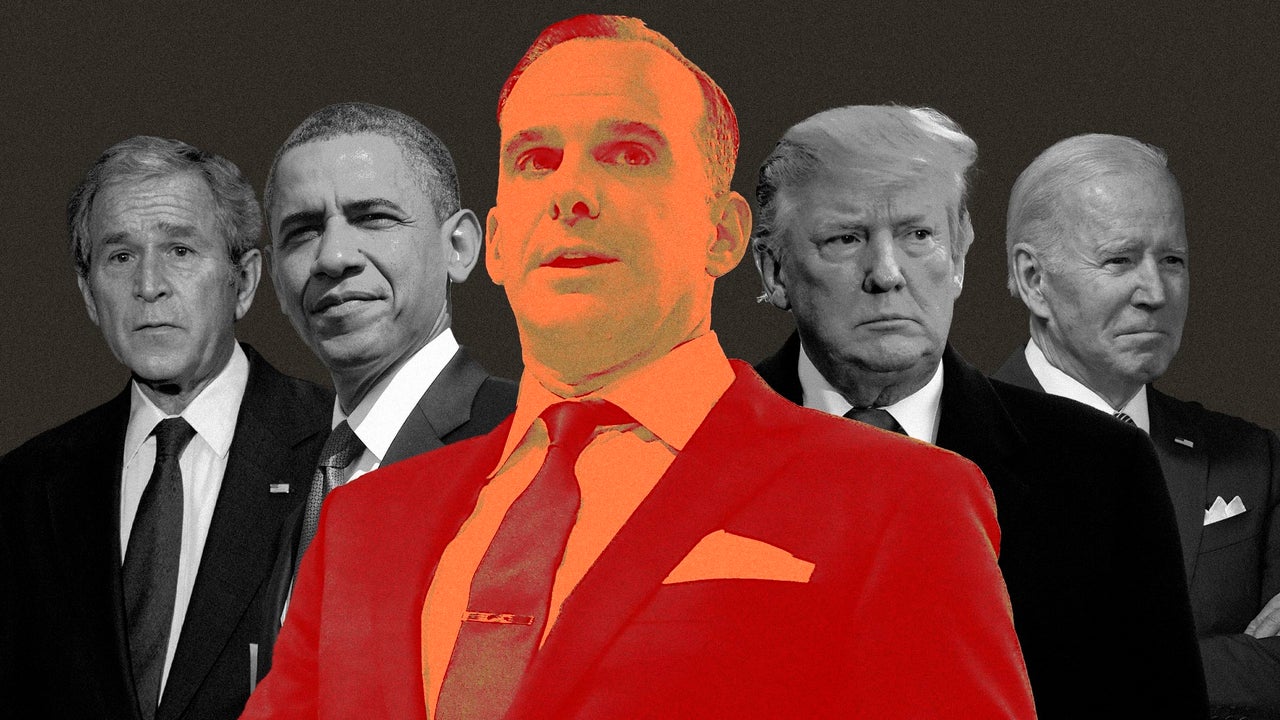
<div class=__reading__mode__extracted__imagecaption>Brett McGurk

President Joe Biden is about to make his biggest statement yet about America’s role in the Middle East — one that will disappoint many of his supporters and affirm that while presidents come and go, Washington’s often self-defeating approach to the region persists.

Ahead of Biden’s first presidential trip to the region this summer, his aides are finalizing a set of documents that one U.S. official who viewed the package summed up as “a recitation of every establishment view.”

Perhaps no one better reflects the national security establishment than the architect of Biden’s approach: Brett McGurk, the White House coordinator for the Middle East and North Africa.

As one of the few Washington operators who can boast of serving four successive presidents — both Republicans and Democrats — the 49-year-old McGurk is now more powerful than ever. And his personality, views and relationships are guiding American policy in a region where the U.S. has often made deadly, destabilizing mistakes, particularly over the almost 20 years during which McGurk has climbed up the ranks of government.

McGurk’s emphasis is on stability: He believes the U.S. should shore up local regimes, warts and all, as partners against threats like militancy, Iran’s nuclear capabilities and disruptions to global trade.

That view has largely guided America’s approach for decades. But today, many experienced analysts — including Biden’s own advisers — are questioning that tired strategy. They say it can convince Middle Eastern dictators they have unconditional support from Washington, and can blind the U.S. to the costs and the shakiness of authoritarian rule. . .

In interactions with congressional staffers this spring, for instance, McGurk’s team privately pushed back on a letter from 30 Democratic lawmakers urging “a serious reassessment of the U.S.-Saudi relationship,” according to a source familiar with the incident.

HuffPost presented all these criticisms to McGurk, who forcefully rebutted them in a phone call but declined to let his responses be used on the record. . .

Middle East, McGurk-Style

McGurk presents himself as humbled by U.S. overreach in the Middle East. Biden will not pursue “maximalist” American goals like past presidents he served, McGurk told The National last year.

In practice, Biden is behaving much like Obama and Trump: providing largely unchecked support to local autocrats and often letting their concerns drive decisions. McGurk’s bet is that a soft approach will create a foundation for a sustainable, ultimately beneficial U.S. regional policy. But skeptics note that by avoiding tough conversations with MidEast partners in the past, particularly about their domestic repression, the U.S. has ultimately faced crisis after crisis.
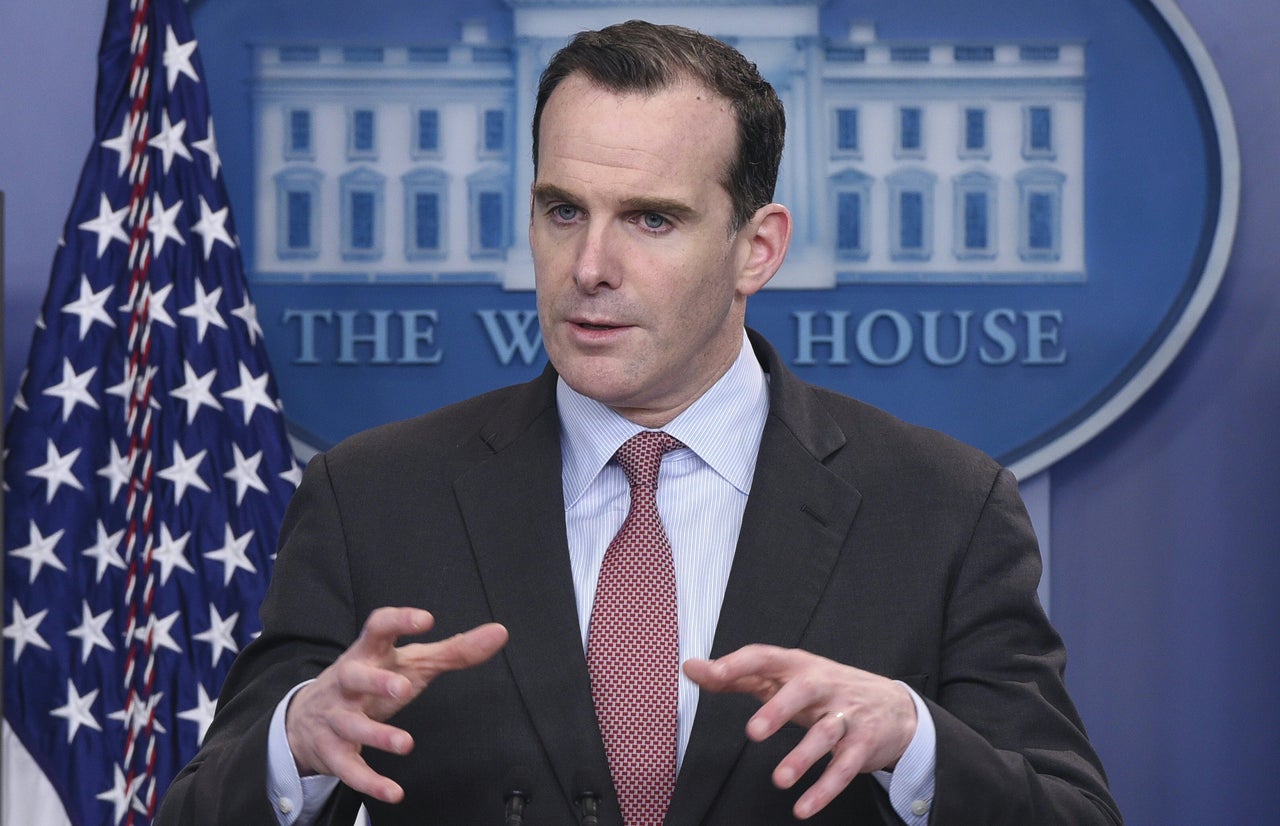
McGurk is a familiar face in Washington — and he is now more powerful than ever.

Consider U.S.-Saudi relations.

After Biden’s initial critiques of the kingdom, his administration has spent months courting de facto Saudi ruler Crown Prince Mohammed bin Salman, shipping him fresh weapons and repeatedly sending McGurk and other top officials to Riyadh. The prince, known as MBS, refused to speak with Biden this spring when he sought help with the oil market, according to Wall Street Journal reporting, and his allies say the trouble is Biden — not the prince’s erratic record, including his role in the killing of Jamal Khashoggi. (Notably, recent White House readouts of interactions with top Saudi officials did not even mention the murdered journalist.)

Now, the Biden administration is planning a summer meeting between the president and MBS, two sources familiar with the discussions told HuffPost.

[    ] “Biden promised accountability. Then there was no accountability and the excuse was, ‘It’s so they’ll help us when we need them,’” said one observer of the relationship. “Then comes a moment of need, where the Saudis didn’t help when the U.S. asked for more oil. How do you rectify your failure? A failed appeasement policy will not be fixed with more appeasement.”

Policymakers wary of McGurk’s drive for a reconciliation worry that other core concerns will be overlooked.“McGurk is the person Middle East autocrats turn to when they want a pliant ear.”

- U.S. official
. . .Derisively referring to McGurk as “the present-day Lawrence of Arabia,” the official concluded: “He’s a very smooth-talking white guy who has now these credentials, and it almost feels like it doesn’t matter who comes into office — they’re going to have Brett run the Middle East for them.”

Saudi Arabia cuts oil flows to China despite OPEC+ pledge to accelerate production

<div class=__reading__mode__extracted__imagecaption>Saudi Aramco is yet to provide a reason for the shortfall (Shutterstock)

RIYADH: Saudi Arabia will provide some Chinese buyers with less crude than they asked for next month, despite a pledge by the Organization of the Petroleum Exporting Countries and its allies, known as OPEC+, to speed up production.

Saudi oil giant Aramco normally does not provide buyers a reason why volumes are cut, according to Bloomberg, which added that Aramco did not immediately reply to an email seeking comment on the matter.

While Chinese buyers are facing a shortfall, those in Japan, South Korea, Thailand and India will get the oil volumes they had sought, with some even getting extra supplies, Bloomberg reported, citing refinery officials who asked not to be identified for information privacy. 

Looking for alternatives to Russian products, many Asian buyers asked Aramco for more oil this week, during the so-called nomination process.

Buyers are still finding Saudi cargoes more affordable than supplies from the North Sea and the US, despite a higher-than-expected increase in prices from the Kingdom.

China and India are big buyers of Russian crudes, even after Moscow’s invasion of Ukraine. 

RIYADH: Construction firm China Railway 18th Bureau Group Co. has been awarded a $974 million contract to build five kilometers of tunnels in the Saudi Arabian city of Madinah.

The project also involves the construction of a pedestrian bridge, according to MEED.

Al-Amida road will serve as an alternative to the current ring road, through expanding the roadway to six lanes, upgrading the Ali Bin Abi Taleb traffic tunnel and connecting Al-Amida to the King Faisal ring road.

Canada’s WSP and US-based Parsons are among consultants working on the project while Rua al-Madinah Holding is the client, MEED said.

Saudi Arabia also witnessed a tunneling project in NEOM, in June, with contracts being awarded for the bored tunneling sections of The Line.
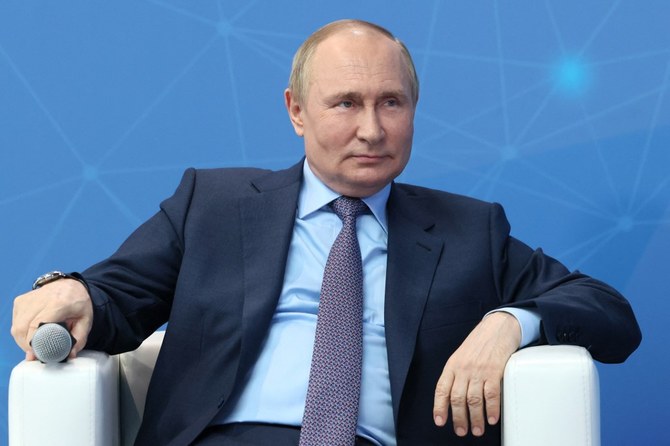
RIYADH: Russian companies should not start “concreting over their oil-wells” according to Vladimir Putin as he predicted the West will rely on energy from his country for many years.

As the EU currently imports around 40 percent of its gas from Russia, the bloc has pledged to reduce its dependency on Russian oil by 90 percent by the end of 2022. . .

SOMETHING TO CHIRP ABOUT: Twitter overhauls process for reporting rule-breaking idiots

Hmmm...The rollout of the new reporting flow comes as Elon Musk’s attempted takeover of the platform has placed renewed scrutiny on Twitter’s moderation policies. Musk’s position as a “free speech absolutist” suggests he’d want the company to take a much more relaxed approach to content moderation under his ownership. But with the Tesla CEO making frequent threats to scrap the deal, it’s still unclear when, or even if, the acquisition may be completed.
The new reporting flow in action

Twitter overhauls process for reporting rule-breaking idiots

In testing, actionable reports increased by 50 percent thanks to the new process

<div class=__reading__mode__extracted__imagecaption>The new reporting flow in action.

Twitter’s redesigned process for reporting policy violations on its platform is now widely available, the company has announced. It’s designed to handle everything from reports about misinformation and spam, to harassment and hate speech. The redesign has been in testing since December last year, and uses a so-called “symptoms-first reporting flow” that’s designed to make it easier to report bad behavior. It’s now available in “most countries” across web, iOS, and Android.

The company outlined how the new process works in a blog post last year. Previously, Twitter’s process would ask which policy has been broken, and then ask for more details. Instead, the new flow asks for details on what’s happened, before getting more granular about which rules may have been broken. Twitter’s blog post likened the new process to a doctor asking “Where does it hurt?” rather than immediately jumping to specifics.

Early results from the testing have been positive. Twitter says the number of “actionable reports” increased by 50 percent as a result of the new process.

Jan 1/6 HEARINGS: Sorry, Boomers, but this is not the Watergate scandal

The day before David Brooks had this to say in an Opinion Piece: "Using the events of Jan. 6 as campaign fodder is small-minded and likely to be ineffective. If you think you can find the magic moment that will finally discredit Donald Trump in the eyes of the electorate, you haven’t been paying attention over the last six years. . .
Sorry, boomers, but this is not the Watergate scandal in which we need an investigation to find out who said what to whom in the Oval Office. The horrors of Jan. 6 were out in public. The shocking truth of it was what we all saw that day and what we’ve learned about the raw violence since.
David Brooks wrote this the day before:
 

The Jan. 6 Committee Has Already Blown It

Former U.S President Donald Trump on screen during the hearing of the U.S. House Select Committee to Investigate the January 6 Attack on the United States Capitol, on Capitol Hill in Washington on Thursday. | REUTERS

The point of progressive politics is not, ultimately, to get a particular person elected; it’s to make change.

Opinion Piece written by Bill McKibben: "American politics—especially now—is not noted for its graciousness. But last week something happened in Vermont that deserves notice, if only because the example it sets could help other progressives in other places consolidate power.
And finally it reminds us that—though ego is part of what drives anyone willing to take on the somewhat crazy job of politics in the 21st century—there’s something a little lovely when people overcome that ego
> The state’s senior senator, Pat Leahy, is retiring after this term
> (Bernie Sanders’s seat could come open if he chooses not to run again in two years.)

Why What Happens In Vermont Shouldn’t Stay In Vermont

It could help progressives in other places build power.

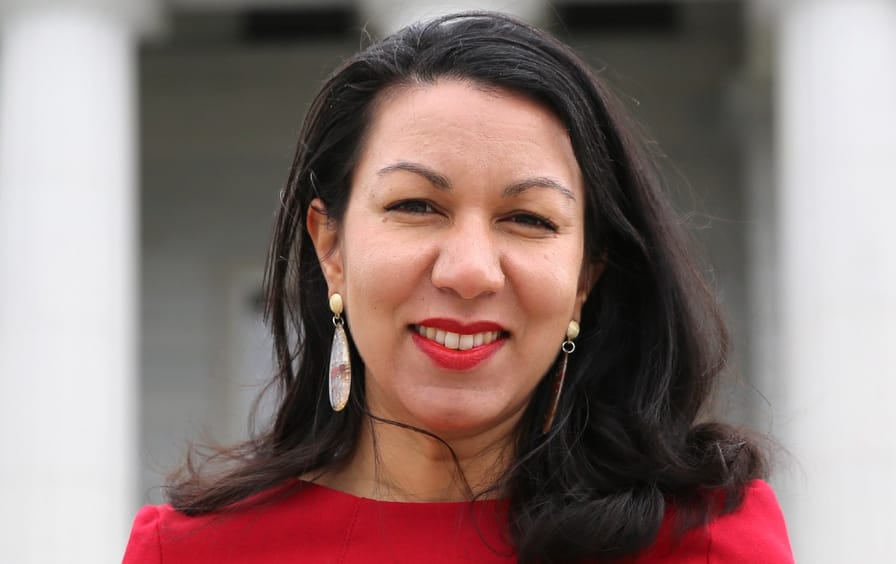
<div class=__reading__mode__extracted__imagecaption>Democratic Vermont State Senator Kesha Ram Hinsdale poses in front of the statehouse in Montpelier, on April 20, 2022. (Wilson Ring / AP Photo)

". . .It came about a week ago, the final filing deadline for this year’s statewide elections. Because the state’s senior senator, Pat Leahy, is retiring after this term, its single representative—Peter Welch—is campaigning for his seat. And so in turn several candidates, all of them women, were jousting in the Democratic primary for Welch’s old chair. (In Vermont, the Democratic primary has lately been decisive for federal offices.)

Two of the women—Kesha Ram Hinsdale and Becca Balint—are staunch progressives; the third, Molly Gray, would be more liberal than most Democrats in Congress, but she’s more centrist than her competitors, and has attracted mainstream money for her campaign. So on Friday, at the last possible moment, Ram Hinsdale withdrew from the race and endorsed Balint. “During our time together in the Vermont Senate, Becca and I have always shared the same vision for the future of Vermont,” Ram Hinsdale wrote in a letter to her supporters (a group that included me). “One that champions the needs of working families, bucks the status quo, and fights for everyone in Vermont to have a seat at the decision-making table. I feel lighter knowing that I can support a woman of deep character who has worked so hard and is going to serve Vermonters so well in Washington.”

It wasn’t an easy call—Ram Hinsdale is an ambitious politician, the youngest state legislator in the country when she first ran in 2008 and the youngest Indian American ever elected to state office. And she would have been not just the first woman but the first person of color Vermont ever sent to D.C.

And it wasn’t entirely selfless: She was trailing slightly in the race according to the only poll, and this way she can retain her state Senate seat (perhaps with an inside edge to become the chamber’s leader) and live to fight again another day for federal office. (Bernie Sanders’s seat could come open if he chooses not to run again in two years.)

But her decision did illustrate several things I wish other progressive candidates would keep in mind. . .

[Read between-the-lines https://www.thenation.com/article/politics/vermont-congress-election/ ]

. . .It’s not lost on me that these are women making a smart set of decisions—living in the age of Marjorie Taylor Greene, Lauren Boebert, and Elise Stefanik can make one discount the importance of gender in changing politics, but there’s something there.

And of course they are from Vermont, where politics is generally played in somewhat calmer fashion: All-out aggression doesn’t get you as far here as it seems to in some places. But, truthfully, this kind of calculation shouldn’t be beyond anyone anywhere. The point of progressive politics is not, ultimately, to get a particular person elected; it’s to make change. Which can happen in lots of ways."


REVISED ECONOMIC FORECAST FOR GLOBAL ECONOMY...World Markets On The Brink of A Crisis

According to the report, both rich and poor countries would be hit by the growth slowdown, but developing and emerging market economies are the most vulnerable. Growth in advanced economies was forecast to decline from 5.1% to 2.6% this year, while in emerging and developing countries it is expected to drop from 6.6% to 3.4%.

<div class=__reading__mode__extracted__imagecaption>The trade war has is having an impact on global markets (Image: GETTY)

7 Jun, 2022 15:34

World Bank issues grim economic forecast

The global economy is facing weak growth and high inflation, the report says

World Bank issues grim economic forecast

The World Bank (WB) has cut its global growth projection for this year from 4.1% to 2.9%, warning that many countries are likely to face recession.

“Amid the war in Ukraine, surging inflation, and rising interest rates, global economic growth is expected to slump in 2022,” the Tuesday press release said.

“Several years of above-average inflation and below-average growth are now likely, with potentially destabilizing consequences for low- and middle-income economies. It’s a phenomenon – stagflation – that the world has not seen since the 1970s.”

According to WB President David Malpass, “for many countries, recession will be hard to avoid.”

The institution said that after halving from 5.7% in 2021, growth would be stuck at 3% in both 2023 and 2024 as the Russia-Ukraine conflict affected investment and trade, the pent-up demand from the pandemic faded, and policy support was withdrawn.

The report highlighted that the slowdown in growth between 2021 and 2024 was on course to be twice that of the period between 1976 and 1979. The recovery from the stagflation of the 1970s required steep increases in interest rates in the West, it said. Those “played a prominent role in triggering a string of financial crises in emerging market and developing economies.”

According to the report, both rich and poor countries would be hit by the growth slowdown, but developing and emerging market economies are the most vulnerable. Growth in advanced economies was forecast to decline from 5.1% to 2.6% this year, while in emerging and developing countries it is expected to drop from 6.6% to 3.4%.

“Just over two years after Covid-19 caused the deepest global recession since World War II, the world economy is again in danger … Even if a global recession is averted, the pain of stagflation could persist for several years – unless major supply increases are set in motion,” said the report."

RELATED

World Bank warns global economy may suffer 1970s-style stagflation

Risks of further deterioration are mounting

The global economy may be headed for years of weak growth and rising prices, a toxic combination that will test the stability of dozens of countries still struggling to rebound from the pandemic, the World Bank warned Tuesday.

Not since the 1970s — when twin oil shocks sapped growth and lifted prices, giving rise to the malady known as “stagflation” — has the global economy faced such a challenge.

The bank slashed its annual global growth forecast to 2.9 percent from January’s 4.1 percent and said that “subdued growth will likely persist throughout the decade because of weak investment in most of the world.”

Fallout from Russia’s invasion of Ukraine has aggravated the global slowdown by driving up prices for a range of commodities, fueling inflation. Global growth this year will be roughly half of last year’s annualized rate and is expected to show little improvement in 2023 and 2024.

This will be the sharpest slump after an initial post-recession rebound that the global economy has suffered in more than 80 years, the bank said. And the situation could get even worse if the Ukraine war fractures global trade and financial networks or soaring food prices spark social unrest in importing countries.

PRESTIGIOUS THINK-TANK BROOKINGS INSTITUTIONS PUTS PRESIDENT ON ADMINISTRATIVE LEAVE

Intro:

Brookings Institution Places Its President On Leave Amid FBI Probe

Brookings Institution President and retired four-star Marine Gen. John Allen is being investigated for his role in an illegal foreign lobbying campaign.

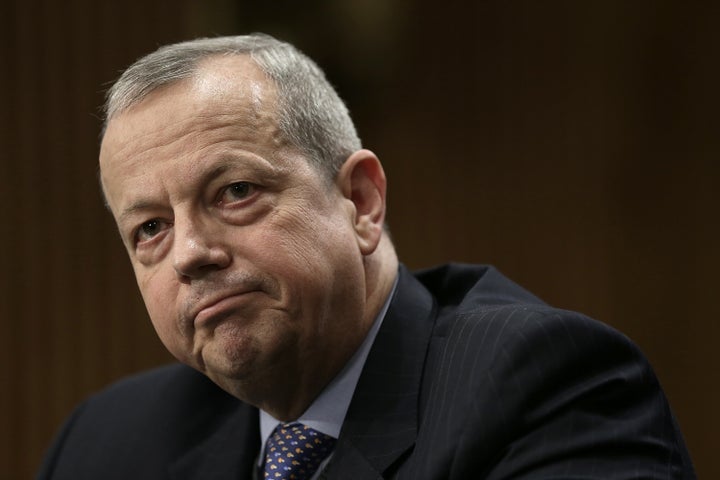
<div class=__reading__mode__extracted__imagecaption>Retired Marine Corps Gen. John Allen, special presidential envoy for the global coalition to counter ISIL testifies before the Senate Foreign Relations Committee February 25, 2015 in Washington, DC.

The prestigious Brookings Institution placed its president, retired four-star Marine Gen. John Allen, on administrative leave Wednesday amid a federal investigation into Allen’s foreign lobbying.

Brookings’ announcement came a day after The Associated Press reported on new court filings that show the FBI recently seized Allen’s electronic data as part of an investigation into his role in an illegal foreign lobbying campaign on behalf of the wealthy Persian Gulf nation of Qatar.

An FBI agent said in an affidavit in support of a search warrant there was “substantial evidence” that Allen had knowingly broken a foreign lobbying law. Allen had made false statements and withheld “incriminating” documents, the FBI agent’s affidavit said.

Allen has not been charged with any crimes and previously denied any wrongdoing.

Brookings told staffers Wednesday that the institute itself is not under federal investigation. The think tank’s executive vice president, Ted Gayer, will serve as acting president.

“Brookings has strong policies in place to prohibit donors from directing research activities,” the email said. “We have every confidence in the Brookings team’s ability to remain focused on delivering quality, independence, and impact.”

The federal investigation involving Allen has already ensnared Richard G. Olson, a former ambassador to the United Arab Emirates and Pakistan who pleaded guilty to federal charges last week, and Imaad Zuberi, a prolific political donor now serving a 12-year prison sentence on corruption charges. Several members of Congress have been interviewed as part of the investigation.

The new court filings detail Allen’s behind-the scenes efforts to help Qatar influence U.S. policy in 2017 when a diplomatic crisis erupted between the gas-rich Persian Gulf monarchy and its neighbors.

Allen’s alleged work for Qatar involved traveling to Qatar and met with the country’s top officials to offer them advice on how to influence U.S. policy, as well as promoting Qatar’s point of view to top White House officials and members of Congress, the FBI’s affidavit says.

Brookings is one of the most prestigious think thanks in the U.S.

Allen, who was a senior fellow at the Brookings Institution prior to becoming president in late 2017, used his official email account at the think tank for some of his Qatar-related communications, the affidavit says.

Qatar has long been one of Brookings’ biggest financial backers, though the institution says it has recently stopped taking Qatari funding."


Brookings puts president on leave amid reported federal probe

[ See original image

The Brookings Institution put its president, former Marine Gen. John Allen, on administrative leave Wednesday, after an AP report said there is a federal investigation into his role in a foreign lobbying campaign on behalf of Qatar.

Why it matters: AP on Tuesday reported the FBI seized Allen's electronic data as part of the probe, which has implicated other U.S. officials.

The think tank informed employees of Allen's leave in an email Wednesday that was obtained by Axios. Brookings stressed to its workers that the organization is not under investigation.

  • Allen, who led U.S. and NATO forces during the war in Afghanistan, has been president of Brookings since 2017.

Former VTDigger Reporter Can Go Deeper Here in Arizona: Awards & Recognitions...and "Letting-Go"

Certainly the scandal-ridden MCAO deserves some more attention than this!

Prosecutors

Maricopa County Attorney's Office to Oust 'ACAB Gang' Prosecutor

MCAO prosecutor April Sponsel receives an award from Mesa police in 2018.

"April Sponsel, the prosecutor who ignited a major scandal when she brought bogus gang charges against Black Lives Matter protesters, is on her way out of the Maricopa County Attorney's Office.
After keeping Sponsel on paid leave for more than a year, the county informed her on Monday that they plan to fire her, citing multiple cases that she had egregiously overcharged. ABC15 broke the news of the county's plans on Tuesday evening.
The details of these new cases are damning.

> In one, Sponsel charged a man with felony assault on an officer with a "dangerous weapon." It turned out to be a nearby ballpoint pen, which no one saw the man holding. . .Sponsel is being investigated by the Arizona state bar over her conduct in this case and others, according to court documents obtained by New Times that contain emails from a state bar investigator requesting grand jury transcripts of the cases.

Other Sponsel cases highlighted in the letter suggest similar issues.

Though the county has now formally informed Sponsel that it plans to dismiss her, the termination is not yet finalized. Sponsel will be allowed to respond at a meeting with the county next week. Asked about Sponsel at a press conference Wednesday morning, interim Maricopa County Attorney Rachel Mitchell said because it was an "active personnel matter," she couldn't get into details.

Phoenix New Times obtained a copy of the 16-page dismissal letter against Sponsel, however, that details the key failures of the 2020 gang prosecutions, which have been widely reported. But, notably, it also exposes serious flaws in several other cases Sponsel handled over the last few years,. .Before that, though, Mitchell took over the division in September 2021 and, she claims, reviewed Sponsel's record. "I was the person who identified those cases," she told press on Wednesday.

NOTE: The letter, and the county's review, only dealt with Sponsel's most recent pending cases from 2020 and 2021, when she was part of the now-disbanded first responders unit.

> Though she held a key role, Sponsel was just one of multiple prosecutors and law enforcement officials at the county and the Phoenix Police Department who worked to bring the charges. After public outcry began to mount, the county attorney's office dropped the charges. In March 2021, it placed Sponsel on leave. An investigation commenced, culminating in Monday's decision.

THE STORY CONTINUES: . . But Sponsel has an 18-year tenure as a MCAO prosecutor. For years, she was a lead counsel on cases involving aggravated assault on law enforcement officers. She received glowing performance reviews as recently as last spring, she has alleged in court documents in her ongoing defamation lawsuit against the county.

In her lawsuit, which was filed in February, Sponsel claims that the county attorney's office and former County Attorney Allister Adel scapegoated Sponsel for the gang prosecutions — when, in fact, the entire chain of command approved of the charges.

"Everyone on the MCAO executive team, including Adel and others in her chain of command, was aware that Sponsel would be handling the [gang case] and approved of her handling the case," the civil complaint alleges.

Sponsel was informed by her supervisor, she alleges in court, that Adel and her second-in-command, Ken Vick, had approved of the gang charges. There was "no question" that Adel was aware of the charges, Sponsel claims. Vick is now facing a state bar investigation over his role in the prosecutions.

>> But armed with the evidence in this letter, the county seems to be making a case that the gang prosecutions were not an isolated event.

Mitchell said Wednesday that the county is open to looking back at older cases that Sponsel handled, but is not doing so proactively. "If there are some additional cases from the past, beyond the time that [Sponsel] was in the First Responders Bureau, that people have concerns about and want us to look at, we can certainly do that," Mitchell said.
The complete notice of intent to dismiss Sponsel, with some redactions by the county attorney's office, is shown below:

Please read more / go there >> https://www.phoenixnewtimes.com/news/april-sponsel-embattled-acab-gang-prosecutor-to-be-ousted-from-attorneys-office-13792647 

RELATED CONTENT