Saturday, July 02, 2022

Mission StraightUp: VIRGIN ORBIT COSMIC GIRL LAUNCHES 7 RESEARCH SATELLITES INTO LOW-EARTH ORBIT

‘Straight Up’ success!

Virgin Orbit successfully launches satellites during first night mission

img_86-1.jpg

1 comment

‘Straight Up’ success

"Virgin Orbit launched a rocket carrying seven satellites from California’s Mojave Air and Space Port early Saturday morning at 1:49 AM ET (10:49PM local), marking the small satellite launcher’s first successful night mission. The company brought the satellites into low Earth orbit with the help of its Boeing 747 carrier aircraft called Cosmic Girl, which had the LauncherOne rocket attached beneath one of its wings.

img_89-2.jpg

The mission called Straight Up after the chart-topping song from Paula Abdul's 1988 album "Forever Your Girl." That album was released by Virgin Records, another member of the Virgin Group  -   involved seven research satellites as part of NASA’s Space Test Program. Like its previous missions, Virgin Orbit propelled the satellites into space by having Cosmic Girl carry the LauncherOne rocket 35,000 feet above the ground, giving it a headstart before the rocket detaches and launches its payload into orbit. Virgin Orbit initially postponed the mission on Thursday after finding that its rocket propellant temperature was “slightly out of bounds.”

Virgin Orbit has made five launch attempts in total, but only failed once during its first test flight in May 2020. It has been on a roll since first reaching orbit in January 2021, deploying a set of satellites into orbit in June 2021 and completing yet another mission earlier this year. Virgin Orbit’s Straight Up mission is the company’s fourth successful flight to date.

Virgin Orbit is owned by the British billionaire Richard Branson, and isn’t to be confused with Virgin Galactic, the company’s separate branch for commercial spaceflight. The company went public via a SPAC (special purpose acquisition company) merger last year. While it has completed all its launches from Southern California so far, Virgin Orbit plans on taking off from Cornwall, England later this year."

ADDITIONAL FLIGHT INFORMATION

". . .All five of Virgin Orbit's liftoffs to date have originated from the Mojave Air and Space Port, but, as that comment suggests, the company plans to start launching from other locales soon. Indeed, Virgin Orbit is gearing up for a launch from Spaceport Cornwall in England. That mission, which will be the first-ever orbital effort from the United Kingdom, is on track to lift off in September or thereabouts, Hart said.

The seven satellites that went up on Saturday morning were a diverse lot.

> One of them, the shoebox-sized Adler-1, will study the space debris environment to help improve researchers' models. This little satellite will be operated by Virginia-based company Spire Global.

> The Polish company SatRevolution provided two spacecraft, called Stork-3 and SteamSat-2.

Stork-3 will join SatRevolution's Stork constellation of Earth-imaging satellites, while SteamSat-2 will test water-fueled thrusters developed by the U.K. company SteamJet Space Systems.

> Two other spacecraft are tiny cubesats manifested via NASA's Educational Launch of Nanosatellites program, or ELaNa.

One was developed by NASA's Langley Research Center in Virginia and the other by researchers at the University of Colorado, Boulder.

The final payloads that flew on Saturday were research and development satellites sponsored by the U.S. Department of Defense. They will conduct experiments in space-based communication and in-space navigation, Virgin Orbit representatives said. . .

Virgin Orbit launches 7 satellites in 1st night mission

"Virgin Orbit just aced its fourth mission in a row, launching seven small satellites in the company's first-ever night flight.

Virgin Orbit's carrier plane, a modified Boeing 747 called Cosmic Girl, lifted off from the Mojave Air and Space Port in Southern California on Saturday (July 2) at 1:49 a.m. EDT (0549 GMT; 10:49 p.m. local time) with the company's LauncherOne rocket tucked under one wing.

Cosmic Girl headed west and then southwest, eventually reaching a targeted zone west of the Channel Islands. The plane dropped LauncherOne at 2:53 a.m. EDT (0653 GMT),at an altitude of about 35,000 feet (10,700 meters). A few seconds later, the 70-foot-long (21 m) rocket fired up its first-stage NewtonThree engine, beginning to power its way to orbit.

That burn lasted three minutes. Shortly thereafter, the rocket's two stages separated, and the upper stage's NewtonFour engine lit up. The NewtonFour blazed for a total of six minutes over two separate burns, taking the seven payloads to their desired orbit, a circular path 310 miles (500 kilometers) above Earth. All seven satellites were successfully deployed there as planned, Virgin Orbit representatives said via Twitter (opens in new tab) at 3:56 a.m. EDT (0756 GMT).

It was the fourth consecutive successful launch for Virgin Orbit, following satellite-lofting missions in January 2021, June 2021 and January of this year . . "

RELATED

Cosmic carrier: Inside Virgin Orbit's Boeing 747

You are viewing premium content from a subscription product

Subscribe today to gain access to a vast online library of articles just like this.

It is January 17, 2021. A Boeing 747-400 with a strangely familiar livery crosses the Pacific coast north of Los Angeles. Aboard are a special crew and a single VIP, but this was no president. Instead, the aircraft pulls off an unusual trick. Pitching to an angle no airliner would normally achieve, Cosmic Girl makes the first successful air launch of an orbital class, liquid-fuelled rocket. . .

Satellites used to cost millions and be car-sized, now cubesats can be closer in price to a brandnew car and can be toaster-sized. They use increasingly powerful, standardised microelectronics, constellations offering a dilution of risk and increased coverage. Civilian or military, the fields of positioning, timing, communications and observation are all underpinned by data and satellites.

This renaissance is now matched politically, the UK not alone in having a recently founded Space Command, the domain now considered akin to land, sea or air. There is an immense drive to create, use and sell orbital data services, hampered by a bottleneck in affordable, flexible launching. With NASA passing the baton to the private sector, there is no major incumbent and the market is considered wide open. The democratising effect of New Space represents ideas, not ideologies .

The 70ft LauncherOne rocket in place beneath Cosmic Girl's port wing 
VIRGIN ORBIT/ GREG ROBINSON

LINK: https://www.key.aero/article/cosmic-carrier-inside-virgin-orbits-boeing-747


Video for Boeing 747 carrier aircraft called Cosmic Girl
Jun 30, 2021 · In their first commercial mission, Virgin Orbit launched seven satellites into orbit using their ...
Duration: 1:39
Posted: Jun 30, 2021

Next Up In Science


CORONAL MASS EJECTIONS...from MesaZona Archives

Here are a few... there are many more

Solar CME Shockwave Hits Magnetosphere | S0 News July.16.2017

For your information there's a short video upload from YouTube about geomagnetic impacts
Published on Jul 16, 2017
 
July 16, 2017: CME STRIKE SPARKS GEOMAGNETIC STORMS: Geomagnetic storms are underway on July 16th following a CME strike at 0545 UT. Auroras have been sighted in New Zealand as well as US states such as Washington and Wyoming. The storms are intensifying as Earth moves into the CME's magnetized wake. They are currently category G2 (moderately strong). Arrived on schedule.
 

19 May 2021

CORONAL MASS EJECTIONS

Coronal mass ejections are lively bursts of plasma that send geomagnetic shockwaves across the solar system. The bigger ones that cross paths with Earth can wreak havoc on satellites in space, potentially disrupting radio transmissions or (for really rare and massive ones) knocking power grids offline. The plasma emitted from these ejections pummel Earth’s protective magnetosphere and slide around into its polar regions, clashing with the atmosphere . . .
OK Here's "a happy accident" reported yesterday

One of NASA’s Solar Orbiter tools caught its first video of a coronal mass ejection

An instrument aboard NASA and ESA’s Solar Orbiter had a “happy accident”


CORONAL MASS EJECTIONS: Cosmetic Geo-Magnetic Radiation, Pole Shifts, Plasma Bombs, Disruptions Impacting Planet Earth

Parts of that story are told here in a very long-and-detailed report by Matt Ribel that appeared in Wired's  Backchannel

[Illustration inserted below by Mike Pernice] PERNICE

Every so often, our star fires off a plasma bomb in a random direction. Our best hope the next time Earth is in the crosshairs? Capacitors.

<div class=__reading__mode__extracted__imagecaption>ILLUSTRATION: MARK PERNICE

UNLIKELY STORY: The Ukraine Played A Major Part in Making North Korea A Major Threat

Today, we can say with near absolute certainty that, when designing and constructing its intercontinental ballistic missile, the DPRK used RD-250 rocket engines produced at the Ukrainian Yuzhmash machine-building plant in the city of Dnepropetrovsk.

How does a country which is effectively cut off from the rest of the world even achieve this level of technology? You might be surprised, but we must go to Ukraine for answers. . .

1 Jul, 2022 16:21

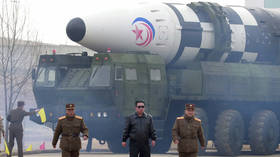
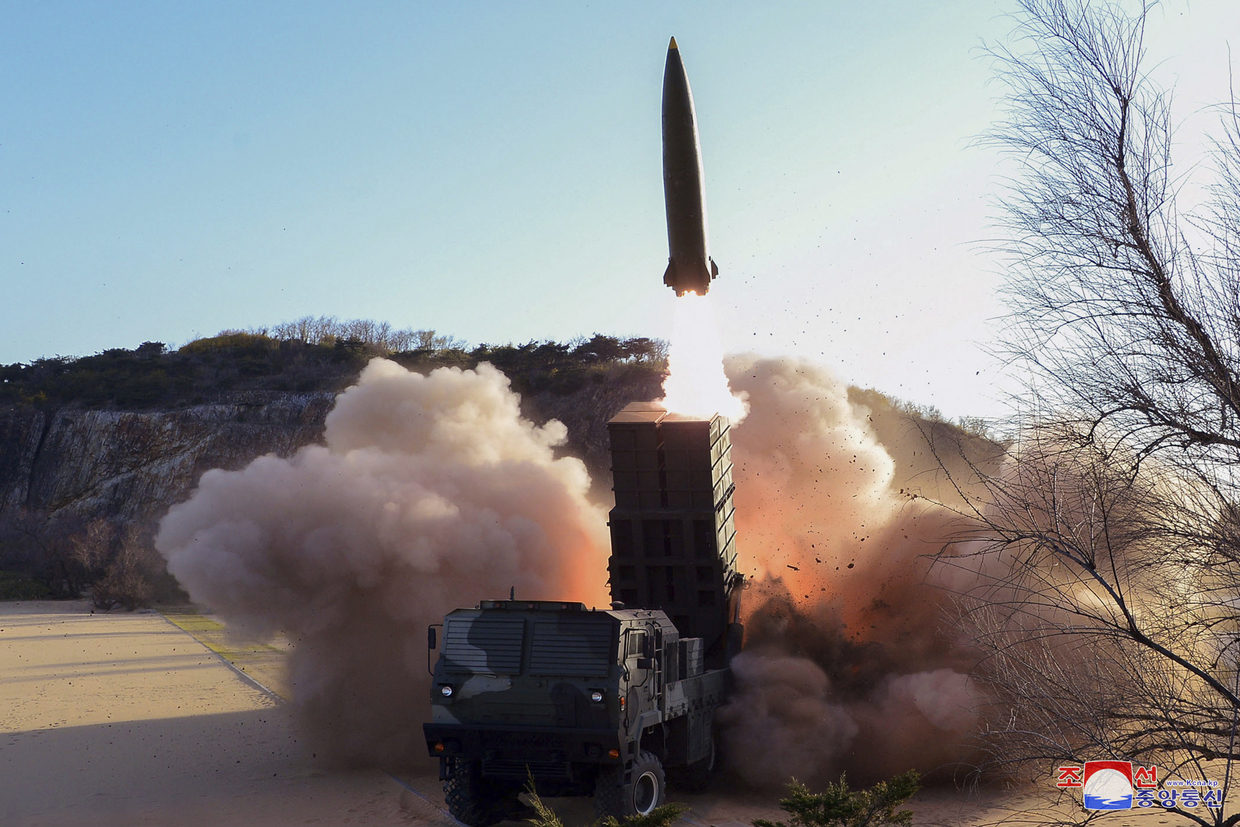
Nuclear family: How Ukraine helped North Korea develop the world's deadliest weapons

Experts point out the Ukrainian roots of Kim Jong-un's rocket program
Nuclear family: How Ukraine helped North Korea develop the world's deadliest weapons

(Image © AP / KCNA via KNS)

"North Korea’s (DPRK) nuclear missile program remains a major headache for the United States, and much of the wider world.

Its development would not have been possible, however, without Pyongyang’s access to Soviet technology, specifically  nuclear-capable hardware that remained in Ukraine after the collapse of the USSR. This article delves into the unlikely story of the part Ukraine played in making North Korea a major threat to America and its Asian allies. 

The US, South Korea and Japan share a lot of common goals, one of them being the complete de-nuclearization of the Korean Peninsula. US President Joe Biden has once again made this point clear at the 2022 NATO summit in Madrid. Meanwhile, Washington’s allies in Asia have recently found a new reason for concern – on June 14, South Korean Foreign Minister Park Jin announced that North Korea had completed preparations for a new nuclear test.

Prior to that, in March 2022, Supreme Leader Kim Jong-un effectively ended his country's self-imposed 2018 moratorium on testing intercontinental ballistic missiles (ICBMs) capable of reaching US soil. Now, both Seoul and Washington are anxiously awaiting news about new test launches.

How does a country which is effectively cut off from the rest of the world even achieve this level of technology? You might be surprised, but we must go to Ukraine for answers.

From the communist land all the way to the land of Juche

Today, we can say with near absolute certainty that, when designing and constructing its intercontinental ballistic missile, the DPRK used RD-250 rocket engines produced at the Ukrainian Yuzhmash machine-building plant in the city of Dnepropetrovsk.

Like most of the still-functioning industrial enterprises in Ukraine, Yuzhmash is part of the Soviet legacy. The plant was built in 1944 with World War II in full swing; later, during the Cold War, its engineers designed and produced the USSR’s most advanced missiles to compete with the US in the arms race.

In the 21st century, Washington once again feels threatened by certain Yuzhmash products – despite the fact that Ukraine, following its 2014 coup, became a satellite of the US, and the plant has since signed contracts with the Americans (to produce rocket stages, engines for these stages, as well as various hardware used in their launch vehicles).

In August 2017, The New York Times, citing Michael Elleman, a missile expert with the lobby group Institute of International Strategic Studies (IISS), reported that the DPRK had most likely used the RD-250 engines to design its own intercontinental ballistic missile.

“It’s likely that these engines came from Ukraine – probably illicitly... The big question is how many they have and whether the Ukrainians are helping them now. I’m very worried,” Elleman said. The experts at the IISS, however, believed that the official authorities in Kiev were not involved in the smuggling operation.

The design bureaus of Yuzhmash, as well as Yuzhnoye Design Office, a similar enterprise in Dnepropetrovsk, were emphatic in their denial of any collaboration with Pyongyang and its nuclear missile program. Secretary of the National Security and Defense Council of Ukraine Aleksandr Turchynov even suggested that the accusations were part of an ‘anti-Ukrainian campaign’ carried out by Russian intelligence. He claimed it was Moscow’s way of concealing its own assistance to North Korea.

However, in a 2018 report by the 1718 Sanctions Committee (DPRK), the Ukrainian authorities admitted that, in all likelihood, the engine for North Korea’s ballistic missiles was created using components of the RD-250 engine produced by Yuzhmash. They added that, in their opinion, the deliveries must have been made through Russian territory. Of course, they would say this.

Vasily Kashin, Director of the Center for Comprehensive European and International Studies at the National Research University Higher School of Economics (HSE), told RT that this controversy about North Korea receiving liquid-fuel engines from Yuzhmash remains the only incident officially on record.

“It wasn’t Ukraine sending their engines to North Korea – it was the work of North Korean scientific and technical intelligence in Ukraine that made it all happen. Apparently, the liquid-fuel rocket engines had been acquired there illegally even prior to 2014,” the expert concluded.

Be my guest, or transfer of military technology

At the same time, relations between Kiev and Pyongyang have never been friendly and heartfelt enough to suggest Ukraine’s willingness to provide North Korea with powerful nuclear weapons. However, there is documentary evidence of Ukraine’s corruption-based cooperation with other countries in the nuclear missile field at the turn of the 21st century, which may invite precisely this kind of thinking.

In 1994, Kiev finally discarded the last of its remaining nuclear arsenal, of around 1,000 missiles it had retained after the collapse of the USSR. The plan was to pass half of them on to Russia and to destroy the rest – as part of the US-funded disarmament program.

But in 2005, ex-president of Ukraine Viktor Yushchenko confirmed that the previous administration had sold X-55 cruise missiles capable of carrying a nuclear warhead to Iran and China “through several figureheads,” as he put it. The range of these missiles is 2.5 thousand kilometers, so this scam practically meant an increased threat of nuclear attack for Israel and Japan.

However, it seems that North Korea had other ways of getting what it wanted.

Starting from the 1990s, representatives of North Korea were caught red-handed trying to get hold of Soviet nuclear missile technology on many occasions. Kashin believes Pyongyang has been conducting scientific and technical intelligence in Ukraine for quite a while now.

“According to declassified KGB documents, North Korean scientific and technical intelligence efforts in Ukraine date back to Soviet times. There was a criminal case, for example, involving their agent, a worker of the Arsenal Factory in Kiev, who was caught stealing parts of anti-tank missiles. North Koreans had ample opportunity to get hold of Soviet military technology in the 1990s and early 2000s in Dnepropetrovsk where they were snooping around all the time. And the Ukrainian government was not involved in any of this. There is nothing to confirm that they were selling their technology deliberately, of course. They just took advantage of the gaps in Ukraine’s flawed counter-intelligence system,” Kashin said.

Mikhail Khodarenok, a military analyst and retired colonel, reminded RT about the chaos and anarchy that reigned in post-Soviet Russia and Ukraine, affecting many areas of life in the 1990s.

“Back then, Ukraine saw much of its critically important technology leak out of the country. We can trace Ukrainian influence in both China’s and Iran’s strategic cruise missile arsenals. And it’s not surprising – everyone did their best to survive in those turbulent times. And many things may indeed have been done without the involvement of [the] Ukrainian leadership.”

“But I don’t believe North Koreans were able to steal much. I am inclined to think that, in many cases, it was all based on deals, on mutual agreement. It’s just that the government was not part of it,” Khodarenok concluded.

RT

And 20 years after the Soviet Union collapse, espionage attempts by North Korea continued.

On 12 December 2012, the DPRK became the 10th nation to join the global space club by placing its Kwangmyongsong-3 (or KMS-3) satellite in Earth orbit. It was the same year when a high-profile spy case involving North Korean nationals was investigated in Ukraine.

It resulted in two citizens of North Korea (employees of a trade mission in Belarus) being sentenced to eight years in prison. They were caught trying to buy technical documentation and scientific works containing important R&D results from the staff of the Yuzhnoye Design Office in Ukraine. And they offered to pay a modest fee of $1,000 for every research paper on liquid-fuel engine systems. An unnamed source later informed the Strana.ua web portal that the Koreans had taken a particular interest in the design of the legendary R-36M (or Satan) intercontinental ballistic missile engine. It’s the most powerful missile of its kind.

Hunger and bombs

Another issue that has likely played into the hands of North Korean technology hunters is the ‘brain drain’ phenomenon, with dozens of Soviet engineers fleeing abroad after the Belovezh Accords were signed in 1991, disbanding the USSR.

> The post-Soviet de-industrialization of Ukraine took stable income and career prospects away from dozens of professionals working at the Ukrainian aerospace manufacturer Yuzhmash. So these people were forced to look for other ways to make a living.

Choices were limited. They could either try their luck in the wild post-Soviet labor market (attempting to start a business or becoming a salesperson) or agree to a tempting –albeit questionable in terms of patriotism and legality– offer to help other countries with their nuclear missile programs. 

Many of them found themselves in difficult circumstances –personally and professionally– after the fall of the Soviet Union. It's even believed that some of them went to North Korea, Iran and Pakistan.

Former US Ambassador to Ukraine Carlos Pascual later admitted that the importance of this phenomenon, when top-level specialists lost their jobs, was overlooked. It wasn’t just a matter of their personal turmoil – this was an important factor for the non-proliferation of weapons of mass destruction. 

> The US and EU, however, took some initiatives in the mid-1990s. They funded the Science and Technology Center in Ukraine, an intergovernmental organization that was supposed to make sure that expertise and experience in the area of weapons of mass destruction didn’t leak. 

Executive Director Curtis Bjelajac admitted that there was a point where the center basically gave out money to certain specialists. In the end, millions of dollars were spent on former Soviet engineers and scientists specializing in missile and nuclear technology. The general consensus is that this helped stop the flow of professionals into countries that are toying with dangerous technology. But were there any ‘leaks’?

According to Mikhail Khodarenok, there is an understanding within the community of experts that it was the work of Yuzhmash specialists that helped North Korea develop its missiles.

“You can’t really judge Yuzhmash engineers – everyone tried to survive back then, and those countries paid good money. I think that many went there for work. North Korea would not have made such advances without the expertise in the critical technology.

The Soviet Union also had to borrow – it used Wernher von Braun's research after the war,” Khodarenok said. (Von Braun was a German aerospace engineer and Nazi Party member who later worked in the US — RT).

Creative nuclear weapons

Compared to Western Europe and the US, South Korea has been very reserved in its help to Kiev during this year's crisis, providing mostly moral support and supplying non-lethal military aid. Some are surprised by this reaction. Why doesn’t Seoul do more? Maybe South Korea is concerned with the possibility that the equipment received by Ukraine might someday magically reappear north of the 38th parallel?

Khodarenok thinks that this is unlikely but he finds the theory interesting. He says that the real reason South Korea is not going all in is that “every Russian family owns several things manufactured in South Korea, and the country doesn’t want to lose that market”. However, Seoul may change its stance under pressure from Washington, the expert warns.

Kashin sees the connection between South Korea’s reserved reaction and the North’s nuclear problem, but he finds it elsewhere.

“South Korea knows that if it helps Ukraine, Russia will stop complying with the sanctions against North Korea. Seoul understands that it shouldn’t burn all bridges with Russia, whose military operation in Ukraine was supported by North Korea (one of very few countries). And since Russia’s relations with all developed [sic] countries went south, Moscow might decide to get creative with its North Korea partnership. And nobody wants that – especially not South Korea. Israel, by the way, is guided by the same considerations – it has refused to supply Ukraine with any lethal equipment, because Russia might respond by providing Iran with some unpleasant weapons,” he commented. 

FEATURE


Cyber Security Fundamentals...Offers & Deals from Bleeping Computer ((Prices subject to change))

A firewall is often your first defense against breaches and attacks. This deep dive into the Palo Alto Networks Cybersecurity Fundamentals (PCCSA) certification will help you get the most from them for $19.99, 93% off the $295 MSRP.
Please Note: Prices are subject to change

Improve your firewall skills with this PCCSA training course deal

An effective firewall is one of your core tools against many online threats, yet IT professionals often need more than a setup manual to get the most from them. This in-depth course on the Palo Alto Networks Cybersecurity Fundamentals (PCCSA) credential will help you not only learn about Palo Alto products but firewalls more generally.

The course was developed in collaboration between iCollege and ITProTV. Both are dedicated to giving IT professionals the self-paced training they need, taught by fellow tech workers. The courses focus on the day-to-day, so you can begin applying what you learn at work immediately.

Although this course is geared towards entry-level IT professionals seeking a Palo Alto Networks Certified Cybersecurity Associate (PCCSA) certification, it's designed to also help more advanced team members pick up useful knowledge. The PCCSA in particular sets the stage for more advanced certifications, including the Palo Alto Networks Certified Network Security Administrator (PCNSA) and Palo Alto Networks Certified Network Security Engineer (PCNSE) exams.

Broken up into 27 lectures across 6.78 hours, the course touches on each aspect of the exam in detail, starting with configuration and maintenance before moving on to foundational skills using the firewall tools. Students will learn how to identify attacks, properly describe them as needed to analysts and others, and what to do when an attack is identified. They'll also look into how systems, networks, and security tools work together to protect all involved, including cloud security approaches. The course is designed to be used as a reference when studying and to brush up as well when needed."

Related Articles:

Get started with Microsoft Azure with this certification bundle deal

Learn new coding languages with this coding 101 bootcamp bundle deal

Expand your Microsoft Excel skills with this VBA masterclass deal

Stay up to date on cybersecurity with an Infosec4TC membership deal

Learn the fundamentals of cybersecurity with this training bundle deal

ZERO-DAY FLAW DISCOVERED AT END OF MAY...Fixed with Microsoft’s Windows update on June 14

Let's continue ---- In conclusion, the gang appears to be growing bigger and more prolific, recruiting talented malware authors to offer their users more “ready to deploy” tools that don’t require experience or coding knowledge. . .Incorporating the Follina-exploiting document reduces the infection friction and increases the rate of successful attacks.

XFiles info-stealing malware adds support for Follina delivery

The XFiles info-stealer malware has added a delivery module that exploits CVE-2022-30190, aka Follina, for dropping the payload on target computers.

The flaw, discovered as a zero-day at the end of May and fixed with Microsoft’s Windows update on June 14, enables the execution of PowerShell commands simply by opening a Word document.

In the case of the XFiles malware, researchers at Cyberint noticed that recent campaigns delivering the malware use Follina to download the payload, execute it, and also create persistence on the target machine.

Exploiting Follina

The malicious document, which most likely reaches the target via spam email, contains an OLE object pointing to an HTML file on an external resource that contains JavaScript code exploiting Follina.

JavaScript code exploiting CVE-2022-30190(Cyberint)

This results in the fetching of a base64-encoded string that contains PowerShell commands to create persistence in the Windows startup directory and execute the malware.

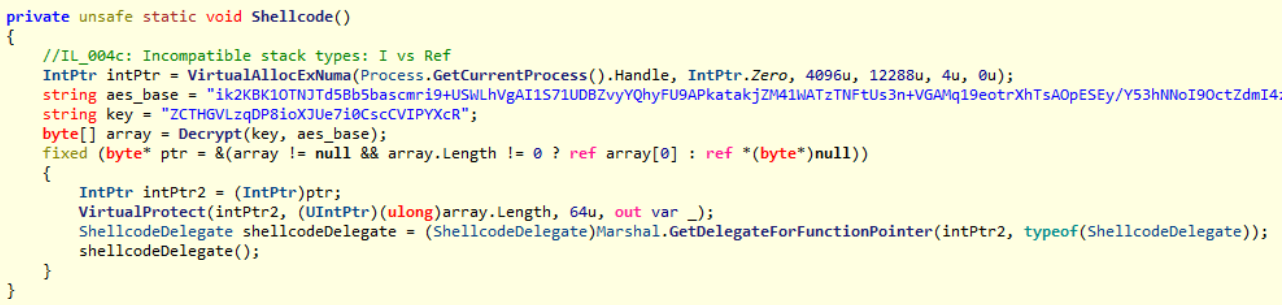
The second-stage module uses the filename “ChimLacUpdate.exe” and includes a hardcoded encrypted shellcode and AES decryption key. It’s decrypted and executed in the same running process via an API call.

The resulting shellcode(Cyberint)

After the infection process has been completed, XFiles begins typical info-stealer malware operations like targeting cookies, passwords, and history stored in web browsers, cryptocurrency wallets, taking screenshots, and looking for Discord and Telegram credentials.

The files are stored locally in newly-created directories and eventually exfiltrated via Telegram, taking advantage of the anonymity in the communications platform.

XFiles expanding

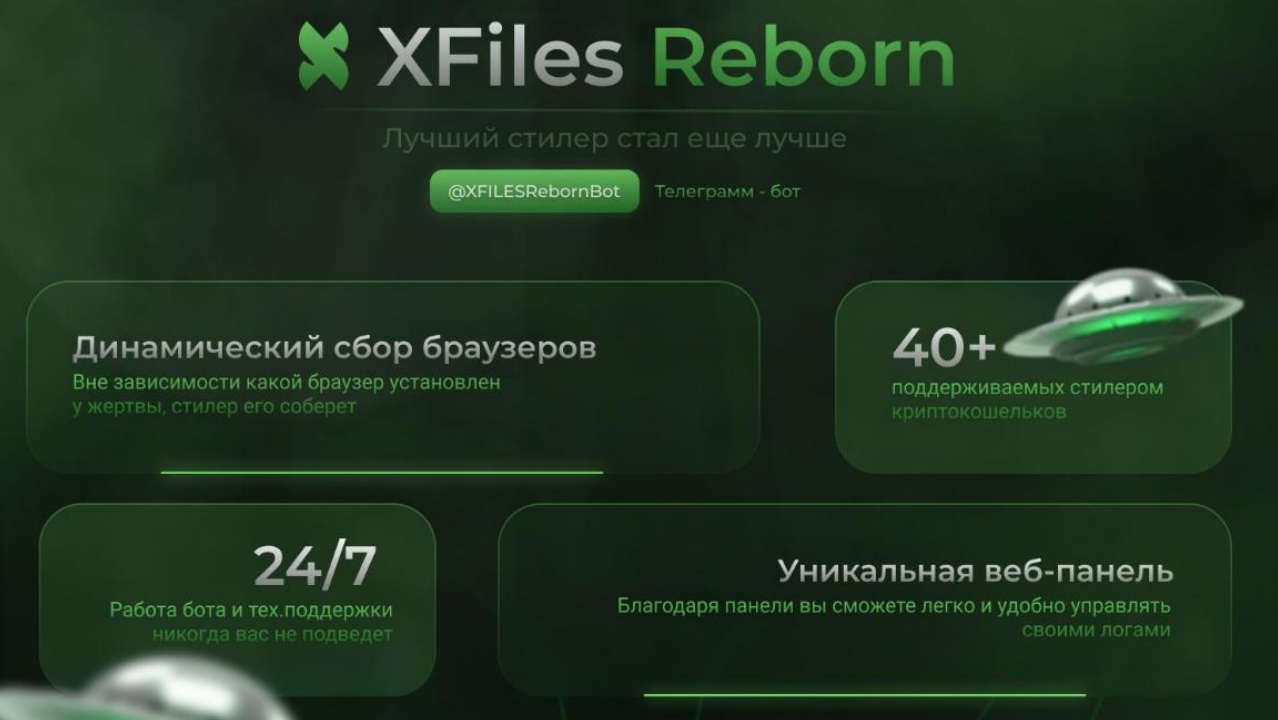
XFiles Reborn operation main page

Cyberint has been following the ‘XFiles Reborn’ operation for a while and notes that the group behind it has expanded by recruiting new members and launching new projects.

One notable recruitment was that of the author of the ‘Whisper Project’, an info-stealer that was quickly gaining traction in the cybercrime underground but was suddenly discontinued when the creator joined XFiles.

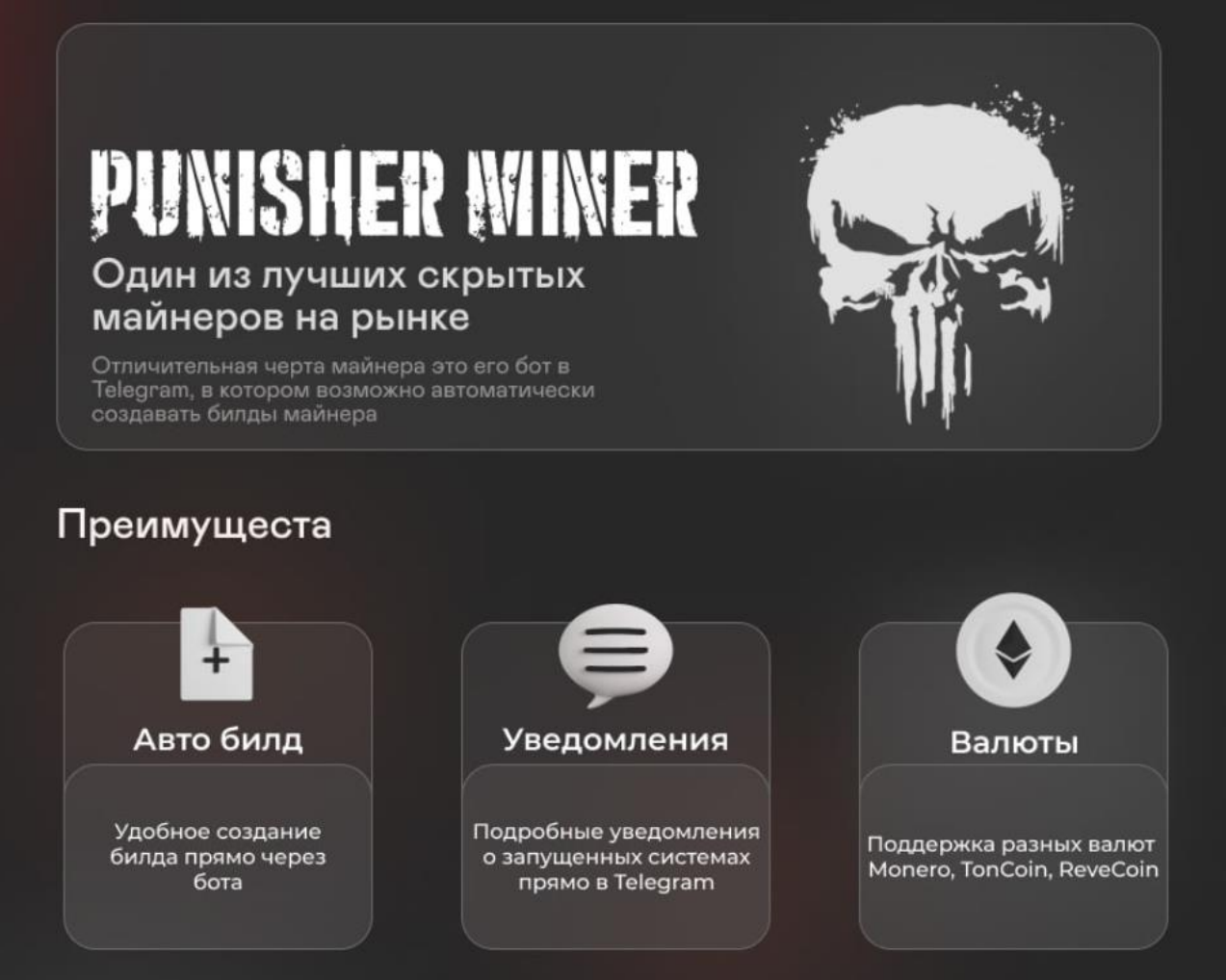
One of the new projects launched by the group earlier this year is called the ‘Punisher Miner’, advertised as a highly evasive and stealthy miner supporting Monero, Toncoin, and Ravecoin.

Punisher Miner promotional page

The new mining tool is sold for 500 rubles ($9), which is as much as XFiles charges for one month of renting the info-stealer. . ."

Related Articles:

New YTStealer malware steals accounts from YouTube Creators

Raccoon Stealer is back with a new version to steal your passwords

Eternity malware kit offers stealer, miner, worm, ransomware tools

German automakers targeted in year-long malware campaign

Android malware on the Google Play Store gets 2 million downloads


>

LIVE NEWS FROM ALJAZEERA

Source:  https://www.aljazeera.com/news/2022/7/2/ukraine-russia-war-live-news

News|Russia-Ukraine war

Ukraine-Russia live news: Ukraine separatists encircle Lysychansk

Andrei Marotchko, a spokesman for the separatist forces, says Lugansk popular militia and Russian forces occupied last strategic heights

Smoke rises from the city of Severodonetsk

Smoke rises from the city of Severodonetsk in the eastern Ukrainian region of Donbas on June [File: Aris Messinis/AFP]
(Al Jazeera)

Ukrainian separatists backed by Russia say they had “completely” encircled the key city of Lysychansk in the eastern Lugansk region.

  • Russian forces have destroyed five Ukrainian army command posts in the Donbas and in the Mykolaiv region with high-precision weapons and also struck three storage sites in the Zaporizhia region, the defence ministry says.
  • The mayor of Ukrainian city Mykolaiv warns residents to stay in shelters as powerful explosions rock the city.
  • Moscow denies targeting civilians in Ukraine with Kremlin spokesperson Dmitry Peskov telling reporters that Russian Armed Forces “do not work with civilian targets”.
  • The United States is sending Ukraine two NASAMS surface-to-air missile systems, four additional counter-artillery radars and up to 150,000 rounds of 155mm artillery ammunition as part of its latest weapons packages for Ukraine. 
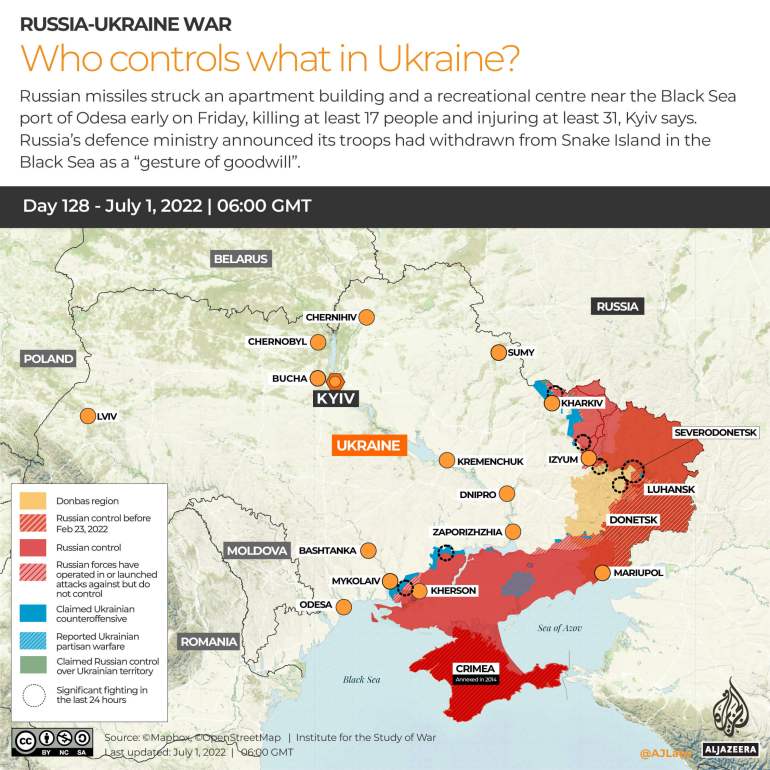
  • INTERACTIVE_UKRAINE_CONTROL MAP DAY128_July1

    Here are the latest updates:

    Ukraine separatists claim they have encircled Lysychansk

    Ukrainian separatists backed by Russia have said they had “completely” encircled the key city of Lysychansk in the eastern Lugansk region,

    “Today the Lugansk popular militia and Russian forces occupied the last strategic heights, which allows us to confirm that Lysychansk is completely encircled,” Andrei Marotchko, a spokesman for the separatist forces, told the TASS news agency.

    Capturing the city would allow the Russians to push deeper into the wider eastern region of the Donbas, which has become the focus of their offensive since failing to capture Kyiv after launching their military operation in Ukraine in late February.

    Across the Donets river, the Russians captured the neighboring city Severodonetsk last week.