Tuesday, July 05, 2022

Generally in The Dark: Volume IV "Stranger Things" (than now as we get into apocalyptic times)

Hmmm.... ever feel we are living in 'a parallel universe'????

Stranger Things 4 ends by trusting in the season’s best and worst instincts

Stranger Things 4 Vol. 2 finishes with a deadly bang and the glimpse of the apocalypse

<div class=__reading__mode__extracted__imagecaption>Millie Bobby Brown as Eleven and Matthew Modine as Dr. Martin Brenner.

"Though Netflix hyped Stranger Things 4 Vol. 2 as being its own standalone season of the Duffer Brothers’ nostalgic sci-fi opus, its two extra-long episodes are truly just the final chapters of Vol. 1’s story about what’s really been hunting Eleven and her friends. Stranger Things 4 Vol. 2 puts a period on this season’s introduction of Vecna, and sets the stage for its psionic hero and villain to take on even larger roles in the series’ future. As a season finale focused on emotional payoff, Vol. 2’s manages to rise to the occasion and deliver. But it does so while also leaning into some of Stranger Things’ worst instincts that have plagued the series from the jump.

While Stranger Things 4 Vol. 2 does actually sneak in a solid couple of jokes that succinctly summarize the important bits of Vol. 2, the episodes pick up immediately after the ones preceding them without losing any of the story’s momentum.

After going out of its way to lead you into thinking that Eleven (Millie Bobby Brown) murdered all of the other child test subjects at the Hawkins Lab, Stranger Things 4 revealed that her first terrifying show of power as a young girl came during a fight with Henry (Jamie Campbell Bower), the man who would go on to become Vecna. Vol. 2 opens with Eleven coming to fully understand her relationship to Henry/Vecna, and choosing for herself how she wants to deal with his murderous plan to escape the Upside Down.

By stripping Eleven of her powers, separating her from her friends, and introducing even more unexamined lore, Stranger Things 4 has been purposefully taking the series back to its roots when both the show’s audience and its characters were generally in the dark about what was going on . . .

.....................................................................................................................

.....................................................................................................................

.....................................................................................................................

.............While it’s been great to watch Hopper (David Harbour), Joyce (Winona Ryder), and Murray (Brett Gelman) trust the kids to take care of themselves while they deal with their own adventures in the Soviet Union, Stranger Things knows their stories haven’t been what people are tuning in for. Vol. 2 does the admirable thing, though, and keeps the adults plenty busy with actual things to do rather than simply dropping them back in Hawkins for the occasion.

Vol. 2 wisely uses its time in Russia to begin alluding to Stranger Things’ final season, but Hopper’s big Demogorgon fight is also part of how these episodes remind you how much everyone has changed over the course of the series. Like Hop, the prospect of potentially dying in battle brings out a sobering sentimentality in Dustin (Gaten Matarazzo), Eddie (Joseph Quinn), Nancy (Natalia Dyer), and Steve (Joe Keery) that compliments the proactive way they ride out the apocalypse.

It’s sort of wild how Vol. 2 chooses to interrupt the time it spends with Lucas (Caleb McLaughlin) and Max to remind you that he’s also on the run from high school basketball star-turned-militiaman Jason Carver (Mason Dye). With Jason having witnessed Vecna’s wrath firsthand, his becoming even more of a gun-toting heel in Vol. 2 doesn’t add all that much to the episodes outside of emphasizing that he was always an asshole.

In the grand scheme of psychic battles, Eleven’s confrontation with Vecna isn’t necessarily the showiest, but it does carry an emotional heft that hasn’t always been the case with Stranger Things’ previous finales. Vol. 2 recontextualizes many of those battles with a bit of straightforward foreshadowing of what’s to come, and even though this season definitely felt like it could have been the end of Stranger Things, it’s fair to say that the series does have a little bit more gas left in the tank."

NOT OFFICIAL EVEN AFTER 2 CONSECUTIVE QUARTERS

5 Jul, 2022 10:46

US recession whispers becoming a roar – Politico

The Fed may tolerate an economic slump in order to tame inflation, the publication said

The alarm over a looming recession is growing louder in the US, as the government struggles to control soaring prices, Politico reported on Tuesday.

“From Wall Street to Washington, whispers about a coming economic slump have risen to nearly a roar,” the publication writes, adding that the Federal Reserve’s “aggressive” policy sent stocks tumbling to their worst performance in decades and plunged consumer confidence to record lows.

Fed Chair Jerome Powell said last month that a recession was “certainly a possibility” and that the central bank wanted to “get inflation back down to 2%.” Powell’s comments followed a hike in interest rates by 75 basis points, the biggest increase in three decades. Wall Street’s benchmark for many stock funds, the S&P 500, reacted by losing 20% by the end of June, in what’s become in the worst half of a year for US stocks since 1970. The inflation rate reached a 40-year high of 8.6% in May.

According to Politico, the central bank’s apparent willingness to tolerate an economic downturn if it helps bring inflation under control doesn’t sit well with the American people. Critics cited by the publication claim the abrupt increases in borrowing costs will lead to a surge in lay-offs and “drive the economy off a cliff.”

Powell said last week that “overall, the US economy is well positioned to withstand tighter monetary policy.” According to Bloomberg, however, about a third of economists say a recession in the US is likely in the next two years.

The situation could be made worse by other factors, Politico says, such as the potential nosedive of housing prices or an escalation of the conflict in Ukraine, which could lead to further increases in oil and food prices."

=====================================================

Believe It or Not, the Market Has Three Silver Linings

=====================================================    

In short, natural gas now rivals oil as the fuel that shapes geopolitics. And there isn't enough of it to go around

Natural gas soars 700%, becoming driving force in the new cold war


US Recession Chances Surge to 38%, Bloomberg Economics Model Says

Techdirt Daily Deals

Daily Deal: The Two Million Dollar Puzzle

from the good-deals-on-cool-stuff dept

Are you a fan of solving puzzles? Do you like winning money? Then MSCHF has a treat for you. MSCHF, the makers of THE ONE MILLION DOLLAR PUZZLE, now brings you THE TWO MILLION DOLLAR PUZZLE. All you have to do is buy this 500-piece jigsaw puzzle, complete it, and get a chance to win anything from $1 to $1,000,000! And everyone is a winner, there are no losers. This time around two puzzles will have the $1,000,000 code in them. You can get one puzzle for $30, 2 for $56, or 4 for $100.

Note: The Techdirt Deals Store is powered and curated by StackCommerce. A portion of all sales from Techdirt Deals helps support Techdirt. The products featured do not reflect endorsements by our editorial team.

Filed Under:  

If you liked this post, you may also be interested in...

BRAVE NEW WORLD EUGENICS: World's First PGT-P Baby Born...It happened

PGT-P stands for preimplantation genetic testing for polygenic disorders. It is conducted in conjunction with IVF and allows prospective parents to actively select which of their own embryos to take, based on the strength of its genes. . .
THE TAKE-AWAY: "We shouldn’t only use artificial ways to reproduce, but we should make use of the tools we have for IVF to ensure we have the best chance of making healthy babies.”

Genetic Screening Now Lets Parents Pick the Healthiest Embryos

People using IVF can see which embryo is least likely to develop cancer and other diseases. But can protecting your child slip into playing God?

"At 18 months old, Aurea Yenmai Smigrodzki is inquisitive like any other toddler. She likes peanut butter, the beach, and mobile phones—or any toys that look like phones. She likes to copy her mum and dad, Thuy and Rafal, when they are using theirs. Aurea doesn’t know it yet, but her birth was very special: She is the world’s first PGT-P baby, meaning she is statistically less likely than the rest of us to develop a genetic disease or disorder throughout her life...

Rafal and Thuy were given the genetic profiles of five prospective embryos, and Aurea’s was the strongest candidate, because her embryo had the fewest recognizable genetic mutations that could go on to cause disease. “It was really a no-brainer,” says Rafal of the choice he and Thuy made to undergo the genetic screening process. “If you can do something good for your child, you want to do it, right? That’s why people take prenatal vitamins.”

All parents want their children to be healthy, but lots have reason to fear passing on something harmful. Our genes can predispose us to developing all kinds of diseases: diabetes, heart disease, cancers, and many more. With this in mind, one could be forgiven for assuming that Rafal or Thuy carried some inheritable condition and wanted to break the chain. But the reality, Rafal admits, is that he “simply knew that PGT-P existed,” and so he decided to give it a try.

Rafal is a neurologist and has an interest in pioneering technologies, referring to himself as a “techno-optimist.” He has even signed up to have his brain cryogenically stored when he dies, in the belief it will one day be resurrected, thoughts and spirit intact. In his eyes, genetic screening of embryos is nothing crazy or even special, it is simply the natural next step for humans to take. “It’s like the first time someone ever made a phone call—sure, it was a unique moment, but really it was just the beginning of something that now everybody does,” Rafal muses. “In 10 years’ time, this kind of polygenic testing will be completely non-controversial. People will be doing it as a matter of course.”

[    ] “People ask me if I’m trying to play God in choosing to do this,” Rafal adds, anticipating the next big question. He believes that “genetic selection is not playing God, it’s working as a mechanic on molecular machines that sometimes break and need to be fixed.”

Embryonic selection itself is nothing new. For around three decades, IVF clinicians have taken sperm and egg samples to grow into several embryos at once, before choosing the most promising-looking one for implantation in the uterus. Clinics already tend to screen against chromosomal abnormalities such as Down’s syndrome, but until recently the only other indicator they had to go by was the way one group of cells looked against the other—the selection was more or less arbitrary.

Companies such as Genomic Prediction are taking this process much further, giving parents the power to select the embryo they believe to have the best fighting chance of survival both in the womb and out in the world. At the time of writing, Genomic Prediction works with around 200 IVF clinics across six continents. For company cofounder Stephen Hsu, the idea behind preconception screening was no eureka moment, but something he and his peers developed gradually. “We kept pursuing the possibilities from a purely scientific interest,” he says. Over time sequencing has become cheaper and more accessible, and the bank of genetic data has become ever greater, which has provided the opportunity to easily apply machine learning programs to seek out patterns, Hsu explains.

. . .As Hsu indicates, the crucial difference with this technology is that it’s not just single mutations like cystic fibrosis or sickle cell anemia that the service makes its calculations on. The conditions embryos are screened for can be extremely complicated, involving thousands of genetic variants across different parts of the genome.

Most Popular

In late 2017, Hsu and his colleagues published a paper demonstrating how, using genomic data at scale, scientists could predict someone’s height to within an inch of accuracy using just their DNA.

The research group later used the same method to build genomic predictors for complex diseases such as hypothyroidism, types 1 and 2 diabetes, breast cancer, prostate cancer, testicular cancer, gallstones, glaucoma, gout, atrial fibrillation, high cholesterol, asthma, basal cell carcinoma, malignant melanoma, and heart attacks. This did not come without controversy. In fact, by mid-2020, the outrage among graduate students at Michigan State University was loud enough to force Hsu out of his position as vice president at the institution. Hsu believes that the opposition people felt to Genomic Prediction in the beginning was largely because people feel uneasy about the fact that genetics can seal our fate—that unfavorable traits can’t always be amended through hard work and determination. “People don’t want to believe that there’s some degree of hardwiring that can’t be overcome by good habits or good education,” he says.

“But the fear is misplaced: the ability to detect single gene mutations has been around for some time and nobody considers that ethically questionable, right? It’s just that now we can do it with more precision.”

. . .Like Rafal Smigrodzki, Hsu is confident that public disapproval will ease, and that one day soon embryonic selection against inheritable diseases will be considered the norm.

In his opinion, “we shouldn’t only use artificial ways to reproduce, but we should make use of the tools we have for IVF to ensure we have the best chance of making healthy babies.”

[    ] It’s completely changed the way people all over the world manage pregnancy,” says Rabinowitz."

Rachael Pells is the author of Genomics: How Genome Sequencing Will Change Our Lives. Find out more and order your copy of the book. 

RELATED CONTENT

Posted: May 18, 2019

preimplantation genetic testing for polygenic disorders from www.youtube.com
Aug 13, 2021 · Chapters. View all · Intro · PGT · Preimplantation Genetic Testing for Polygenic Diseases (PGT ...
Duration: 15:11
Posted: Aug 13, 2021
preimplantation genetic testing for polygenic disorders from www.labroots.com
Mar 22, 2022 · These results were compared to data from siblings that had been born. This illustrated that ...
Duration: 1:02:40
Posted: Mar 22, 2022

WAR-OF-WORDS OVER THE MOON

The war of words comes as NASA has also launched a moon exploration program called Artemis. Under Artemis, NASA plans to send a crewed mission to orbit the moon in 2024 and to make a crewed landing near the lunar south pole by 2025.

China lambasts NASA claim it may take over the moon

NASA chief has said that the world should be worried China may claim the moon as its own and tell others to ‘stay out’.

"China has criticised warnings from the chief of NASA that claimed Beijing may take over the moon as part of a military space program.

Zhao Lijian, the Chinese foreign ministry spokesman, told reporters on Monday that China firmly opposed NASA Administrator Bill Nelson’s “irresponsible remarks”.

Nelson, who heads the United States’ space agency, had told the German newspaper Bild in an interview published on Saturday that he was worried about China’s space ambitions.

“We must be very concerned that China is landing on the moon and saying: ‘It’s ours now and you stay out’,” he said, referring to Beijing’s moon exploration plans.

China, which has stepped up the pace of its space program in the past decade, has made exploration of the moon a focus.

<div class=__reading__mode__extracted__imagecaption>The war of words comes as NASA has also launched a moon exploration programme called Artemis [File: Sorin Furcoi/Al Jazeera]

It made its first lunar uncrewed landing in 2013 and is planning uncrewed missions to the moon’s south pole some time this decade.

It also plans to launch rockets powerful enough to send astronauts to the moon towards the end of this decade and has also set its sights on a Mars sample-return mission around 2030.

It is also working on a three-module space station called Tiangong that will rival the International Space Station (ISS), from which it is barred as US law bans NASA from sharing data with China. Nelson said China’s space program was a military one and claimed that it had stolen ideas and technology from others.

When Bild asked what military purposes China may pursue in space, he replied: “Well, what do you think is happening on the Chinese space station? They are learning how to destroy other people’s satellites.

“There is a new space race,” he added. “This time, with China.”

Zhao, the Chinese foreign ministry spokesman, said Nelson’s remarks were not the first time that NASA chiefs have “ignored the facts and spoken irresponsibly about China”.

“The US side has constantly constructed a smear campaign against China’s normal and reasonable outer space endeavours, and China firmly opposes such irresponsible remarks,” he said.

China has always promoted the building of a shared future for humanity in outer space and opposed its weaponisation and any arms race in space, he added. . .

Under Artemis, NASA plans to send a crewed mission to orbit the moon in 2024 and to make a crewed landing near the lunar south pole by 2025.That crew will include the first woman and the first person of colour on the moon. “We will use what we learn on and around the Moon to take the next giant leap: sending the first astronauts to Mars,” NASA said on its website.


STATES OF EMERGENCY: No Denying Now

Open your eyes and read >>

Italy declares state of emergency in five regions over drought

The northern agricultural Po valley has been hit by its worst drought in decades.

"Italy has declared a state of emergency over a worsening drought that has plagued five northern regions in recent weeks, Prime Minister Mario Draghi’s office has announced.

The cabinet approved a state of emergency in Emilia-Romagna, Friuli-Venezia Giulia, Lombardy, Piedmont and Veneto until December 31, the government said in a statement on Monday, and allocated a 36.5 million euro ($39.5m) fund to help those affected.

Italy is facing an unusually early heatwave and a lack of rainfall, particularly in the northern agricultural Po valley, which has been hit by its worst drought in decades.

The state of emergency provides “extraordinary means and powers” to help guarantee public safety, compensation for losses while seeking to guarantee normal living conditions for those in the area.

According to the country’s largest agricultural union, Coldiretti, the drought threatens more than 30 percent of national agricultural production, and half of the farms in the Po Valley, where Parma ham is produced.

Lakes Maggiore and Garda – located close to Milan between the regions of Piedmont and Lombardy – were also hit by lower than normal water levels for this time of year, while further south the Tiber river, which runs through Rome, also dropped.The Po, the peninsula’s largest water reservoir, is extensively used by farmers to irrigate rice paddies, farm fields and grazing land for cows.

In recent days, several municipalities have announced restrictions. Verona, a city of a quarter of a million people, has rationed the use of drinking water, while Milan has announced the closure of its decorative fountains.

As a result of the drought, hydroelectric power production has fallen sharply. Hydroelectric plants, mostly in the mountainous north of the country, account for nearly 20 percent of national energy production.The emergency declaration came a day after at least seven people died after a glacier collapsed in the Italian Alps which Draghi said was “without doubt” linked to global warming."

AMERICAN DENIALISM: Celebrating "Star-Spangled Glory ...What about THE REALLY BIG EVENT of 1812?

Oh say can you see the hypocrisy of it all?  The reconsideration of the “1812 Overture” is the latest example of the difficult questions facing cultural institutions.
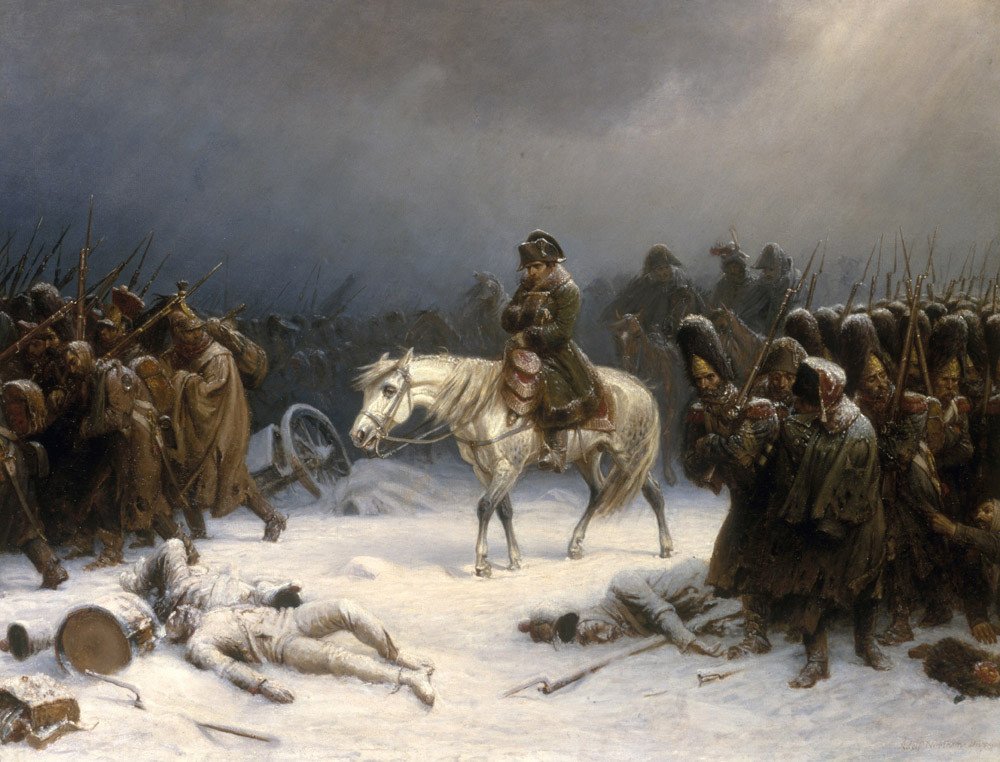
On June 24, 1812, the Grande Armée, led by French Emperor Napoleon Bonaparte, crossed the Neman River, invading Russia from present-day Poland. The result was a disaster for the French. The Russian army refused to engage with Napoleon's Grande Armée of more than 500,000 European troops. Napoleon's invasion of Russia is one of the best studied military campaigns in history and is listed among the most lethal military operations in world history
File:Napoleons retreat from moscow.jpg
The overture, which runs about 15 minutes, is unabashedly patriotic, featuring Russian folk songs and a volley of cannon fire set to the former Russian national anthem, “God Save the Czar.” Some renditions include vocal lines from a Russian Orthodox text, “God Preserve Thy People.”
Note: Interpretations of the piece have changed over time, said Emily Richmond Pollock, an associate professor of music at the Massachusetts Institute of Technology. While it was first used to celebrate the Russian empire, it later became synonymous with American democracy. Now, in some circles, it symbolizes authoritarianism in modern Russia.

Amid Ukraine War, Orchestras Rethink ‘1812 Overture,’ a July 4 Rite

Some ensembles have decided not to perform Tchaikovsky’s overture, written as commemoration of Russia’s defeat of Napoleon’s army.

With its earsplitting rounds of cannon fire and triumphal spirit, Tchaikovsky’s “1812 Overture” has been a staple of Fourth of July festivities across the United States for decades, serving as a rousing prelude to glittering displays of fireworks.

But this year many ensembles, concerned about the overture’s history as a celebration of the Russian military — Tchaikovsky wrote it to commemorate the rout of Napoleon’s army from Russia in the winter of 1812 — are reconsidering the work because of the war in Ukraine. . ."

Please continue reading >> https://www.nytimes.com/2022/07/03/arts/music/1812-overture-russia-ukraine.html

ADAPTATION AND APPROPRIATION IN ANOTHER CONTEXT: As a rousing patriotic hymn, the Overture has subsequently been adapted into and associated with other contexts than that of the Russian resistance to Napoleon's invasion. The 1812 Overture is popularly known[17] in the United States as a symbol of the United States Independence Day, a tradition that dates to a 1974 choice made by Arthur Fiedler for a performance at the Boston Pops July 4th concert

> HISTORY The Year 1812, Solemn Overture, Op. 49, popularly known as the 1812 Overture,[1] is a concert overture in E major written in 1880 by Russian composer Pyotr Ilyich Tchaikovsky to commemorate the successful Russian defense against Napoleon's invading Grande Armée in 1812.

====================================================

REVISIONIST STORIES

Mar 13, 2022 · Why now is no time for Tchaikovsky's 1812 Overture ... It is important to bear in mind that Tchaikovsky wrote the piece to a commission; he did ...

Tchaikovsky's 1812 Overture

"With a performance history going back over 300 years, Tchaikovsky's "1812 Overture" may have been written by a Russian to commemorate a new cathedral, but today it is perhaps most well known as a musical symbol of America's independence.

Video for 1812 overture
Feb 21, 2011 · The 1812 Overture, composed by Pyotr Ilyich Tchaikovsky in 1880. This version with cannons ...
Duration: 15:09
Posted: Feb 21, 2011

A Grand Commemoration

In 1880, Tchaikovsky’s friend Nikolai Rubinstein suggested that the Russian composer of some of the world's most beloved ballets should create a grand work to be played in honor of a number of upcoming events. Rubinstein specifically had in mind the completion of the Cathedral of Christ the Savior (which also served as a memorial commemorating Russia’s victory in the 1812 French Invasion of Russia), as well as the 25th anniversary of Emperor Alexander II’s coronation and the Moscow Arts and Industry Exhibition of 1882. In October that same year, Tchaikovsky began composing the work and completed it six weeks later. . .

Tchaikovsky and the Pops

Perhaps the most famous performance of the "1812 Overture" took place not in Russia or in Europe, but in America. Boston Pops conductor Arthur Fiedler was no doubt inspired by the overture's exhilarating musical structure when he decided to include it as part of his 1974 Independence Day performance. In addition, Fiedler choreographed fireworks, cannons, and a steeple bell choir to the overture. Since then, orchestras all over the U.S. quickly followed suit, and it is now a tradition to perform the overture during Independence Day celebrations. As a result, many American’s have come to believe that the piece represents the victory of the United States against the British Empire during the War of 1812, never mind that the overture includes "La Marsillaise" and "God Save the Tsar." Still, if Tchaikovsky were alive today, he might be flattered at the misrepresentation, since the mark of any great artwork is its timelessness and universal relevance."

The overture debuted in Moscow on 20 August [O.S. 8 August] 1882,[2] conducted by Ippolit Al'tani under a tent near the then-almost-finished Cathedral of Christ the Saviour, which also memorialised the 1812 defense of Russia.[3]

The 15-minute overture is best known for its climactic volley of cannon fire, ringing chimes, and a brass fanfare finale. It has also become a common accompaniment to fireworks displays on the United States' Independence Day.[4] The 1812 Overture went on to become one of Tchaikovsky's most popular works, along with his ballet scores to The Nutcracker, The Sleeping Beauty, and Swan Lake.[5]

As a rousing patriotic hymn, the Overture has subsequently been adapted into and associated with other contexts than that of the Russian resistance to Napoleon's invasion. The 1812 Overture is popularly known[17] in the United States as a symbol of the United States Independence Day, a tradition that dates to a 1974 choice made by Arthur Fiedler for a performance at the Boston Pops July 4th concert

=================================================

> RELATED -- Note the date

Russia’s defeat of Napoleon’s army. from www.youtube.com
Jun 23, 2017 · Up to 650,000 French soldiers invaded Russian Poland on 24 June for what Napoleon hoped ...
Duration: 2:55
Posted: Jun 23, 2017
Russia’s defeat of Napoleon’s army. from www.youtube.com
Aug 25, 2016 · The French invasion of Russia and Battle of ... attempt to engage and defeat the Russian army ...
Duration: 6:10
Posted: Aug 25, 2016