Monday, August 01, 2022

BEWARE OF RETIRED POLICE OFFICERS...Mark Finchem

 One more day will tell a whole lot about these news stories; meanwhile there's more!Arizona’s secretary of state race is the most eye-catching and consequential of Tuesday’s primary battles, in part because of Republican state Rep. Mark Finchem.

So far this year, Republican primary voters have split on whether to put election skeptics on the November ballot.

PHOENIX (AP) — An Arizona lawmaker endorsed by former President Donald Trump who attended the Jan. 6, 2021, rally that preceded the violent assault on the U.S. Capitol and another lawmaker who also believes the 2020 presidential election results should be overturned are among four Republicans vying for the top elections post in the presidential battleground.

It’s a trend seen in several Republican primaries this year that has led to mixed results for those who peddle conspiracy theories and promote the falsehood that widespread fraud led to Trump’s defeat. Tuesday’s primary elections feature similar candidates in Kansas and Washington state.

The retired Michigan police officer and current Arizona House member was at the Capitol on Jan. 6 and contends Trump lost Arizona because of rampant fraud. He backed a controversial and much-criticized state Senate “audit” of the 2020 election results in the state’s most populous county and this year tried to get the Republican-controlled Legislature to notify Congress that Arizona wanted to decertify Joe Biden’s election win.

Finchem also is suing in federal court with a leading GOP contender for Arizona governor to block the use of vote-counting machines in Arizona. The lawsuit contends they are potentially prone to hacking that can change votes. A judge is considering whether to throw out the case.

Finchem’s claims come despite the lack of valid evidence of any widespread fraud that would have changed the result in Arizona, where Biden beat Trump by just over 10,000 votes. He maintains that “fictitious ballots” marred the results.

“So for you to say that there’s no evidence, I think the media is willfully disregarding the evidence that’s out there,” Finchem said....

His primary competitors include another state House member, Shawnna Bolick, a Trump supporter who contends the 2020 election was deeply flawed. She said in a televised debate that she would not have certified the election had she been secretary of state, despite it being a requirement to do so absent a court order.

“And I would have been breaking the law at that point and that would have been fine,” she said on the debate carried on Arizona PBS.

“Was there organized, rigged fraud that that changed the outcome of the election?” he asked. “I have seen no evidence of that.”
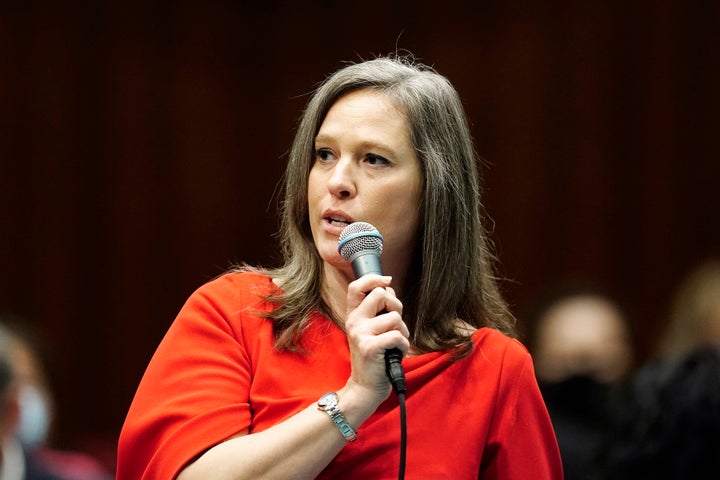

In this Monday, Jan. 10, 2022 file photograph, Shawnna Bolick, a Republican running for Secretary of State for Arizona, speaks at the Arizona Capitol in Phoenix. (AP Photo/Ross D. Franklin, File)

 The other two Republican candidates are state Sen. Michelle Ugenti-Rita, who acknowledges Biden’s victory and has made election reform a key focus during her 12 years in the Legislature, and Beau Lane, a businessman and political newcomer who has earned the endorsement of Republican Gov. Doug Ducey

Got Milk?...The Benefits of Breast-Feeding | Aljazeera


Infographic: Which countries have the lowest breastfeeding rates?

Less than half of all newborns around the world are exclusively breastfed during their first five months

World Breastfeeding Week is celebrated from August 1 to 7 every year. Coordinated by the World Alliance for Breastfeeding Action (WABA), it highlights the importance of breastfeeding in tackling malnutrition, understanding inequality and the challenges mothers face across the globe.

According to the United Nations Children’s Fund (UNICEF), less than half of all newborns around the world (44 percent) are exclusively breastfed during the first five months of their lives.

However, despite the numerous health benefits for both babies and mothers, breastfeeding isn’t always easy. In the following infographic series, Al Jazeera looks at why breast milk is important and where breastfeeding is most prevalent.

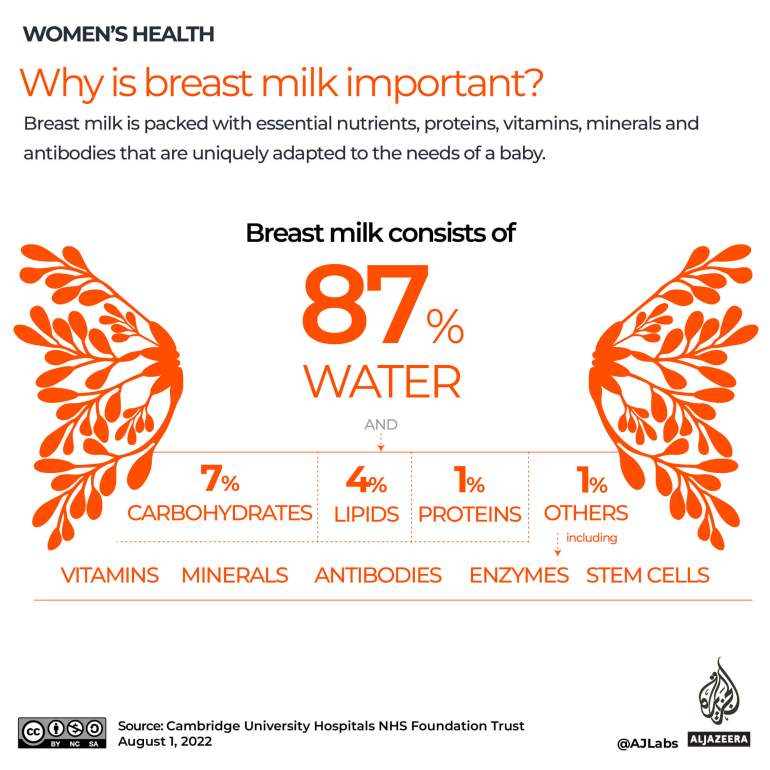
Why is breast milk important?

Breast milk is packed with essential nutrients, proteins, vitamins, minerals and antibodies uniquely adapted to a baby’s needs.

Consisting of about 87 percent water, breast milk keeps the infant hydrated, manages body temperature, lubricates joints, and protects organs. It also consists of about 7 percent lactose – a sugar that provides the baby with energy, 4 percent fats (lipids) and the remaining 2 percent proteins and other bioactive components, which cannot be found in formula.

WHY IS BREAST MILK IMPORTANT

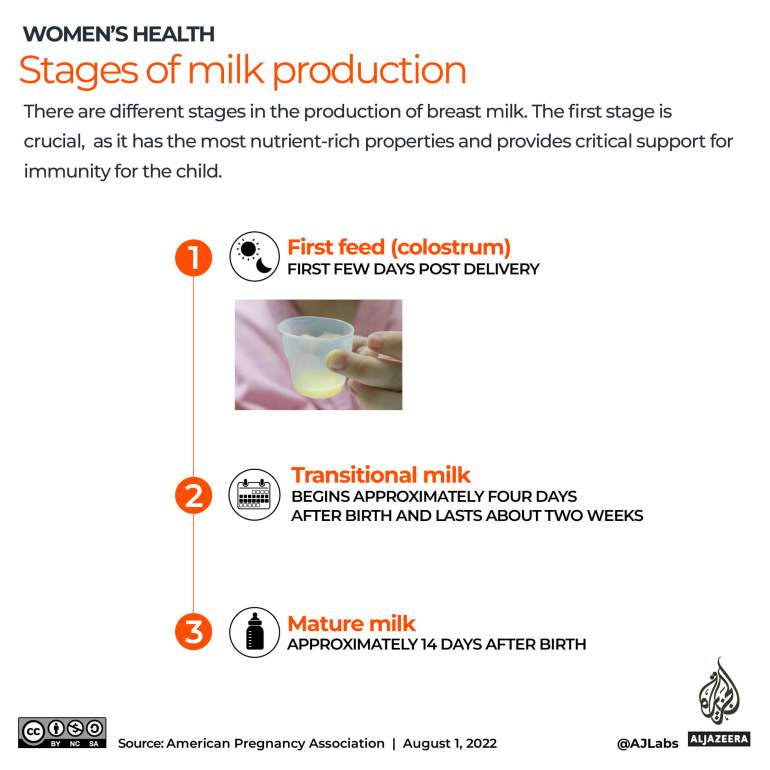
The production of milk by the mammary glands is stimulated by hormones. As the pregnancy comes to term, a woman’s body begins to produce the first breast milk, called colostrum, in the initial days after birth.

Colostrum is known as “liquid gold” because of its colour and benefits to newborns: it is packed with protein, vitamins, minerals and immunoglobulins (antibodies) that are essential to the growth and protection of a newborn.

INTERACTIVE_BREASTFEEDING AWARENESS WEEK - STAGES OF MILK PRODUCTION

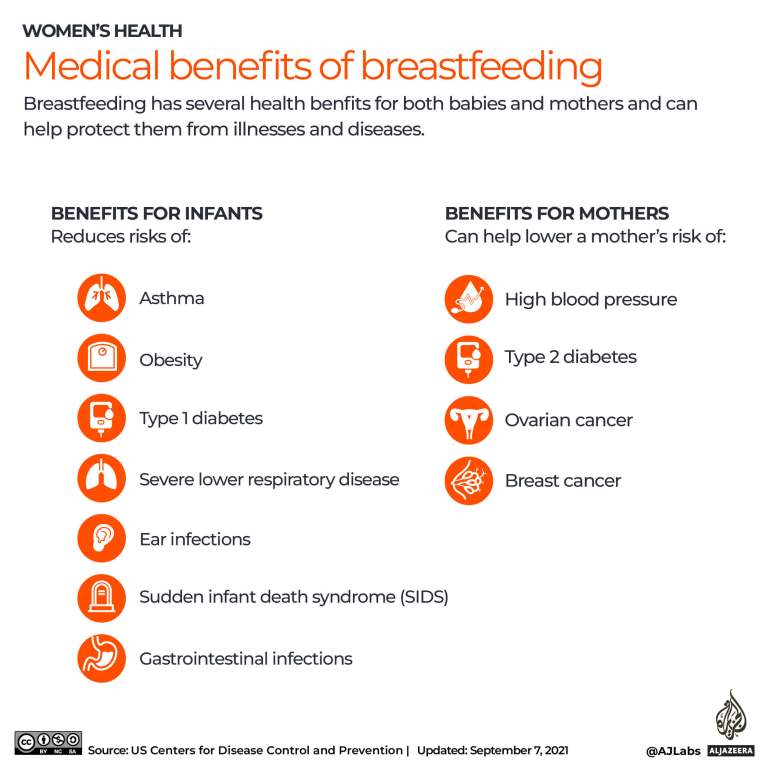
According to the United States Centers for Disease Control and Prevention (CDC), breastfeeding has several health benefits for babies and mothers and can help protect them from illnesses and diseases.

Privacy Policy

For babies, breastfeeding can reduce the risk of:

  • Asthma
  • Obesity
  • Type 1 diabetes
  • Severe lower respiratory disease
  • Ear infections
  • Sudden infant death syndrome (SIDS)
  • Gastrointestinal infections

For mothers, breastfeeding can lower the risk of:

  • High blood pressure
  • Type 2 diabetes
  • Ovarian cancer
  • Breast cancer

INTERACTIVE_BREASTFEEDING AWARENESS WEEK - MEDICAL BENEFITS

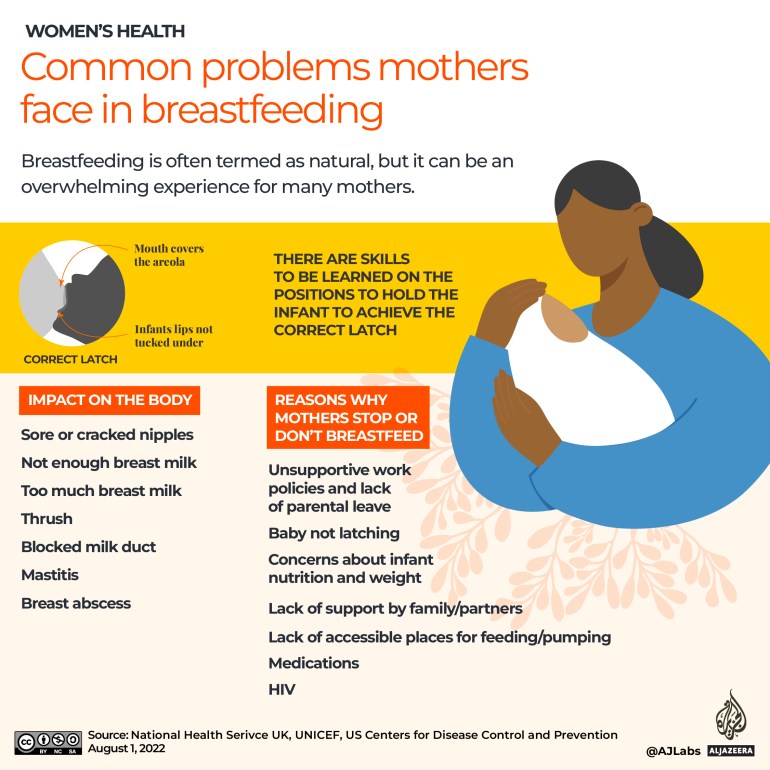
Common problems breastfeeding mothers face 

Breastfeeding is not always an option.

Amna Riaz is a young mother from Karachi, Pakistan who had a challenging pregnancy and now has a one-year-old daughter. Amna has Hashimoto’s disease, an autoimmune disorder affecting the thyroid gland. She is clinically obese and had irregular menstruation cycles. For her, even the pregnancy was a miracle.

“I lost 12kg (26.4 pounds) during my pregnancy and ended up giving birth via caesarean section because I was surviving via drips, not solid food, with compromised kidneys,” she said.

With some help post-delivery, lactation counselling and family support, Amna’s milk supply was good.

“After one month of amazing [feeding] … I had to go through another whole new challenge to feed my baby,” she said.

After being told her baby wasn’t growing properly, Amna had to supplement her breast milk with a lactose-free formula (the baby was diagnosed as lactose-intolerant). Her own supply wasn’t enough.

“She wasn’t gaining weight at all [with] the formula milk … [combined] with breast milk,” she says.

The baby eventually had trouble latching onto her mother’s breast, Amna said, adding: “I completely weaned her off breast milk in six months.”

REVISED INTERACTIVE_COMMON PROBLEM3

Yasmin, not her real name, a 29-year-old mother also based in Karachi, told Al Jazeera that breastfeeding was difficult for her and nothing felt normal after she gave birth.

“When my baby was brought to me six hours after [birth] a nurse tried to help me breastfeed,” she said. “With hardly any energy and feeling overwhelmed, I wasn’t able to feed her much at the hospital due to my physical and mental health at that time. But when I came home, I started to pump manually. It was taking so much of my energy. I could barely sit or walk properly in the first few days.”

In the weeks that followed, despite lactation counselling and medications to help boost her supply, Yasmin opted for formula instead of her own milk because her mental health was suffering and she felt switching to formula was her only option – in spite of pressure from her husband to feed “naturally”. She chose to put her mental health first, knowing she was slipping into postpartum depression.

Hareem Sumbul, a certified lactation counsellor, said breastfeeding stimulates the production of oxytocin, a happiness hormone that helps calm mothers.

But, “in case breastfeeding does not go as planned or if there are any hurdles in breastfeeding which cause stress, it can even contribute to kicking off postpartum depression”, she said.

Breastfeeding rates around the globe

According to data collected by UNICEF, South Asian countries have the highest exclusive breastfeeding rates for babies up to five months old: 57 percent.

At 55 percent, Eastern and Southern Africa have the second-highest breastfeeding rates followed by Eastern Europe and Central Asia (41 percent), Latin America and the Caribbean (37 percent) and West and Central Africa (37 percent).

One in three newborns (33 percent) in the Middle East and North Africa are exclusively breastfed.

A retired gynaecologist, who worked in Saudi Arabia for more than a decade and requested not to be named, told Al Jazeera most Saudi mothers tend to be young and have hired help to take care of the infant.

“In private hospitals, there used to be ready-made formula for children that was given freely,” she said. “Once the child is put on the formula in the bottle, there are lesser chances the child will take to suckling.”

INTERACTIVE_BREASTFEEDING AWARENESS WEEK - RATES AROUND THE WORLD

Globally, North America has the lowest rate of exclusive breastfeeding for babies within the first five months of their lives, with just over 26 percent.

Christina Tenorio, a doula and certified lactation specialist from the Pasadena Breastfeeding Center in California in the US, said parents tend to switch to formula mainly because breastfeeding becomes difficult.

“There are also parents who choose to formula feed or supplement because they have to return to work or they do not have the ability to exclusively breastfeed,” she said. “They may have other children or have other responsibilities that don’t allow for exclusive breastfeeding.”

“We definitely see a divide and the discrepancies and disparities in women of colour and the ability to pay. Many parents have to have two-income households, and many moms return to work in six to eight weeks. This will definitely decrease the longevity of breastfeeding.”

Source: Al Jazeera

This won't be Trump's Last Tango by Any Means

 In just one day...


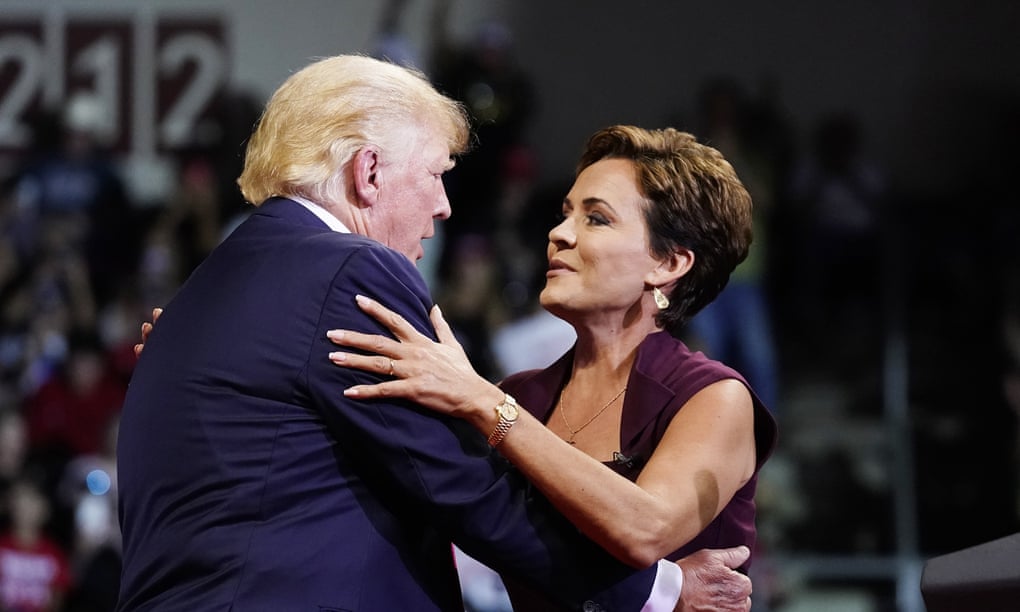
Kari Lake is embraced by Donald Trump at a rally in Prescott last week. Lake has falsely said Biden did not win in Arizona, and called the election ‘corrupt’.
Kari Lake is embraced by Donald Trump at a rally in Prescott last week. Lake has falsely said Biden did not win in Arizona, and called the election ‘corrupt’. Photograph: Ross D Franklin/AP

Kari Lake and Mark Finchem running for governor and secretary of state in primary contests that could have serious consequences

in New York, in Phoenix, and in Washington
Mon 1 Aug 2022 03.00 EDTLast modified on Mon 1 Aug 2022 03.01 EDT

Arizona Republicans are on the verge of nominating two of America’s most prominent election deniers for governor and secretary of state, the latest in a series of primary contests with serious consequences for America’s democracy.

Kari Lake, a former news anchor, and Mark Finchem, a state lawmaker, are running for governor and secretary of state, respectively. Both have built their campaigns around the lie that the 2020 election was stolen. Both are frontrunners in their races and if elected, would take over roles with considerable power over how elections are run and certified in a key battleground state.

The Arizona primary on Tuesday is the latest in a series of contests where candidates who have questioned the election results stand a strong chance of winning the GOP nomination for statewide office. It’s a trend that is deeply alarming, experts say, and could pave the way for Republicans to reject the result of a future election

  • Kari Lake is embraced by Donald Trump at a rally in Prescott last week. Lake has falsely said Biden did not win in Arizona, and called the election ‘corrupt’.
    Kari Lake is embraced by Donald Trump at a rally in Prescott last week. Lake has falsely said Biden did not win in Arizona, and called the election ‘corrupt’. Photograph: Ross D Franklin/AP

    Kari Lake and Mark Finchem running for governor and secretary of state in primary contests that could have serious consequences

    in New York, in Phoenix, and in Washington
    Mon 1 Aug 2022 03.00 EDTLast modified on Mon 1 Aug 2022 03.01 EDT

    Arizona Republicans are on the verge of nominating two of America’s most prominent election deniers for governor and secretary of state, the latest in a series of primary contests with serious consequences for America’s democracy.

    Kari Lake, a former news anchor, and Mark Finchem, a state lawmaker, are running for governor and secretary of state, respectively. Both have built their campaigns around the lie that the 2020 election was stolen. Both are frontrunners in their races and if elected, would take over roles with considerable power over how elections are run and certified in a key battleground state.

    The Arizona primary on Tuesday is the latest in a series of contests where candidates who have questioned the election results stand a strong chance of winning the GOP nomination for statewide office. It’s a trend that is deeply alarming, experts say, and could pave the way for Republicans to reject the result of a future election

  • Cartoon Carousel The nation’s cartoonists on the week in politics | By POLITICO STAFF 01/23/2026 05:00 AM EST

    Every week political cartoonists throughout the country and across the political spectrum apply their ink-stained skills to capture the fo...