Zero-Trust for Semiconductor Industry 'Green-Washing' Pledges for Net-Zero Pledges to Reach Net Zero Emssions by 2050
Let's take a huge concept hyper-local: In the US, a single fab, Intel’s 700-acre campus in Ocotillo, Arizona, produced nearly 15,000 tons of waste in the first three months of this year, about 60% of it hazardous.
It
also consumed 927m gallons of fresh water, enough to fill about 1,400
Olympic swimming pools, and used 561m kilowatt-hours of energy.
ONE TAKE-AWAY: Chip companies make lots of money. So even though all these green carbon measures would have a cost, they can afford it.
"The
semiconductor industry has a problem. Demand is booming for silicon
chips, which are embedded in everything from smartphones and televisions
to wind turbines, but it comes at a big cost: a huge carbon footprint.
The
industry presents a paradox. Meeting global climate goals will, in
part, rely on semiconductors. They’re integral to electric vehicles,
solar arrays and wind turbines. But chip manufacturing also contributes
to the climate crisis.
> It requires huge amounts of energyandwater – a chip fabrication plant, or fab, can use millions of gallons of water a day – and creates hazardous waste.
As the semiconductor industry finds itself increasingly under the spotlight, it is starting to grapple with its climate impacts.
✓✓ Last week Taiwan Semiconductor Manufacturing Company, the world’s largest chipmaker, which supplies chips to Apple, pledged to reach net zero emissions by 2050.
The company aims to “broaden our green influence and drive the industry
towards low-carbon sustainability”, said the TSMC chairman, Mark Lui.
But decarbonizing the industry will be a big challenge.
TSMC alone uses almost 5% of all Taiwan’s electricity, according to figures from Greenpeace, predicted to rise to 7.2% in 2022, and it used about 63m tons
of water in 2019. The company’s water use became a controversial topic
during Taiwan’s drought this year, the country’s worst in a half
century, which pitted chipmakers against farmers.
>
Chip manufacturing, rather than energy consumption or hardware use,
“accounts for most of the carbon output” from electronics devices, the
Harvard researcher Udit Gupta and co-authors wrote in a 2020 paper. . .A global shortage of high-end chips,. .has increased focus on the industry.
CONSEQUENCES:
In a tight market, automakers found themselves at the back of the chip
queue, far behind much bigger-scale semiconductor customers such as
Apple, who use the chips to give computing power to their smartphones,
laptops and other devices.
>
. . ."Recently, I started seeing our effects on the environment
completely come to the forefront,” said Sohini Dasgupta, principal
design engineer at ON Semiconductors.
Two years ago, she said, the industry “was sitting on the fence, in the middle of the pack, saying: ‘Yes, sustainability is important, but we don’t know what to do with it’”. But
now she sees movement: “Every day it pops up in our emails, what our
company’s doing, what other companies are doing,” she said. . .
The
rise of ethical investing has helped, according to Mark Li, a
semiconductor analyst at the investment firm Bernstein. Fund managers
increasingly market “green funds” and investors are asking more
questions about companies’ environmental, social, and governance (ESG)
impact. “Over the last three years, the voice of ESG investment is much
louder than before,” Li said. Ultimately, this changes how companies behave, he added. . .
>
Greater availability of renewable energy is helping chipmakers reduce
their carbon footprint. Intel made a commitment to source 100% of its
energy from renewable sources by 2030, as did TSMC, but with a deadline of 2050.
>
Energy consumption accounts for 62% of TSMC’s emissions, said a company
spokesperson, Nina Kao. The company signed a 20-year deal last year
with the Danish energy firm Ørsted, buying all the energy from a
920-megawatt offshore windfarm Ørsted is building in the Taiwan Strait. . .
> As well as switching to renewables, chipmakers could also implement efficiencies in fabs. . .
> Fabs could be more efficient in regulating air and water temperature, humidity, and pressure
> There is also innovation aimed at tacklingthe
worst-polluting materials used in making semiconductors. The chip
industry uses different gases during the production process, many of
which have a significant climate impact . . ."
1 Why Intel and TSMC are building water-dependent chip factories in one of the driest U.S. states
By Sam Shead | CNBC
The
biggest semiconductor manufacturers in the world are quickly trying to
build new factories as the global chip crisis continues to wreak havoc
on a plethora of industries.
U.S. semiconductor giant Intel
announced in March that it plans to spend $20 billion on two new chip
plants in Arizona. Separately, TSMC (Taiwan Semiconductor Manufacturing
Company) said it was going to build a $12 billion factory in Arizona,
and chief executive C.C. Wei said Wednesday that construction had
already begun.
The Grand Canyon State may not, however, seem like
the most obvious place for a chip “foundry” or “fab” since the high-tech
manufacturing plants guzzle millions of gallons of water every day.
At
present, in the face of climate change, Arizona is facing a deepening
water crisis and some of the state’s all-important aquifers have an
uncertain future.
Arizona received just 13.6 inches of rainfall on
average per year between 1970 and 2000, according to the NOAA National
Climatic Data Center, making it the fourth driest state nationwide.
Conversely, Hawaii and Louisiana recorded the highest levels of average
yearly precipitation in the U.S. over the same time frame, reporting
63.7 inches and 60.1 inches, respectively.
Jun 4, 2021 — Why Intel and TSMC are building water-dependent chip factories in one of ... Arizona received just 13.6 inches of rainfall on average per year ...
Mainstream Reports: MAKING CHIPS TAKES LOTS OF WATER
By
now we all know that water is one of the most precious commodities here
in the desert. We can't live without this valuable natural resource
that is increasingly getting 'monetized in the marketplace - a scarce commodity that can be extracted, bought and sold and traded.
INSERT: Extreme Drought (D3)- across much of central, southern, and western Arizona, as well as Southeast California In Arizona: Maricopa, northern Pinal, southern Gila, La Paz, and Yuma counties
"Major
semiconductor manufacturers looking to expand in Arizona will likely be
spared from water cuts induced by an unprecedented water shortage in
the Southwest, at least for now. . .
As
part of the scramble to end a shortage of another kind — the global
dearth in semiconductor chips — both Intel and TSMC plan to open new
facilities in Arizona. But they’re setting up shop just as one of the worst droughts in decades grows worse across the Western US.
> A factory or “fab” for making semiconductors needs a lot of water to operate. It’ll guzzle between 2 to 4 million gallons of water a day by some estimates, using the water to cool down equipment and clean silicon wafers.
That’s about as much water as 13,698 to 27,397 Arizona residents might use in a day.
Fabs
are also pretty picky when it comes to water quality, they need to use
“ultra-pure” water to prevent any impurities from damaging the chips.
Water shortages loom over future semiconductor fabs in Arizona
Chipmakers are setting up shop in Arizona as drought worsens
Federal authorities officially declared a shortage
on the Colorado River for the first time ever this week, which will
trigger water cuts in several states and Mexico starting January 1st,
2022.
TSMC Says a Shortage of Commodity Chips Is Disrupting Trillion-Dollar Industries
Anton Shilov
3 - 4 minutes
PRE-NOTE: "...The market of semiconductor manufacturing tools is also huge and
multifaceted. If TSMC cannot get an ASML extreme ultraviolet (EUV)
lithography scanner or an Applied Materials deposition tool on time, its
huge $20+ billion fab will stand idle. Ultimately, other suppliers of
fab tools as well as TSMC's customers will suffer, so supply chain
management will get even more crucial tomorrow than it is today.
US governor visits Taiwan in trip focused on semiconductors
Al Jazeera
3 - 4 minutes
Arizona Governor Doug Ducey is expected to meet Taiwanese President Tsai Ing-wen and chip representatives during trip.
The
governor of the US state of Arizona has begun a trip to Taiwan focused
on securing critical chips that are at the centre of the heated tech
rivalry between the United States and China.
Arizona Governor Doug Ducey is expected to meet Taiwanese President
Tsai Ing-wen as well as business leaders and university representatives
in the semiconductor industry during his three-day visit to the
self-governing island.
The visits have drawn an angry response from Beijing, which considers
Taiwan a province that must be “reunified” with the Chinese mainland by
force if necessary.
✓ During his visit to Taiwan, Ducey is seeking to attract suppliers for
a new $12bn semiconductor plant being built in Arizona by Taiwan
Semiconductor Manufacturing Corp (TSMC), the world’s largest supplier of
the critical chips used in practically all electronic devices.
The governor will then travel to South Korea, where he is expected to
meet South Korean President Yoon Suk-yeol and business leaders later in
the week. ✓
“Arizona has excellent relationships with Taiwan and the Republic of Korea,” Ducey said before beginning the trip.
“The goal of this trade mission is to take these relationships to the
next level — to strengthen them, expand them and ensure they remain
mutually beneficial.”
Taiwan produces more than half the global supply of high-end
processor chips, and Washington is concerned that the US is overly
dependent on the island and other Asian suppliers.
Concerns about the global supply of semiconductors have been
heightened by shortages during the COVID-19 pandemic and China’s
aggressive moves towards Taiwan. Beijing carried out unprecedented
military exercises near the island in response to Pelosi’s visit,
disrupting shipping and air traffic and highlighting the potential
vulnerability of the global supply chain for semiconductors.
Sign up for Al Jazeera
Weekly Newsletter
✓ In July, the US Congress passed legislation pledging $52bn in grants
and other aid to develop the domestic semiconductor industry and a 25
percent tax credit for investors in US-based chip factories.
Washington has also ramped up its support for Taiwan, although it does not recognise the island as an independent country.
✓ ✓ US President Joe Biden is planning to ask Congress to approve the
sale of $1.1bn in arms to the island, including 60 anti-ship missiles
and 100 air-to-air missiles, the media outlet Politico reported on
Wednesday.
Raytheon is most famous not for philanthropy, but for missiles. It
manufactures the BGM-109 Tomahawk, the long range cruise missile Trump
ordered fired at chemical weapons facilities in Syria in 2018. They cost around $2 million each. Raytheon also makes the Javelin
weapon system that has become crucial to Ukraine's fight against
Russia. Girls Who Code has partnered with Raytheon since 2018 and the
organization lists the manufacturer as a "partner" on its website that
donates more than $1 million to it in 2021.
‘Girls Who Code’ Team Up With Tomahawk Missile Maker Raytheon
The defense manufacturer has partnered with the STEM oriented nonprofit to provide leadership and technical training to college students.
Defense contractor Raytheon and tech nonprofit Girls Who Code are teaming up to launch a “pilot leadership academy for STEM college students.” According to a Raytheon press release, the program isspecificallyfor “STEM students who will soon enter the workforce.”
Girls Who Code is a nonprofit organization that aims to close the gender gap in tech. It has various clubs andprogramsthat seek to foster a love of STEM and tech in women. It has clubs for kids as young as eight, runs summer programs and gives out grants for highschoolers, and runs career counseling and development programs for college aged participants.
Raytheon is a defense contractor that manufactures weapons of war.
The partnership program is an initiative for teaching college aged girls how to code. It includes programs to strengthen leadership, technical, and professional skills as well as networking opportunities. In a press release announcing the partnership, Raytheon hailed it as a win for diversity.
“The Leadership Academy aims to provide students from historically underrepresented groups with increased exposure to tech careers by empowering them with a supportive community of peers and professional development opportunities,” the press release said. “Students in the Leadership Academy come from more than 80 colleges across the U.S. and about 90% identify as Black, Latina, Indigenous, or first-generation college students.”
Girls Who Code will also help Raytheon with its charitable giving initiatives.
“This four-month pilot program will include small cohort meetings—designed to provide opportunities for shared learning, career mentoring, and community-building—as well as a Give Back Project,” the press release said. “Participants will receive guidance from peers and Raytheon Technologies mentors as they plan, manage, and execute community service projects. Volunteers from the company will also participate in speed networking events and technical interview prep sessions with the students.”
Raytheon is most famous not for philanthropy, but for missiles. It manufactures the BGM-109 Tomahawk, the long range cruise missile Trump ordered fired atchemical weapons facilitiesin Syria in 2018. They cost around $2 million each. Raytheon also makes theJavelinweapon system that has become crucial to Ukraine’s fight against Russia. Girls Who Code has partnered with Raytheon since 2018 and the organization lists the manufacturer as a “partner” on its website that donates more than $1 million to it in 2021.
The press release did not say if the Girls Who Code would be working on weapons systems and the organization did not return Motherboard’s request for comment. But the press release did offer some insights.
"At Girls Who Code, we understand that to prepare our students for the workforce; we must not only equip them with the resources they need to build on their technical skills. To help them thrive, we also need hands-on engagement that will teach them the fundamentals of growing their networks through leadership," Tarika Barrett, CEO of Girls Who Code said in the release. "We're overjoyed to partner closely with Raytheon Technologies on this pilot program and are excited by the opportunity to continue to provide students with the tools and confidence they need to make a difference."
Raytheon did not return Motherboard’s request for comment.
Aug 26, 2021 · Raytheon Technologies partnered with the national organization to host five two-week virtual programs for 300 high school girls from across the ...
8 hours ago · Raytheon Technologies said Monday it is partnering with Girls Who Code to launch GWC's Leadership Academy, a semester-long program for more ...
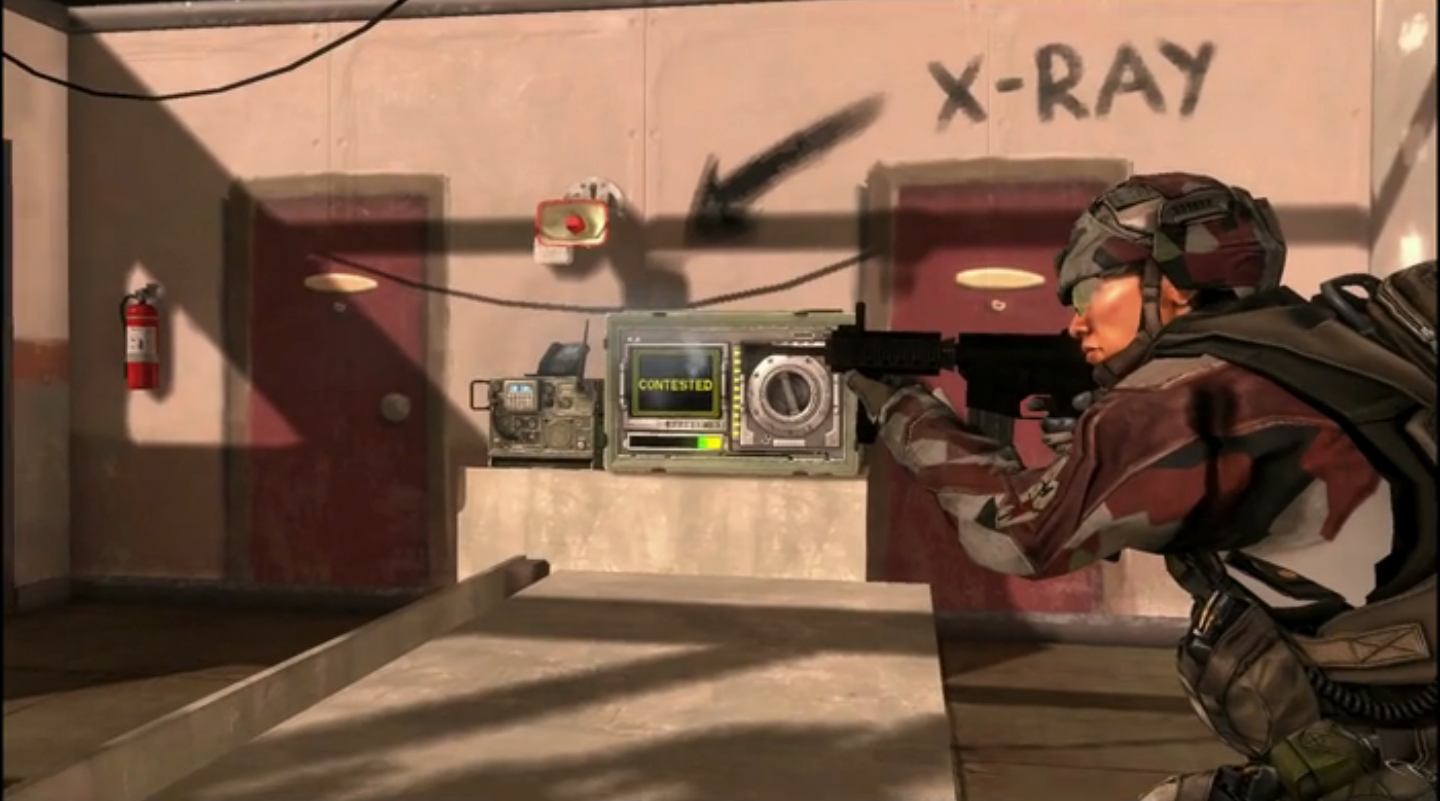
Intro: First this -- As war itself turns to simulation, when buttons replace triggers and
blades, and when killing is removed several orders from civilians and
even from soldier-executioners, who is morally responsible for wrongful
death or even “successful” “targeted strikes”?
Navy Looking for Gamers After Disastrous Esports Launch
4 - 5 minutes
Goats
and Glory, the U.S. Navy’s esports team, is looking for new sailors to
refresh its roster of Twitch streamers. According to an August 22 admin memo, Goats and Glory needs new sailors to play games in front of a camera to help with the military’s recruitment effort.
“The
Navy Esports Team significantly contributes to the multi-faceted
outreach campaign of CNRC [Commander, Navy Recruiting Command] by
engaging with prospective Sailors online and at gaming venues,” the memo
said. “Centennials [Gen Z] are moving into digital spaces for most of
their content consumption and social interactions, and the Esports
domain is one of the most popular and vibrant online arenas to date.
Connecting and attracting the best talent requires the Navy to be in the
same spaces where those future Sailors reside.”
✓ When military esports teams launched in 2020, the Navy was explicit
that it was not trying to recruit anyone using video games. It was odd
given that the team was run through Navy Recruiting Command and the
streamer’s official handbook said the whole thing was a recruiting effort.
This
new memo looking for streamers is also explicit. The streamers are to
make connections with people interested in the Navy and travel to high
schools and colleges across the country in service of that goal. “Goats
and Glory team members operate at the Navy Esports facility, which is
specifically designed for the team to practice, stream, and compete,”
the memo said. “Team members will develop a routine streaming cadence,
encouraging followers and viewers to interact with the members and
outreach content, and compete against high schools and colleges across
the country.”
The
launch of the military esports teams was a disaster on all fronts.
Goats and Glory vanished for a few months after one of its streams
included jokes about Nagasaki and a racial slur. A National Guard streamer repeated white supremacist
talking points about genocide. The Army’s Twitch stream couldn’t handle
the amount of chatters asking about war crimes and courted a free speech controversy.
Many
of the Twitch channels went quiet for a few months before starting up
again. Some simulcast to Facebook. Since 2020, most of the teams have
been quietly streaming to small audiences.
✓ Occasionally, the audience
still asks about war crimes. But the military won’t be leaving these
digital spaces. They need them. Every single branch of the U.S. military
is struggling to make its recruitment goals
and the Pentagon has to meet its potential soldiers and sailors where
they are. Increasingly, they’re online watching other people play video
games.
Once reviled by
U.S. politicians, video games have become an important connection point
between generations. The State Department even seems to think it can use
video games to help instill American values in the youth of Saudi
Arabia.
The State Department is soliciting applications for a $45,000 grant
with the goal of using U.S. gamers to train an esports team in the
Kingdom. “This program should engage with Emerging Voices (EVs),
particularly in the age group of 18-30 years, on key U.S. government
priorities such as STEM education, gender equality, and English language
learning, and to promote studying gaming related college majors in the
United States and help develop an eSports culture in Saudi Arabia,” it
said.
The video game
industry has come a long way since the days of Senators holding up light
guns in Congress. Now both the DoD and State Department see video games
as important pieces of their diplomatic toolkits.
ORIGINAL REPORTING ON EVERYTHING THAT MATTERS IN YOUR INBOX.
Jul 15, 2020 · The US Military Is Using Online Gaming to Recruit Teens · Gamers with the Army, Navy, and Air Force are spending hours on Twitch with children as ...
According
to popular discourse, video games are either the divine instrument of
education’s future or the software of Satan himself, provoking young men
to carry out all-too-real rampages. Much like discussions surrounding
the Internet, debates on video games carry the vague, scattershot
chatter that says too much about the medium (e.g. do video games cause violence?) without saying much at all about the particulars of games or gaming conventions (e.g. how can death be given more weight in first person shooters?).
As Atlantic contributor Ian Bogost argues in his book, How to Do Things with Video Games, we’ve
assigned value to games as if they all contain the same logic and
agenda. We assume, unfairly, that the entire medium of video games
shares inherent properties more important and defining than all the
different ways games are applied and played. The way out of this
constrained conversation is to bore down into specifics, to tease out
various technologies, and to un-generalize the medium. We get such an
examination in War Play, Corey Mead’s important new study on the U.S. military’s official deployment of video games.
A
professor of English at Baruch College CUNY, Mead has written a
history, a book most interested in the machinations of military game
development. But War Play, too, lays a solid foundation from
which to launch more critical investigations—into soldier’s lives, into
computerized combat, and into the most dynamic medium of our time.
War Play moves
forward along two intertwined themes. First, Mead says,
throughout history, the intense needs of government-sanctioned combat
have spurred technological innovation in society. Second, the military
is a forerunner in original methods of education. We can see evidence of
the former in microwave ovens and semiconductors, GPS and jet engines;
there’s evidence of the latter in wide-scale standardized testing,
distance education, and vocational learning. Within the two themes’
intersection is the book’s creative tension. How are video
games, specifically designed for the armed forces, empowering soldiers?
How do they influence civilian behavior?
America’s Army
But
before Mead can conjure the ethical dilemmas of bloodless virtual
realities, or plumb lionized state violence, he acts as a historian. The
military has used video games “at every organizational level for a
broad array of purposes,” he writes. It’s had three big aims in this: to
recruit soldiers, to train them, and, most recently, to treat
their psychological disorders, such as PTSD.
That’s how it’s been
since the years after World War II, when the army and commercialized
gaming built a collaborative relationship, a kind of
military-entertainment complex. It still lives: The military offers
funding and technical expertise to game and computer developers, and, in
exchange, they give it proprietary technology and technical consulting.
Beginning
in 1960 and ending in the 1990s, “the armed forces took the lead in
financing, sponsoring, and inventing the specific technology used in
video games.” Spacewar!, the title historians consider the first
video game, was developed by graduate students at MIT who were funded by
the Pentagon. As Mead tells us, the 1962 side project was made on a
Programmed Data Processor-1, an early microcomputer. The PDP-1’s
manufacturer didn’t have a faux space-battle program in mind—one in
which “two players used switches and knobs to maneuver spaceships
through the gravity field of a star while firing missiles at each
other”—when the hardware was designed, surely. But SpaceWar! gave birth to the navigational controls and monitor-as-sight set-up that would influence all subsequent games.
Later, the original first-person perspectives of 1980’s Battlezone and its successor, 1993’s Doom,
showed the potential for 3-D piloting, multiplayer networking,
and virtual reality-based training. Through commercial gaming
technology, the armed forces could adapt soldiers to the tactics of team
fighting and trigger-fast decision making, or conjure tailor-made
battle environments for them. The arrangement has synergy: The Pentagon
avoids pitiful, expensive efforts to create their own training
simulators, and developers get fat government checks. The symbiosis
flourished after the Cold War, as budgetary constraints—the lead unnamed
character in this book—privileged tactical games over costly field
exercises. But 21st-century warfare and the young people who volunteer
for it were changing too.
America’s Army
Iraq and Afghanistan, Mead reminds us, don’t resemble Band of Brothers; today, wars look more like Generation Kill. Instead
of clearly demarcated enemies, and push-the-front directives,
servicemen and women are faced with “endlessly mutating insurgencies,”
and surveillance information overload. The complexity of digital weapons
systems has increased. So, too, have the gargantuan data processing
requirements of the Defense Department and the military’s vast
bureaucracy. After 9/11, the armed forces have put a premium on
cognitive dexterity.
So, Mead writes, games have changed to fit
the times. Programs like DARWARS emphasize “cross-cultural
communication, convoy operations, infantry tactics, and rules of
engagement.” Specific games like UrbanSim and Tactical Iraqi focus on counterinsurgency and language skills. New theater of war simulators like Virtual Battespace 2 enable
commanders to construct specific frontline scenarios—IED explosions,
ambushes, medical evacuations—to train entire companies of soldiers.
Whole worlds can be customized through topography and enemy engagement.
And it all begins to look like a primitive version of Star Trek’s Holodeck or the X-Men’sDanger Room.
(There’s a rich but underdeveloped idea in this book, of sci-fi
writers, time and time again, shaping the minds of military engineers.)
While
thorough in his history of the military’s games development, Mead
forgoes a robust account of games criticism. Take his discussion of America’s Army.
America’s Army was built using commercial software: It was created on the engine of Epic Games’ Unreal. Modeled
after culturally pervasive first-person shooters, its first iteration
was released in 2002 and is available to the public for free. Mead tells
us that, as America’s Army was used explicitly as a recruitment
tool aimed at young teenagers, it could be viewed as propaganda or as an
army intrusion into the home—but he never develops these thoughts. In
one sentence, he might list two reactionary senators; in another, a
lawyer and an author appear, railing like knee-jerk anti-game activists.
So only in passing explanation do we learn that no player actually dies in America’s Army.
Mead never expands on this hypocrisy, that a game meant to teach people
about the service fails to convey a sense of loss or carnal gore.
(Neither does it convey a sophisticated geopolitical understanding.
Readers looking for a range of views on America’s Army might do better to seek out Marcus Schulzke’s scholarly survey of criticism about the game.)
Mead also relegates discussion of the army’s “utterly ineffective” “most controversial” game, Full Spectrum Warrior,
to a footnote. I find this suspect. It’s only there, in a tiny font,
that we learn that the project failed as a training tool and cost the
government “millions of dollars to produce” while the video game company
THQ made over $50 million from the project. Doesn’t that historical
episode deserve more attention?
Elsewhere, Mead questions the
military’s push into civilian classrooms. With its adherence to the
technocratic management of standardized tests, and the insistence on
qualitative mastery and virtual learning, the armed forces impart on
public schools an ideology that education advocates don’t necessarily
want.
To his credit, Mead also illuminates gaming’s inroads in treating psychological afflictions, like PTSD. Simulators such as Virtual Afghanistan use
head-mounted displays to create “immersive, interactive environments.”
With the help of clinicians in controlled settings, soldiers are able to
confront traumatic memories in a process called exposure therapy. By
recalling distressing episodes from their past, soldiers learn to
habituate themselves to those fearful experiences. Games help them
manage their negative emotions and troubled thoughts. In addition,
role-playing allows veterans to direct the actions of different
characters (a military spouse, a social worker, a soldier with PTSD) to
gain perspective and self-reflection. These game-based therapies have
shown promising results in alleviating mental illness, serving as a
bridge to traditional therapies and dissolving the stigma that sees
counseling as a sign of weakness.
As the civilian population has quarantined itself from its own wars, from its countrymen and women who fight them, War Play’s efforts
to explore the healing potential of games is commendable. Also
commendable is how, in the book’s concluding chapter, Mead allows his
narrative to unhinge. He at last confronts lingering and provocative
questions.
Riffing off the expression “all but war is simulation,”
Mead considers weapons that are highly mediated, like Reaper and
Predator drones piloted by soldiers using monitors and computer
controls. As war itself turns to simulation, when buttons replace
triggers and blades, and when killing is removed several orders from
civilians and even from soldier-executioners, who is morally responsible
for wrongful death or even “successful” “targeted strikes”? Who, in
this surreal and oddly precise version of Ender’s Game, is
ultimately culpable? When war becomes even more unseen, when it slides
ever-more toward computerized management and best-guess threat
assessment, will we be more disposed to wage it?
Update "...“By partnering with Rumble Ads, Truth Social i
poised to displace the
Big Tech platforms as a superior venue for businesses to connect with an
extraordinarily engaged audience of millions of real people,” TMTG CEO
Devin Nunes said in a statement.
Truth Social is strapped for cash and struggling to find new users
Makena Kelly
4 - 5 minutes
Truth Social is strapped for cash and facing a mountain
of tech and legal troubles that could doom the future of former
president Donald Trump’s personal social media platform.
✓ The most immediate problem is the platform’s stalled
SPAC, initially planned as a way to publicly trade shares in the new
company without the diligence of an IPO. But the SPAC has been delayed,
leaving the Digital World Acquisition Corp., which was projected to take
ownership of Truth Social, in an awkward position. SEC filings show that the company
has lost in over $6 million in the first half of this year, hasn’t
generated any revenue, and holds only $293 million in a trust that
houses most of its assets.
✓✓ DWAC’s stock price has shed nearly 75 percent
of its value since its March peak — and in its SEC filing, the company
said that it will need more money to continue operating and asked to
extend the SPAC merger past the September 8th deadline.
✓ But Truth Social’s financial woes already seem to be affecting operations. Earlier this week, Fox Business reported that
the company stopped paying RightForge, a conservative internet
infrastructure company, in March and now owes the vendor at least $1.6
million in backdated payments. While RightForge CEO Martin Avila has
said that the company is “committed to servicing” Truth Social, the
platform could lose its hosting services if it continues to withhold
payments.
The social network’s biggest asset continues to be Trump
himself and the legion of fans who have followed him after his ban from
Facebook, Twitter, and YouTube in the wake of the Capitol riot. But
while the iOS app saw a surge in downloads shortly after the FBI’s
warranted search of Trump’s Mar-a-Lago residence, basic technological
failures are still holding back growth. The app launched in February but
wasn’t widely available on Apple’s App Store until May. It still hasn’t
launched on Android operating systems, something that Axios reported was due to “insufficient content moderation.”
✓ In a statement on Tuesday,
TMTG said that it was working “in good faith with Google” to host Truth
Social on the Google Play Store. “TMTG has no desire to litigate its
business matters in the public sphere, but for the record, has promptly
responded to all inquiries from Google,” the statement said.
Trump himself seems unconcerned by the issues. On Monday, he posted dozens of messages promoting blatant conspiracy theories like QAnon, which are largely banned on mainstream platforms.
✓ Trump’s ongoing legal woes have also made the network’s
financial situation more precarious. An early investor sued DWAC,
alleging violations of securities law, and it’s not entirely clear who
is still on the company’s board. Sarasota’s Herald-Tribune reported in July that Trump left his media company weeks before the SEC subpoenaed members of the board. In a statement to Axios in July, Truth argued that Trump still remains on the board, despite Florida business records suggesting that he left in June.
As part of its SEC filing this month, DWAC warned
investors that the series of investigations into Trump, like those
probing his businesses and his role in the deadly January 6th attack on
the Capitol, could result in Truth becoming “less popular” if they
damage Trump’s credibility.
✓✓ Still, Truth Social appears to be making some gains on
the business front. Last week, Rumble announced that it would be
launching its own advertising network that would allow advertisers to
run ads on its partnered platforms. Truth Social joined as Rumble’s
first advertising partner.
“By partnering with Rumble Ads, Truth Social is poised to
displace the Big Tech platforms as a superior venue for businesses to
connect with an extraordinarily engaged audience of millions of real
people,” TMTG CEO Devin Nunes said in a statement.
.jpg)

 > It requires huge amounts of energy and water – a chip fabrication plant, or fab, can use millions of gallons of water a day – and creates hazardous waste.
.jpg)

:no_upscale()/cdn.vox-cdn.com/uploads/chorus_asset/file/22649983/usdroughtmonitor_weekly_ndmc__web__2021_06_01.png)
.jpg)


.jpg)



.jpg)
.jpg)

.jpg)
.jpg)
.jpg)



.jpg)

.jpg)
.jpg)
.png)
.jpg)


.jpg)