


 CIVIL COMMERCIAL
NASA completes agreement with Axiom Space for second private astronaut mission
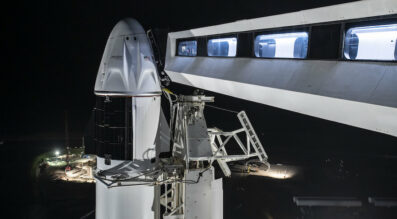
NASA has completed an agreement for a second private astronaut mission to the International Space Station with Axiom Space, the only company that bid on the opportunity.
Chinese megawatt-level space nuclear reactor passes review

An image of Neptune taken by Voyager 2, days before its closest approach in August, 1989. Credit: NASA/JPL HELSINKI — A Chinese nuclear reactor for providing power and propulsion in outer space has passed a comprehensive performance evaluation, according to reports.
The reactor was designed by the Chinese Academy of Sciences and can generate one megawatt of electricity for spacecraft power supply and propulsion.
The project passed a comprehensive performance evaluation by China’s Ministry of Science and Technology Aug. 25, according to Science and Technology Daily and other Chinese media.
The online reports across multiple outlets have since been deleted but cached and archived versions are accessible.
No technical details nor plans for use of the nuclear power system were stated in the reports.
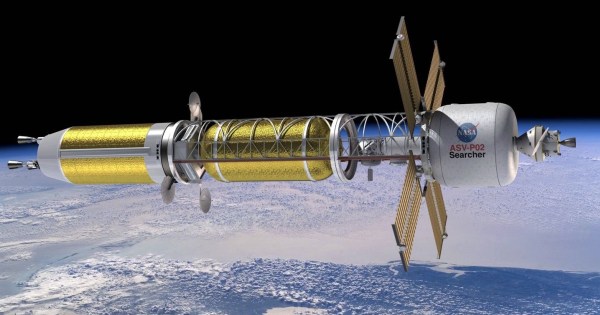
Nuclear fission systems offer high levels of power and electricity propulsion for robotic missions to the outer planets, which receive very low levels of energy from the sun, rendering solar power generation useless. They can also provide power on planetary surfaces for crewed missions.
The project was initiated in 2019 as a national key research and development program and demonstrates a strong Chinese interest in developing nuclear power for use in space.
The South China Morning Post reported last year that a prototype design had been completed and some components had been built.
Senior Chinese space exploration official Wu Weiren, director of the newly-established Tiandu deep space exploration laboratory, in 2019 called for breakthroughs in nuclear power for space, to meet future mission requirements.
Chinese civilian mission proposals using a nuclear space reactor to provide power for propulsion include Voyager-like missions which would see a pair of spacecraft towards the nose and tail of the heliosphere and potentially a third perpendicular to the plane of the ecliptic.
A Neptune orbiter mission concept using electric propulsion powered by a nuclear reactor has also been published.
China has been expanding its space transportation and deep space capabilities in recent years, successfully developing cryogenic rockets to facilitate lunar, Mars and space station projects. It is now working on reusable launchers, super heavy-lift rockets and a two-stage-to-orbit reusable spaceplane system.
The U.S. is also moving ahead with nuclear powered spacecraft plans, with DARPA, NASA and the Department of Defense all working on concepts.



NASA and China are eyeing the same landing sites near the lunar south pole
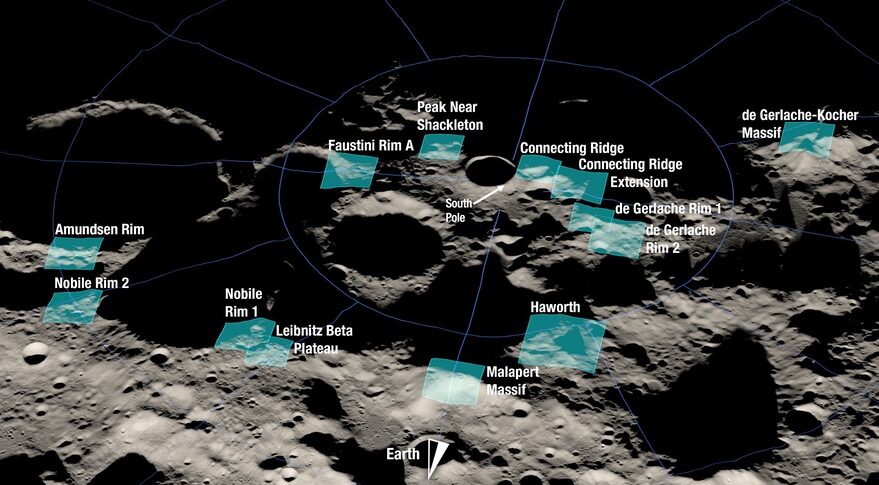
HELSINKI — China and the United States have identified overlapping potential landing sites at the south pole of the moon as both countries ramp up their lunar exploration ambitions.
The partially intersecting plans for lunar landings highlight the new interest in particular lunar resources and pose questions as to how competing countries implement and coordinate their respective moon exploration plans.
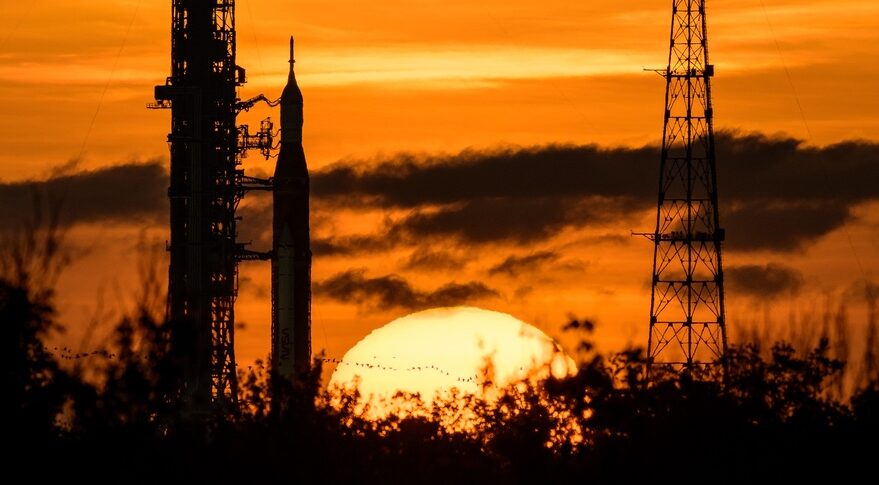
NASA earlier this month announced the selection of 13 potential locations for the Artemis 3 crewed mission which is currently scheduled to launch in late 2025.
NASA candidate landing sites, each about 15 by 15 kilometers, are located within six degrees of latitude of the south pole.
Meanwhile, a Chinese journal article on potential lunar south pole landing sites, authored by Chang’e-4 lunar mission commander Zhang He and others, identifies 10 suitable spots near the lunar south pole. The sites are thought to be related to the country’s Chang’e-7 mission, currently scheduled for 2024.
Chang’e-7 will be uncrewed and consist of an orbiter, relay satellite, lander, rover and “mini flying detector,” with the latter to look for the presence of water.
Artemis 3 and Chang’e-7 both identify sites near Shackleton, Haworth and Nobile craters as potential landing zones.
The overlap is in part due to both looking to find sites with high elevation and good lighting conditions for conducting mission activities while also being close enough to permanently shadowed craters which are thought to trap volatiles such as water-ice.
It is not clear how the two countries will coordinate their respective lunar plans, with NASA preparing to launch Artemis 1 and China having its own plans for an International Lunar Research Station.
NASA is severely limited in its capacity to engage with Chinese entities by the so-called Wolf Amendment inserted into an appropriation bill in 2011.
In 2015 the Obama Administration began the U.S.-China Civil Space Dialogue, organized by the State Department, allowing discussion of space matters. While meetings were continued into the Trump Administration, that avenue currently does not appear conducive to discussion.
A State Department spokesperson said on background that, “The last U.S.-China Civil Space Dialogue was in 2017. There are no plans presently for another civil space dialogue. Should a civil space dialogue be scheduled, the United States will announce at the appropriate time.
“We have and will continue to keep the lines of communication open with Beijing, including on issues of spaceflight safety.”
The International Space Exploration Coordination Group (ISECG) could however allow for multilateral discussions and coordination of plans.
Neither NASA nor paper author Zhang He had responded to a request for comment on the overlapping landing sites at press time.
Christopher Newman, professor of space law and policy at Northumbria University in the United Kingdom, told SpaceNews that “this is a genuine opportunity for collaboration and cooperation between the two giant powers, and would be an opportunity to show all the rhetoric about space exploration being more than geopolitical in nature.”
“However, in reality it is not hard to see why they both want the same spots. It is prime lunar real estate for in-situ resource utilization. This could be the first potential point of conflict over resources beyond Earth,” Newman said.
“Both parties are signatories to the Outer Space Treaty so nominally accept the use of celestial bodies for peaceful purposes, but it will be interesting to see what happens. A lot will depend on who gets there first. This could add an unwelcome element of competition which threatens security both in space and on Earth.”
Both parties’ landing plans will likely be revised as the respective missions get closer. NASA officials state they aim to narrow the list about 18 months before Artemis 3 to time to prepare procedures specific to each site.
It is not clear how China, which used data from NASA’s Lunar Reconnaissance Orbiter (LRO) for its selection, will proceed with narrowing down its potential landing sites.
The landing area for the 2020 Chang’e-5 lunar sample return mission was known years in advance, partly because of a 2017 launch failure that delayed that mission.
In the case of the early 2019 Chang’e-4 lunar far side landing, a number of research papers identifying potential sites in the South Pole-Aitken Basin—a vast impact crater of immense scientific interest—were published ahead of the mission by mid-2018, but the selection of Von Kármán crater as a primary landing site was not revealed until closer to launch that December.
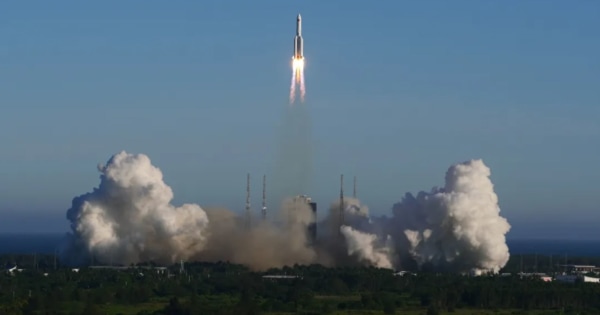
Both countries have recently exchanged criticism over respective space activities. NASA Administrator Bill Nelson is reported to have told German publication Bild that China would occupy the moon, while later criticizing China over the uncontrolled reentry of a Long March 5B first stage.
“Space observers also pointed out that as NASA is trying hard to relive its Apollo glories, China is working on innovative plans to carry out its own crewed moon landing missions,” an Aug.21 article from Beijing tabloid Global Times read, with quotes stating the belief that “NASA might grow more hostile against China in the space domain given the huge pressure it is facing to maintain its global leadership in moon exploration.”
The same outlet again criticized Nelson for his comments in the wake of the Artemis 1 launch scrub on Monday.
Space Force building ground station in Alaska ahead of launch of Arctic satcom mission

Secretary of the Air Force Frank Kendall visits Clear Space Force Station, Alaska, Dec. 21, 2021. Credit: U.S. Air National Guard Satellite terminals in Alaska will be the main connection to the new EPS-R payloads that will launch in 2023WASHINGTON — The U.S. Space Force has started building a gateway site at Clear Space Force Station, Alaska, where it will operate two new polar communications payloads scheduled to launch in 2023 on a Space Norway mission.
The Space Systems Command’s satellite communications office broke ground earlier this week to prepare the site to serve as a gateway for the Enhanced Polar Systems-Recapitalization (EPS-R) payloads, the command said in a news release.
Satcom terminals at Clear will be the main connection to the new EPS-R payloads that will launch next year on Space Norway’s Arctic Satellite Broadband Mission known as ASBM.
The EPS-R payloads, developed by Northrop Grumman, will fly to highly elliptical orbits on two ASBM satellites projected to launch on a SpaceX Falcon 9 rocket from Vandenberg Space Force Base, California.
The EPS-R gateway segment is estimated to cost about $4 million. It also includes facilities at Naval Base Point Loma, and the Army’s Camp Roberts, in California. It’s a joint project led by the Space Force, the Naval Information Warfare Center and the U.S. Army Corps of Engineers.
The EPS-R are Extremely High Frequency Extended Data Rate payloads that will provide secure communications services for U.S. forces operating in the north polar region. The ASBM mission includes communications payloads for the Norwegian Ministry of Defense and for British satellite operator Inmarsat.
The two EPS-R payloads will augment two existing Enhanced Polar Systems satellites also made by Northrop Grumman.
The project has been praised by U.S. defense officials as an example of international cooperation on space programs.
“The EPS-R system is crucial to multiple military services for warfighters in the polar region,” said 1st Lt. Timothy Phelps, EPS-R gateway and terminals team lead.


.jpg)
.jpg)


