Thursday, September 22, 2022

INFORMATION EQUALITY

 Pre-Note 


… we have a small favour to ask. Tens of millions have placed their trust in the Guardian’s fearless journalism since we started publishing 200 years ago, turning to us in moments of crisis, uncertainty, solidarity and hope. More than 1.5 million supporters, from 180 countries, now power us financially – keeping us open to all, and fiercely independent.

Unlike many others, the Guardian has no shareholders and no billionaire owner. Just the determination and passion to deliver high-impact global reporting, always free from commercial or political influence. Reporting like this is vital for democracy, for fairness and to demand better from the powerful.

And we provide all this for free, for everyone to read. We do this because we believe in information equality. Greater numbers of people can keep track of the events shaping our world, understand their impact on people and communities, and become inspired to take meaningful action. Millions can benefit from open access to quality, truthful news, regardless of their ability to pay for it.

Every contribution, however big or small, powers our journalism and sustains our future. Support the Guardian from as little as $1 – it only takes a minute. If you can, please consider supporting us with a regular amount each month. Thank you.

__________ 

www.theguardian.com

Royal family given veto on use of footage of Queen’s funeral

Jim Waterson
3 - 4 minutes

British television channels gave Buckingham Palace a veto on the use of footage from Queen Elizabeth II’s funeral, indicating the complicated relationship around the media’s coverage of the monarchy.

As part of an agreement with news broadcasters, the royal household was given the right to request that particular pieces of footage from the funeral services at Westminster Abbey and Windsor Castle were not used again.

Royal staff sent messages to the BBC, ITV News and Sky News during the event with the timestamps of footage they wished to exclude from future news broadcasts and social media clips. As a result, five short pieces of video featuring members of the royal family were removed from circulation.

Although the sections were relatively brief, the decision to give the palace a veto on what footage could be used has caused unease among some journalists who worked on the coverage, in ongoing tension at British media outlets between marking the death of a major national figure and allowing news coverage to be shaped by the royal family. . .Broadcasters largely left wider constitutional questions about the future of the monarchy out of their coverage. Dermot Murnaghan, who co-presented the funeral coverage on Sky News, told the Guardian the “proper order of funerals is to retain respect” and that there would be a chance to look at such issues in the future..." 

READ MORE

THE CHAOS MACHINE: The people who have the authority in the power are - just like in any major corporation, are the profit drivers


According to Simon Parkin writing in The Guardian, author Mark Fisher explains how social media algorithms and design “deliberately shape our experiences”, exerting “such a powerful pull on our psychology and our identity that it changes how we think, behave and relate to one another”.

The Chaos Machine is an essential book for our times - Ezra Klein

The Chaos Machine is the story of how the world was driven mad by social media. ... Google Books


www.theguardian.com

The Chaos Machine by Max Fisher review – how social media rewired our world

Simon Parkin
4 - 5 minutes

"I joined Twitter in the apparently halcyon days of 2009, before Brexit, Sandy Hook denial, Covid-19 conspiracy-mongering, and the livestreaming of police brutality. At that time, it felt like a school playground: you larked about with like-minded individuals, made charming acquaintances and laughed at the antics of the resident show-offs. Maybe, for someone, somewhere, that version of social media still exists. But probably not.. .


In The Chaos Machine, New York Times reporter Max Fisher attempts to chart the development of these familiar and contradictory forces from the time of Facebook’s launch in 2004. Since then, the site has expanded from a dorm-room project for rating the attractiveness of female students to the world’s third most visited website, with the unregulated power to move fringe conspiracy theories toward the mainstream, elect governments on the back of misinformation and even, according to UN human rights experts, play a “determining role” in genocide in Myanmar.

Fisher has enjoyed more access than most. In 2018 he received a stash of documents from a Facebook contractor-turned-whistleblower (named Jacob, in the book) that purported to reveal the inadequacy of the social network’s moderation policies. Facebook duly invited Fisher to its offices to sit in on high-level meetings. This level of insight, he writes, left him alternating “between sympathy for and scepticism of Facebook’s policy overlords”.

[. . .]  He quotes Facebook’s own researchers as saying “our algorithms exploit the human brain’s attraction to divisiveness”, leveraging that flaw to “gain user attention and increase time on the platform”. Twitter and Facebook are engineered in ways that “supercharge identity into a matter of totalising and existential conflict” – an idea familiar to anyone who browsed their feeds in the months leading up to the Brexit referendum.


In one sense this is a contemporary retelling of the myth of Narcissus. Social media provides the mirror in which we see our ideas and preferences algorithmically reflected. As these beliefs are reinforced, we fall increasingly in love with that reflection until some previously trivial thought or prejudice becomes a defining element of our identity. Simultaneously, we are not built for the omniscience social media affords, making us party to every tragedy and triumph across the world in real time. Fisher likens the platforms to the cigarette manufactures of the 60s, claiming not to understand why people might be concerned about the impact of their products. At some point we’ll look back on these days in bewilderment."  

✓ VIDEO


www.npr.org

Social media can inflame your emotions — and it's a byproduct of its design

Ari Shapiro Twitter Instagram
9 - 12 minutes

NPR's Ari Shapiro talks to Max Fisher, author of The Chaos Machine, about how social media companies leverage content that elicits anger and outrage to keep users engaged on their platforms.

ARI SHAPIRO, HOST:

If you feel like checking social media leaves you feeling angrier and more outraged, that's not your imagination. Max Fisher has covered the impact of social media around the world for The New York Times, from genocide in Myanmar to COVID misinformation in the U.S. And in his new book, "The Chaos Machine," he describes how the polarizing effect of social media is speeding up.


MAX FISHER: (Reading) Remember that the number of seconds in your day never changes. The amount of social media content competing for those seconds, however, doubles every year or so, depending on how you measure it. Imagine, for instance, that your network produces 200 posts a day, of which you have time to read about a hundred. Because of the platform's tilt, you will see the most outraged half of your feed. Next year, when 200 doubles to 400, you will see the most outraged quarter, the year after that the most outraged eighth. Over time, your impression of your own community becomes radically more moralizing, aggrandizing and outraged. And so do you. At the same time, less innately engaging forms of content - truth, appeals to the greater good, appeals to tolerance - become more and more outmatched like stars over Times Square.

SHAPIRO: That's Max Fisher reading from "The Chaos Machine: The Inside Story Of How Social Media Rewired Our Minds And Our World." Welcome to ALL THINGS CONSIDERED...


www.nytimes.com

Review: ‘The Chaos Machine,’ by Max Fisher

Tamsin Shaw
1 - 2 minutes

PAIN??...Powell Signals More Pain to Come With Fed Sending Rates Higher

 REPEAT... REPEAT...

Powell Signals More Pain to Come With Fed Sending Rates Higher

·5 min read
Powell Signals More Pain to Come With Fed Sending Rates Higher

(Bloomberg) -- Federal Reserve Chair Jerome Powell vowed officials would crush inflation after they raised interest rates by 75 basis points for a third straight time and signaled even more aggressive hikes ahead than investors had expected.

Most Read from Bloomberg


“We have got to get inflation behind us. I wish there were a painless way to do that. There isn’t,” Powell told a press conference in Washington on Wednesday after officials lifted the target for the benchmark federal funds rate to a range of 3% to 3.25%.

“Higher interest rates, slower growth and a softening labor market are all painful for the public that we serve. But they’re not as painful as failing to restore price stability and having to come back and do it down the road again,” he said.

✓The S&P 500 stock index ended near session lows -- pushing its slide from a January record to more than 20%. The gauge struggled to find direction in the aftermath of the Fed announcement, climbing as much as 1.3% at one point. Yields on the two-year Treasury note topped 4%, piercing that mark for the first time since 2007. The dollar rallied.

Officials forecast that rates would reach 4.4% by the end of this year and 4.6% in 2023, a more hawkish shift in their so-called dot plot than anticipated. That implies a fourth-straight 75 basis-point hike could be on the table for the next gathering in November, about a week before the US midterm elections.

The Fed chief agreed that the median of quarterly projections submitted by policy makers implied a further 125 basis points of tightening this year. But he said there had been no decision taken on the size of the rate increase at the next meeting and stressed that a fairly large group of officials preferred to only lift rates by a percentage point by year end.

Powell said his main message was that he and his colleagues were determined to bring inflation down to the Fed’s 2% goal they “will keep at it until the job is done.” The phrase invoked the title of former Fed chief Paul Volcker’s memoir “Keeping at It.”

“We’ve written down what we think is is a plausible path for the federal funds rate. The path that we actually execute will be enough -- it will be enough to restore price stability,” he said. That was a strong signal that officials would not hesitate to raise rates by more than they currently expect if that’s what it takes to cool inflation.

Further ahead, rates were seen stepping down to 3.9% in 2024 and 2.9% in 2025, their projections showed.


“This is Powell’s last roll of the dice and he is going all in,” said Derek Tang, an economist at LH Meyer in Washington. “The higher unemployment forecasts are fair warning they will inflict pain and this has just begun.”

The updated forecasts showed unemployment rising to 4.4% by the end of next year and the same at the end of 2024 -- up from 3.9% and 4.1%, respectively, in the June projections.

The Fed’s quarterly projections, which showed a steeper rate path than officials laid out in June, underscore the Fed’s resolve to cool inflation despite the risk that surging borrowing costs could tip the US into recession. Interest rate futures showed investors betting rates would peak around 4.6% in early 2023.

What Bloomberg Economics Says ...

“More important even than the 75-basis-point rate hike at the Sept. 20-21 FOMC meeting was the shift in the committee’s views in the updated Summary of Economic Projections. Almost two-thirds of members now see rates peaking next year even higher than the 4.5% markets had priced in. Bloomberg Economics expects the terminal rate ultimately will be 5%.”

-- Anna Wong, Andrew Husby and Eliza Winger (economists)

To read more click here

Powell and his colleagues, slammed for a slow initial response to escalating price pressures, have pivoted aggressively to catch up and are now delivering the most aggressive policy tightening since the Fed under Volcker four decades ago.

Estimates for economic growth in 2023 were marked down to 1.2% and 1.7% in 2024, reflecting a bigger impact from tighter monetary policy.

Read more: The Global Race to Hike Rates Tilts Economies Toward Recession

Inflation peaked at 9.1% in June, as measured by the 12-month change in the US consumer price index. But it’s failed to come down as quickly in recent months as Fed officials had hoped: In August, it was still 8.3%.

Job growth, meanwhile, has remained robust and the unemployment rate, at 3.7%, is still below levels most Fed officials consider to be sustainable in the longer run.

The failure of the labor market to soften has added to the impetus for a more-aggressive tightening path at the US central bank.

Fed action is also taking place against the backdrop of tightening by other central banks to confront price pressures which have spiked around the globe. Collectively, about 90 have raised interest rates this year, and half of them have hiked by at least 75 basis points in one shot.

(Updates with closing market levels in fourth paragraph.)

Most Read from Bloomberg Businessweek

Powell Signals More Pain to Come With Fed Sending Rates Higher

·5 min read

IN THE PUBLIC INTEREST: Riotsville, USA is out in the US now


Intro: "...What you’re watching in Riotsville is what we would now couch under the idea of police reform, which is they are trying to correct for some of the abuses that happened by police in 1967 by undergoing this training and coordination among departments.


“That is also a very helpful illustration of the limits and falsity of the idea of police reform, because police reform often is just a way of increasing funding for police. ‘If we just train them better, then they’ll get better and, in order to train them, we have to funnel more money to them.’


www.theguardian.com

Riotsville, USA: the shocking story of fake army towns that militarised police

David Smith
8 - 9 minutes

“Welcome to Riotsville,” says a raincoat-clad ABC news correspondent with a noisy, placard-waving crowd and row of what appear to be shops behind him. “This is a simulated riot in a simulated city. But as another summer approaches, it might be Anywhere, USA.”

The news clip resurfaces in Riotsville, USA, a documentary about the stagecraft of state coercion. It tells how the army built fake towns, or “riotsvilles”, on its bases and used soldiers as actors to stage huge theatrical re-enactments of civil unrest. The military response was filmed to help with the training of law enforcement.

It sounds like a dark sequel to The Truman Show or the creepy, mannequin-filled mock towns used for nuclear tests in the 1950s. The riotsvilles were buried in obscurity for half a century until Sierra Pettengill, an archival researcher and film-maker, read about them in Nixonland, historian Rick Perlstein’s book about the tumultuous 1960s and 1970s.


“I immediately looked to see what I could find, which was very little, and then eventually found a record in the National Archives that sounded about right and got that film transferred and sent over,” the director of Riotsville, USA recalls via Zoom from Brooklyn, New York.


“I then began a long process of trying to contextualise what this meant – literally within a historical context, but also where this fits in a metaphorical sense in how America treats race and equality, what choices it makes for allocation of resources, and the eternal loop we seem to be on.”

There was not an official campaign to cover up the riotsvilles, a response to uprisings against racial injustice (“race riots” in the parlance of the time) and protests against the Vietnam war. They seem to have fallen into the shadows because of collective amnesia. They had been hiding in plain sight all this time. . .

“What you’re watching in Riotsville is what we would now couch under the idea of police reform, which is they are trying to correct for some of the abuses that happened by police in 1967 by undergoing this training and coordination among departments.

“That is also a very helpful illustration of the limits and falsity of the idea of police reform, because police reform often is just a way of increasing funding for police. ‘If we just train them better, then they’ll get better and, in order to train them, we have to funnel more money to them.’ Money just ends up in more arrests so Riotsville is helpful.

“In terms of resources, this is a moment where the idea of the federal government funding local police departments is largely purchased. There had been lots of white riots prior to the 1960s and the kind of financial will did not exist in the same way.”

Campaigns to defund the police surged after the death of Floyd but provoked an inevitable backlash and are now seen by many Democrats as politically toxic. Joe Biden has repeatedly distanced himself from the movement, insisting that the police must be funded, not defunded.


But Pettengill argues: “The film to me is a very good argument for defunding the police. We’re not in some particular policy pickle that we can just fund our way out of. It is deeply, darkly broken and by design. The film is illustrating that design. It is watching a system get constructed.”

✓ IDA ENTERPRISE DOCUMENTARY FUND GRANTEE

Riotsville, USA

DIRECTOR(S): 
SIERRA PETTENGILL
 PRODUCER(S): 
SARA ARCHAMBAULT, JAMILA WIGNOT
 GRANT YEAR(S): 
2020

1968: Massive civil unrest, followed by a rare chance for justice. Riotsville, USA is the untold story of what we did instead. Told through a series of all-archival chapters chronicling forgotten and increasingly bizarre events, the film reveals the mechanism by which a nation declares war against its own.


Sierra Pettengill, Director

Sierra Pettengill is a Brooklyn-based filmmaker who works primarily with archival material. Her feature and short documentaries have screened at festivals including the Locarno Film Festival, the Sundance Film Festival, and in theaters around the world. She was a 2017/2018 Sundance Institute Art of Nonfiction Fellow, a fellow at the MacDowell and Yaddo Artist colonies, and writes frequently about film for publications including frieze magazine and Film Comment.

Sara Archambault, Producer

Archambault is a creative producer dedicated to the craft of artful nonfiction storytelling. She has an extensive professional history in production, programming, and foundation work—including 10 years as Program Director at the LEF Foundation and 9 years as Head Programmer of award-winning documentary film series The DocYard. Past producing credits include Emmy-nominated documentary Traces of the Trade/dir. Katrina Browne (Sundance, POV 2008), Street Fighting Men/dir. Andrew James (IFFBoston 2017), award-winning short Community Patrol/dir. Andrew James (Big Sky, T/F 2018) and Truth or Consequences/dir. Hannah Jayanti (Rotterdam 2020). Sara's work has received support from Tribeca Film Institute, Sundance Institute, SFFILM, Catapult Film Fund, Hot Docs International Pitch Forum, Film Independent, Stella Artois/Women in Film Finishing Fund, and IFP Spotlight on Documentaries. She was a 2013 Sundance Producing Fellow, a 2020 Impact Partners Producing Fellow and received the 2020 Nonfiction Vanguard Award from SF DocFest.

Jamila Wignot, Producer

Wignot is an award-winning documentary filmmaker. Her directing work includes the The African-Americans: Many Rivers to Cross (PBS), hosted by Henry Louis Gates and chronicling the five hundred year history of African Americans, the series won Peabody, Emmy, and NAACP awards; Town Hall, a feature-length co-production with ITVS and co-directed with Sierra Pettengill following Tea Party activists determined to unseat Barack Obama; and for PBS’s American Experience series, the Peabody Award-winning, Triangle Fire and Emmy-nominated Walt Whitman. Jamila’s producing credits include W. Kamau Bell’s Bring The Pain (A&E); Sundance Award-winning director Musa Syeed's narrative feature, A Stray (SXSW); Street Fighting Men, following Black Detroiters fighting for the city they love; and The Rehnquist Revolution, the fourth episode of WNET’s series The Supreme Court, which was an IDA Best Limited Series winner. She is currently directing the first feature-length documentary about the visionary choreographer Alvin Ailey


Riotsville, USA - Official Trailer - YouTubeyoutube.com› watch
01:57

Only in theaters September 16http://riotsvilleusa.com/Welcome to RIOTSVILLEUSA, a turning point in American history where the protest movements of the late...

Published: August 19, 2022 Views: 40K

✓ Videos

 RELATED

filmforum.org

Film Forum · Q&A with RIOTSVILLE, U.S.A. Director Sierra Pettengill, Writer Tobi Haslett & Badges Without Borders Author Stuart Schrader

3 minutes

Sunday, September 18
2:45

Sierra Pettengill’s work focuses on the warped narratives of the American past. Most recently, she directed the archival short The Rifleman, which premiered at the 2021 Sundance Film Festival. Her 2017 feature-length film, the all-archival documentary THE REAGAN SHOW, premiered at the Locarno Film Festival before airing on CNN. She directed the ‘Big Dan’s Tavern’ episode of the Netflix series Trial By Media about the first televised rape trial in the U.S. Her 2018 all-archival short film, Graven Image, aired on POV and is held at the Legacy Museum in Montgomery, Alabama. In 2013 she produced the Academy Award-nominated film CUTIE & THE BOXER, which also won an Emmy Award for Best Documentary, and co-directed (with Jamila Wignot) TOWN HALL, about the emergent Tea Party movement, for PBS. She has also worked as an archival researcher for many artists including Jim Jarmusch and Adam Pendleton. She was a Sundance Institute Art of Nonfiction Fellow, a fellow at the Yaddo and MacDowell colonies, and is a board member of Screen Slate.
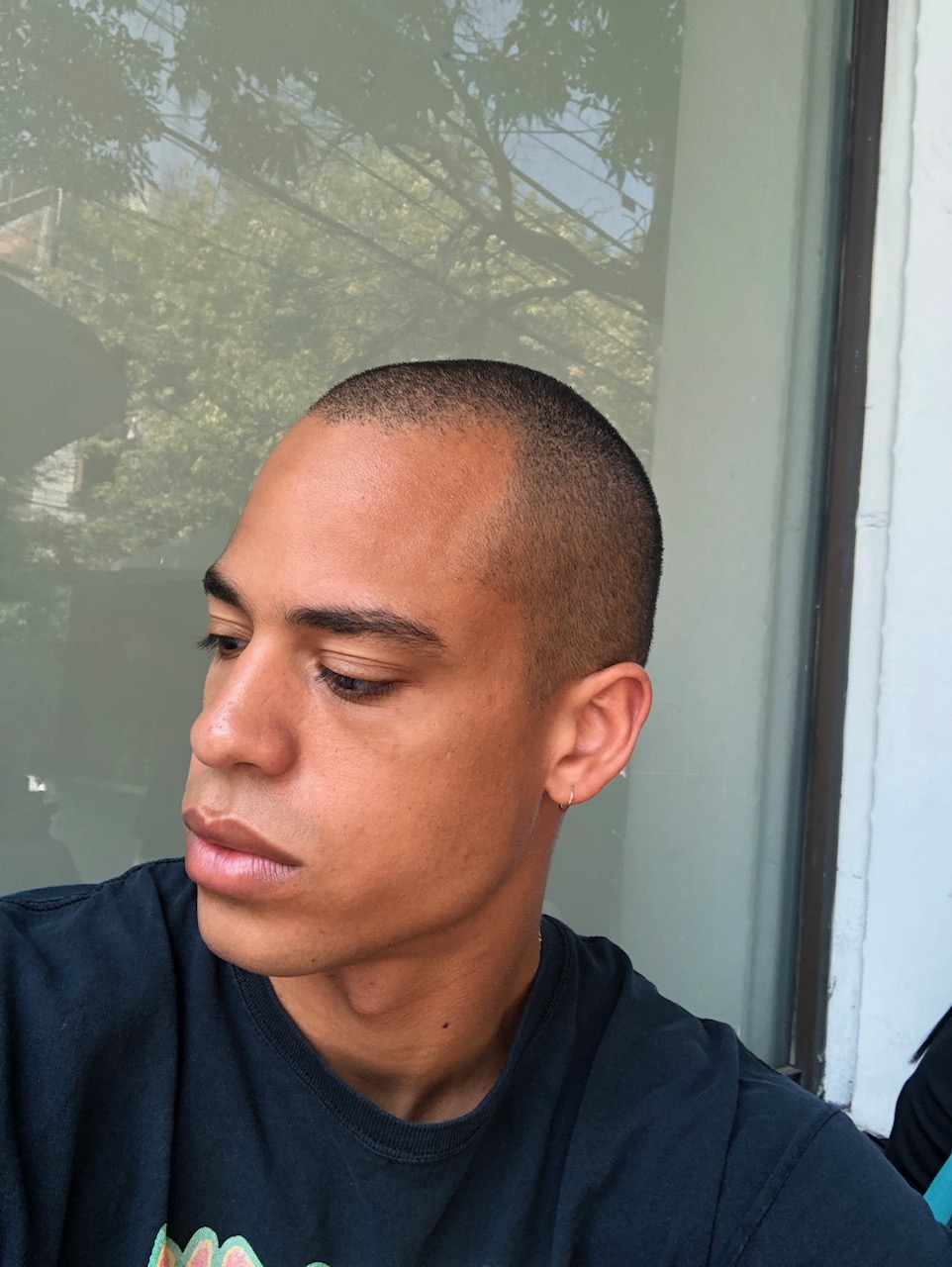
Tobi Haslett is a writer who has written about art, film, literature and politics for The New Yorker, Artforum, Harper's, and elsewhere. He penned the introduction to Horse Crazy (1989), a novel by Gary Indiana reissued in 2018, and Nothing But the Music, a collection of poems by Thulani Davis forthcoming from Blank Forms in 2020. Tobi’s essays have appeared in the exhibition catalogues for Radical Visions: Reza Abdoh (MoMA PS1, 2018) and Martin Puryear's U.S. Pavilion exhibition at the 59th Venice Biennale. He lives in New York.
.

.


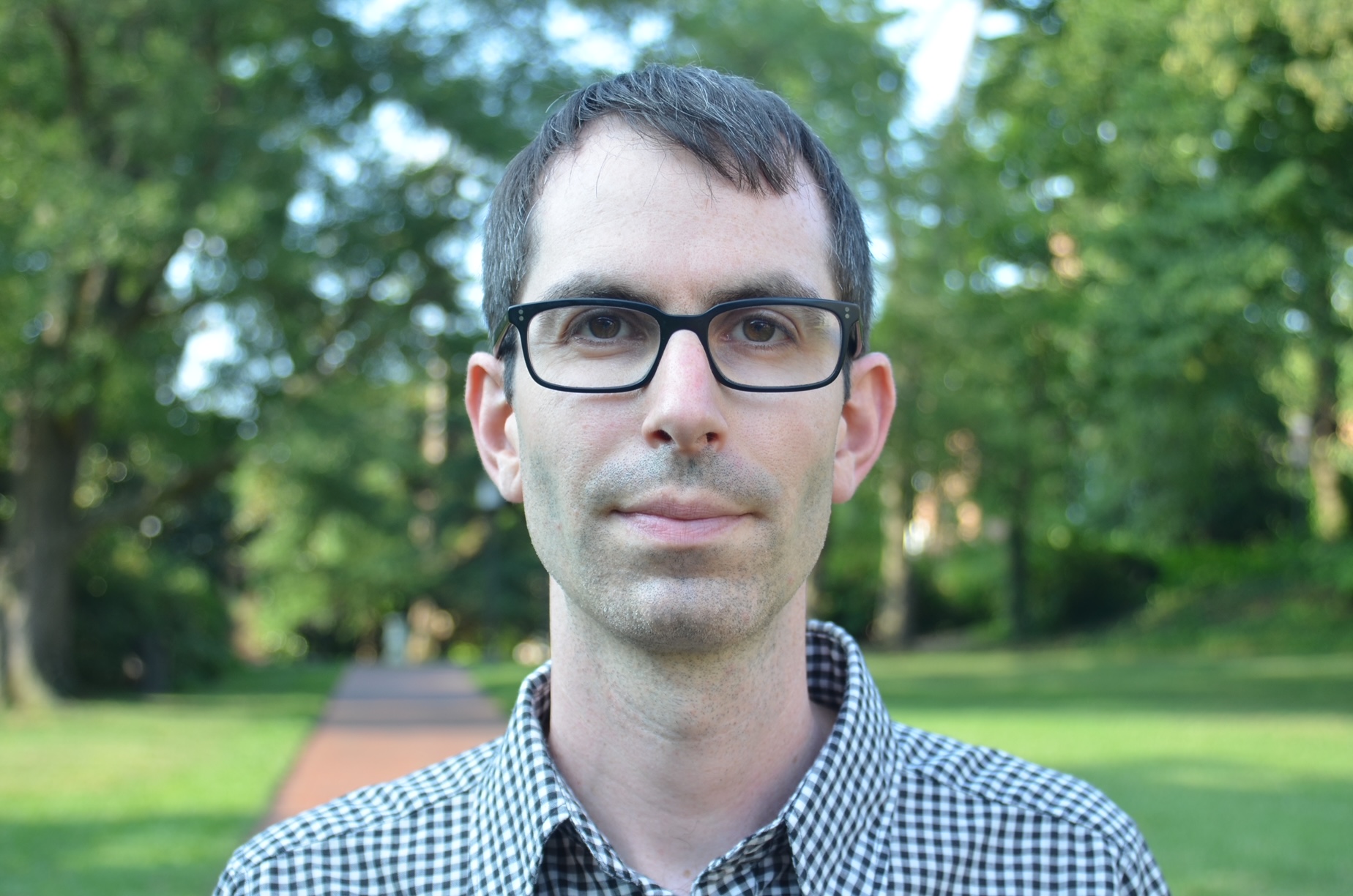
Stuart Schrader is a scholar of policing, empire, war, and radical movements to challenge them. He is the author of Badges Without Borders: How Global Counterinsurgency Transformed American Policing, published in 2019. Schrader is currently at work on a new book about the rise of the police as unique political actors in the United States, examining the history of police unionism after the Civil Rights Movement. His articles have been published widely, in Artforum, The Baffler, Harvard Design Magazine, n+1, The Nation, The Washington Post, and many other venues.

SAVE THIS FOR FUTURE REFERENCE