H I Sutton Illustration for USNI News Satellite image ©2022 Maxar Technologies Used with Permission
The Chinese military held a major exercise to prove how the People’s
Liberation Army Navy could use large civilian ferries to launch a
massive amphibious invasion of Taiwan.
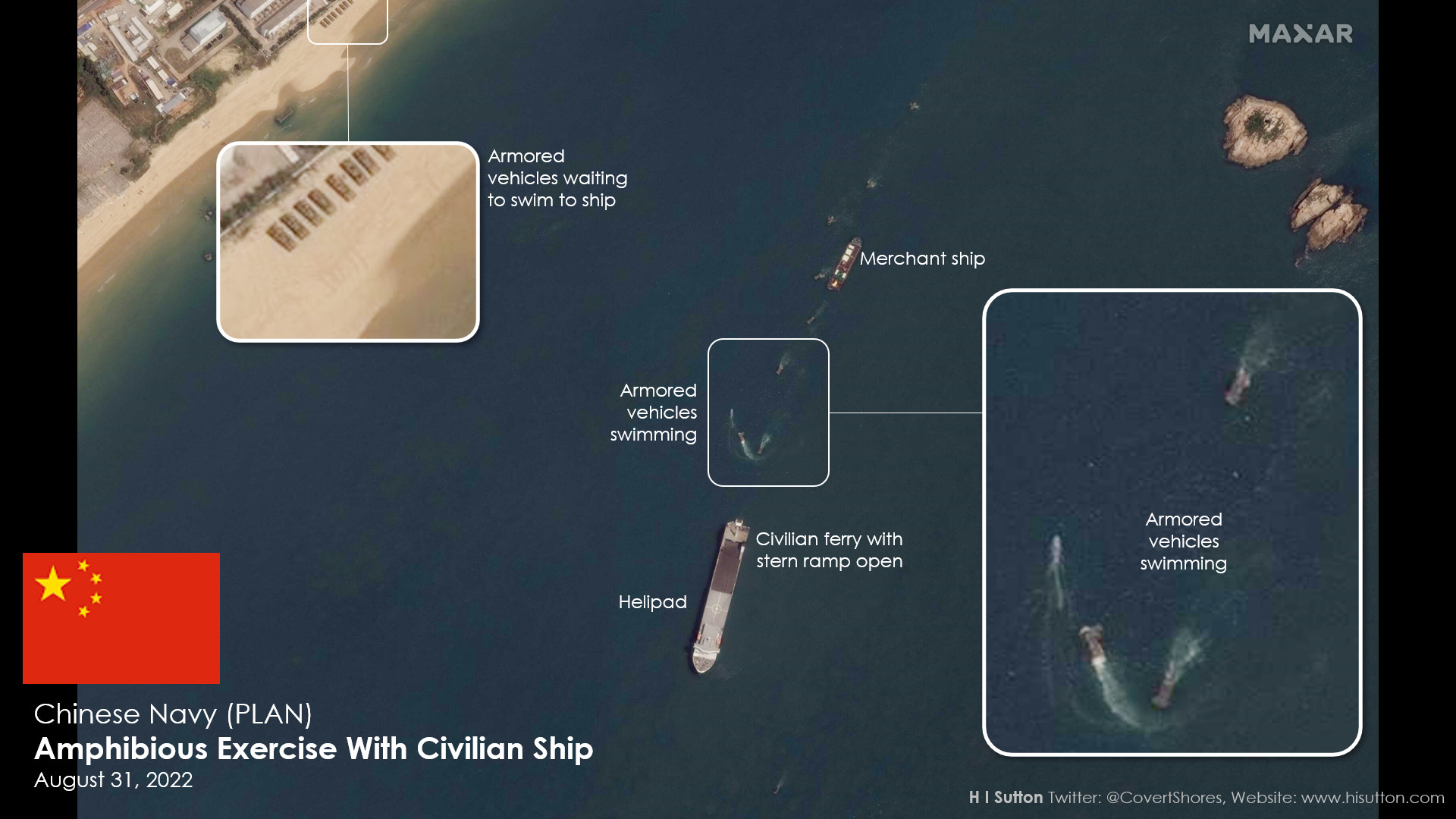
The PLAN brought amphibious landing craft to a Chinese beach near the
Taiwan Strait, according to Aug. 31 satellite imagery reviewed by USNI
News. Offshore, the PLAN arrayed several large civilian ferries and
warships. The PLA landing craft left the beach, swam to the car ferries
and loaded amphibious assault craft aboard at sea via a
specially-constructed ramp. The landing craft then left the ferries and
returned to their starting point.
Defense analyst Tom Shugart, who monitors Chinese military exercises, followed the drills
and tracked seven of the civilian dual-use amphibious ferries during
the exercise. Additionally, satellite imagery company Maxar Technologies
has provided USNI News with high-resolution images of the August
drills, revealing key details.
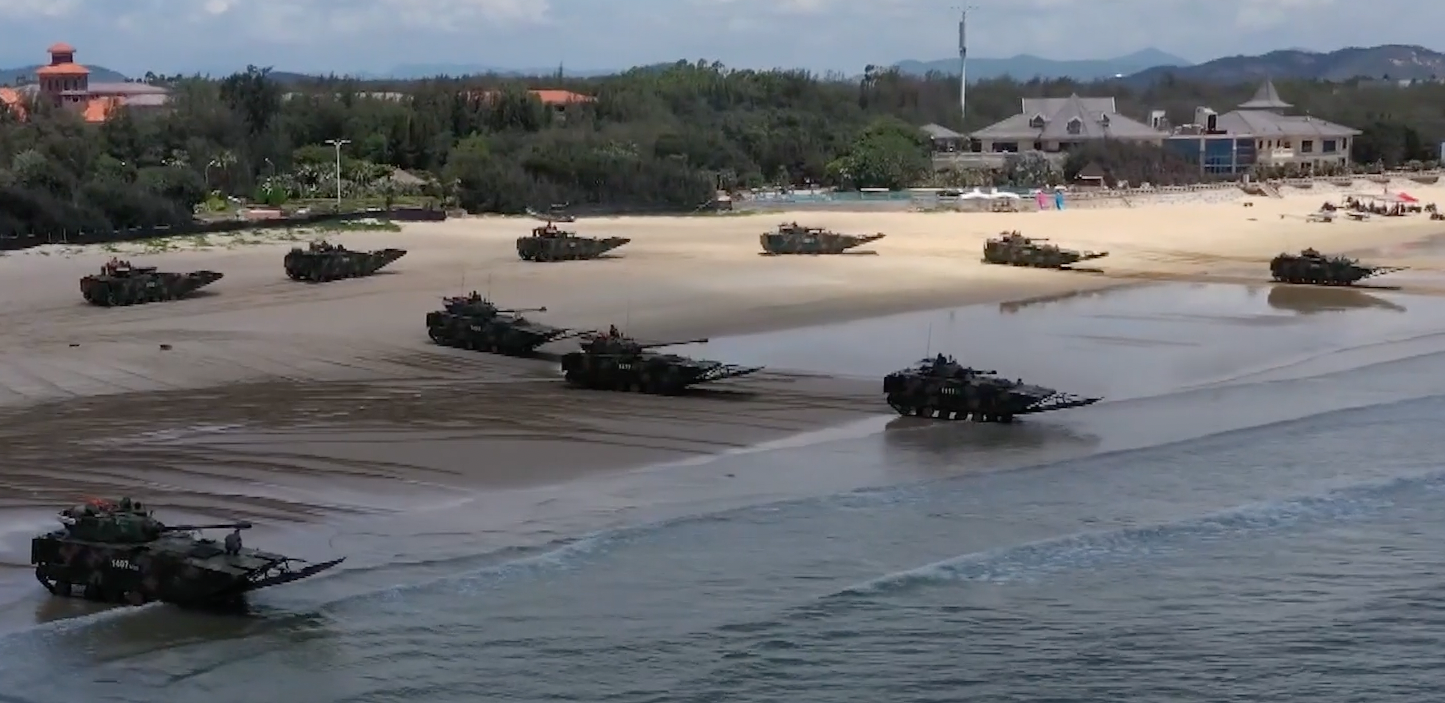
Chinese Type 05 amphibious fighting vehicle in 2021. CGTN Image
“They ended up parked off the coast in areas that were near other
areas where we’ve seen them do amphibious assault training before with
commercial ferries,” Shugart told USNI News.
“The numbers were bigger than we’ve seen before.”
The roll-on roll-off (RoRo) ferry has been identified as Bo Hai Heng Tong,
a 15,000-ton multipurpose cargo ship. The ferry’s internal parking
‘lane’ is 1.6 miles long and three meters wide, spread across three
decks. This translates into a vehicle cargo capacity that’s almost three
times that of a San Antonio-class amphibious warship (LPD-17), Shugart
said.
“AN LHA or LPD spends a lot of cubic feet [on] Marines able to
operate for weeks or months at sea. That’s a lot of wasted space if all
you’re doing is making a quick trip across the strait,” he said.
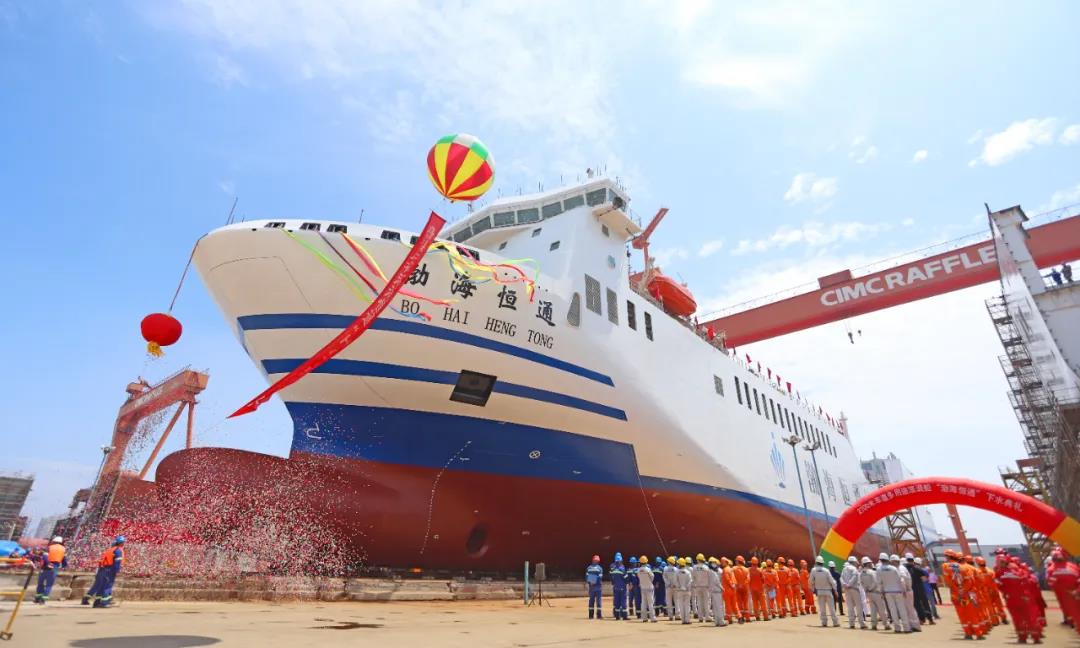
Bo Hai Heng Tong launched in 2020.
This ship is not unique. Her sister ship, Bo Hai Heng Da,
was built at the same time with the same specifications. As the name
implies, they normally operate in the Bohai Sea. But for the exercise Bo Hai Heng Tong sailed over 1,000 miles south to be opposite Taiwan.
The concept of augmenting amphibious warfare ships with civilian
vessels, and ships taken up from trade (STUFT), are not new to the PLAN.
The Chinese Navy has been practicing it for years. Many are used for
transport, while some carry artillery pieces on their decks for shore
bombardment.
However, launching craft – like the 26-ton ZTD-05, an amphibious armored vehicle used by the PLA – at sea is a new development, Shugart said.
“Everybody assumed that you had to seize a port first. That
those [ferries] were second echelon forces… Somebody else has got to
seize the port,” he said.
“2021 was the first time we saw them dump amphibious assault vehicles
right into the water, which means now those ferries can be the first
echelon sending assault units straight to the beach.“
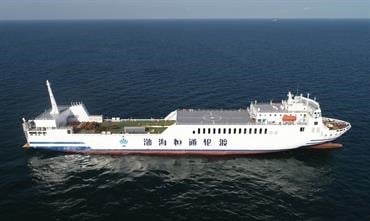
Bo Hai Heng Tong
The new RoRo ships – launched in 2020 – are significant in a few
ways. They are larger than most other ships in their class. When
launched at the CIMC Raffles shipyard in Yantai, the yard described the
ships as the largest multi-purpose RoRos Asia.
They are multipurpose ships designed from the outset to carry a range
of vehicle types and containers and are built with a large helicopter
landing deck.
The amphibious exercise came less than a month after U.S. House
Speaker Rep. Nancy Pelosi (D-Calif.) visited Taiwan. The visit drew a
massive show of force from China as Beijing ramped up military sea and
air activity around the island.
Previous norms, such as not sailing warships beyond the median line
in the Taiwan Strait, were ignored during the exercise. The new normal
sees increased activity, including flying drones over Taiwanese islands.
One notable drone incident occurred the same day as the amphibious exercise.
Several Chinese Navy ships were also involved in the exercise. The Type 071 class landing platform dock (LPD), Wuzhishan (987), was present with an older landing ship tank (LST). These also practiced swimming with armored vehicles.

A Chinese amphibious armored vehicle leaving the car ferry Bang Chui Dao in 2020. CCTV image
Shugart said, “China’s roll-on/roll-off ferries are very well-suited
to support” any invasion of Taiwan. “Civilian augmentation will be
essential, if not providing the majority of the required sealift
capacity.”
Since the exercise, RoRo ships have returned to their normal routes,
ferrying civilian vehicles across the entrance to the Bohai Sea. But
their capability would allow China to switch to invasion mode at short
notice.
“What can you come up with that’s better than a ferry? That’s what
they do. That’s what they’re designed for, is to quickly move vehicles
and people, drop them off and go back and work as efficiently as humanly
possible,” Shugart told USNI News.







 0
0










.jpg)


.jpg)
.jpg)
.jpg)
.jpg)
.jpg)
.jpg)