Friday, October 21, 2022

ArsTechnica Round-Up Yesterday

 An annotated selection FYI: 


NOTE: ". . . Even a flicker of reach seems to be enough to connect with Americans on social media, though. WSJ reported that often Americans are directed to pick up migrants who have just crossed into the US. One Arizona border patrol agent told the WSJ that approximately 90 percent of drivers the department arrests—some under 18—admit to being recruited through social media. The US attorney for Arizona, Gary Restaino, told the WSJ that “half the smuggling cases his office prosecutes involve social-media recruitment.”

arstechnica.com

Smugglers are using TikTok, Instagram to dupe Americans into smuggling migrants

by Ashley Belanger - Oct 20, 2022 4:28 pm UTC
4 - 5 minutes

Border Patrol agent says 90% of drivers arrested were recruited on social media.

Sometimes attracting drivers as young as 14 with emoji-filled posts that promise thousands of dollars “for just a few hours of driving,” smugglers often rely on social media to recruit Americans to help migrants illegally cross the US-Mexico border, The Wall Street Journal reported.

Popular platforms like Instagram, WhatsApp, Snapchat, TikTok, and Twitter all told the WSJ that they prohibit these posts. However, the Journal talked to local and federal law-enforcement officials, as well as defense attorneys for Americans recruited on social media, who confirmed that despite those bans, the trend is “increasingly common.”

When contacted by Ars, a Twitter spokesperson pointed out that the Journal's report didn't include specific examples of this activity happening on the platform. The spokesperson linked to Twitter's Transparency Center, where the company tracks reports on this content.

Snapchat's spokesperson told Ars, "Our global safety teams... work around the clock to quickly investigate any reports and take appropriate action. We will continue to work in close collaboration with law enforcement and support investigations to help prevent abuse on our platform.”

Meta has not yet responded to Ars, but it told the WSJ that it has invested in technology to detect these posts. Ars also couldn't immediately reach TikTok, which told the WSJ that it not only removes posts but bans accounts when such content is detected.

The Journal reported that because of social media bans, most “posts appear briefly” before vanishing. . ." 

READ MORE ^

NOTE: "... "This is an extremely difficult economic climate and capital environment, and at present we don't have the capital to fund our rapid growth. Because of that, we're focusing our energies on our core business: serving multi-tenant buildings in our existing dense urban markets," Starry CEO Chet Kanojia said in a press release

rstechnica.com

Starry Internet cuts 500 jobs—half its workforce—and cancels big expansion

by Jon Brodkin - Oct 20, 2022 5:21 pm UTC
5 - 6 minutes

Starry once planned to cover 40 million homes, currently has just 91,000 users.

Starry

Wireless home Internet provider Starry is cutting 500 employees, about half of its workforce, and canceling plans to expand into new states. Starry's board of directors yesterday approved the plan to cut 500 jobs, the Internet service provider said in a Securities and Exchange Commission filing today.

"The decision was based on cost-reduction initiatives intended to reduce operating expenses and allow the Company to focus on serving its existing core markets and customers," the filing said.

Starry said the job cuts will be "substantially complete" by the end of December. Starry also announced a freeze on hiring and non-essential expenditures and withdrew full-year 2022 guidance that was previously given to investors. . .

The press release suggests the job cuts won't be the last major changes for Starry. The company said the cost-cutting plan will "conserve capital and improve its capital runway as it explores all strategic options."

Starry launched in 2016. In mid-2019, Starry spent $48.5 million on 24 GHz spectrum licenses covering more than 25 million households in 25 states. "Combined with Starry’s current deployment roadmap, Starry’s fixed wireless footprint will reach more than 40 million households, covering more than 25 percent of all US households," the company said at the time.

Starry has just 91,000 users

But the expansion never reached the scale envisioned by the company. Starry provides service in Boston; Columbus, Ohio; Denver; Los Angeles; New York City; and Washington, DC. The company's network can serve 5.96 million homes after recent expansions in those markets.

Less than 2 percent of potential users subscribe to Starry service, though the customer number has been growing. Starry said it had 91,297 customers as of September 30, up from 55,078 one year earlier. That includes bulk billing arrangements where a building owner or association is invoiced for multiple units.

Starry says its most popular broadband plan is $50 a month for speeds up to 200Mbps, with unlimited data. Average speed test results last quarter were 196Mbps for downloads, 105Mbps for uploads, and latency of 20.3 ms, Starry says.

Kanojia said Starry "needed to curtail our cash burn while we pursue strategic options," but stressed that it wouldn't abandon its customers. "Today is a very tough day for our Starry team, but I want to be clear: Starry remains open for business," he said. "We, like so many others, are making the difficult calls now and taking steps that will allow us to be laser-focused on financing the business over the long-term and continue serving our markets."


ISP defaulted on FCC funding

In December 2020, the Federal Communications Commission tentatively awarded Starry $268.85 million to serve 108,506 homes and businesses in nine states: Alabama, Arizona, Colorado, Illinois, Mississippi, Nevada, Ohio, Pennsylvania, and Virginia. Starry, also known as Connect Everyone, got final approval to obtain most of the Rural Digital Opportunity Fund (RDOF) money less than two months ago. It would have been paid out over 10 years.

But the company defaulted on the bids in a move that seemed to take the FCC by surprise..."

READ MORE ^


arstechnica.com

Microsoft leaked 2.4TB of data belonging to sensitive customer. Critics are furious

by Dan Goodin - Oct 20, 2022 1:03pm MST
5 - 6 minutes

Data includes signed contracts and projects related to critical infrastructure.

Getty Images

"Microsoft is facing criticism for the way it disclosed a recent security lapse that exposed what a security company said was 2.4 terabytes of data that included signed invoices and contracts, contact information, and emails of 65,000 current or prospective customers spanning five years.

The data, according to a disclosure published Wednesday by security firm SOCRadar, spanned the years 2017 to August 2022. The trove included proof-of-execution and statement of work documents, user information, product orders/offers, project details, personally identifiable information, and documents that may reveal intellectual property. SOCRadar said it found the information in a single data bucket that was the result of a misconfigured Azure Blob Storage.

Microsoft can’t, or Microsoft won’t?

Microsoft posted its own disclosure on Wednesday that said the security company “greatly exaggerated the scope of this issue” because some of the exposed data included “duplicate information, with multiple references to the same emails, projects, and users.” Further using the word “issue” as a euphemism for “leak,” Microsoft also said: “The issue was caused by an unintentional misconfiguration on an endpoint that is not in use across the Microsoft ecosystem and was not the result of a security vulnerability.”

Absent from the bare-bones, 440-word post were crucial details, such as a more detailed description of the data that was leaked or how many current or prospective customers Microsoft really believes were affected. Instead, the post chided SOCRadar for using numbers Microsoft disagreed with and for including a search engine people could use to determine if their data was in the exposed bucket. (The security company has since restricted access to the page.)

When one affected customer contacted Microsoft to ask what specific data belonging to their organization was exposed, the reply was: “We are unable to provide the specific affected data from this issue.” When the affected customer protested, the Microsoft support engineer once again declined.

Critics also faulted Microsoft for the way it went about directly notifying those who were affected. . ."

READ MORE ^

arstechnica.com

74% say connected cars and EV chargers need cybersecurity ratings

by Jonathan M. Gitlin - Oct 20, 2022 8:22am MST
2 - 3 minutes

There's a new EnergyStar-like label program for connected devices—but not cars.
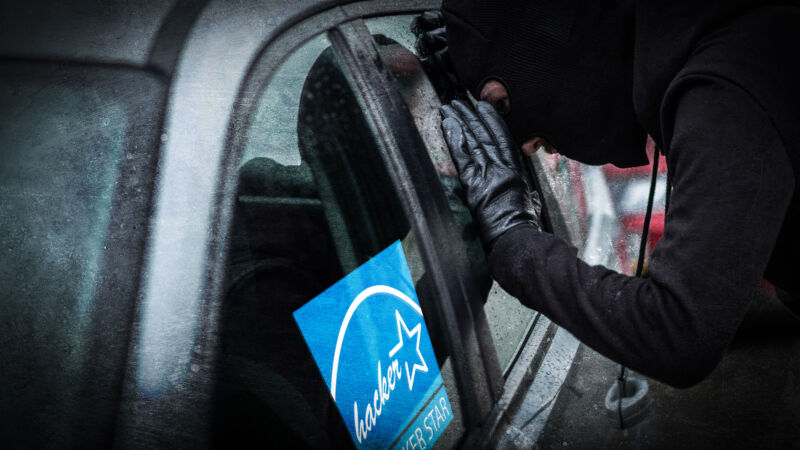
Aurich Lawson | Getty Images

"Almost 3 in 4 people think that connected cars and electric vehicle chargers should be rated for their ability to resist cybersecurity threats. That's the finding from a survey conducted last week by BlackBerry to see whether people consider Internet-connected devices (also known as the Internet of Things) to be secure from hacking threats.

The survey was commissioned in response to a new White House initiative announced on Wednesday. The Biden administration plans to launch a labeling program for IoT devices in 2023, similar to the EnergyStar ratings that tell consumers how much electricity a TV or appliance will use.

The White House wants the National Institute of Standards and Technology and the Federal Trade Commission to come up with a basic set of security standards so that Americans can tell at a glance whether that new speaker or washing machine is in danger of joining a botnet or getting hit with ransomware.

Perhaps alarmingly for Ars readers, only 54 percent of the 1,008 people surveyed said they are concerned about Internet-connected devices in their homes being hacked. And just 32 percent said they own IoT devices that they do not let access the Internet due to security concerns. But 82 percent agreed that a cybersecurity rating like EnergyStar would make them feel more informed about connected devices.

BlackBerry also asked, "Do you think a cybersecurity/'star rating' system should be extended to connected cars and electric vehicle charging stations?" Overwhelmingly, respondents did, with 74 percent agreeing with that statement.

There's no indication yet that the White House, NIST, or the FTC plan to include connected cars or EV chargers in the new labeling scheme, but there's probably a better chance of that happening than every connected car being fitted with a physical kill switch to disconnect it." 


Latest Stories

Wednesday, October 19, 2022

Western Euro Democracies Disintegrated. . .

 GREAT BRITAIN 

Suella Braverman quits and vote chaos add to turmoil for the PM

  • Published
Liz TrussIMAGE SOURCE,PA MEDIA
Image caption,
Liz Truss survived Prime Minister's Questions relatively unscathed only for events to start unravelling

A chaotic day in Parliament has left Liz Truss's survival even more uncertain after the sudden resignation of her home secretary and angry scenes during a fracking vote in the Commons.

Opposition MPs alleged some Tories had been bullied and manhandled into voting with the government on fracking.

A minister denied the claim, but many Tory MPs ended the day feeling angry and let down by their own party.

One Conservative MP Charles Walker said the situation was a "shambles".

Visibly furious, he told the BBC: "I've really not seen anything like tonight", adding that there was "no coming back" for the government.

Later he added: "I expect the prime minister to resign very soon because she's not up to her job."

FRANCE "

Workers around France have walked out to demand better pay amid swirling warnings of a tough winter ahead in Europe. Many on the continent are struggling with record inflation and an energy crisis.

Here’s what to know about the strikes that have snowballed in France:How did the French strikes start?

They began weeks ago with refinery workers who went on strike to demand higher salaries, partly arguing that oil and gas companies have raked in profits from Europe’s soaring energy prices — a trend being driven by Russia’s war in Ukraine.

The strikes led to fuel shortages and lines at stations around France as some pumps ran dry. Nearly a third of the country’s gas stations were out of some type of fuel by Sunday.


Inflation triggers strikes across France: What to know about the protests

A protester wields a flare during a demonstration in Paris on Tuesday. (Bertrand Guay/AFP/Getty Images)

TechDirt Mid-Week

 Older Stuff

Trending Posts

AT&T Hit With $23 Million Fine For Bribing Illinois Lawmaker

from the just-another-day-in-the-office dept

In just the last decade or so AT&T has been fined $18.6 million for helping rip off programs for the hearing impaired; fined $10.4 million for ripping off a program for low-income families; fined $105 million for helping “crammers” rip off their customers; fined $60 million for lying to customers about the definition of “unlimited” data; and accused of ripping off U.S. schools for decades.

The company’s also no stranger to using sleazy lobbying to get whatever it wants, whether that’s less competition, fewer consumer protections, rubber stamped mergers, or gigantic tax breaks that serve no useful public purpose. The vast, vast majority of the time the company faces absolutely no repercussion for its dodgy lobbying practices, especially those on the state level.

That luck recently ran out in Illinois, where the company was fined $23 million for bribing a state lawmaker’s ally in order to secure a key policy vote. According to a deferred prosecution agreement, the vote in question was a 2017 vote on Carrier of Last Resort (COLR) legislation that would have eliminated AT&T’s obligation to continue to provide landline service to all state residents.

AT&T of course wants to be free of having to provide dated landlines. Consumer groups are quick to note many of those landlines are used by old people who often can’t afford (or don’t understand how to use) cellular service, leaving them cut off from essential services and 911. They were also paid for on the back of millions in taxpayer subsidies, suggesting that taxpayers should have some say in the matter.

Instead of just making its case, AT&T used an intermediary lobbying firm to deliver $22,500 to former Illinois Speaker of the House Michael J. Madigan to influence his vote:

AT&T allegedly used a lobbying firm as an intermediary to make the payment and disguise its true purpose. US Attorney John Lausch’s office filed a one-count criminal information in US District Court for the Northern District of Illinois, charging AT&T Illinois with using an interstate facility to promote legislative misconduct. Former AT&T Illinois President Paul La Schiazza was indicted on five charges as a result of the same investigation.

As somebody that has covered AT&T for 22 years now, I know this kind of dirty pool happens pretty much constantly. In many states, AT&T all but owns the entirety of the state legislature, routinely literally writing state telecom policy and legislation. The vast, vast majority of the time, AT&T sees absolutely no penalty for the behavior, making this a rare occurrence.

AT&T’s no stranger to these kinds of tactics on the federal level either. In the last five years alone the company managed to secure a massive $42 billion tax break in exchange for doing nothing, gutted the FCC and its consumer protection authority, eliminated both net neutrality and broadband privacy rules, and is currently helping to gridlock the nomination of FCC nominee Gigi Sohn.

All to protect its regional telecom monopoly, stall competition, and ensure U.S. consumer protection enforcement is a feckless mess. You don’t get to enjoy six straight years of captured federal lawmakers without breaking more than a few of the nation’s already extremely pathetic lobbying rules (like that time AT&T paid Trump fixer Mike Cohen $600k to gain inside access to the Trump White House).

Filed Under: 
Companies: at&t

Louisville Cop Used Law Enforcement Database To Seek Female Targets To Hack For Sexually Explicit Content

from the access-without-oversight dept

Law enforcement officers have plenty of unfettered access to expansive databases containing plenty of personal information. This access is instrumental to law enforcement work, including ongoing investigations, attempts to locate wanted criminals, and the routine minutia of validating drivers licenses and registration.

The problem is there’s so little oversight of officers’ use of these databases. Over and over and over again, this access is abused for personal purposes. And abuse is far from uncommon. . . 

After All That Nonsense… Republicans Aren’t Even Using The Spam Backdoor They Forced Google To Create

from the you-did-what-now? dept

Do you remember all the nonsense from earlier this year, in which executives from the Republicans’ favorite spamming operation misread a study about how various email providers handled political mailings and absolutely flipped out? The study didn’t say what they claimed it said: that Google was nefariously sending GOP emails to spam filters. It showed that in an untrained inbox, Google was more likely to declare Republican political messages as spam than Democratic political messages (the same study also showed the opposite for Outlook and Yahoo Mail — those sent more Dem emails to spam than Republicans, but nobody complained about that). Of course, the same study showed that this differential in Gmail went away for anyone who trained their spam filter.

Of course, there was also the fact that Republican emails also… are way more spamlike. Even some of their biggest supporters admit that. Also, their tech talent is weaker, as we noted, . . 

The Word ‘Emoji’ Is A Protectable Trademark?

from the emoji-emoji-emoji dept

Emoji Co. GmbH has registered trademarks in the dictionary word “Emoji.” They mostly are a licensing organization, and their registrations are in a wide range of classes: “from articles of clothing and snacks to ‘orthopaedic foot cushions’ and ‘[p]atient safety restraints.’” (Raise your hand if you’ve ever seen Emojico-branded patient safety restraints). Indeed, the court essentially questions the entire basis of Emojico’s licensing business, saying:

Given the ubiquity of the word “emoji” as a reference to the various images and icons used in electronic communications, it is especially important that Plaintiff come forward with evidence demonstrating that the term is also known as an identifier of Plaintiff as a source of goods….Other than its say-so, Plaintiff offers no evidence demonstrating, for instance, that consumers actually associate Plaintiff with emoji products such as those offered for sale by Defendants

(The absence of secondary meaning sounds like a major problem with Emojico’s case, one of several problems the court spots and then essentially ignores).

So, was justice served in this case? On the one hand, it’s all for show, because Emojico will almost certainly collect zero dollars of this damages award. On the other hand, it’s a terrifying reminder of how things can go wrong in default proceedings, when the court is hearing only the plaintiff’s unrebutted advocacy. The true victims of this court’s error, and of Emojico’s litigation campaign, are consumers who love emoji-themed items but increasingly will find it harder to acquire those products in online marketplaces because Emojico keeps lawfaring vendors out of the marketplace or forcing vendors to use terms that consumers don’t recognize. Even if the defendants didn’t make the arguments, the judge should have listened to her instincts and intervened on the consuming public’s behalf. All of us, except possibly for Emojico and its lawyers, are poorer because she didn’t.

Reposted with permission from the Technology & Marketing Law Blog

Chinese City Decides LARPers Are Next In Line For Government Censorship

from the let's-set-some-concrete-rules-for-pretending dept

The Chinese government is being weird again. Most of this weirdness springs naturally(?) from its desire to suppress dissent and control the narrative.

That desire sometimes leads to bizarre outcomes, like the brief banning of the letter “N” on social media platform Weibo. The government’s concerns were related to online displeasure with Xi Jinping’s moves towards becoming president for life. The Communist Party removed the “no more than two consecutive terms” language from the law and the government believed the letter “N” might refer to “n terms in office,” with “n” possibly being a reference to more than two.

Another censorship effort led to the banning of certain English words in Chinese-developed mobile games. Not all English words, mind you. And not even the bad ones (you know the ones I mean). But words like “mission start” and “warning,” which are common gaming terms but also ones the government perceived as somehow threatening.

Speaking of intruding on the gaming world, the Chinese government took its direct regulation of all content up a notch by sending out online tax collectors to collect taxes on virtual goods owned by gamers.

Now, it’s moving from the online world to the real world, again targeting certain gamers for additional restrictions, hassles, and, one presumes, possible jailing. Granted, it’s not the entire government. . .

Ye’s ‘Buyout’ Of Parler Looks Very Much Like A Failed Company Taking Advantage Of Troubled Rich Guy

from the this-is-just-kind-of-sad dept

Ye, formerly Kanye West, has had quite a week or so. He got locked out of both his Instagram and Twitter accounts for posting anti-semitic nonsense. Immediately following that, he went on the Drink Champs podcast/video show and spouted even more such nonsense. He’s continuing to spew similar nonsense in other interviews as well. Indeed, it seems like anyone putting him on right now is really exploiting someone who is dealing with some pretty serious issues.

I’m not one to diagnose someone randomly, though Ye has been open about his bipolar diagnosis and the fact that it is a constant effort to manage the condition.

But then things got even stranger on Monday, as Parlement Technology, the parent company of Parler, announced that Ye was now “buying” Parler. He’s not buying Parlement, which was formed when Parler tried to expand beyond its flailing social network by purchasing Dynascale and claiming that it was now building “uncancelable” cloud services (they’re not the first to try this. They’ve also dabbled in NFTs and other nonsense, none of which seems to be doing well).

So the deal with Ye is not to buy the company, but to unload the flop of a social media platform that has very few users left as the market for “Twitter-but-for-assholes-removed-from-Twitter” was already pretty small, and is now divided between way too many platforms: Parler, Gab, Gettr, Truth Social, and some other wannabes.

Over at the Verge, they’re reporting that Parlement has been trying to offload Parler for a few weeks now at astronomical prices, while noting that basically no one uses the site any more: somewhere around 50,000 daily active users, which is a rounding error that Elon Musk would sue over on Twitter.

According to a source familiar with the discussions, Parler’s parent company, Parlement, has been trying to offload its social media platform to potential buyers over the last few weeks. One prospective buyer described Parlement’s asking price for the platform as wildly inflated, and said they were stunned by the site’s low number of daily active users. 

[….]

The service currently maintains around 50,000 daily active users, a source familiar told The Verge, compared to hundreds of millions for even moderately sized networks like Twitter and Snapchat.

Put all that together, and this really seems like an opportunistic Parlement taking advantage of Ye, who is upset about his treatment on Instagram and Twitter, who has money to burn, and was talked into taking on this albatross of a failed social media platform to pretend to be creating a site for “free speech.”

Instead, this just looks to be a sad situation, especially given how Ye has been lashing out in his nonsensical rants about others trying to take advantage of him, when the reality is that it’s now that he’s actually being taken advantage of.

Filed Under: 
Companies: parlement technologiesparler


NO CAPTAIN ONBOARD