Wednesday, October 26, 2022

WHOA! It can "induce strong humoral, cellular and mucosal immunity to achieve triple protection,"

Developed by Chinese company CanSino Biologics, the aerosolized adenovirus type-5 vector-based COVID-19 vaccine (Ad5-nCoV) provides a non-invasive option. It uses a nebulizer to change liquid into aerosol for inhalation through the mouth, according to the company.
Shanghai starts administering inhalable COVID-19 vaccine . . .inhaled vaccines work directly at the virus’ point of entry, giving them the advantage of inducing an immune response at the mucosal surfaces of the nose and mouth, where the coronavirus is most likely to invade the body.
news.cgtn.com

Shanghai starts administering inhalable COVID-19 vaccine

CGTN,China Global Television Network
2 minutes

East China's Shanghai has started administering an inhalable COVID-19 vaccine as a booster dose. /CanSino Biologics

"East China's Shanghai has started administering an inhalable COVID-19 vaccine as a booster dose. /CanSino Biologics

East China's Shanghai has started administering an inhalable COVID-19 vaccine as a booster dose. /CanSino Biologics

East China's Shanghai has started administering an inhalable COVID-19 vaccine as a booster dose from Wednesday, according to the Information Office of Shanghai Municipality.

Developed by Chinese company CanSino Biologics, the aerosolized adenovirus type-5 vector-based COVID-19 vaccine (Ad5-nCoV) provides a non-invasive option. It uses a nebulizer to change liquid into aerosol for inhalation through the mouth, according to the company.
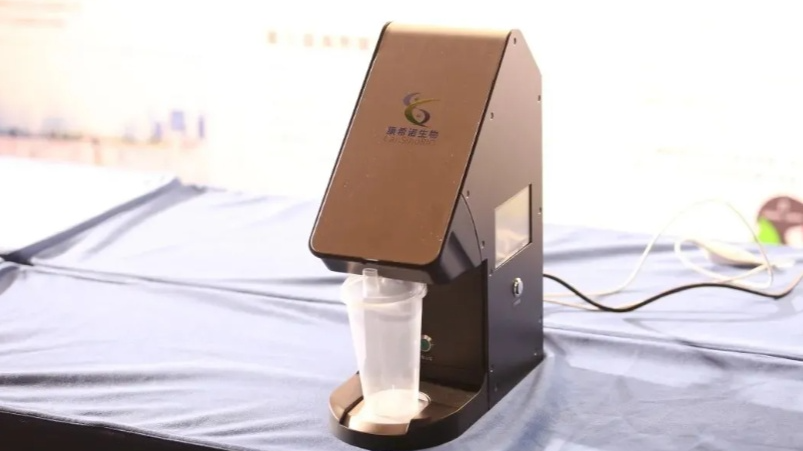
The aerosolized adenovirus type-5 vector-based COVID-19 vaccine. /CanSino Biologics

The aerosolized adenovirus type-5 vector-based COVID-19 vaccine. /CanSino Biologics

The aerosolized adenovirus type-5 vector-based COVID-19 vaccine. /CanSino Biologics

The company said on its official WeChat account that the vaccine can "effectively induce comprehensive immune protection in response to SARS-CoV-2 after just one breath."

It can "induce strong humoral, cellular and mucosal immunity to achieve triple protection," the company added.

Compared with intramuscular injection, the inhalable vaccine requires only one-fifth of its dosage. It can only be used as a booster dose for now, and adults aged 18 years and above can choose this vaccine as an alternative.

Read More:

Chinese inhalable COVID-19 booster vaccine safe and effective

41 minutes ago · BEIJING (AP) — The Chinese city of Shanghai started administering an inhalable COVID-19 vaccine on Wednesday in what appears to be a world ...
1 hour ago · BEIJING — The Chinese city of Shanghai started administering an inhalable COVID-19 vaccine on Wednesday in what appears to be a world first.
44 minutes ago · China's biggest city, Shanghai, started administering an inhalable COVID-19 vaccine Wednesday in what appears to be a world first.
3 hours ago · The Chinese city of Shanghai has started administering an inhalable COVID-19 vaccine in what appears to be a world first.
2 hours ago · BEIJING (AP) — The Chinese city of Shanghai started administering an inhalable COVID-19...
4 hours ago · The Chinese city of Shanghai started administering an inhalable COVID-19 vaccine on Wednesday in what appears to be a world first.
59 minutes ago · By KEN MORITSUGU Associated Press. BEIJING (AP) — The Chinese city of Shanghai started administering an inhalable COVID-19 vaccine on Wednesday in what ...
4 hours ago · BEIJING — (AP) — The Chinese city of Shanghai started administering an inhalable COVID-19 vaccine on Wednesday in what appears to be a world ...
4 hours ago · BEIJING (AP) — The Chinese city of Shanghai started administering an inhalable COVID-19 vaccine on Wednesday in what appears to be a world ... 

RELATED CONTENT
www.news-medical.net

Inhaled delivery of a potent neutralizing nanobody effective against SARS-CoV-2

By Dr. Tomislav Meštrović, MD, Ph.D.Aug 11 2020
6 - 8 minutes

A recent study by researchers from China, available on the bioRxiv* preprint server, shows how stable neutralizing nanobody Nb11-59 might be a promising prophylactic and therapeutic molecule against coronavirus disease (COVID-19) – especially if administered via the inhalatory route.
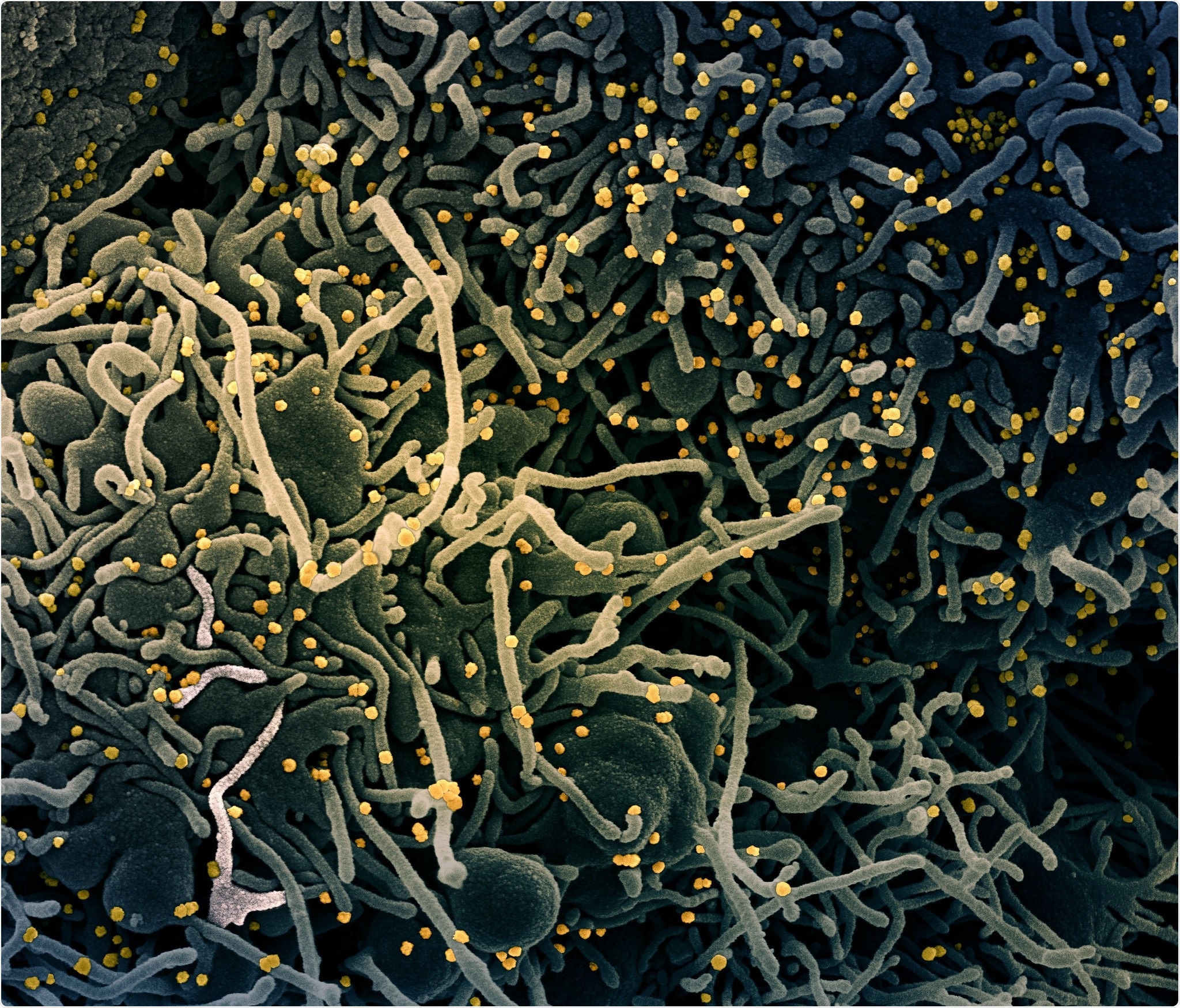
Colorized scanning electron micrograph of a VERO E6 cell (blue-green) exhibiting elongated cell projections and signs of apoptosis, after infection with SARS-COV-2 virus particles (yellow), which were isolated from a patient sample. Image captured at the NIAID Integrated Research Facility (IRF) in Fort Detrick, Maryland. Credit: NIAID

Colorized scanning electron micrograph of a VERO E6 cell (blue-green) exhibiting elongated cell projections and signs of apoptosis, after infection with SARS-COV-2 virus particles (yellow), which were isolated from a patient sample. Image captured at the NIAID Integrated Research Facility (IRF) in Fort Detrick, Maryland. Credit: NIAID

The outbreak of COVID-19, caused by the severe acute respiratory syndrome coronavirus 2 (SARS-CoV-2), has emerged as an unprecedented global pandemic, urging rapid development of effective prophylactic or therapeutic solutions. Thus far, this pursuit was elusive, but several candidates showed promise in preclinical trials.

Akin to other coronaviruses, the spike glycoprotein homotrimer on the SARS-CoV-2 plays a significant role in receptor binding and viral entry. Its S1 subunit harbors the C-terminal receptor-binding domain (RBD), which binds to the human angiotensin-converting enzyme 2 (ACE2) present on our cells.

Consequently, biologic drugs that aim to neutralize SARS-CoV-2-RBD/ACE2 interaction are growing explosively, recognizing this event as an Achilles heel of the whole infection process. One of the salient research directions is to construct COVID-19-targeting antibodies that exhibit broad-spectrum activity against both the wild-type and the mutant viral strains.

In addition to conventional monoclonal antibodies, heavy-chain-only antibodies isolated from camels (also known as single-domain antibodies or nanobodies) provide a paradigm shift in the development of therapeutic antibodies. Also, novel delivery strategies of antibodies should be explored and encouraged.

Taking all that into account, a group of scientists from Shanghai Novamab Biopharmaceuticals Co., Shanghai University of Medicine and Health Sciences, Chinese Academy of Sciences, and China Pharmaceutical University in Nanjing, identified stable nanobodies that successfully recognize SARS-CoV-2 RBD – including several mutants.

A roadmap towards effective nanobodies

In this study, the researchers report nanobody phage display libraries derived from four camels which were immunized with the SARS-CoV-2 spike RBD, and from which 381 nanobodies were identified to recognize the RBD – including the eight variants of SARS-CoV-2.

Considering the RNA viral nature of SARS-CoV-2, as well as the reported mutations of SARS-CoV-2-RBD in various countries, cross-activity of 381 nanobodies against various RBD mutants has also been studied through periplasmic extract enzyme-linked immunosorbent assay.

The Biolayer Interferometry based assay was carried out in order to measure the binding kinetic of nanobodies to RBD, while their neutralizing potential was appraised with the use of plaque reduction neutralization test (PRNT).

Finally, a high-efficiency expression system was established in specifically selected yeast organism. Formulated nanobodies were examined for their purity by size exclusion chromatography (SEC-HPLC), and their nebulization was conducted by employing PARI eFlow rapid Nebulizer System.

A robust blocking activity of Nb11-59

"Herein, we showed that 7 RBD-directed nanobodies identified were capable of blocking the interaction between ACE2 and the eight RBD-mutant variants, with Nb11-59 showing the most potent blocking activities", study authors summarize their main findings.

The observed Nb11-59 successfully recognized the wild-type and eight kinds of RBD protein mutants. Furthermore, this specific nanobody was efficient in laboratory inhibition of the replication cycle of authentic SARS-CoV-2, with 50% neutralization dose of 0.55 μg/mL – which is similar or lower than values for several monoclonal antibodies isolated from human B cells.

Likewise, a sufficient blocking activity was also demonstrated against SARS-CoV-1 (i.e., a causative agent of the original SARS outbreak) and its close relative, bat SARS-like coronavirus WIV1 (found in Chinese rufous horseshoe bats).

The encouraging fact is that Nb11-59 can be mass-produced on a large-scale using Pichia pastoris (yeast species for the production of recombinant proteins) with 99.36% purity. The nanobody also demonstrated adequate stability profile, while nebulization did not influence its stability.

The advantages of single domain antibodies

Taking into account their biophysical traits and rather small size, single domain antibodies have a myriad of advantages in the treatment of respiratory tract infections. As already mentioned, they can be produced on a large scale and at a very low cost.

"We showed that Nb11-59 expression could reach 20 g/L through fermentation using the yeast expression system, which means that it could be rapidly and widely used as a preventive or therapeutic molecule", emphasize study authors in their bioRxiv paper.

Moreover, Nb11-59 (as a single domain antibody with small size) could be delivered to the infection site via inhalation, reinforced by its high stability at the temperature range between 4 and 40 °C, but also its consistent post-nebulization stability profile.

Due to the highly infectious COVID-19 pandemic, such inhaled delivery of Nb11-59 may likely be effective in controlling the spread of SARS-CoV-2. This novel way of drug delivery may offer more favorable drug administration to patients but also improved drug absorption effects.

In conclusion, this paper represents a creative endeavor to find the first nanobody drug against SARS-CoV-2 in respiratory form. Such a promising therapeutic molecule is definitely worthy of further research in order to accelerate its clinical development and potential real-world implementation.

*Important Notice

bioRxiv publishes preliminary scientific reports that are not peer-reviewed and, therefore, should not be regarded as conclusive, guide clinical practice/health-related behavior, or treated as established information.

Journal reference:

WHOA! A cybercriminal hacked the personal information of 4 million customers

 In Australia the government is critical of companies that amass more customer data than necessary to make money from it in ways unrelated to the services for which the information was provided. . .

Australia’s No 1 health insurer says all customers’ data hacked

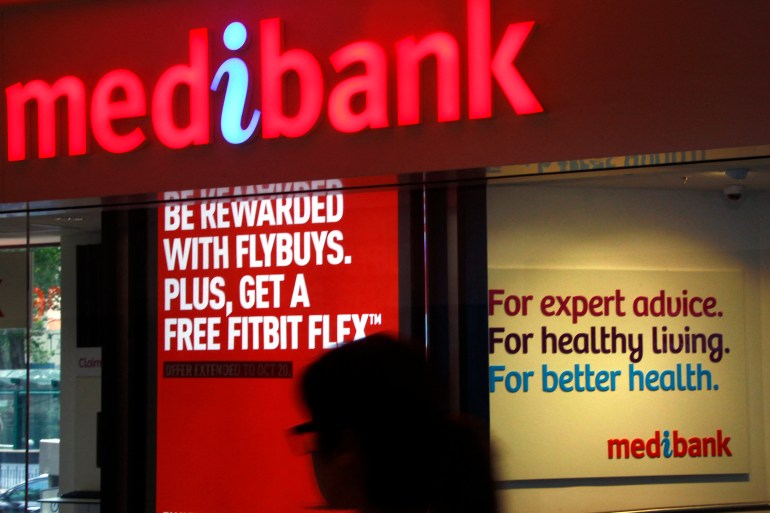
Medibank says a cybercriminal hacked the personal information of its 4 million customers.

Medibank
Australia’s largest health insurer has disclosed that cyberattackers hacked the personal data of all its 4 million customers [File: David Gray/Reuters]

Australia’s largest health insurer says a cybercriminal hacked the personal data of all its 4 million customers, as the government introduced legislation that would increase penalties for companies that fail to protect clients’ private information.

Medibank said on Wednesday that “significant amounts of health claims data” had also been accessed in the breach, which was reported to police a week ago when trade in the company’s shares was halted.

Australia’s No 1 health insurer says all customers’ data hacked

Medibank says a cybercriminal hacked the personal information of its 4 million customers.

Medibank
Australia’s largest health insurer has disclosed that cyberattackers hacked the personal data of all its 4 million customers [File: David Gray/Reuters]

Australia’s largest health insurer says a cybercriminal hacked the personal data of all its 4 million customers, as the government introduced legislation that would increase penalties for companies that fail to protect clients’ private information.

Medibank said on Wednesday that “significant amounts of health claims data” had also been accessed in the breach, which was reported to police a week ago when trade in the company’s shares was halted.

The thief has demanded a ransom and has reportedly threatened to expose the diagnoses and treatments of high-profile customers.

Medibank said its priority was to discover the specific data stolen in relation to each customer and to share that information with those customers.

The company had previously said the breach was thought to be limited to its subsidiary AHM and foreign students.

✓ “Our investigation has now established that this criminal has accessed all our private health insurance customers’ personal data and significant amounts of their health claims data,” Medibank Chief Executive Officer David Koczkar said in a statement to the Australian Securities Exchange.

“This is a terrible crime – this is a crime designed to cause maximum harm to the most vulnerable members of our community,” Koczkar added, with an apology to customers.

The government has been planning urgent legislative reforms on cybersecurity regulation since a hacker stole the personal data of nearly 10 million current and former customers of Optus, Australia’s second-largest wireless telecommunications carrier.

✓ Optus became aware on September 21 that the personal data of more than one-third of Australia’s population of 26 million had been stolen.

In introducing amendments to the Privacy Act to Parliament on Wednesday, Attorney General Mark Dreyfus mentioned both companies and MyDeal, an online retail intermediary that lost the data of 2.2 million customers in a hack revealed two weeks ago.

“Governments, businesses and other organizations have an obligation to protect Australians’ personal data, not to treat it as a commercial asset,” Dreyfus added.

The government is critical of companies that amass more customer data than necessary to make money from it in ways unrelated to the services for which the information was provided.

The penalties for serious breaches of the Privacy Act would increase from 2.2 million to 50 million Australian dollars ($1.4m to $32m) under the proposed amendments.

A company could also be fined the value of 30 percent of its revenues over a defined period if that amount exceeded 50 million Australian dollars ($32m).

Medibank said on Wednesday it did not have cyber insurance and estimated the hack would reduce its earnings by between 25 million and 35 million Australian dollars ($16m to $22m) by early next year.

The Medicare trading halt was lifted on Wednesday and shares slid more than 14 percent in early trading.

SOURCE: THE ASSOCIATED PRESS

SEQUOIA'S CHAIN OF SCHOOLS (India): K12 Techno Services... Let’s Eduvate

No doubt that Edtech is a BIG business - What does Sequoia Capital India do?The Silicon Valley headquartered blue-chip venture capital firm has backed Indian startups such as food delivery app Zomato, Software as a Service firm Freshworks, social commerce company Meesho, and edtech unicorn Byju's.Jun 14, 2022


Sequoia India eyes $50 million investment in K12 despite market slump

several children meditating on soccer pitch

Image Credits: Orchids International School

"Sequoia India is in advanced stages of deliberations to invest over $50 million in K12 Techno Services, a startup that offers a range of services to education institutions and also runs its own chain of schools, doubling down on a firm that it first backed over a decade ago, two sources familiar with the matter told TechCrunch.

K12 Techno Services — which has raised more than $75 million in previous rounds, according to Tracxn — also engaged with TPG and Accel in recent weeks but has decided to move ahead with existing backer Sequoia India, one of the sources said.

The round hasn’t closed, so the terms of the investment may change, sources cautioned, requesting anonymity sharing nonpublic information. It’s unclear if anyone other than Sequoia is also investing in the round.


✓ K12 Techno Services runs Orchids International School chain in over two dozen cities in India. It operates more than 90 schools, where it teaches a range of subjects from robotics to philosophy for an individual’s “360-degree development.” Orchids has served over 75,000 students, according to its website.

✓ It also offers integrated curriculum, a platform for online classes and other school management applications to over 300 schools through its arm called Let’s Eduvate. “Our comprehensive solutions are scale-able and adaptable that work effectively for all types of schools. They are efficacious for various school management activities as designed for the overall growth of students, hence for schools,” it describes on its website.

✓ Sparkle Box, another arm of K12, runs an e-commerce store for custom-made activity kits aimed at children.

K12 didn’t respond to a request for comment Thursday, whereas Sequoia India declined to comment.

✓ The deal represents Sequoia’s aggressive and multifaceted approach to tackling the edtech market in India, where over 300 million students go to school and participate in competitive college entrance exams. It’s one of the earliest backers of Byju’s, Unacademy and Doubtnut that serve students from kindergarten to those preparing to enter colleges. It’s also an investor in Eruditus, which offers higher education to students in dozens of markets.

Edtech startups in India — and beyond — are some of the most impacted by the ongoing market downturn that has reversed much of the gains made in the 13 year-long bull run. The edtech industry in the South Asian market has cut nearly 5,000 jobs this year." 


How Sequoia became India's biggest venture capital firm


Sequoia Capital India Advisors has written cheques of all sizes—from seed to growth—and never lost sight of an exciting startup.


 But liquidity and exit concerns remain

Tuesday, October 25, 2022

Clearview Scrape-and-Sell...Sooner or later, it will run into something it can’t walk away from

". . .Clearview’s run in the US has been slightly more successful that its endeavors outside our borders. Thanks to a lack of strong privacy laws, not much can be done about Clearview’s scrape-and-sell tactics. But outside of the US, Clearview is finding it almost impossible to engage in shady business as usual.


A few countries have explicitly uninvited Clearview. The UK, after first threatening a $23 million fine for privacy law violations, finally settled on a $9.4 million fine that came with an order to delete all data pertaining to UK residents. The Italian government had the same problems with Clearview and its web scraping, ordering it to pay a $21 million fine for GDPR violations 

Clearview’s CEO Hoan Ton-That has issued yet another nonsensical non-defense of Clearview’s business model that basically says Clearview will continue its non-compliance with CNIL’s earlier order.

There is no way to determine if a person has French citizenship, purely from a public photo from the internet, and therefore it is impossible to delete data from French residents. Clearview AI only collects publicly available information from the internet, just like any other search engine like Google, Bing or DuckDuckGo.

If this is true, Clearview’s product is illegal everywhere in Europe. Clearview is admitting it cannot determine the origin of the images and data it scrapes, which also means it can’t comply with its own agreements/legal settlements where it has agreed to stop collecting in certain locales and delete data pertaining to these residents. . .

French Government Hits Clearview With The Maximum Fine For GDPR Violations

from the yeah...-that's-a-shame dept

Clearview hasn’t won many friends since its inception. Scraping the web of any relevant content to compile a few billion records for facial recognition matches is no way to run a respectable business, and Clearview has been anything but respectable.

Early access was granted to anyone who was interested, including private companies, government agencies, and whatever billionaires might be willing to throw a few dollars Clearview’s way. Since all of this data is compiled without anyone’s permission (including the sites being scraped), Clearview has been finedsued, hit with cease-and-desists, and found itself reviled even in the surveillance tech industry. . .

Ton-That claims to be “heartbroken” that France has “misinterpreted” Clearview’s business model. Of course, no one has misinterpreted anything. Clearview openly admits how it collects data and, for the most part, who it sells access to — a list that expands and contracts based on reactions to legal problems but generally still remains “anyone who’s interested.”

Presumably, Clearview will continue to do what it does while foreign regulators wave unpaid bills and set up No Trespassing signs. Clearview may think it can outlast the backlash, but none of this is going to just go away if Clearview ignores it. Sooner or later, it will run into something it can’t walk away from. And with each fine and lawsuit, its potential customer base continues to shrink.

Filed Under: 
Companies: clearviewclearview ai


Timeless Tom Tomorrow

Tom Tomorrow is the creator of the weekly political cartoon, This Modern World, which can be found on sites including Daily Kos, The Nib and The Nation, as well as many alternative weeklies across the nation (support your local altweekly!). His work has appeared in publications including The New York Times, The New Yorker, Spin, Mother Jones, Esquire, The Economist, The Nation, U.S. News and World Report, and The American Prospect.

From 1999-2001, he worked on a series of animated web cartoons which can be viewed here.

In 2009, he created the cover art for the Pearl Jam album Backspacer.

In 2015 he held a record breaking Kickstarter, raising $310,357 to publish a massive, two volume compilation celebrating the 25th anniversary of the strip.

He has published thirteen other anthologies of his work:

Greetings From This Modern World (1992) (introduction by Bill Griffith)
Tune in Tomorrow (1994)
The Wrath of Sparky (1996)
Penguin Soup for the Soul (1998) (introduction by Christopher Hitchens)
When Penguins Attack (2000) (introduction by Dave Eggers)
The Great Big Book of Tomorrow (2003)
Hell in a Handbasket (2006)
The Future’s So Bright I Can’t Bear to Look (2008)
Too Much Crazy (2010) (introduction by Michael Moore)
The World of Tomorrow (2012) (introduction by Eddie Vedder)
Crazy is the New Normal (2016)
— Il Pazzo Mondo a Atelle e Strisce (Italian, 2016)
Life in the Stupidverse (2020)

He is also the author of a book for children, The Very Silly Mayor (2009).

He received the Robert F. Kennedy Award for Excellence in Journalism in 1998 and in 2003, the Herblock Award in 2013, and was a Pulitzer Prize finalist in 2015. Other honors include:

1993: Media Alliance Meritorious Achievement Award
1995: Society of Professional Journalists James Madison Freedom of Information Award
2000: Association for Education in Journalism and Education, Professional Freedom and Responsibility Award
2001: James Aronson Award for Social Justice Journalism
2004: Association of Alternative Newsweeklies award for cartooning, 2nd Place
2006: Association of Alternative Newsweeklies award for cartooning, 3rd Place
2015: Association of Alternative Newsweeklies award for cartooning, 1st Place
2015: Society of Illustrators Silver Medal for Cartooning

Tom Tomorrow has given many campus talks and presentations, and will available for speaking engagements when such things are possible again.


GREGORY BOVINO: Nazi Cosplay Time in Mineeapolis...Trump's ICE Enforcer

  UPDATE ON SUNDAY 25 JANUARY 2026 Top stories Federal agents fatally shoot Alex Pretti in Minneapolis Star Tribune Fact check: Video, witne...