Thursday, November 24, 2022

ULTRA-MAGA SUPERSTAR DARLING KARI LAKE: Predictable Far-Right Strategy Ploys Go Forward

One report by Rebecca Gloria Gomez published online yesterday. 

Gloria Gomez joined the Arizona Mirror in August 2022. Prior to that, she wrote for the Mirror as the UA School of Journalism’s Don Bolles Fellow. She has written for the Arizona Daily Star, the Arizona Republic and worked at the Arizona Daily Wildcat. She graduated in 2022 with bachelor's degrees in journalism and political science, with a Spanish minor. She’s a member of the Investigative Reporters and Editors and National Association of Hispanic Journalists.

www.azmirror.com

Kari Lake files suit against Maricopa County election officials


By: Gloria Rebecca Gomez - November 23, 2022 5:42 pm
5 - 7 minutes

Republican Kari Lake has filed a lawsuit against Maricopa County election officials, demanding they provide information about voters whose ballots were affected by tabulation mishaps in the county on Election Day in a last-ditch attempt to cast doubt on the results that determined she lost her bid for governor.

In a video interview with former Trump administration official Steve Bannon, Lake slammed the county’s handling of the election and said the information her campaign is seeking will be used to bolster a follow-up lawsuit. 

“We need information from Maricopa County. They ran the shoddiest election ever in history and we want some information,” Lake said in the video. “We’re on a timeline, a very strict timeline when it comes to fighting this botched election.”

Lake, who has built her brand on the inaccurate claim that the 2020 election was marred by fraud, has previously indicated that she would refuse to accept the outcome of a midterm election in which she was not the winner. Democratic nominee Katie Hobbs won the gubernatorial race by around 17,000 votes, a margin by which a recount is not warranted under current state law. 

Problems with on-demand printers on Election Day affected around 70 polling places in Maricopa County and resulted in some confusion as voters were directed to either place their ballot in a special drawer, nicknamed Door #3, for later tabulation at Maricopa County Tabulation and Election Center or check-out of vote centers experiencing issues to vote at a second site. Some 146 people left voting centers experiencing issues without checking out and traveled to a second site, where they were issued provisional ballots. The county promised to review and count those provisional ballots.

In the brief, Lake’s attorney alleges that as many as 118 polling centers in the county dealt with issues because of tabulators which wouldn’t read ballots, leading to frustrated voters who were forced to wait in long lines or left without voting. The lawsuit requests that the court require the county’s election officials to provide public records before the canvassing deadline of Nov. 28, to give Lake’s campaign time to seek redress. 

“In the absence of an immediate and comprehensive production of the requested public records, (Kari Lake) cannot ascertain the full extent of the problems identified and their impacts on electors,” wrote Timothy La Sota, Lake’s attorney. 

The lawsuit relies on declarations from voters, some of whom shared that they ended up leaving due to long wait times, said they were afraid their votes weren’t properly counted or personally witnessed chaotic conditions at poll sites. 

The information being requested is extensive and wide-ranging, including the names and contact information of voters who were present at polling sites that experienced printer malfunctions, the number of ballots that were spoiled or canceled for any reason, and the number of UOCAVA ballots, cast by overseas military members, and their verification processes. 

Also requested are the names and contact information of voters who dropped off a mail-in ballot on Election Day and also submitted an in-person ballot, resulting in the rejection of the former. The information of voters who filled in provisional ballots after checking in at a second site, as well as data on polling sites and the wait times that were reported online were also requested. 

Adjudication, the process by which election officials determine the intent of a voter when dealing with uncertainty about the voter’s eligibility or choice, also came under fire in the lawsuit, which requested that adjudication rates by legislative district be provided. 

Lake’s lawsuit comes as election officials in the state are grappling with several challenges from Republican politicians. On Tuesday, Republican nominee for Attorney General Abe Hamadeh filed against Maricopa County, claiming that issues on Election Day cost him the race. The Republican National Committee joined Hamadeh in his suit, but did not bolster Lake’s. 

Also on Tuesday, outgoing Republican state Sen. Kelly Towsend, who currently chairs the Senate Government Committee, subpoenaed the Maricopa Board of Supervisors, which oversees Election Day voting. Townsend, a frequent proponent of the Big Lie, demanded that the board provide more information on the tabulation and printer malfunctions that occurred during the midterm election and gave them until Nov. 28 at 9:30 a.m. to answer. 

Maricopa County Offices are closed Nov. 24 and Nov. 25 for the Thanksgiving holiday. 

Republican Attorney General Mark Brnovich sent a letter on Saturday asking Maricopa County for an explanation of how the problems with on-demand printers at polling sites occurred and were fixed. The county replied it would answer after the official canvass on Nov. 28, which is statutorily mandated, was completed."

RELATED CONTENT

www.independent.co.uk


Arizona election official forced into hiding amid death threats

2 - 3 minutes

 "A senior election official in one of Arizona’s most politically important counties has been forced to go into hiding after receiving a string of death threats in the wake of Kari Lake’s defeat.

Bill Gates, who serves as chairman of the Maricopa County Board of Supervisors, has been taken to an undisclosed location and is being safeguarded by a security detail from the area sheriff’s office.

Mr Gates is an outspoken defender of his county’s electoral practices and integrity, pushing back on frenzied conspiracy theories shared among supporters of Donald Trump and the candidates he endorsed.

Arizona’s elections on 8 November saw top Republicans who falsely claim the 2020 election was “stolen” lose their races by slim margins.

Now, several are falsely claiming that fraud and machine tampering were used to keep them out of office.

Chief among the losing deniers is erstwhile gubernatorial candidate Ms Lake, who endeared herself to both Mr Trump and his supporters during her campaign by relentlessly focusing on the debunked myth of a stolen election.

The MAGA Republican lost the race for governor to Democrat Katie Hobbs, but is refusing to concede.

She recently visited Mar-a-Lago to appear at an event with Mr Trump, who this weekend wrongly told an audience that Ms Lake’s election is “not over”.

As ballot counting rumbled on longer in Maricopa County, Mr Gates made an effort to reassure voters that things were proceeding as expected and that problems in the mechanical counting of votes had been addressed

11 hours ago · The former TV anchorwoman's campaign claims technical problems with ballot printers disrupted the election in Arizona's most populous county ...
 
 
5 days ago · Video from inside the GOP war room in Arizona reveals a breakdown in relations between campaign attorneys and a top lawyer for the county.
5 days ago · Ms. Lake's supporters say in testimonials that they had problems at Phoenix-area polling sites. But a review by The New York Times shows ...
Missing: files | Must include:files
7 days ago · On Monday, the Associated Press called Arizona's governor race in favor of Secretary of State Katie Hobbs (D).
7 days ago · He is a Republican. Arizona gubernatorial candidate Kari Lake (R) declined to concede governor race to Democrat Katie Hobbs Thursday, raising ...
4 days ago · The Elections Integrity Unit (“Unit”) of the Arizona Attorney General's Office (“AGO”) has received hundreds of complaints since Election Day ...

Cyber Warfare Rages On: Clusters of U.S. Disinformation Facebook Accounts Get Banned

"The U.S. network — linked to individuals associated with the U.S. military — operated across many internet services and focused on Afghanistan, Algeria, Iran, Iraq, Kazakhstan, Kyrgyzstan, Russia, Somalia, Syria, Tajikistan, Uzbekistan, and Yemen," reads the announcement.  . .

www.bleepingcomputer.com

Meta links U.S. military with covert Facebook influence operation

Bill Toulas
6 - 8 minutes

Lips with USA flag lipstick

"Meta has removed several accounts on Facebook and Instagram associated with the U.S. military, saying they were used as part of covert influence operations targeting the Middle East and Russia.

Meta says it removed 39 Facebook accounts, 26 Instagram accounts, 16 Facebook Pages, and two Facebook groups for violating its 'coordinated inauthentic behavior' policy.

The most successful of these Facebook pages had 22,000 followers; the more extensive group counted 400 members, while one of the banned Instagram accounts had 12,000 followers. . .

Meta found the inauthentic accounts after an internal investigation was launched following information by independent researchers at Graphika and the Stanford Internet Observatory, who published a five-year overview of pro-Western covert influence operations in August 2022.

The disinformation network operated in clusters that promoted specific topics corresponding to audience interest from the mentioned countries.

The posters pretended to be locals in those countries, using fake photos generated by GAN (generative adversarial network) tools to evade exposure by reverse image searches.

Notably, some of the banned Pages used their own unique logos and visual style and linked to matching accounts on YouTube, Twitter, Vkontakte, and dedicated websites.

"They posted videos, articles, photos, and memes about the country they focused on. When these brands ran the same image or meme, they would each superimpose its own logo on it, likely to make the content appear more unique and credible." - Meta

A giveaway that these were fake accounts was that they were posting during U.S. business hours and not in the time zones of the countries they were supposedly based in.

✓ The people behind these clusters posted in Arabic, Farsi, and Russia to praise the U.S. military and raise terrorism concerns in regions of particular interest.

The fake accounts used $2,500 in advertising on Facebook to ensure their disinformation content would reach more users.

In many cases, the campaigns criticized Iran, China, and Russia, focusing on the Russian invasion of Ukraine, China's oppression of the Uyghur people, the two country's support of the Taliban regime in Afghanistan, and Iran's influence in the Middle East.

Previously, in September 2022, Facebook removed disinformation networks from China and Russia, with the latter using a staggering 1,633 fake accounts and 703 Pages."

Related Articles:

Meta dismantles massive Russian network spoofing Western news sites

Ducktail hackers now use WhatsApp to phish for Facebook Ad accounts

Russia labels Meta an 'extremist' org, sends legal threats to users

FBI warns of disinformation threats before 2022 midterm elections

US charges BEC suspects with targeting federal health care programs


Wednesday, November 23, 2022

General Atomics MQ-1C Gray Eagle Attack Drone: This Lethal Weapon Can Define The Future of 21st Century War

"The White House this week officially requested nearly $40 billion in new aid to Ukraine to fight its war against Russia’s invasion, which would — in a single piece of legislation — double the total amount of overt military aid allocated to Kyiv by the U.S. since Joe Biden took office. It is no coincidence that the defense industry is on track to spend less money lobbying the federal government than at any point since the initial years of the Iraq War. Business is booming.


✓  “There needs to be an assessment, as the U.S. has increased the kinds of weapons it’s providing [Ukraine]: Will it appreciatively change the situation on the battlefield in the Ukrainian’s favor and are the risks to that in terms of Putin’s perceptions manageable?” said Matt Duss, a longtime foreign policy adviser to Sen. Bernie Sanders who is now a visiting scholar at the Carnegie Endowment for Peace. “If the answer to both of those questions is yes, then they [Ukraine] will probably get them.” Duss added that he thinks “the Biden people have been smart about how Putin interprets U.S. actions.” ---Jeremy Scahill writing in The Intercept 15 Nov 2022

CONTEXT For your interest

>> 


PRIMARY SOURCE November 15, 2022 

Geography is destiny for Ukraine

www.defensepriorities.org

The futility of U.S. military aid and NATO aspirations for Ukraine — Defense Priorities

23 - 29 minutes

Key points

  1. Since the 2014 Russian annexation of Crimea, the U.S. has provided $2.5 billion in military aid to Ukraine. Continued security assistance prolongs the conflict and heightens U.S.-Russia tensions.

  2. Russia shares a 1,200-mile border with Ukraine and views the prospect of Kyiv joining NATO and basing U.S. and allied forces there as a threat. Russia will absorb significant costs—monetary and human—to prevent this outcome.

  3. A resolution in Ukraine that does not account for Russia’s concerns is unrealistic; therefore, U.S. and European leaders should account for them, starting with ruling out Ukrainian accession to NATO.

  4. Because of the risk of escalation, potentially to nuclear war, the U.S. should seek détente with Russia and support the establishment of a neutral, non-aligned Ukraine that serves as a buffer state between Russia and the West.

Repeating the same mistakes in Ukraine

President Biden met with Ukrainian President Volodymyr Zelensky at the White House in September 2021 and reiterated the U.S. commitment to Ukraine’s territorial sovereignty. The meeting suggests the Biden administration intends to continue the failed policy of his two predecessors: providing piecemeal security assistance to Ukraine and supporting its eventual accession to NATO. . ." READ MORE 


 REPORT written by Jeremy Scahill published in The Intercept 8 days ago

theintercept.com


Will Biden Sell Advanced Drones to Ukraine?

Jeremy Scahill
19 - 24 minutes

"It’s been a grand two years for the war industry. Russia’s invasion of Ukraine, the perceived scent of Vladimir Putin’s blood emanating from the Kremlin, and hyped-up tensions with China have all converged to accelerate the already fierce pace of U.S. military spending, weapons sales and defense contracts. The appetite for more powerful armaments and advanced technologies, engulfed in an atmosphere of insatiable “must-have” thinking in Washington, D.C., has heralded a new golden age for the manufacturers of war. . .

> The Ukraine war has presented the defense industry the opportunity to have its latest innovations tested on a real battlefield against a powerful nation-state, with the added perceived geopolitical bonus of significantly degrading the war capabilities and stockpiles of Russia, a country the U.S. has, once again, declared its arch-nemesis. At the same time, the Pentagon has expressed clear reservations about how high up the proprietary defense technology chain this trend should extend. 

Over the past several months, a quiet battle has been simmering in Washington over whether the Biden administration should permit Ukraine to purchase what would be the most sophisticated weaponized drone deployed to date in the war against Russia’s invasion, the MQ-1C Gray Eagle. Capable of firing four high-powered Hellfire missiles or eight Stinger munitions, the unofficial successor to the widely used Predator drone has been deployed in U.S. counterterrorism missions in the Middle East, Afghanistan and Africa, particularly under presidents Barack Obama and Donald Trump. Unlike the Predator and Reaper drones, the U.S. has never approved the export of the Gray Eagle, even to its allies. It would require sign-off from a number of government bodies, including regulators at the State and Defense Departments.


In addition to its substantial weapons payload, the Gray Eagle has sophisticated reconnaissance and intelligence technology and can remain airborne for more than 24 hours. This has made it an ideal weapon for sustained monitoring of structures that are believed to house “high-vmalue targets” or for conducting long-range attacks in undeclared war zones or “denied areas” without the need to use warplanes, sea-launched cruise missiles, or ground troops.


Press Releases


But the war in Ukraine is being fought in stark contrast to the “targeted killing” operations utilized in the so-called war on terrorism where the U.S. was engaged in asymmetric warfare, mostly against non-nation-state actors. Both Ukraine and Russia possess and regularly utilize weaponized drones in battle, though the models they possess are several tiers below the quality and lethality of the premiere systems used repeatedly by the U.S. in Iraq, Afghanistan, Somalia, Syria, and Yemen. Ukraine has used Turkish-made Bayraktar drones, which are a much cheaper and far more vulnerable version of the top-level U.S. drones, such as Reapers, Predators, and Gray Eagles. While the Bayraktar’s capabilities and potential firepower are inferior to its U.S. analogs, Ukraine has used the drone to great effect against Russian forces, particularly early in the conflict against logistical supply routes and artillery positions.

RELATED CONTENT 

mesazona.blogspot.com

SPOUTING OFF IN HALIFAX: US Secretary of Defense Lloyd Austin

25 - 32 minutes

US Secretary of Defense Lloyd Austin declared on Saturday that the outcome of the conflict in Ukraine will shape the geopolitical order of the 21st century. The West’s “stability and prosperity” is on the line, he stressed. 

“The outcome of the war in Ukraine will help determine the course of global security in this young century,” Austin told an audience at the Halifax Security Forum in Canada. “And those of us in North America don’t have the option of sitting this one out.”

“Stability and prosperity on both sides of the Atlantic are at stake,” he continued, asserting that Russia’s military operation “tears at the rules-based international order that keeps us all secure.”

. . .


 The West’s “stability and prosperity” is on the line, he stressed. “The outcome of the war in Ukraine will help determine the course of global security in this young century,” Austin told an audience at the Halifax Security Forum in Canada. “And those of us in North America don’t have the option of sitting this one out.”


✓ Commenting on this approach before, Russian President Vladimir Putin has argued that, rather than benefiting the whole world, this order serves as an instrument of “unipolar hegemony,” used by the US to make the rest of the world its “vassals.”

“The West is insisting on a rules-based order,” he remarked in a speech in September. “Where did that come from anyway? Who has ever seen these rules? Who agreed or approved them?”

“Russia is a great thousand-year-old power, a whole civilisation, and it is not going to live by such makeshift, false rules,” he declared."


China, Russia Seek 'Might Makes Right' World: US Defense Chief

AFP - Agence France Presse
3 - 4 minutes


China and Russia seek a world where force is used to resolve disputes, US Defense Secretary Lloyd Austin warned Saturday, vowing that the United States will continue defending humanitarian principles and international law.

"Beijing, like Moscow, seeks a world where might makes right, where disputes are resolved by force, and where autocrats can stamp out the flame of freedom," Austin told the Halifax International Security Forum in Canada. . ."

www.rt.com

Outcome of Ukraine conflict will help define 21st century – Pentagon

3 minutes

"Washington’s hegemony, which it calls the “rules-based international order,” is at stake, Lloyd Austin has declared

US Secretary of Defense Lloyd Austin declared on Saturday that the outcome of the conflict in Ukraine will shape the geopolitical order of the 21st century. The West’s “stability and prosperity” is on the line, he stressed. 

“The outcome of the war in Ukraine will help determine the course of global security in this young century,” Austin told an audience at the Halifax Security Forum in Canada. “And those of us in North America don’t have the option of sitting this one out.”


From The intercept: BITCOIN Deja Vu | Sam Biddle March 20 2018, 8:22 a.m.

Hmmm there was a time warp there

theintercept.com

The NSA Worked to “Track Down” Bitcoin Users, Snowden Documents Reveal


Sam Biddle
14 - 18 minutes

Internet paranoiacs drawn to bitcoin have long indulged fantasies of American spies subverting the booming, controversial digital currency. Increasingly popular among get-rich-quick speculators, bitcoin started out as a high-minded project to make financial transactions public and mathematically verifiable — while also offering discretion. Governments, with a vested interest in controlling how money moves, would, some of bitcoin’s fierce advocates believed, naturally try and thwart the coming techno-libertarian financial order.

It turns out the conspiracy theorists were onto something. Classified documents provided by whistleblower Edward Snowden show that the National Security Agency indeed worked urgently to target bitcoin users around the world — and wielded at least one mysterious source of information to “help track down senders and receivers of Bitcoins,” according to a top-secret passage in an internal NSA report dating to March 2013. The data source appears to have leveraged the NSA’s ability to harvest and analyze raw, global internet traffic while also exploiting an unnamed software program that purported to offer anonymity to users, according to other documents.

Although the agency was interested in surveilling some competing cryptocurrencies, “Bitcoin is #1 priority,” a March 15, 2013 internal NSA report stated.

The documents indicate that “tracking down” bitcoin users went well beyond closely examining bitcoin’s public transaction ledger, known as the Blockchain, where users are typically referred to through anonymous identifiers; the tracking may also have involved gathering intimate details of these users’ computers. The NSA collected some bitcoin users’ password information, internet activity, and a type of unique device identification number known as a MAC address, a March 29, 2013 NSA memo suggested. In the same document, analysts also discussed tracking internet users’ internet addresses, network ports, and timestamps to identify “BITCOIN Targets.”

The agency appears to have wanted even more data. . .

It also suggested powerful search capabilities against bitcoin targets, hinting that the NSA may have been using its XKeyScore searching system, where the bitcoin information and wide range of other NSA data was cataloged, to enhance its information on bitcoin users. An NSA reference document indicated that the data source provided “user data such as billing information and Internet Protocol addresses.” With this sort of information in hand, putting a name to a given bitcoin user would be easy.

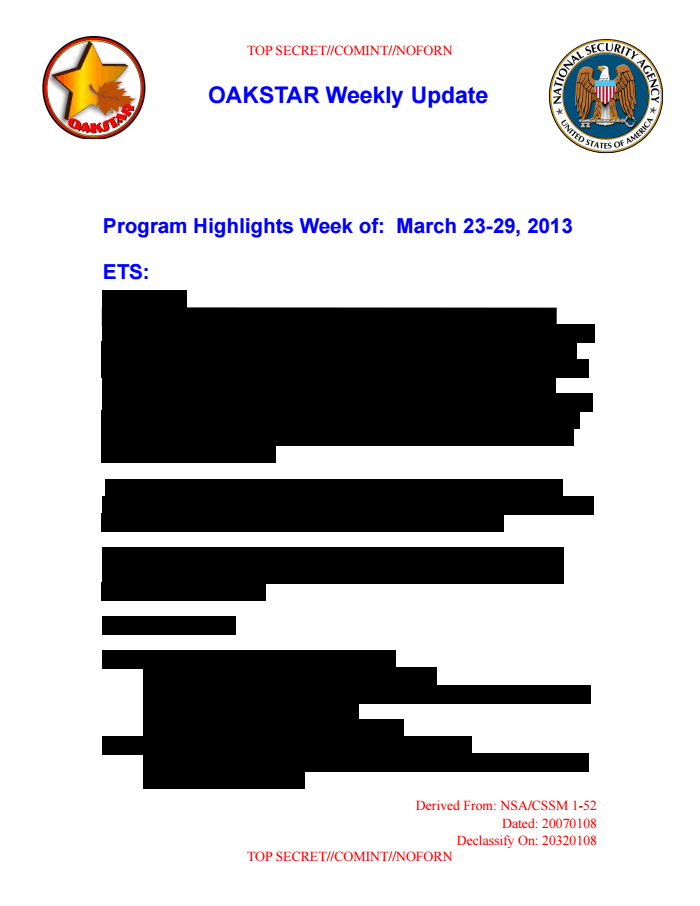
The NSA’s budding bitcoin spy operation looks to have been enabled by its unparalleled ability to siphon traffic from the physical cable connections that form the internet and ferry its traffic around the planet. As of 2013, the NSA’s bitcoin tracking was achieved through program code-named OAKSTAR, a collection of covert corporate partnerships enabling the agency to monitor communications, including by harvesting internet data as it traveled along fiber optic cables that undergird the internet.

Specifically, the NSA targeted bitcoin through MONKEYROCKET, a sub-program of OAKSTAR, which tapped network equipment to gather data from the Middle East, Europe, South America, and Asia, according to classified descriptions. As of spring 2013, MONKEYROCKET was “the sole source of SIGDEV for the BITCOIN Targets,” the March 29, 2013 NSA report stated, using the term for signals intelligence development, “SIGDEV,” to indicate the agency had no other way to surveil bitcoin users. The data obtained through MONKEYROCKET is described in the documents as “full take” surveillance, meaning the entirety of data passing through a network was examined and at least some entire data sessions were stored for later analysis.

At the same time, MONKEYROCKET is also described in the documents as a “non-Western Internet anonymization service” with a “significant user base” in Iran and China, with the program brought online in summer 2012. It is unclear what exactly this product was, but it would appear that it was promoted on the internet under false pretenses: The NSA notes that part of its “long-term strategy” for MONKEYROCKET was to “attract targets engaged in terrorism, [including] Al Qaida” toward using this “browsing product,” which “the NSA can then exploit.” The scope of the targeting would then expand beyond terrorists. Whatever this piece of software was, it functioned a privacy bait and switch, tricking bitcoin users into using a tool they thought would provide anonymity online but was actually funneling data directly to the NSA.

The hypothesis that the NSA would “launch an entire operation overseas under false pretenses” just to track targets is “pernicious,” said Matthew Green, assistant professor at the Johns Hopkins University Information Security Institute. Such a practice could spread distrust of privacy software in general, particularly in areas like Iran where such tools are desperately needed by dissidents. This “feeds a narrative that the U.S. is untrustworthy,” said Green. “That worries me.”

. . .

The NSA’s interest in cryptocurrency is “bad news for privacy, because it means that in addition to the really hard problem of making the actual transactions private … you also have to make sure all the network connections [are secure],” Green added. Green said he is “pretty skeptical” that using Tor, the popular anonymizing browser, could thwart the NSA in the long term. In other words, even if you trust bitcoin’s underlying tech (or that of another coin), you’ll still need to be able to trust your connection to the internet — and if you’re being targeted by the NSA, that’s going to be a problem.

NSA documents note that although MONKEYROCKET works by tapping an unspecified “foreign” fiber cable site, and that data is then forwarded to the agency’s European Technical Center in Wiesbaden, Germany, meetings with the corporate partner that made MONKEYROCKET possible sometimes took place in Virginia. Northern Virginia has for decades been a boomtown for both the expansive national security state and American internet behemoths — telecoms, internet companies, and spy agencies call the area’s suburbs and office parks home.

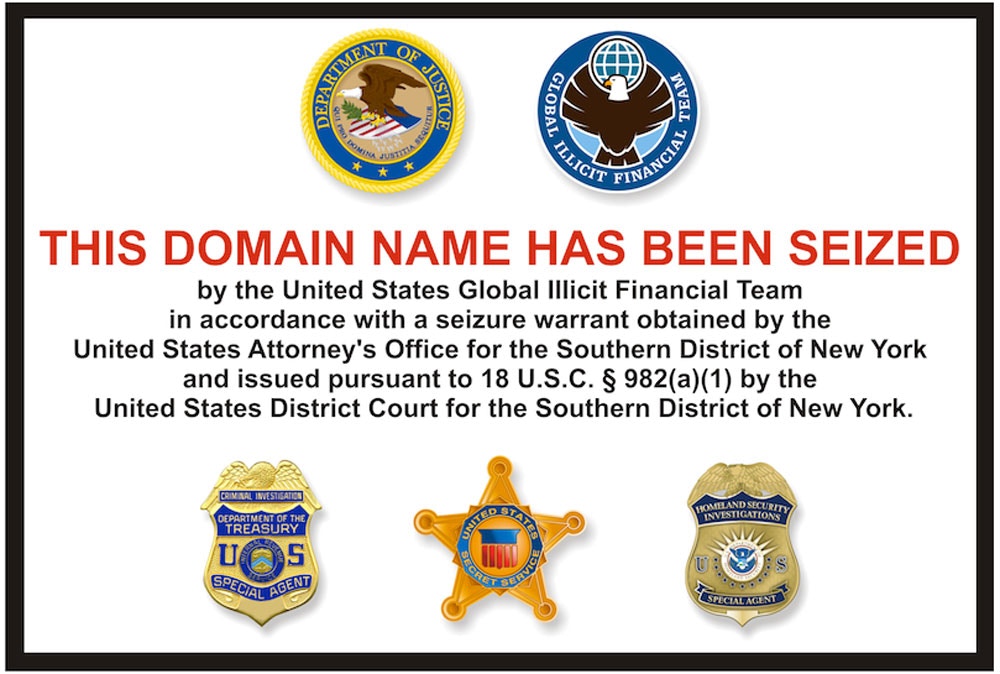
Liberty_Reserve_seizure-1519149164

Liberty Reserve website name seizure notice.

Screenshot: Liberty Reserve

Bitcoin may have been the NSA’s top cryptocurrency target, but it wasn’t the only one. The March 15, 2013 NSA report detailed progress on MONKEYROCKET’s bitcoin surveillance and noted that American spies were also working to crack Liberty Reserve, a far seedier predecessor. Unlike bitcoin, for which facilitating drug deals and money laundering was incidental to bigger goals, Liberty Reserve was more or less designed with criminality in mind. Despite being headquartered in Costa Rica, the site was charged with running a $6 billion “laundering scheme” and triple-teamed by the U.S. Department of Justice, Homeland Security, and the IRS, resulting in a 20-year conviction for its Ukrainian founder

 . . . READ MORE

NYT Columnist Thomas Friedman: “The World Will Push Back” Against Trump ...

    Jan 27, 2026 #amanpourpbs From ICE's violent crackdown in Minneapolis to President ...