.jpg)
The Supreme Court has long acknowledged that law enforcement, by its very nature, requires police and similar officials to make decisions about which arrests to make, which enforcement actions to bring, and how to allocate the limited number of officers employed by an agency. And it has warned courts not to interfere with these kinds of decisions, especially when law enforcement decides not to target someone for arrest or enforcement.
As the Court held in Heckler v. Chaney (1985), “an agency’s decision not to prosecute or enforce, whether through civil or criminal process, is a decision generally committed to an agency’s absolute discretion.” This principle, the Court added, “is attributable in no small part to the general unsuitability for judicial review of agency decisions to refuse enforcement.”
So if the leaders of a law enforcement agency decide that a particular class of people are not a high priority for enforcement, even if those individuals have violated federal law, Heckler says that judges like Drew Tipton should generally stay the heck away from that decision.
.jpg)
A Trump judge seized control of ICE, and the Supreme Court will decide whether to stop him
Judge Drew Tipton’s order in United States v. Texas is completely lawless. Thus far, the Supreme Court has given him a pass.
.jpg)
"In July, a Trump appointee to a federal court in Texas effectively seized control of parts of Immigration and Customs Enforcement (ICE), the federal agency that enforces immigration laws within US borders. Although Judge Drew Tipton’s opinion in United States v. Texas contains a simply astonishing array of legal and factual errors, the Supreme Court has thus far tolerated Tipton’s overreach and permitted his order to remain in effect.
Nearly five months later, the Supreme Court will give the Texas case a full hearing on Tuesday. And there’s a good chance that even this Court, where Republican appointees control two-thirds of the seats, will reverse Tipton’s decision — his opinion is that bad.
The case involves a memo that Secretary of Homeland Security Alejandro Mayorkas issued in September 2021, instructing ICE agents to prioritize undocumented immigrants who “pose a threat to national security, public safety, and border security and thus threaten America’s well-being” when making arrests or otherwise enforcing immigration law.
A federal statute explicitly states that the homeland security secretary “shall be responsible” for “establishing national immigration enforcement policies and priorities,” and the department issued similar memos setting enforcement priorities in 2005, 2010, 2011, 2014, and 2017.
Nevertheless, the Republican attorneys general of Texas and Louisiana asked Tipton to invalidate Mayorkas’s memo. And Tipton defied the statute permitting Mayorkas to set enforcement priorities — and a whole host of other, well-established legal principles — and declared Mayorkas’s enforcement priorities invalid. This is not the first time that Tipton relied on highly dubious legal reasoning to sabotage the Biden administration’s immigration policies. . .
During the Trump administration, the Court’s Republican-appointed majority was so quick to intervene when a lower court judge blocked one of Trump’s policies that Justice Sonia Sotomayor complained that her colleagues were “putting a thumb on the scale in favor of” the Trump administration.
.jpg)
Even when the law offers no support for the GOP’s preferred policies, in other words, the Court permits Republicans to manipulate judicial procedures in order to get the results they want. The Texas attorney general’s office can handpick judges who they know will strike down Biden administration policies, and once those policies are declared invalid, the Supreme Court will play along with these partisan judges’ decisions for at least a year or so."
Help keep articles like this free
Understanding America’s political sphere can be overwhelming. That’s where Vox comes in. We aim to give research-driven, smart, and accessible information to everyone who wants it.
Reader gifts support this mission by helping to keep our work free — whether we’re adding nuanced context to unexpected events or explaining how our democracy got to this point. While we’re committed to keeping Vox free, our distinctive brand of explanatory journalism does take a lot of resources. Advertising alone isn’t enough to support it. Help keep work like this free for all by making a gift to Vox today.
In U.S. v. Texas, broad questions over immigration enforcement and states’ ability to challenge federal policies - SCOTUSblog
CASE PREVIEW
on Nov 28, 2022
at 3:43 pm
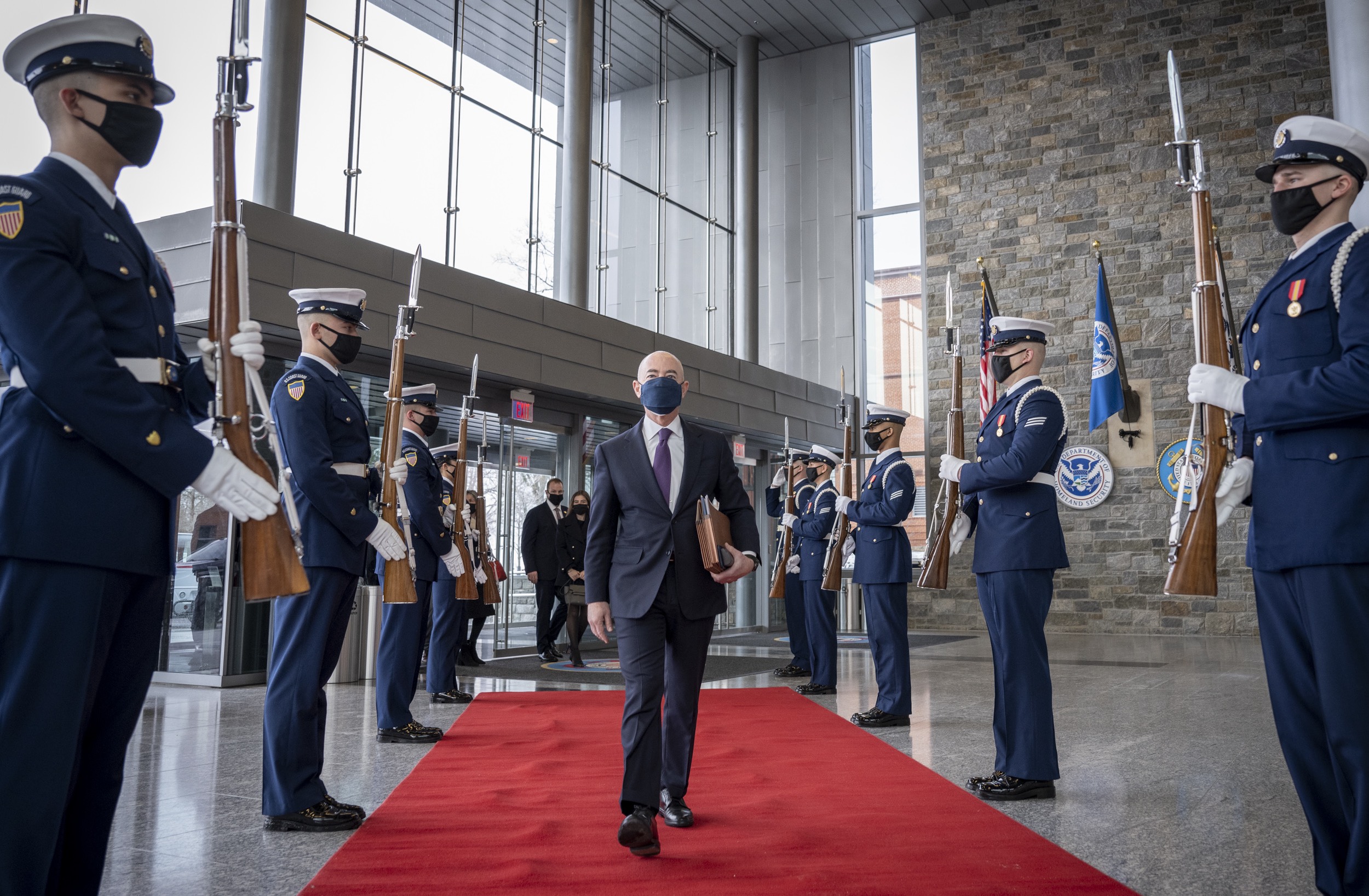
Homeland Security Secretary Alejandro Mayorkas, seen here in February 2021, wrote an immigration-enforcement memorandum that is being challenged at the Supreme Court. (Wikimedia Commons)
The Supreme Court will hear oral argument on Tuesday in a dispute over the Biden administration’s authority to set immigration policy. Texas and Louisiana are challenging a federal policy that prioritizes certain groups of unauthorized immigrants for arrest and deportation, arguing that it violates federal law. But the Biden administration and its supporters counter that a ruling for the states would have sweeping implications – not only for immigration policy but also for states’ ability to sue the federal government when they disagree with its actions.
The policy at the heart of United States v. Texas is outlined in a September 2021 memorandum by Secretary of Homeland Security Alejandro Mayorkas on the federal government’s priorities for immigration enforcement. Explaining that there are over 11 million noncitizens currently in the United States who could be subject to deportation, but that the Department of Homeland Security does not have the resources to apprehend and deport all of them, the memorandum instructed immigration officials to prioritize the apprehension and deportation of three groups of noncitizens: suspected terrorists, people who have committed crimes, and those caught recently at the border. Mayorkas’ memo resembles immigration-enforcement policies enacted under President Barack Obama and other prior administrations, though not Donald Trump, who sought to limit the role of discretion in immigration enforcement.
Texas and Louisiana went to federal court in Texas to challenge the Biden administration’s policy, arguing that federal law requires the government to detain and deport many more noncitizens than those identified by Mayorkas as high prioritizes. The federal government, the states argued, does not have the authority to prioritize some unauthorized immigrants for deportation while downplaying others. U.S. District Judge Drew Tipton agreed, and he vacated the policy nationwide in June. The U.S. Court of Appeals for the 5th Circuit declined to put Tipton’s ruling on hold while the government appealed.
The Biden administration came to the Supreme Court in July, asking the justices to freeze Tipton’s order. By a vote of 5-4, the justices left Tipton’s order in place, but they also agreed to take up the challenge and hear oral argument without waiting for the court of appeals to weigh in.
The justices directed the Biden administration and the states to address three specific questions. The first is whether the states have a right to bring their lawsuit at all – a concept known as legal standing. The Biden administration maintains that they do not, stressing that states can sue the United States only if they are directly injured by the federal government. But Texas and Louisiana, U.S. Solicitor General Elizabeth Prelogar writes, have argued only that the presence of additional noncitizens in their states may cost them more – for example, by requiring them to shoulder the costs of keeping noncitizens in prison or by providing them with public benefits. And courts have never recognized these kinds of indirect costs as creating a right to sue, the administration says. If this lawsuit is allowed to go forward, the administration warns, it will mean that any state could “sue the federal government about virtually any policy.”
In a “friend of the court” brief supporting the Biden administration, law professor Stephen Vladeck accuses Texas of engaging in – both in this dispute and in other lawsuits against the Biden administration – “a deliberate strategy of judge shopping.” Texas has filed its cases in courthouses where it is virtually guaranteed to draw Republican-appointed judges – a strategy, Vladeck says, demonstrating that the states are “engaged in nothing more than a campaign of generalized grievances against a political opponent.”
Texas and Louisiana insist that they have a right to bring their lawsuit because the policy inflicts “real, particularized, and concrete harms” on them. As Tipton concluded, they write, by increasing the number of unauthorized immigrants with criminal convictions and final deportation orders who are released into the United States, the policy increases the costs to the states for everything from health care and education to incarceration.
The second question in the case is whether the policy is consistent with federal immigration law and the federal law governing administrative agencies. The states contend that Congress adopted federal immigration laws requiring the arrest and detention of noncitizens in the wake of a “wholesale failure” by federal immigration authorities “to deal with increasing rates of criminal activity” by noncitizens. In those laws, the states say, Congress provided that the federal government “shall take into custody any alien who” has committed certain crimes “when the alien is released” from criminal custody, and that when there is a final deportation order, the federal government “shall remove” the noncitizen within 90 days, and that the noncitizen shall remain in custody during that time. The use of “shall” means that these provisions are mandatory, the states argue, but Mayorkas’ memo makes them discretionary by allowing immigration officials to make a case-by-case decision about whether to detain a noncitizen.
The Biden administration tells the justices that federal immigration law gives immigration officials “broad discretion” to deal with people who are not authorized to be in the United States. Officials can, for example, decline to begin deportation proceedings, end such proceedings after they are initiated, or decline to carry out a deportation order after it has been entered. And although Tipton and the states suggest that Congress has created a mandatory duty to apprehend noncitizens who have committed crimes and those who have final deportation orders, the Biden administration insists that Congress’ use of the word “shall” nonetheless “does not displace the Executive’s traditional discretion to apprehend individuals not yet in its custody.” But in any event, the Biden administration continues, such a reading of federal immigration law would be “both unprecedented and unfeasible” when Congress has not given it the resources to apprehend and detain everyone who could be deported.
The states push back against the argument that the federal government simply lacks the resources to detain everyone who might be covered by the provisions that the states cite. When it initially enacted the laws at the center of this case, the states say, Congress provided a two-year grace period for the executive branch to be able to comply with the laws, but it declined to further extend that period. And in any event, the states continue, the federal government has consistently “underutilized existing detention facilities.” Indeed, the states contend, the Biden administration has twice submitted budget requests asking Congress “to cut those very resources by 26%.”
The third question in the case is whether Tipton had the power to set aside the policy. The Biden administration points to a provision of federal immigration law providing that, as a general rule, only the Supreme Court can “enjoin or restrain the operation” of immigration law. Although the federal law governing administrative agencies may allow the district court to disregard the policy in the case before it, that does not give the district court the power to vacate the policy and prevent the Biden administration from implementing it throughout the United States. At the very least, the administration continues, only the Supreme Court can set aside the policy, because federal immigration law reflects “Congress’s considered judgment that only this Court should have the authority to grant programmatic relief against the Executive Branch’s implementation of the INA.”
The states counter that the federal law governing administrative agencies clearly gives courts the power to “set aside” agency actions that do not comply with federal law. The only way that a court can “set aside” agency action, the states say, is by vacating it. By contrast, the states observe, the federal law on which the Biden administration relies only bars federal courts from entering an injunction against the federal government. But an injunction is different from vacating an agency action, the states observe: An injunction requires a party to a case either to do something or to refrain from doing something, while vacating an agency action does not require anyone to do anything. The government’s contrary interpretation, the states contend, “would likely insulate virtually every rule related to the INA from judicial review.” But at a minimum, the Supreme Court – which has the power to do so – should enter an injunction or vacate the policy, the states argue.
Eighteen states with Republican attorneys general, led by Arizona, filed a “friend of the court” brief supporting Texas and Louisiana. Like Texas and Louisiana, the states stress that the federal government’s immigration policies “impose significant costs on the States, including billions of dollars in new expenses relating to law enforcement, education, and healthcare programs.” And they launch a broader attack on U.S. immigration policy generally, contending that it has created an “unmitigated disaster” at the U.S.-Mexico border.
Sixteen blue states and the District of Columbia are supporting the Biden administration, arguing that Texas and Louisiana’s position would undermine principles of prosecutorial discretion and threaten the safety of immigrant communities. And a group of local governments, led by Los Angeles, warn that a ruling for Texas and Louisiana will have significant and serious ripple effects throughout the country. If the Supreme Court eliminates the federal government’s discretion in immigration enforcement, they tell the justices, the government will instead be required “to take a more aggressive, inconsistent, poorly prioritized approach resulting in arbitrary removals.” For example, they write, “a working mother with no criminal history” will be “just as great a removal priority as a would-be terrorist or violent felon.” And that approach, the local governments caution, will prompt immigrants, worried about the prospect of deportation, to “avoid contact with local law enforcement or healthcare services,” which will in turn harm the public more broadly.
This article was originally published at Howe on the Court.
Recommended Citation: Amy Howe, In U.S. v. Texas, broad questions over immigration enforcement and states’ ability to challenge federal policies, SCOTUSblog (Nov. 28, 2022, 3:43 PM), https://www.scotusblog.com/2022/11/in-u-s-v-texas-broad-questions-over-immigration-enforcement-and-states-ability-to-challenge-federal-policies/
.jpg)

.png)
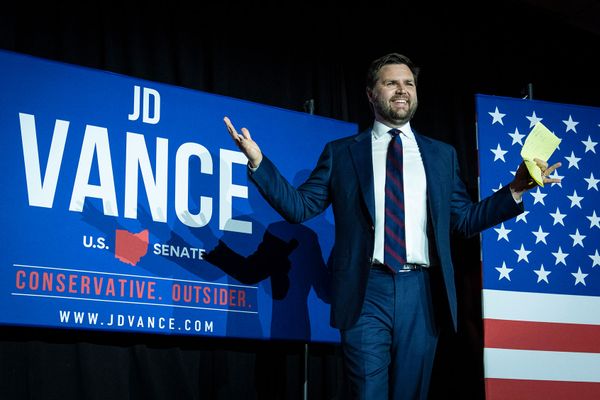 Republican
U.S. Senate candidate J.D. Vance arrives onstage after winning the
primary, at an election night event at Duke Energy Convention Center on
May 3, 2022 in Cincinnati, Ohio. (Drew Angerer/Getty Images)
Republican
U.S. Senate candidate J.D. Vance arrives onstage after winning the
primary, at an election night event at Duke Energy Convention Center on
May 3, 2022 in Cincinnati, Ohio. (Drew Angerer/Getty Images).jpg)
.png)
.webp)





.webp)







:quality(70)/s3.amazonaws.com/arc-authors/thenational/5a1721d1-b1fc-47a7-8c35-985395d5a5ae.png)
:quality(70)/cloudfront-eu-central-1.images.arcpublishing.com/thenational/AYUFHEP5MJE6TG5DNISBGBOF2Q.jpg)


