.jpg)
Scroll down for the official transcript >
TOP NEWS IT WAS in the city-ownef non-profit newsroom yesterday @ 7:04 pm
.jpg)
.jpg)
ICMYI - Mayor Giles Appears on CBS Face the Nation
January 23, 2023 at 4:07 pm"Mayor John Giles appeared on Face the Nation on CBS Jan. 22, along with the mayors of Miami, New Orleans and Atlanta to talk about several issues, including homelessness and crime, during a roundtable discussion following a meeting of the U.S...." READ more
Transcript: Mayors Francis Suarez, LaToya Cantrell, Andre Dickens and John Giles on "Face the Nation," Jan. 22, 2023
.jpg)

/ CBS News
The following is a transcript of an interview with Mayors Francis Suarez of Miami, LaToya Cantrell of New Orleans, Andre Dickens of Atlanta and John Giles of Mesa, Arizona, that aired Sunday, Jan. 22, 2023, on "Face the Nation."
MARGARET BRENNAN: We're back now with four of our nation's mayors. Francis Suarez is the mayor of Miami and the head of the US Conference of Mayors. Latoya Cantrell is the mayor of New Orleans. Plus, we have Atlanta Mayor Andre Dickens with us, along with John Giles, the mayor of Mesa, Arizona. Good morning to all of you. And thank you so much for being here in person. I want to talk about just what is developing, in terms of the shooting in California. Nationwide, we are seeing this spike in violent crime, we're seeing reports of an uptick in anti-semitism and hate crimes. All of you are from states where there are fairly permissive gun laws. And I wonder, Mayor Suarez, how you put those pieces together? What is driving this?
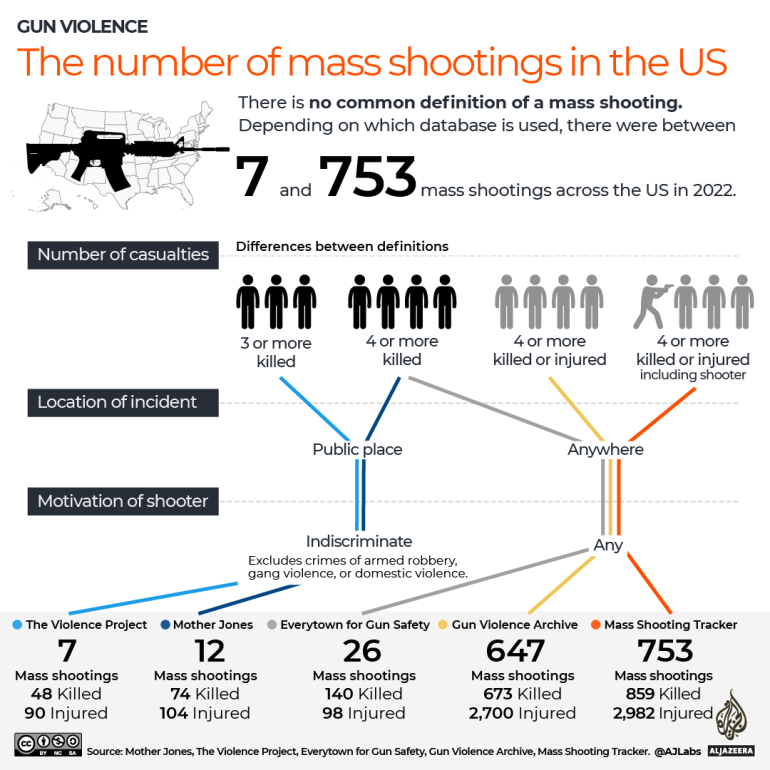
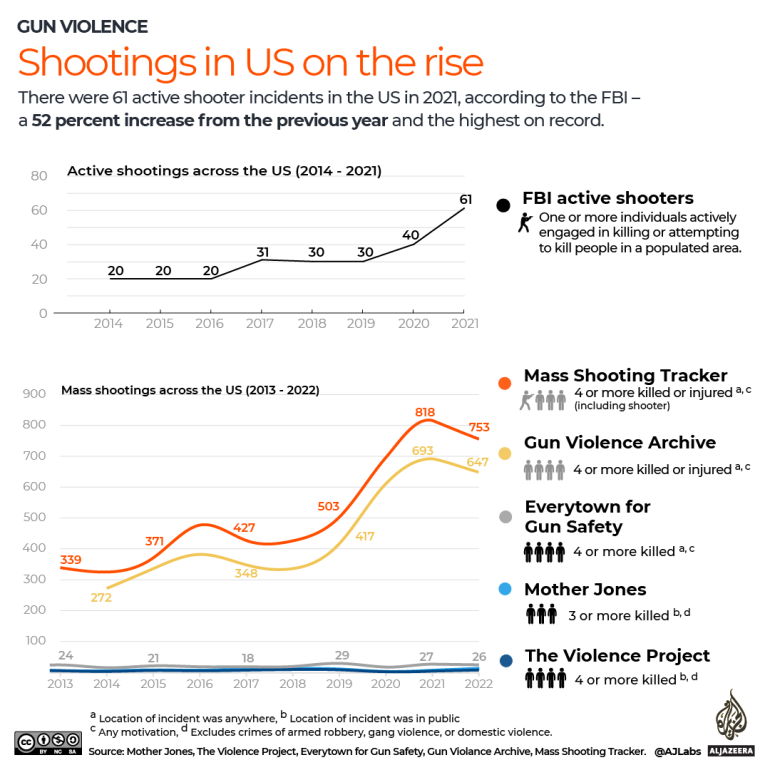
MIAMI MAYOR FRANCIS SUAREZ: Yeah, it's- it's so many different factors that are driving this. But you know, one of the things that we focused a lot on, at this mayoral conference that we just ended, was mental health. And mental health is a huge component of what's driving a lot of these, when you look at the root cause, and you go back and you sort of peel back the layers of the onion. Mayors are very concerned about it. We obviously had a panel, obviously on-on urban crime. And certainly a lot of these mayors have talked about, you know, gun control in their cities. In our city, you know, we have- we're very blessed. We had a great year, our homicide level went down, we've been able to have a knock on proverbial wood, that we haven't had any of these mass shootings that we've seen across the country, which seem to be escalating in terms of frequency, and in terms of, you know, the amount of times that we're seeing them, it's almost every day, it seems like we're having one. So it's been- it's been tough. It's something that mayors are grappling with across the country. And we're focusing it on in a very comprehensive way.
MARGARET BRENNAN: You specifically this week, told your fellow mayors that some of this is driven by no cash bail policies. Why do you say that? Are repeat offenders the problem?
MAYOR SUAREZ: Yeah, what I'm focusing on is that the no cash bail is creating lawlessness in a lot of our cities, what's happening is, for example, people get out right away, they're not even, you know, they don't even have to post bail. So they're able to get out right away. And so we're seeing someone go into like a CVS, for example, and take thousands of dollars worth of merchandise, which is causing a CVSs to close, which hurts the you know, the rest of the city, but that's not particularly related to, to the gun violence issue. It's related more to petty crime, which is creating lawlessness in some of our cities. But what we're doi- we are seeing in the city of Miami is, you know, we are funding our police, you know, a lot of cities cut into the defunding police movement. And we're seeing that as a bipartisan issue. I said it at the White House, you know, just a couple days ago, and the President echoed what I said about funding police and not defunding police. So I think that is a bigger issue, as we struggle with how we solve these issues in our cities.
MARGARET BRENNAN: And President Biden put in $4 billion in grants that's available for local law enforcement use in cities around the country.
ATLANTA MAYOR ANDRE DICKENS: Yeah, you know, as you talked about this issue that's happening right now, in California, yet another mass shooting in our country, it continues to happen too frequently. And so it's just too many guns in America. It's too many guns in the hands on our streets and guns plus anger equals bad outcomes, equals violence. And so we have to bring back laws that are sensible, common sense gun laws to be able to reduce the amount of access that people have to guns. And so you see another mass shooting, and lives are lost. And my heart goes out to the people of California experiencing that. And so as mayor Suarez mentioned, we're talking about mental health, and how to make sure that we have anti-violence in our communities, we're utilizing a "Cure Violence," you know, to bring down the retaliation and make sure we have healing in our communities to try to use policing and non-policing tactics to bring down violence. Midnight Basketball, things that, you know, Summer Youth Employment Program to help help our youth, but mental health and just getting people the quality care that they need. So they make wise decisions, because most of the violence that we're seeing in our communities is escalating disputes, people that are unable to resolve a conflict, that's just escalated too much. And people aren't fighting or arguing anymore. They're taking their hands in their pockets and pulling out a gun. And it gets too intense and someone kills someone. And that's the violence we're seeing in America. So we have to take a whole of government approach to be able to bring down as violence, things that we can do to help our youth to help our communities.
MARGARET BRENNAN: Yeah.
MAYOR ANDRE DICKENS: And as some of the stuff that we're doing in Atlanta.
MARGARET BRENNAN: Mayor Giles, you actually I'm surprised when I saw that Mesa has such a big population. I think you're the biggest city at the table, and it looked at that look to your police say says that you are one of America's safest large cities.
MESA, ARIZ., MAYOR JOHN GILES: Right.
MARGARET BRENNAN: How do you qualify that and how are you doing that? If that is, is fact.
MESA, ARIZ., MAYOR JOHN GILES: Well, a lot of the things that these fellows had just mentioned. we are doubling down on our investment in our police department and we are shifting the paradigm. A few years ago, we changed the name of our fire department. It's no longer the Mesa Fire Department; it's now Mesa fire and medical to better reflect what we do. We need to do the same when it comes to policing that needs to be the police and mental health department. Last year we diverted over three thousand 911 calls away from a police response to a mental health response. So again, the-the importance of mental health is ubiquitous and all that we do, and it was discussed at the- at the conference. It's- It has everything to do with- with how we address homelessness, it does everything with how we do how we address policing in our community.
MARGARET BRENNAN: Mayor Cantrell, I want to get you on that too, because President Biden said it's not about defunding the police. It's about restraining the police. I wonder if you agree with that. I know you have had a problem in New Orleans with not having enough police officers less than 1000 for 300,000 people.
MAYOR CANTRELL: Sure, and the thing is is that it's about retention and it is also about recruitment. Because of this second tranche of the American rescue plan dollars coming our way with direct allocation. Oh, it has really been a lifeline where we're putting 80 million in public safety across the board. One of the biggest in terms of a retention and incentive package to retain, we see it slowing down, meaning attrition is declining, our officers are staying. And so we just have to continue to give the tools and resources that our officers need to respond. Also, in terms of the capacity issue you mentioned. You know, I've had to put all commissioned officers that were in special ops, over 75, back on the street, because my officers were saying, 'Hey, we need help out here.' So I have to protect my officers so they can protect my city. And so we're seeing a real results in regards to our redeployment strategy on the ground.
MARGARET BRENNAN: You- New Orleans has the highest per capita murder rate of any major city. Why?
MAYOR CANTRELL: Why? Is because one, dealing with COVID-19, violence, everyone has guns, the ability or the lack of the ability to resolve a conflict without reaching and pulling a gun. Also, as it relates to accountability, you know, low lining offenses, you know, when they don't get bail or they're not restrained, then we're just seeing how these crimes escalate. People need to be held accountable across the board. And we're seeing results, I would say. We're moving in the right direction. But I tell you, we definitely need to hold people accountable. You can't fight crime, just focusing on police. It's about a system, a criminal justice system. It's about the D.A., your judges, and it's about building in accountability. Everyone needs to be held accountable. And that's how we're focusing on it, holistic approach in the city of New Orleans, definitely seeing a decline moving in the right direction.
MARGARET BRENNAN: This issue of crime in your city is causing a lot of political problems, and you are the target of a recall drive that's underway right now. A number of allegations against you, as well in regard to financial improprieties. How much of the responsibility with the crime issue do you- do you personally take?
MAYOR CANTRELL: Well, first of all, it is the New Orleans Police Department that is absolutely under my authority. And with that, making sure that not only I'm listening to my officers, but getting them the resources that they need to fight crime. And that is exactly what we're seeing on the ground, the incentive packages, retaining officers, as well as recruitment. And that's the focus.
MARGARET BRENNAN: And you believe you'll survive this recall effort?
MAYOR CANTRELL: Well, based on what I see is that the residents of my city definitely appreciate continuity in leadership. And so with that, that speaks to keeping progress moving and alive under my leadership. Second, elected twice in the city. 61% the first time, 65% The second time. Continuity and leadership is what I'm seeing by my people.
MARGARET BRENNAN: I want to get to all of you on a number of issues. But I know something very intense has just happened in Atlanta. Mayor Dickens, I watched a press conference you held last night, following the death of a Georgia-based activist it turned into a riot. This stems as I understand it from the shooting death of an activist and the body camera from the policeman who is believed to have shot this individual doesn't exist. What can you tell us in terms of who is behind the violence that happened yesterday?
MAYOR DICKENS: Yeah, earlier this week, an individual that was protesting in the woods- a number of folks are in the woods trying to protest against the development of a public safety training center, which is for police and firefighters. A new state of the art training center that's going to allow us to do 21st century policing, allow us to have a emergency vehicle obstacle course, and these things that police and fire will be able to work together to be able to bring about, you know, safety in our community. And so we're building it, but some folks don't want to see anything built that supports police so they call it 'cop city.' And these individuals are in the woods protesting it, and unfortunately, they were engaged by the Georgia State Patrol, asked him to be able to move out of the woods, an individual shot at the Georgia State Patrol and the Georgia State Patrol officers shot back. And unfortunately, that individual was killed and a patrol officer, the state patrol officer was shot in the abdomen. And so now, they had a protest last night, and it was peaceful. But there were some individuals within that crowd that meant violence. They had explosives. They burned down a police car, they broke windows at businesses. And so our police department, along with our state and federal partners, took swift action within two blocks and brought that situation under control. And the violence stopped and those six individuals were arrested. And it should be noted that these individuals were not Atlanta or Georgia residents. Most of them traveled into our city to wreak havoc. And so, we love to support people when they're doing right, peaceful protest is a part of the American- our freedoms, but when you are violent, we will make sure that you get held accountable.
MARGARET BRENNAN: I want- I want to pick you up on that point. When you say people from out of town, they're carrying explosives. Is this an organized movement here? Your local paper says this is having national reach with reaction from groups ranging from quote, 'environmental activists, radical anarchist and black revolutionaries.' Marjorie Taylor Greene, Georgia Congresswoman, I'm sure you know, her blamed 'Black Lives Matter' and 'Antifa' and that she blamed Democrats. On the facts, seven to 13 people have been charged with domestic terrorism. Is this terrorism? Is this crime? What is this? Who's behind it?
MAYOR DICKENS: Yeah, I won't go as far as whatever that representative said. But what I will say is that it is a crime, and that's why they've been charged with the crime. And these crimes--
MARGARET BRENNAN: Domestic terrorism--
MAYOR DICKENS: And the crimes range from violence to domestic terrorism to assault battery and some other things. But yes, it is violent when someone turns to burn down a police car or breakout windows or have explosives on them. I don't get into the names. I don't know all the organizations. I'll let y'all decide who did it. I just know they're arrested. And if they come into Atlanta, again, to wreck havoc, they will be arrested again.
MARGARET BRENNAN: But do you believe your city is being targeted by organized groups?
MAYOR DICKENS: In that regard? Yes, those individuals that are protesting against cop city, as they call it, it's really a public safety training center. They don't want to see the very things that they asked for more police training, we can't train imaginary, we have to do it in a facility that allows for police firefighters in the community to train together. And so this is bringing about the change that we wanted to see in 2020. And now while we're doing it, these individuals don't want to see any resources go towards that training is so we're going to develop this training center and those individuals will have to come to a halt.
MARGARET BRENNAN: Mayor Giles, you are on the frontline of the migration surge and I think it's so interesting that you're characterizing your city as very safe. You know, these issues of migration surges being uncontrolled and crime are often conflated. How were you doing that, in terms of not having this overwhelm your local officials and law enforcement?
MAYOR GILES: Well, I wish I could say it's not overwhelming us. It is, and it has been for decades, and one of the things I've enjoyed about this conference over the last few days is where you're starting to see more biparti- bipartisan frustration, you're seeing the mayor of New York City and Chicago and in Atlanta, and Denver are all top of their agendas now, is talking about the problems that are being created in their communities as a result of the migration surge. I in no way support or encourage the practice of some of our border state governors in sending migrants to these large northeastern cities, but I do have to admit that it has elevated this issue to a place that it has not been previously. Border states have been complaining for decades about the need to address immigration reform, the need to dedicate additional resources to the border and we're doing the best we can. In our city, the church groups, the nonprofits, that are being put upon by the federal government to come in and take up the slack, we are past our resources. So hopefully, this newfound bipartisan frustration and joining of northeastern cities to this issue will help elevate it.
MARGARET BRENNAN: And you have the Super Bowl coming out to Arizona soon. I know- I read that you plan to take the Homeland Security Secretary around your city.
MAYOR GILES: Absolutely. Mayor Gallego and I met with the, Secretary Mayorkas just a few days ago have extended that invitation. We have very limited resources as far as welcoming centers and facilities to process these migrants as they proceed in their- in their journeys on sometimes to the northeastern cities. We need the band aids to keep coming from- from the federal government in terms of facilities. But we also need to address the underlying issue of immigration reform.
MARGARET BRENNAN: Mayor Suarez, I need to get to you on this as well, because South Florida has seen this influx by boat Cubans in particular Haitians, Customs and Border Protection report a 400% increase in the month of October alone. Are these new tighter regulations from the Biden administration making any difference?
MAYOR SUAREZ: It's hard to say they were just imposed, but certainly, I think the failure of having an immigration solution, as Mayor Giles said, is creating a sort of- Miami and Florida becoming a border state and border city. As you said, we had the single largest increase in public school enrollment year over year, this year. And so that just to put that in context, about 14,000 new children, if a big school has 2,000 children, that's seven new schools that we have to create in the system. It obviously, as you said, puts a homeless- strain on the homeless system in trying to- to take care of the least, the last, and the lost in our cities. It puts a strain on our public hospital system, we have one of the largest public hospitals in the country that provides hundreds of millions of dollars of indigent care, puts a tremendous amount of strain on that system. So I think cities across America, as Mayor Giles said, are coming together in a bipartisan fashion. And we're asking for a long term solution. This problem has to be fixed. There has to be an articulated strategy. A lot of the immigration is coming from this hemisphere, and it doesn't seem like you know, either party really has focused on solving the problem as opposed to, you know, demonizing the other side for their position. I think that's what mayors do, is we focus on solving problems, not blaming somebody else for it.
MARGARET BRENNAN: Right. And you delivered that message here in Washington this week. Mayors, thank you very much for coming to the table.
MAYORS: Thank you.
MARGARET BRENNAN: We'll be right back.
Opinion: Millions more Americans will go hungry if Congress doesn’t act soon
.jpg)
Editor’s Note: Levar Stoney is the Democratic mayor of Richmond, Virginia, and serves as the chair of the U.S. Conference of Mayors’ Children, Health and Human Services Committee. John Giles is the Republican mayor of Mesa, Arizona, and is a trustee of the U.S. Conference of Mayors. The opinions expressed in this commentary are their own.
"Families across America are precariously perched on the edge of a hunger cliff. With inflation on the rise and supply chain backlogs, more families have been turning to food banks, forcing programs nationwide to ration supplies and cut services. And now the war in Ukraine is leading to more food shortages and driving up prices even further. Now is not the time to turn our backs on those who cannot afford to put food on the table.
The U.S. Department of Agriculture (USDA) has estimated that as many as 30 million adults and 12 million children are living in food-insecure households. And the U.S. Census Bureau’s Household Pulse Survey found that in the last seven days, 10.3% of respondents sometimes or often did not have enough to eat. Local food aid organizations are essential community resources for families during this crisis, but they cannot do it all by themselves.
That’s why mayors across the United States are calling on Congress to take swift action to address the coming hunger cliff.
We’ve already seen what robust action and funding from Congress can do. Beginning in March 2020, Congress expanded eligibility and increased benefit levels of federal nutrition programs like the Supplemental Nutrition Assistance Program (SNAP), which serves more than 41 million people. These actions prevented more Americans from going hungry over the course of the pandemic.
However, if Washington doesn’t act soon, many of the programs that have served as a lifeline during the pandemic will expire, and millions more will go hungry. In early March of this year, as part of the Omnibus package, Congress failed to renew a vital school meal waiver program, which provides free lunches to those in need. It expires on June 30, and millions of schoolchildren will lose a vital benefit if it is not renewed. Expanded SNAP benefits are also set to fully expire once the Biden administration declares the nation’s Covid-19 public health emergency over, which could come as soon as this summer following the Biden administration’s latest 90-day extension starting on April 16. Combined, these actions threaten to force millions of families to choose between keeping food on the table and meeting other essential expenses.
There could not be a worse time to remove these safety nets.
But the good news is that nine bills have been introduced in Congress — all supported by America’s mayors — that would prevent millions from falling into food insecurity at the end of the Covid-19 public health emergency. For example, the Closing the Meal Gap Act of 2021 would permanently improve SNAP access and benefit amounts, and the Improving Access to Nutrition Act of 2021 would end time limits on SNAP eligibility, ensuring food security for those seeking full-time work. These bills must be passed, and Congress must also address the lapse in school meal waivers while millions of children are still without enough food.
Food security and equity should not be partisan issues. As leaders from both sides of the aisle, we’re committed to working with Congress to address food insecurity.
Congress must not fail to act. American families are counting on lawmakers to help them make ends meet during the greatest public health crisis of our generation."
.jpg)
.jpg)



.jpg)
.jpg)

.jpg)
.jpg)
.jpg)
.jpg)
.jpg)
.jpg)


