The White House has announced a series of actions to increase
fairness in the rental market and further fair housing principles. These
steps align with a newly released “Blueprint for a Renters Bill of Rights,”
which outlines a set of principles to spur action by the federal
government, state, and local partners, and the private sector to protect
renters and promote rental affordability.
“Over a third of the American population–44 million households–rent
their homes. Before the pandemic, well over 2 million eviction fillings
and roughly 900,000 evictions occurred annually–disproportionately
affecting Black women and their children. Since then, rental housing has
become less affordable with some landlords taking advantage of market
conditions to pursue egregious rent increases,” said the White House
statement. “Today’s announcements recognize there are responsible
housing providers–large and small, national and local–willing to treat
renters fairly, but it also holds accountable those who exploit market
realities at the cost of renters’ housing access and stability.”
Key actions from the administration include:
The
Federal Trade Commission (FTC) and Consumer Financial Protection Bureau
(CFPB), both independent agencies, will collect information to identify
practices that are unfairly preventing applicants and renters from
accessing or remaining in housing. According to the White House, this is
the first time the FTC has issued a request for information related to
unfair practices in the rental market;
The CFPB will issue
guidance and coordinate enforcement efforts with the FTC to ensure
accurate information in credit reporting and to hold background check
companies accountable for instituting unreasonable procedures;
The
Federal Housing Finance Agency will launch a public process to examine
proposed actions promoting renter protections and limits on extreme rent
increases for future investments;
The Department of Housing and
Urban Development will publish a notice of proposed rulemaking to
require public housing authorities and owners of project-based rental
assistance properties to give at least 30 days’ notice before
terminating a lease due to nonpayment; and
The administration
will hold quarterly meetings with a diverse group of residents and
resident advocates to enable them to share their ideas to strengthen
protections.
“Strengthening and enforcing renter
protections is vitally important to addressing the broader housing
crisis. There is a tremendous power imbalance in our housing system that
tilts heavily in favor of landlords at the expense of low-income and
other marginalized renters, putting families at greater risk of housing
instability and homelessness and fueling racial inequity,” said Diane
Yentel, president and CEO of the National Low Income Housing Coalition
(NLIHC). “The administration’s announcements today are an important step
toward achieving President Biden’s commitment to establishing a Renters
Bill of Rights, but there is much more work still to be done.”
Yentel added that the moves are significant and historic, but the White House missed the opportunity to act on other key recommendations
made by the NLIHC and its HoUSed campaign and Tenant Leader Cohort. “It
is farther than I’ve ever seen a White House go to amplify and promote
the importance of renter rights and protections,” she said. “NLIHC
remains committed to working closely with the administration and
Congress to take all necessary actions to ensure renters with the lowest
incomes remain stably housed.”
In addition, the White House has
issued a call to action to housing providers and other stakeholders to
make a commitment to improve the quality of life for renters through the
launch of the Resident-Centered Housing Challenge. State, local,
tribal, and territorial governments also are being encouraged to develop
new policies or enhance existing ones to promote fairness and
transparency in the rental market.
Several organizations have committed to the Challenge, which will occur this spring and impact over 15 million rental units.
The
Pennsylvania Housing Finance Agency (PHFA) and Wisconsin Housing and
Economic Development Authority (WHEDA) are capping annual rental
increases to 5% for federally or state subsidized affordable housing.
Starting this year, WHEDA’s policy applies to existing residents in
properties financed with state or federal low-income housing tax
credits. In Pennsylvania, this policy has been applied to its portfolio
of 450 properties with PHFA funding in 2022;
Members of the
Stewards of Affordable Housing for the Future, which include 12 leading
nonprofits that collectively own or manage nearly 150,000 housing units
across the nation, have committed to offering flexible payment plans for
residents with unpaid rent who have communicated with property
management and providing notices and protections where permitted by law
and financing documents pertaining to nonpayments and any proposed sale
or closure of a property. SAHF will also launch a task force to identify
and share resident-centered best practices;
The National
Apartment Association (NAA) will promote resident programming and
practices, such as helping renters build and improve their credit
through the reporting of positive rent payments to the major credit
bureaus, through its website, industry events, and other content
channels;
The National Multifamily Housing Council (NMHC) will
work with its members to identify business standards that align with
principles of resident-centered management practices;
Realtor.com
Rentals will pilot a listing process through Avail, its DIY landlord
product, to highlight landlords that accept Housing Choice Vouchers; and
The
National Association of Realtors and affiliate Institute of Real Estate
Management have committed to creating new resources for property
managers in its network, including best practices for advertising to
prospective residents where Housing Choice Vouchers are accepted and
providing rental assistance information.
The National
Council of State Housing Agencies commended the administration and
Challenge participants for their efforts but also urged collaboration
and detailed approaches.
“Today’s White House announcement of
federal actions and voluntary commitments by multifamily housing
industry participants to promote ‘resident-centered’ property management
practices cites specific policies adopted by the PHFA and WHEDA to
maintain rents at reasonable levels in properties financed by those
agencies,” NCSHA’s statement read. “These carefully tailored,
state-specific policies were developed after detailed analysis, industry
input, and public comment. Broader federal efforts should follow a
similar approach to balance the needs of all the stakeholders in the
affordable rental housing system.”
While the NAA and NMHC will be
actively engaged with the challenge, they have concerns about what the
new actions mean for multifamily owners and managers.
“The NMHC
has worked in good faith with the administration on its
Resident-Centered Housing Challenge and is pleased to join that
challenge. While they have rejected calls for failed policies such as
national rent control, we are disappointed they are pursuing potentially
duplicative and onerous regulations that are already appropriately
addressed under state and local law,” stated the NMHC. “These efforts
will do nothing to address the nation’s housing shortage and could
discourage much-needed investments in housing. We continue to urge the
administration to prioritize enacting the Housing Supply Action Plan they issued in May. The best renter protection is an abundant supply of housing.”
Bob Pinnegar, NAA president and CEO, also said his organization worked with the administration in good faith.
“We
stand by our commitment to promote industry resident services and
practices,” he said. “NAA also made clear the industry’s opposition to
expanded federal involvement in the landlord/tenant relationship.
Complex housing policy is a state and local issue and the best solutions
utilize carrots over sticks.”
За процесуального керівництва Спеціалізованої прокуратури у
військовій та оборонній сфері Офісу Генерального прокурора за фактом
державної зради викрито та затримано підполковника СБУ одного з обласних
управлінь, що межує з тимчасово окупованою територією (ч. 2 ст. 111 КК
України).
За даними слідства, правоохоронець приховано
збирав службову інформацію за результатами оперативно-розшукової
діяльності та інформацію, яка становить державну таємницю. Зокрема його
цікавили схеми розміщення блокпостів області.
За допомогою
особистого мобільного телефону він фотографував документи. У подальшому,
використовуючи мессенджер Теlegram та електронну пошту, зареєстровану
на російському домені, передавав інформацію представникам
країни-агресора.
Під час обшуків виявлено мобільні телефони, сім-картки російських операторів, грошові кошти, а також інші докази.
Також з’ясовано, що він має зв’язки, у тому числі і родинні, з представниками правоохоронних та державних органів РФ.
Наразі готується повідомлення про підозру, а також клопотання до суду про обрання запобіжного заходу.
Досудове розслідування здійснюється слідчими ГСУ ДБР за оперативного супроводу ГУВБ СБУ.
Примітка:
відповідно до ст. 62 Конституції України особа вважається невинуватою у
вчиненні злочину і не може бути піддана кримінальному покаранню, доки
її вину не буде доведено в законному порядку і встановлено обвинувальним
вироком суду.
5 hours ago · We determined that this submission originates from a credible source, but we still advise that users double check the facts and use common ...
Ukrainian security service ‘needs cleanout’ after arrest of accused spy
Daniel Boffey
4 - 5 minutes
"The arrest of a high-ranking Ukrainian intelligence agent accused of spying for Russia
has highlighted the urgent need for a cleanout of the country’s key
security service, a former deputy head of the agency has said.
The
Ukrainian security service (SBU) reported on Thursday that they
arrested a lieutenant colonel in their ranks on suspicion of “high
treason” and published a photograph of bundles of cash found in his
home.
The unnamed man is said to have used his mobile phone to photograph
documents detailing the location of military checkpoints in
Zaporizhzhia, a frontline region in the south-east of the country, and
sending the information via an email account registered on a Russian
domain.
A photo issued alongside the official statement showed sim
cards issued by Russian mobile carriers, bundles of foreign currency, a
knuckle duster, two knives and a Russian language guide to learning
English.
“Evidence of permanent connections with representatives
of law enforcement and state bodies of the Russian Federation was also
established,” the statement said. “In particular, close relatives of the
traitor are among them.”
Maj Gen Viktor Yahun, who was deputy
head of the SBU until, 2015, said there needed to a thorough cleanout of
the service, which he said had long had an overly close relationship
with its Russian counterpart, the FSB. . .Following Russia’s invasion on 24 February last year, more than 60
members of the SBU and the prosecutor general’s office had remained in
occupied territory and collaborated with the Russian forces,
highlighting the scale of the infiltration of Ukrainian law enforcement
by the Kremlin.
. . .There have also been multiple arrests of SBU agents on counts of
treason in the rest of Ukraine over the last 11 months, including Oleg
Kulinich, who was appointed by Volodymyr Zelenskiy in 2020 to oversee operations in Crimea, which has been held by Russia since 2014. He is yet to comment.
✓ In October, Ukraine
also requested the extradition from Serbia of Andriy Naumov, who used
to head the department of internal security at Ukraine’s state security
service but who left the country hours before Russia’s invasion. He has
not commented.
Yahun said: “Kulinich and Naumov were at the top of the ranks and they had access to the most secret of information.”
✓ As
late as 2010, Yahun said the SBU had internally celebrated KGB Day,
marking the establishment of the communist-era Russian secret service,
and there remained pro-Russian agents through the ranks of the service.
✓ Yahun
claimed that the biggest attack on a military site near Lviv in western
Ukraine last year had been enabled by a 77-year-old former SBU agent
who had passed on the coordinate details and that he feared many in the
service still considered themselves Russian.
While the generation
that worked for the Soviet security services had retired, Yahun added,
the recruitment practices of the SBU meant that their sons and daughters
were now in the agency.
“They grew up with the same values as
their fathers,” he said. “Ukraine made a major mistake in not following
the lead of the Baltic nations following independence in reforming the
security services from ground zero.”
“Of course there were always
patriots in the SBU, but they have been in the minority,” he said. “It
is getting better and since 24 February President Zelenskiy has cleaned
the top ranks, so I do not believe any vital strategic information has
been passed to Russia. Now they are moving their way down the ranks.”
Yahun
said some SBU agents had been bribed and blackmailed into working for
Russia, while others were double agents. “Others just regard themselves
as Russian,” he said. “There was an arrest of a woman in her 40s working
in the SBU who had been found to have been sharing Russian propaganda
on social media.”
Jul 19, 2022 · Ukrainians have long worried about pro-Russia spies infiltrating the country—but now the president is purging his security services of ...
Jul 5, 2021 · As in all such cases, the men are accused of providing information to Ukraine – either the Ukrainian Security Service [SBU] or Military ...
Jul 18, 2022 · President Volodymyr Zelenskyy suspended Security Service of Ukraine (SBU) chief Ivan Bakanov, a childhood friend, and top state prosecutor Iryna ...
The agency was viewed negatively by the Ukrainian public for much of its history, as it was widely regarded as corrupt and was best known for arresting and ...
Since September 1994 he was drafted for military service in the Security Service of Ukraine.
From September 1994 to February 1996 he was studying at the Institute of Training of the Academy of Security Service of Ukraine (he is an honour graduate a second degree in "Law").
From March 1996 to June 2002 he was serving in operational and managerial positions in the Office of Security Service of Ukraine in Lviv region.
In December 2005, with the assistance of the Egyptian Fund for Technical Cooperation with CIS countries had attended the courses "Managing security in a crisis situation" in the Police Academy of the Arab Republic of Egypt.[4]
From 24 March 2014 to 19 June 2015 he was Deputy Head of the Security Service of Ukraine, Major General.[5][6][7]
As
part of the war in eastern Ukraine during a combat mission he was a
member of a group combined military and law enforcement Ukrainian
agencies for liberation Sloviansk,
which was occupied by Russian mercenaries. On April 13, 2014 they were
ambushed Russian mercenaries, led by Igor girkin (Strelkov). During the
first military clash Ukrainian security forces against terrorists in our
country died captain Gennady Bilichenko(received three wounds ball,
which were incompatible with life). It was the first in the history of
independent Ukraine precedent of the death of officer special forces SBU
"Alpha" in battle with representatives of special services of a foreign
state.[8]
During his work as deputy head of Security Service of Ukraine
the operational units of Service received and published unequivocal
evidences of the direct involvement of servicemen of Russian Federation
in hostilities in Ukraine on the operation under the auspices of the
special services of the centers of the recruitment of mercenaries and
preparing saboteurs to destabilize situation and support for terrorists
in Ukraine.[9][10][11]
Counterintelligence
under the guidance of Yahun began the struggle with the secret services
of Russia and controlled their illegal paramilitary groups of
separatists, renewed fighting capacity units of counterintelligence,
warned a lot of terrorist attacks in major cities, significantly reduced
the terrorist threat in the whole Ukraine.[12]
Ukraine’s Security Service uncovers suspected Russian spy in its ranks
The Kyiv Independent news desk
3 minutes
Ukraine’s Security Service (SBU) reported on Jan. 26 that they detained a lieutenant colonel in their ranks on suspicion of high treason.
The
lieutenant colonel is accused of conducting intelligence operations and
passing state secrets to Russian contacts. According to the SBU
statement, he used his personal mobile phone to photograph documents
with layout schemes of military checkpoints in Zaporizhzhia Oblast and
sent the information via an email account registered on a Russian domain
to Russian contacts.
Ukraine’s Security Service also seized
mobile phones, SIM cards issued by Russian mobile carriers, cash, and
other evidence during the suspect’s detention. Their investigation is
ongoing.
Since the start of the invasion, Ukraine’s Security
Service has initiated investigations into more than 2,000 criminal
proceedings against suspected collaborators. However, there still
remains the issue of routing out collaborators from within the ranks of
the SBU itself and other government agencies.
Back in July of
2022, the parliament voted to support President Volodymyr Zelensky’s
decision to dismiss the head of Ukraine’s Security Service, Ivan
Bakanov, for failing to effectively perform his duties. Upon firing him,
Zelensky said that after the start of the full-scale invasion, more
than 60 staff members from the Security Service and the Prosecutor
General’s Office had remained in Russian-occupied territory and
collaborated with Russians.
In August 2022, the Security Service
detained a Russian spy in their Kharkiv office. He was accused of
passing along information on the activity of the Ukrainian Armed Forces
to Russian contacts. The suspect was also found to be coordinating a
Russian attack on the Security Service facilities in Kharkiv.
One
of the stranger cases involving the SBU took place in March 2022. Denys
Kirieiev, a Ukrainian businessman and a member of the Ukrainian
delegation during negotiations early on in the invasion, was allegedly
killed in Kyiv inside a Security Service vehicle. His death was
initially reported as the killing of a Russian agent. According to
recent interviews by Kyrylo Budanov, head of the Ukrainian military
intelligence, Kirieiev was a Ukrainian intelligence agent. Budanov
openly claimed that SBU killed him, but couldn't say why. One advisor to
President Zelensky’s administration later said that Kireiev's death was due to “poor communication” between Ukrainian secret services at the start of the invasion.
2 days ago · In a phone call whose transcript was leaked in 2014, assistant secretary of state Victoria Nuland and US ambassador to Ukraine Geoffrey Pyatt discussed whom ...
2 days ago · ... of State Victoria Nuland and the U.S. ambassador to Ukraine, Geoffrey Pyatt, ... had Nuland positioning Yatsenyuk as the future leader of Ukraine and, ...
11 hours ago · State Department's Victoria Nuland spoke to the US Senate about anti-Russian ... who should run Ukraine with the US ambassador in Kiev Geoffrey Pyatt.
11 hours ago · An intercepted phone call between assistant secretary of state Victoria Nuland and the US ambassador to Ukraine, Geoffrey Pyatt, which took place in the ...
6 hours ago · ... Douglas D. Jones, Emily Blanchard, Erik Woodhouse, Geoffrey R. Pyatt ... Uzra Zeya, Vedant Patel, Victoria Nuland, Wendy R. Sherman, Yael Lempert.
3 days ago · Victoria Nuland: US-Assistant Secretary of State for European and Eurasian AffairsGeoffrey R. Pyatt: United States Ambassador to UkraineJeff Feltman: head ...
US Proxy War: The constant battle to keep things out of the memory hole Nuland-Pyatt Video Restored to YouTube
Paul Knaggs
16 - 21 minutes
US proxy war
People
have the right to be informed and in no way does the information within
this article detract away from Ukraine’s right to defend itself from
Russian aggression, nor does it undermine the people’s right to
self-determination and protection from Ukraine’s military and government
who have been waging a civil war for over eight years in the breakaway
regions of Donetsk and Luhansk’s. A war zone the international community
has constantly and conveniently ignored.
However, again we find
the war of propaganda is constantly being waged. Censorship and the
takedown of information on the internet seem to be the norm. The ‘memory
hole’ is in full swing, it conveniently makes information that helps
people get a better perspective of the history behind the Ukrainian
conflict disappear.
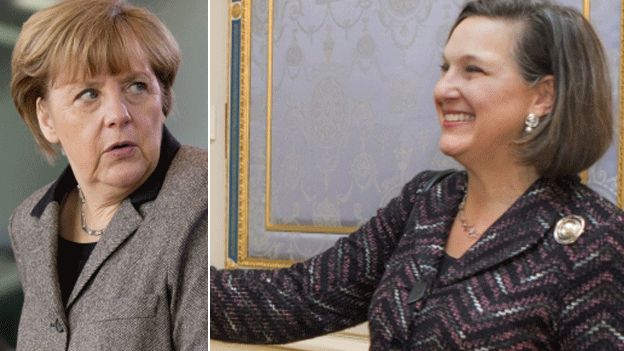
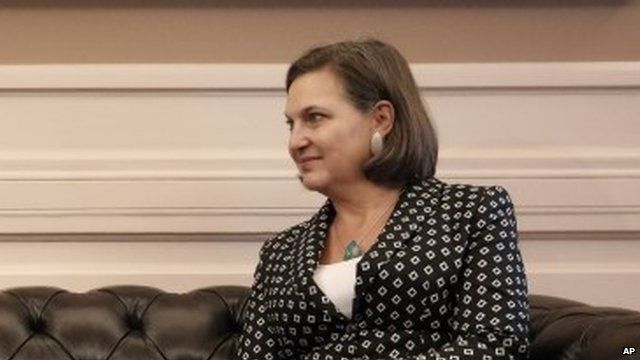
A video of a leaked conversation between ‘Assistant Secretary of StateVictoria Nuland,’
a former U.S. ambassador to NATO and State Department spokeswoman,
talking to the U.S. ambassador to Ukraine, Geoffrey Pyatt, was removed
from YouTube, but now has been restored.
Although during her
three-decade-long career as a US Foreign Service officer Victoria
Nuland has done many things, mostly in the shadows, unfortunately for
her she was projected into the headlines, to become a household name
in US foreign policy.
In the video, the two discuss changing the
Ukrainian government weeks before the democratically-elected President
Viktor Yanukovych was violently driven from power.
The video,
posted on April 29, 2014, had 181,533 views before it was taken down on
Wednesday, and was among the most viewed versions of the conversation on
YouTube. Eight years’ worth of viewer comments on the video had also
been removed.
The bugged phone conversation in which the
pair disparages the EU over the Ukraine crisis was posted online. The
conversation between Assistant Secretary of State Victoria Nuland and
the US Ambassador to Ukraine, Geoffrey Pyatt, appeared on YouTube in 2014.
It
came after Nuland arrived in Ukraine for talks in early February 2014,
two weeks later a coup took place. It was also widely viewed on a
Russian-language Web site, where it appeared online along with a photo
montage of Nuland, Pyatt, and opposition figures. The Russian caption
reads, “Puppets of the Maidan,” the colloquial name for Kiev’s
Independence Square.
The background and implications of the 2014
far-right coup in Kiev, which overthrew the pro-Russian President Viktor
Yanukovych, is critical for understanding the current Ukraine-Russia
war. This coup was openly supported by the US and the European Union,
implemented primarily by far-right shock troops such as the Right Sector
and the neo-Nazi Svoboda Party.
It represented the temporary
culmination of long-standing efforts by US imperialism to install a
puppet regime on the borders of Russia and brought the world a major
step closer to a war between the largest nuclear powers, the US and
Russia. Ukraine has since been systematically built up as a launching
pad for a NATO war against Russia.
Donbass civil warMariupol2014
The
regime change prompted the outbreak of an ongoing civil war in the east
of Ukraine, between Russian-backed separatists and the US-backed
Ukrainian army, which has claimed the lives of tens of thousands and
displaced millions.
In the US, the coup was a catalyst for
an even more aggressive campaign against Russia. Joe Biden’s aim was to
use Ukraine to extend both Nato and the US empire.
The
hacked recording of that phone call sealed the otherwise discreet
diplomat’s place in history. In the recording, Nuland’s voice can be
heard giving Pyatt orders about who the United States had selected to be
Ukraine’s new prime minister. Countering Pyatt’s suggestion of the
popular former boxer, Vitali Klitschko, Nuland selected Arseniy
Yatsenyuk.
After the pro-Russian President Viktor Yanukovych fled
the country and Yatsenyuk struggled to lead a new government, an
anti-Russian billionaire, Petro Poroshenko, won the presidency in
September 2014. He immediately appealed to the Obama administration for
military assistance to counter Russia, but President Obama kept him at bay, reasoning that “Ukraine is a core interest for Moscow, in a way that it is not for the United States.”
In
other words, not only did the CIA work to overthrow the elected
president, Yanukovych, but Nuland managed to manipulate Ukrainian
politics from within and thus contribute to what was to evolve into a
notoriously corrupt regime under Poroshenko.
At the same time, her
commander-in-chief, Barack Obama, chose to limit the US involvement
in Ukraine by defining a prudent arm’s length relationship with the
fiasco that was unfolding, even after Russia seized Crimea from the
Ukrainians.
The US were overactive in Ukraine from 2014 onwards.
By
Official White House Photo by Chuck Kennedy –
http://www.whitehouse.gov/administration/cabinet, Public Domain,
https://commons.wikimedia.org/w/index.php?curid=21990205
When
Russia invaded Crimea in early 2014, Vice President Joseph R. Biden
Jr. pressed Barack Obama to take decisive action, and fast, to make
Moscow “pay in blood and money” for its aggression. The president, a
Biden aide recalled, was having none of it.
Biden worked on Obama
during their weekly private lunches, imploring him to increase lethal
aid, backing a push to ship FGM-148 Javelin anti-tank missiles to Kyiv.
The president flatly rejected the idea and dispatched him to the region
as an emissary, cautioning him “about not overpromising to the Ukrainian
government,” Biden would later write in a memoir.
So, Biden threw
himself into what seemed like standard-issue vice-presidential stuff:
prodding Ukraine’s leaders to tackle the rampant corruption that made
their country a risky bet for international lenders — and pushing reform
of Ukraine’s cronyism-ridden energy industry.
“You have to be
whiter than snow, or the whole world will abandon you,” Biden told the
country’s newly elected president, Petro O. Poroshenko, during an early
2014 phone call, according to former administration officials.
We are all still waiting for the secrets of Hunter Biden’s laptop to be revealed.
Of
course, we all know how much Gas is playing a part in this conflict. We
all know about Hunter Biden’s connection to Ukrainian Gas. we all know
the US has become the biggest exporter in the world of LNG Gas and many
of us know of Joe Biden’s connection to the Largest LNG Gas company in
the US with his good friend the co-founder of Western LNG Andrew
Goldman, also one of Biden former political advisers.
As former vice president Biden visited Ukraine six times and spent hours on the phone with the country’s leaders.
Biden
dived into Ukraine in hopes of burnishing his statesman credentials.
Writing in his 2017 memoir, Biden said Ukraine gave him a chance to
fulfil a childhood promise to make a difference in the world. It also
came to serve a political purpose, as “a legacy project, something he
could run on,” said Keith Darden, an associate professor at American
University who studies Ukraine policy.
That legacy seems to be world domination, an age for a new America.
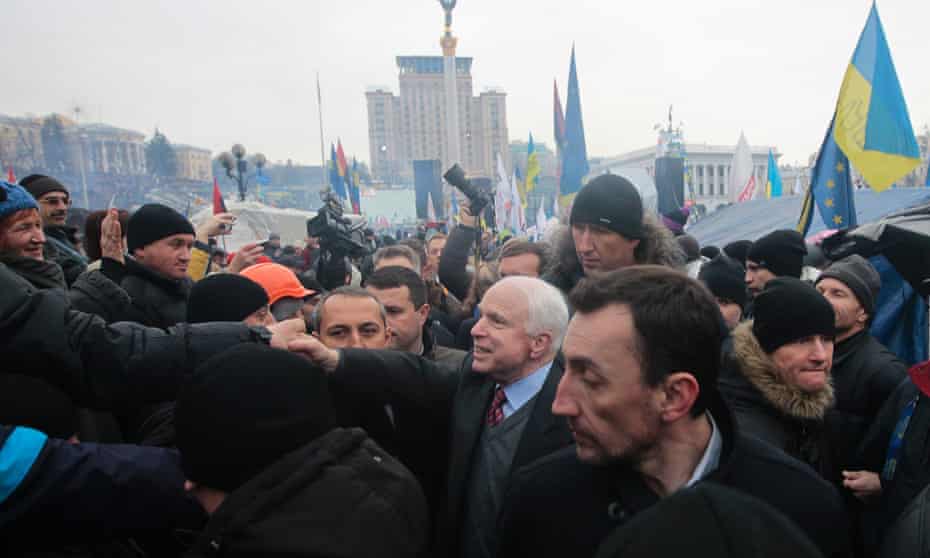
In 2014 Senator John McCain told demonstrators “America is with you,” then, standing shoulder to shoulder with the leader of the far-right Svoboda party as the US ambassador haggled with the state department over who would make up the new Ukrainian government.
Senator
John McCain, center, greets well-wishers in Independence Square in
Kiev. Photograph: Sergei Chuzavkov/AP Photograph: Sergei Chuzavkov/AP
When the Ukrainian president was replaced by a US-selected administration, in an entirely unconstitutional takeover, politicians such as William Hague brazenly misled parliament about
the legality of what had taken place: the imposition of a pro-western
government on Russia’s most neuralgic and politically divided neighbour.
It was all pre-planned, yet another US regime change, another action carried out in the continuation of the Forever wars.
“F—
the E.U.,” Assistant Secretary of State for European and Eurasian
Affairs Victoria Nuland said in a private telephone call that was
intercepted and leaked online.
That was the shocker the media went
with, they pretend the rest of the conversation was chatter. Nuland was
dismissively claiming she was referring to slow-moving European efforts
to address political paralysis and a looming fiscal crisis in Ukraine.
But it was the blunt nature of her remarks, along with the U.S.
diplomatic calculations, that seemed exceptional.
Nuland also
assessed the political skills of Ukrainian opposition figures with
unusual candour and, along with the U.S. ambassador to Ukraine, Geoffrey
Pyatt, debated strategy for their cause, laying bare a deep degree of
U.S. involvement in affairs that Washington officially says are
Ukraine’s to resolve.
At the end of the Nuland-Pyatt video, Lindsey Graham & John McCain tell Ukrainian soldiers they will supply them and that the US will be with them all the way, that was in 2016.
Here is a transcript, with analysis by BBC diplomatic correspondent Jonathan Marcus:
Warning: This transcript contains swearing.
Jonathan Marcus:
At the outset it should be clear that this is a fragment of what may
well be a larger phone conversation. But the US has not denied its
veracity and has been quick to point a finger at the Russian authorities
for being behind its interception and leak.
Voice thought to be Pyatt’s: I
think we’re in play. The Klitschko [Vitaly Klitschko, one of three main
opposition leaders] piece is obviously the complicated electron here.
Especially the announcement of him as deputy prime minister and you’ve
seen some of my notes on the troubles in the marriage right now so we’re
trying to get a read really fast on where he is on this stuff. But I
think your argument to him, which you’ll need to make, I think that’s
the next phone call you want to set up, is exactly the one you made to
Yats [Arseniy Yatseniuk, another opposition leader]. And I’m glad you
sort of put him on the spot on where he fits in this scenario. And I’m
very glad that he said what he said in response.
Jonathan Marcus:
The US says that it is working with all sides in the crisis to reach a
peaceful solution, noting that “ultimately it is up to the Ukrainian
people to decide their future”. However, this transcript suggests that
the US has very clear ideas about what the outcome should be and is
striving to achieve these goals. Russian spokesmen have insisted that
the US is meddling in Ukraine’s affairs – no more than Moscow, the cynic
might say – but Washington clearly has its own game plan. The clear
purpose of leaking this conversation is to embarrass Washington and for
audiences susceptible to Moscow’s message to portray the US as
interfering in Ukraine’s domestic affairs.
Nuland: Good. I don’t think Klitsch should go into the government. I don’t think it’s necessary, I don’t think it’s a good idea.
Pyatt: Yeah.
I guess… in terms of him not going into the government, just let him
stay out and do his political homework and stuff. I’m just thinking in
terms of sort of the process moving ahead we want to keep the moderate
democrats together. The problem is going to be Tyahnybok [Oleh
Tyahnybok, the other opposition leader] and his guys and I’m sure that’s
part of what [President Viktor] Yanukovych is calculating on all this.
Nuland: [Breaks
in] I think Yats is the guy who’s got the economic experience, the
governing experience. He’s the… what he needs is Klitsch and Tyahnybok
on the outside. He needs to be talking to them four times a week, you
know. I just think Klitsch going in… he’s going to be at that level
working for Yatseniuk, it’s just not going to work.
Pyatt: Yeah, no, I think that’s right. OK. Good. Do you want us to set up a call with him as the next step?
Nuland: My
understanding from that call – but you tell me – was that the big three
were going into their own meeting and that Yats was going to offer in
that context a… three-plus-one conversation or three-plus-two with you.
Is that not how you understood it?
Pyatt: No. I think… I
mean that’s what he proposed but I think, just knowing the dynamic
that’s been with them where Klitschko has been the top dog, he’s going
to take a while to show up for whatever meeting they’ve got and he’s
probably talking to his guys at this point, so I think you reaching out
directly to him helps with the personality management among the three
and it gives you also a chance to move fast on all this stuff and put us
behind it before they all sit down and he explains why he doesn’t like
it.
Nuland: OK, good. I’m happy. Why don’t you reach out to him and see if he wants to talk before or after?
Pyatt: OK, will do. Thanks.
Nuland: OK…
one more wrinkle for you Geoff. [A click can be heard] I can’t remember
if I told you this, or if I only told Washington this, that when I
talked to Jeff Feltman [United Nations Under-Secretary-General for
Political Affairs] this morning, he had a new name for the UN guy Robert
Serry did I write you that this morning?
Jonathan Marcus:
An intriguing insight into the foreign policy process with work going
on at a number of levels: Various officials attempting to marshal the
Ukrainian opposition; efforts to get the UN to play an active role in
bolstering a deal; and (as you can see below) the big guns waiting in
the wings – US Vice-President Joe Biden clearly being lined up to give
private words of encouragement at the appropriate moment.
Pyatt: Yeah I saw that.
Nuland: OK.
He’s now gotten both Serry and [UN Secretary General] Ban Ki-moon to
agree that Serry could come in Monday or Tuesday. So that would be
great, I think, to help glue this thing and to have the UN help glue it
and, you know, Fuck the EU.
Jonathan Marcus:
Not for the first time in an international crisis, the US expresses
frustration at the EU’s efforts. Washington and Brussels have not been
completely in step during the Ukraine crisis. The EU is divided and to
some extent hesitant about picking a fight with Moscow. It certainly
cannot win a short-term battle for Ukraine’s affections with Moscow – it
just does not have the cash inducements available. The EU has sought to
play a longer game; banking on its attraction over time. But the US
clearly is determined to take a much more activist role.
Pyatt: No,
exactly. And I think we’ve got to do something to make it stick
together because you can be pretty sure that if it does start to gain
altitude, that the Russians will be working behind the scenes to try to
torpedo it. And again the fact that this is out there right now, I’m
still trying to figure out in my mind why Yanukovych (garbled) that. In
the meantime there’s a Party of Regions faction meeting going on right
now and I’m sure there’s a lively argument going on in that group at
this point. But anyway we could land jelly side up on this one if we
move fast. So let me work on Klitschko and if you can just keep… we want
to try to get somebody with an international personality to come out
here and help to midwife this thing. The other issue is some kind of
outreach to Yanukovych but we probably regroup on that tomorrow as we
see how things start to fall into place.
Nuland: So on
that piece Geoff, when I wrote the note [US vice-president’s national
security adviser Jake] Sullivan’s come back to me VFR [direct to me],
saying you need [US Vice-President Joe] Biden and I said probably
tomorrow for an atta-boy and to get the deets [details] to stick. So
Biden’s willing.
Pyatt: OK. Great. Thanks.
Jonathan Marcus:
Overall this is a damaging episode between Washington and Moscow.
Nobody really emerges with any credit. The US is clearly much more
involved in trying to broker a deal in Ukraine than it publicly lets on.
There is some embarrassment too for the Americans given the ease with
which their communications were hacked. But is the interception and
leaking of communications really the way Russia wants to conduct its
foreign policy? Goodness – after Wikileaks, Edward Snowden and the like
could the Russian government be joining the radical apostles of open
government? I doubt it. Though given some of the comments from Vladimir
Putin’s adviser on Ukraine Sergei Glazyev – for example, his interview
with the Kommersant-Ukraine newspaper the other day – you don’t need
your own listening station to be clear about Russia’s intentions. Russia
he said “must interfere in Ukraine” and the authorities there should
use force against the demonstrators.
Feb 7, 2014 · The alleged conversation between Assistant Secretary of State Victoria Nuland and the US Ambassador to Ukraine, Geoffrey Pyatt, appeared on ...
Social media networks are, well, atwitter about a phone
conversation between US Assistant Secretary of State for European
Affairs Victoria Nuland and US Ambassador to Ukraine Geoffrey Pyatt
regarding developments and strategy in Ukraine that was intercepted and
posted on YouTube.
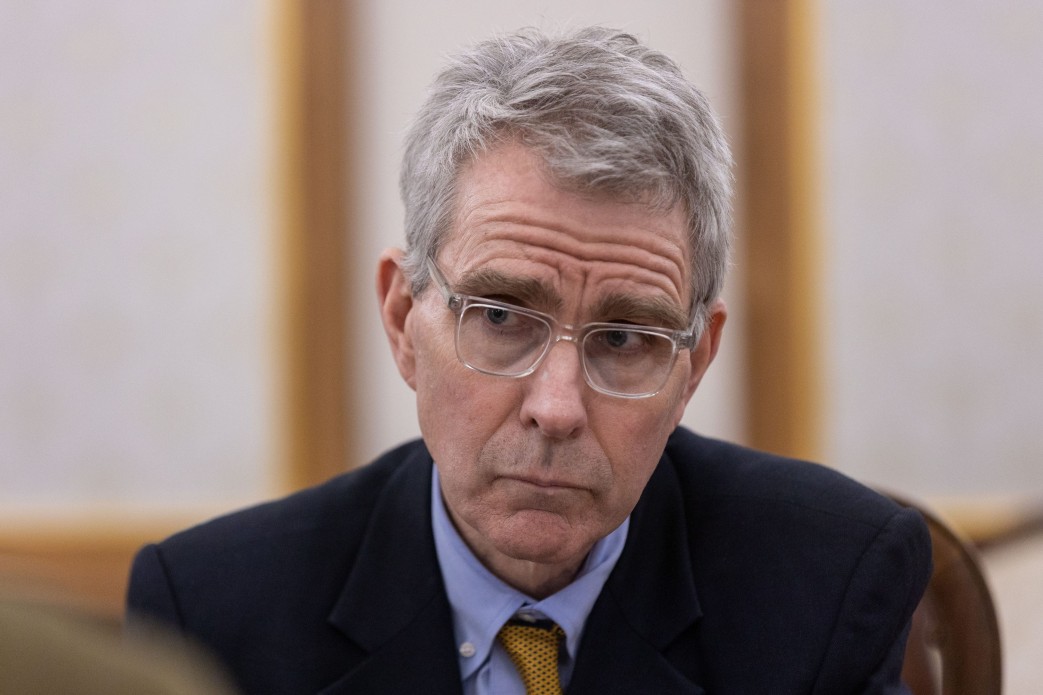
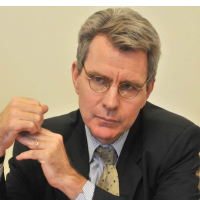
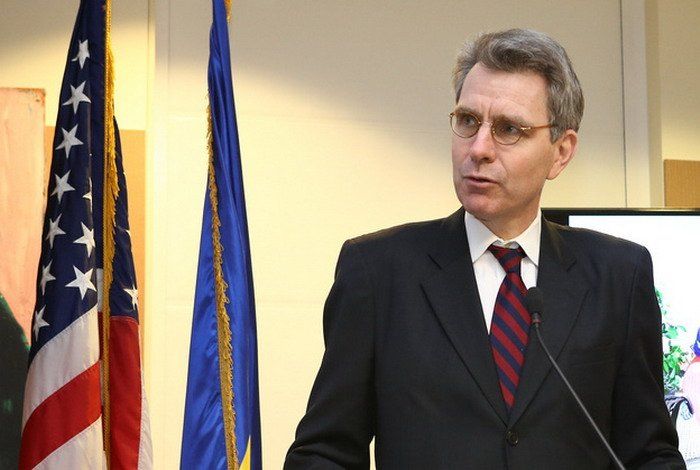
Geoffrey Pyatt Ambassador to Ukraine from 2013-2016
Mission to the International Organizations in Vienna, Austria from 2007
to 2010. He also served at the U.S. Embassy in New Delhi, India as
Deputy Chief of Mission from 2006 to 2007 and as Political Counselor
from 2002 to 2006. Ambassador Pyatt served as Economic Officer at the
U.S. Consulate General in Hong Kong from 1999 to 2002 and as Principal
Officer at the U.S. Consulate General in Lahore, Pakistan from 1997 to
1999. Since joining the Foreign Service in 1989, he has also served on
the National Security Council staff, on the staff of Deputy Secretary
Strobe Talbott and at posts in Honduras and India.
On behalf of President of Ukraine Volodymyr Zelenskyy, Head of the
Office of the President Andriy Yermak held a meeting with US Assistant
Secretary of State for Energy Resources Geoffrey R. Pyatt and US
Ambassador Extraordinary and Plenipotentiary to Ukraine Bridget A.
Brink.
Yermak said that Geoffrey Pyatt's visit to Ukraine is especially
relevant today, on the day when our country was hit by another Russian
missile attack.
"You can personally see the atmosphere in which we live, but at the
same time we continue fighting," the head of the Office of the President
said.
On behalf of President Volodymyr Zelenskyy, he thanked the United
States, President Joseph Biden, and Congress for supporting our country.
Yermak briefed the interlocutors on the consequences of the terrorist
state's attacks on the civilian infrastructure of Ukraine, which took
place today.
According to the head of the President's Office, our country needs
equipment and other assistance for the rapid restoration of heat supply
and energy facilities after missile strikes by Russia.
"Nowadays,
Ukrainians are more united than ever, they have been showing resilience
and courage for nine months. In order for people not to lose this
spirit, it is necessary to take care of quality support for citizens in
critical moments," Yermak said.
The representatives of the United States, for their part, assured of
their commitment to provide assistance to Ukraine, in particular, the
necessary equipment, for the effective support of the Ukrainian people.
False. The US and NATO did not encourage a violent overthrow of the Yanukovich government. They were working hard to resolve that crisis peacefully, including ...
Feb 7, 2014 · ... Victoria Nuland – is heard discussing strategies for resolving the political crisis in Ukraine with US Ambassador Geoffrey Pyatt.
Side Note: "...As distinct from the “narrow” traditional, state-based conception of
public diplomacy described above, recent scholarship has offered a
“broader” conception of the field’s scope by developing the concept of
the new public diplomacy which defines public diplomacy more
expansively than as an activity unique to sovereign states. This view
aims to capture the emerging trends in international relations where a
range of non-state actors with some standing in world politics –
supranational organizations, sub-national actors, non-governmental
organizations, and (in the view of some) even private companies –
communicate and engage meaningfully with foreign publics and thereby
develop and promote public diplomacy policies and practices of their
own. Advocates of the new public diplomacy point to the democratization
of information through new media and communication technology as a new
force that has greatly empowered non-state actors and elevated their
role and legitimacy in international politics. As a result, a new public
diplomacy is seen as taking place in a system of mutually beneficial
relations that is no longer state-centric but composed of multiple
actors and networks, operating in a fluid global environment of new
issues and contexts. SIDE-NOTE: ". . .
RELATED CONTENT
The Cold War has gone back to the future.
PJ
Crowley is a former assistant secretary of state and now a professor of
practice and fellow at the George Washington University's Institute of
Public Diplomacy & Global Communication.
.jpg)
.jpg)

.jpg)
.jpg)


.jpg)
.jpg)
.jpg)
.jpg)
.jpg)





.jpg)
.jpg)
.jpg) '"
'"