Wednesday, November 01, 2023

The Remarkable Costs of War Project | Brown University


What's Not Being Said

What War Does to the Nations That Fight It

By Andrea Mazzarino

Costs of War

Reacting to the terrorist attacks by the Palestinian militant group Hamas that killed more than 1,400 Israelis, Americans have been remarkably focused on whether we should support Israel or the residents of Gaza. In either case, we act as if Israel's only possible decision was whether or not to launch a war against Gaza. 

In the country that waged a disastrous 20-year "global war on terror" in response to the 9/11 attacks, it seems strange that there's been so little discussion about what such a decision might mean in the long term. 

Going to war is just that -- one decision among many possibilities, including taking steps to strengthen and democratize the states where such armed militias may otherwise flourish.

As a co-founder of Brown University’s Costs of War Project, it's become a focus of mine to show just what's happened to us because our government, more than two decades after the 9/11 attacks, continues to fight a “war on terror” (whatever that may mean) in some 85 countries. Yes, that’s right: 85 countries! 

The Costs of War Project (@CostsOfWar) / X

We've armed foreign militaries, flown our drones in a devastating fashion, run prisons (often in places with far laxer human-rights standards than ours), trained foreign militaries, and sometimes fought directly alongside them.

Click here to read more of this dispatch. 


The Costs of War Project - YouTube

www.carnegie.org

The Costs of War | Carnegie Reporter Fall 2023 | Carnegie Corporation of New York

Carnegie Corporation of New York
12 - 15 minutes

Research by the Costs of War project, a Corporation grantee, reveals the ongoing costs of the U.S. post-9/11 wars, from human lives and the U.S. global military footprint to internal and external displacement

By Carnegie Corporation of New York September 13, 2023

Assessing the Cascading Effects of War

A grantee of Carnegie Corporation of New York, the Costs of War project uses research and a public website to facilitate debate about the costs of the post-9/11 wars in Iraq and Afghanistan, and related violence in Pakistan, Somalia, Syria, and elsewhere. 
  • There are many hidden or unacknowledged costs of the United States’ decision to respond to the 9/11 attacks with military force. 
  • The project aims to foster democratic discussion of these wars by providing the fullest possible account of their human, economic, environmental, and political costs, and to foster better informed public policies. 
  • Created in 2010 and housed at Brown University’s Watson Institute for International and Public Affairs, the Costs of War project builds on the work of over 60 scholars, human rights and legal experts, and physicians from around the world.

“There are reverberating costs, the human cost of war, that people in the U.S., for the most part, don’t really know or think enough about, said Stephanie Savell, codirector of the Costs of War project. 
“We hear talk about the endless war being over now that U.S. troops have left Afghanistan, but one significant way that these wars are continuing is that the people in the war zones are continuing to suffer the consequences. The U.S. has been involved in these really violent wars. There’s been an intensification as a result of U.S. involvement. And at this point, the issue is really: How do we come to terms with a sense of responsibility?”

The Costs of War Project: Goals

  • To account for the wars’ costs in human lives and the consequences for public health and well-being, both in the U.S. and in the war zones
  • To assess the wars’ budgetary costs, including the financial legacy, as well as the opportunity costs of the U.S. military budget
  • To describe the scope of the U.S. global military footprint and its political and social impact in the U.S. and around the world
  • To examine the environmental and ecological impact of the U.S. global military presence, including military carbon emissions
  • To evaluate alternatives that provide for meaningful, just, and inclusive human safety and security

Here follow six sections — covering war-related deaths (direct and indirect); human displacement (external and internal refugees); the geographic reach of U.S. counterterrorism activities; Afghanistan before and after the U.S. withdrawal; and the budgetary costs of the U.S. post-9/11 wars — that give a data-rich snapshot of the comprehensive nature of the work undertaken by the Costs of War team. As Neta C. Crawford, Costs of War cofounder and codirector and Montague Burton Professor of International Relations at the University of Oxford, puts it, “It’s hard to convey the cost in lives because of these wars. It’s very tough to talk about it. But we have to.”

Direct Deaths in Post-9/11 Wars

None

The violence stemming from conflicts in Afghanistan, Pakistan, Iraq, Syria, Yemen, and other areas has directly resulted in the deaths of approximately 905,000 to 940,000 people. Several times as many more have been killed as reverberating effects of the wars, losing their lives due to water loss, sewage and other infrastructural issues, and war-related disease. 

As with most wars, we may never know the full extent of the loss of life and injuries. The direct effects include the hundreds of thousands of people who have been killed and injured due to the fighting — killed by bombs, bullets, and fire. The number of people killed directly in the violence of the post-9/11 wars in Afghanistan, Pakistan, Iraq, Syria, Yemen, and other war zones is estimated here.

NOTE: The time periods covered in this table are: Oct. 2001–Aug. 2021 (Afghanistan and Pakistan); Mar. 2003–Mar. 2023 (Iraq); Sept. 2014–Mar. 2023 (Syria/ISIS); Oct. 2002–Aug. 2021 (Yemen); and Oct. 2001–Dec. 2014 (other post-9/11 war zones). The chart also draws on another, earlier paper (September 1, 2021) by Neta C. Crawford and Catherine Lutz for the rest of the war zones: Human Cost of  Post-9/11 Wars: Direct War Deaths in Major War Zones.

Indirect Deaths: The Reverberating Impact of the Post-9/11 Wars

None

The number of people killed indirectly in post-9/11 war zones, including in Afghanistan, Pakistan, Iraq, Syria, and Yemen, is estimated at 3.6–3.8 million, though the precise figure remains unknown.

The report How Death Outlives War (May 15, 2023) reviews the latest research to examine the causal pathways that have led to an estimated 3.6–3.8 million indirect deaths in post-9/11 war zones, including Afghanistan, Pakistan, Iraq, Syria, and Yemen. With direct deaths, the total death toll in these war zones could be at least 4.5–4.7 million and counting, though the precise mortality figure remains unknown. Some people were killed in the fighting, but far more, especially children, have been killed by the reverberating effects of war, such as the spread of disease.

The report examines the devastating toll of war on human health, whoever the combatant, whatever the compounding factor, in the most violent conflicts in which the U.S. government has been engaged in the name of counterterrorism since September 11, 2001. Rather than teasing apart who or what is to blame, or separating out the negative enduring effects of prior wars and sanctions, this report shows that the post-9/11 wars are implicated in many kinds of deaths.

In laying out how the post-9/11 wars have led to illness and indirect deaths, the report’s goal is to build greater awareness of the fuller human costs of these wars and support calls for the United States and other governments to alleviate the ongoing losses and suffering of millions in current and former war zones. The report highlights many long-term and underacknowledged consequences of war for human health, emphasizing that some groups, particularly women and children, suffer the brunt of these ongoing impacts.

Indirect war deaths are caused by 
  • economic collapse, 
  • food insecurity, 
  • the destruction of public services and health infrastructure, 
  • environmental contamination, 
  • reverberating trauma and violence, 
  • and other impacts. 
  •  Furthermore, internal displacements increase people’s vulnerability to the negative health effects of war — including malnutrition, maternal and newborn complications, injury, and disease — which disproportionately impact women and children.

Millions Displaced by the Post-9/11 Wars

None

Over 38 million people have been displaced — becoming refugees seeking safety in another country, or becoming internally displaced within their own country — as a result of the wars the U.S. military has fought since 2001. 
That is more than those displaced by any war or disaster since the start of the 20th century, except for World War II. 
  • Although the United States has accepted hundreds of thousands of refugees, most have been hosted by countries in the greater Middle East.

Any number is limited in what it can convey about displacement’s damage. The people behind the numbers can be difficult to see, and numbers cannot communicate how it might feel to lose one’s home, belongings, community, and much more. 

Displacement has caused incalculable harm to individuals, families, towns, cities, regions, and entire countries physically, socially, emotionally, and economically.

None

In this map, arrows point to the top three countries where the most refugees and asylum seekers from each war-affected country have fled as of 2019. 

Arrows for Syria include all displaced Syrians, 2011–2019. 

None

Dates indicate the start of U.S. military involvement. 
  • Displaced persons data updated through 2020; 
  • Syrian and Afghan internally displaced persons data updated through 2021. 
  • Syrian data only includes people displaced during years of direct U.S. military involvement in the war and in five provinces where U.S. forces have fought. 
Key source, updated August 2021: David Vine, Cala Coffman, Katalina Khoury, Madison Lovasz, Helen Bush, Rachel Leduc, and Jennifer Walkup, Creating Refugees: Displacement Caused by the United States’ Post-9/11 Wars, Costs of War Project, Brown University, Sept. 21, 2020. 
(Credit: Map and graphics by Kelly Martin, www.kmartindesign.com & Investigative Reporting Workshop) 

U.S. Counterterrorism Operations, 2018–2020

None

The U.S. government has taken part in what it has labeled “counterterrorism” activities in at least 85 countries, in an outgrowth of President George W. Bush’s “Global War on Terror” and the U.S. invasion of Afghanistan in 2001

The map below illustrates countries in which the U.S. government conducted operations it explicitly described as counterterrorism, in an outgrowth of President George W. Bush’s “Global War on Terror.” 

These operations included 
  • air and drone strikes; 
  • on-the-ground combat; 
  • so-called “Section 127e” programs in which U.S. special operations forces support “foreign forces, 
  • irregular forces, groups, or individuals” engaged in counterterrorism activities; 
  • military exercises in preparation for or as part of counterterrorism missions; and 
  • operations to train and assist foreign forces. 

The map does not comprehensively cover the full scope of U.S. post-9/11 warfare, as it does not document, for instance, 
  • U.S. military bases used for counterterror operations, 
  • arms sales to foreign governments, or 
  • all deployments of U.S. special operations forces.

Despite the Pentagon’s assertion that the U.S. is shifting its strategic emphasis away from counter­terrorism and toward great power competition with Russia and China, examining U.S. military activity on a country-by-country basis shows that there is yet to be a corresponding drawdown of the counterterror apparatus. 
If anything, this map demonstrates that counterterrorism operations have become more widespread in recent years.

Afghanistan Before and After 20 Years of War (2001—2021)

None

Examining data before the U.S. war in Afghanistan and after the U.S. withdrawal, the infographic below displays indicators of poverty, food insecurity, child malnutrition, women’s rights, U.S. spending, and more.

None

After the war, Afghanistan has seen increases in the percentage of Afghans facing food insecurity, children under five experiencing acute malnutrition, and Afghans living in poverty. Women's rights continue to be heavily restricted. 
  • U.S. development aid to Afghanistan has amounted to $36.07 billion since 2001, while U.S. spending on the top five military contractors has amounted to $2.1 trillion. 
  • In 2022, there were 1.5 million Afghans living with physical disabilities and 2 million Afghan widows. 

Go Deeper

To learn more, check out the list of sources & download a PDF of the infographic.

LEARN MORE

Estimate of U.S. Post-9/11 War Spending FY2001–FY2022

None

The vast economic impact of the post-9/11 wars in Afghanistan, Pakistan, Iraq, Syria, and elsewhere is poorly understood by the U.S. public and policymakers.

The economic impact of the U.S. post-9/11 wars extends beyond the Pentagon’s “Overseas Contingency Operations” (war) budget. 

The charts below and the paper The U.S. Budgetary Costs of the Post-9/11 Wars (September 1, 2021) estimate the more comprehensive budgetary costs of the wars, including past expenditures and future obligations to care for veterans of these wars.

None

  • The comprehensive budgetary costs of the U.S. post-9/11 wars include overseas contingency operations (OCO) of the Department of Defense ($2,101 billion), 
  • homeland security prevention and response to terrorism ($1,117 billion), 
  • interest on OCO borrowing ($1,087 billion), 
  •  increases to Department of Defense base budget ($884 billion), 
  • veterans’ medical care and disability ($465 billion), and 
  • State Department OCO appropriations ($189 billion). 

None

Including estimated future costs for veterans’ care, the total budgetary costs and future obligations of the post-9/11 wars is about $8 trillion in current dollars.

Go Deeper

To learn more, read the report The U.S. Budgetary Costs of the Post-9/11 Wars, published on September 1, 2021. 

READ THE FULL REPORT

Concept by Kenneth Benson and Daniel Um. Art Direction by Daniel Um. Text by the Costs of War project. Kenneth Benson is Carnegie Corporation of New York’s editorial manager. Daniel Um is Carnegie Corporation of New York’s principal design director.

There they go!


An illustration of three books on a windowsill with an eye and a cloud appearing through the window.
Culture Dept.
The cast around an elaborate dining table giving a toast with a prink spirit flying in the background The Theatre
Stephen Sondheim’s Last Musical, “Here We Are,” Comes to the Shed

The writer David Ives and the director Joe Mantello continued without the late composer on an adaptation of two lacerating Luis Buñuel films.

By Helen Shaw

AeroSpace & Defense News 31 October 2023


www.asdnews.com

Leonardo DRS Awarded Contract for Prototype Next-Generation

3 - 4 minutes

This news is classified in: Defense Contracts Sensors Soldier

Oct 31, 2023

Leonardo DRS Awarded Contract for Prototype Next-Generation JETS II for Forward Observers


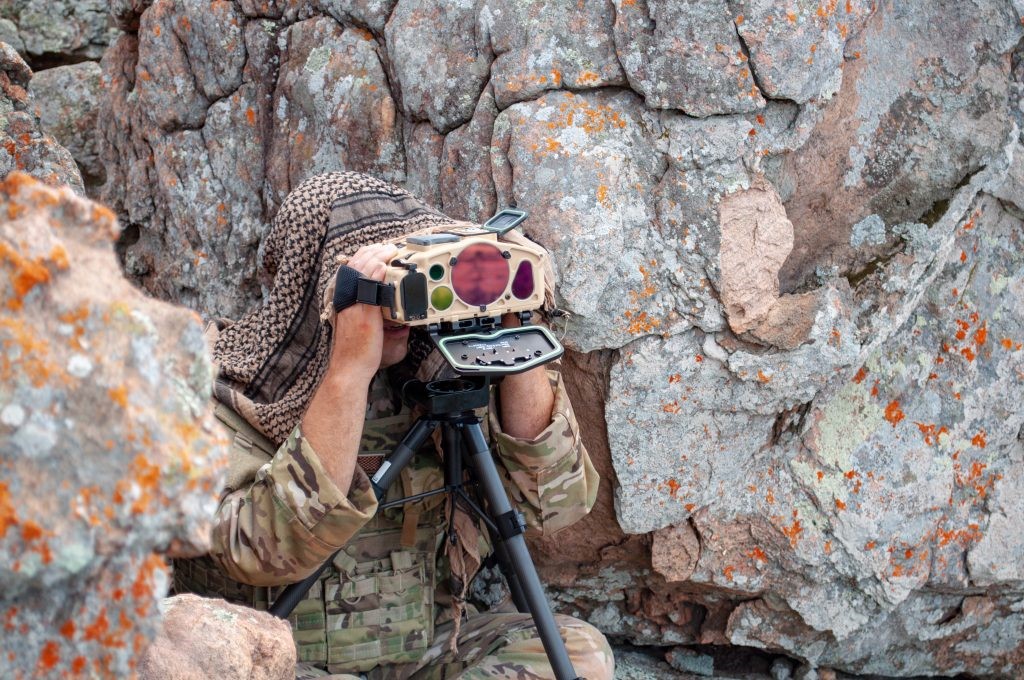
 Leonardo DRS, Inc. (NASDAQ: DRS) announced today that it has been awarded a contract to produce a prototype of the next-generation Joint Effects Targeting System II (JETS II) multi-sensor targeting technology for Forward Observers. The 30-month performance prototype contract was awarded by the U.S. Army.

The updated JETS II hand-held precision laser targeting system provides Forward Observers the capability to call in precision munitions in a wide range of combat scenarios, leading to higher target success rates and greater protection for our warfighters on the ground. The system improves upon and adds enhanced technologies for the users, significantly reducing weight and improving precision accuracy making the system a battlefield multiplier.

“We are proud to have built on the success of our JETS I technology to provide the most comprehensive hand-held target location system available today. By working closely with our customer and listening to their needs, we have delivered a product that gives users a distinct advantage on the battlefield,” said Jerry Hathaway, Senior Vice President and General Manager of the Leonardo DRS Electro-Optical and Infrared Systems business unit. “Leonardo DRS is known for its leading position in advanced sensors and sensor systems, and we are excited to continue this relationship with the U.S. Army over the next several years.”

Loitering Munition - Market and Technology Forecast to 2031

Loitering Munition - Market and Technology Forecast to 2031

Market forecasts by Region, Range, and Launching platform. Country Analysis, Market and Technology Overview, Opportunity Analysis and Leading Company Profiles

Download free sample pages More information

JETS II is man-portable, handheld capability to rapidly acquire, precisely locate, accurately engage targets with precision-guided munitions, and improve the effectiveness of engagement with unguided munitions. The technology includes day and thermal night-vision sights, celestial navigation system, an eye-safe laser range-finder and a digital magnetic compass among several other features.

The JETS II system is designed to give Forward Observers the capability to call in precision munitions in all combat scenarios, leading to fewer munitions expended, higher target success rates, and ultimately greater protection for our warfighters on the ground.

The Leonardo DRS JETS II technology is an example of the extensive installed base of mounted and dismounted advanced electro-optical and infrared technology across the U.S. military. Advanced sensing capability is a key strategic focus for Leonardo DRS providing world-leading sensing and laser technologies for a range of aircraft protection and mounted and unmounted sensors supporting the men and women of the U.S. armed forces.


www.asdnews.com

NGC Selected to Deliver Nearly 40 More Data Transport Satell

3 - 4 minutes

Oct 30, 2023

NGC Selected to Deliver Nearly 40 More Data Transport Satellites for SDA's NextGen Low-Earth Orbit Constellation of Connectivity

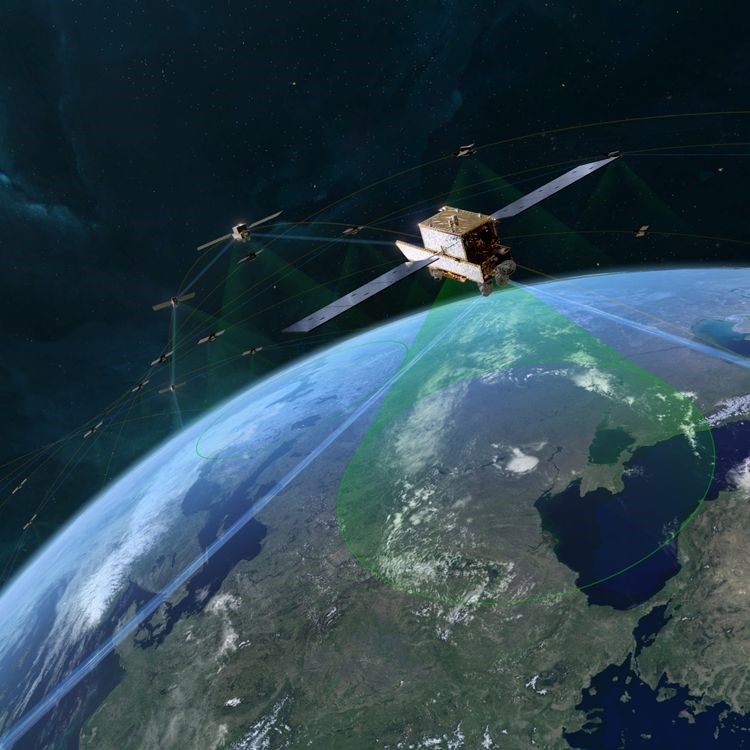
The Space Development Agency (SDA) awarded Northrop Grumman Corporation (NYSE: NOC) an agreement with a total potential value of approximately $732 million to design and build 38 data transport satellites. These satellites will support Tranche 2 Transport Layer – Alpha (T2TL-Alpha), the latest iteration of SDA’s low-Earth orbit Proliferated Warfighter Space Architecture (PWSA).

  • This Alpha announcement follows an August 2023 award to Northrop Grumman of 36  satellites as part of Tranche 2 Transport Layer – Beta (T2TL-Beta); Alpha and Beta satellites are designed to interoperate on orbit.
  • This contract includes supporting ground elements and five years of operations and sustainment with the satellites scheduled to launch starting December 2026.
  • Northrop Grumman was also awarded a contract for Tranche 1 Transport Layer 1 (T1TL), which similarly provide low latency, high volume data transport supporting U.S. military missions around the world.
  • Northrop Grumman’s approach to the PWSA contracts is to combine our satellite technology and mission experience with strategic commercial partnerships to move at the pace the environment demands.

Expert:
Blake Bullock, vice president, communication systems, Northrop Grumman: “Northrop Grumman, in partnership with our industry teammates, is fully committed to the Space Development Agency’s vision of fielding a next-generation, low-Earth orbit architecture connecting and protecting our warfighters wherever they serve. Our Northrop Grumman team is bringing our deep Military SATCOM experience to this mission, and we’re executing on our commitments.”

Details on the Proliferated Warfighter Space Network:
Northrop Grumman provides both space vehicles and ground systems for the SDA’s PWSA, a next-generation constellation in low-Earth orbit. PWSA has two major lines of effort:

Global Space Launch Systems - Market and Technology Forecast to 2027

Global Space Launch Systems - Market and Technology Forecast to 2027

Market forecasts by Region, Technology, Application, Orbit, Launch service, and Payload. Market and Technology Overview, and Leading Companies

Download free sample pages More information

  • The Transport Layer: Designed to provide low-latency, high volume data connectivity supporting U.S. military missions around the world.
  • The Tracking Layer: Designed to detect, track and ultimately target hypersonic and ballistic missiles.

Both layers are designed to interoperate in space using a common data standard allowing satellites made by various manufacturers to communicate seamlessly with one another. Taken together, these satellites are designed to connect elements of an integrated sensing architecture, and the network they create will deliver persistent, secure connectivity, serving as a critical element for Joint All Domain Command Control.

To date, SDA has announced awards to Northrop Grumman of 132 satellites.


www.asdnews.com

Anduril Industries Awarded GBP17M MoD Force Protection Techn

4 - 5 minutes

Oct 31, 2023

Anduril Industries Awarded GBP17M MoD Force Protection Technology Contract

The Ministry of Defence (MoD) has awarded defense technology company Anduril Industries a 31-month contract, initially worth £17 million, to explore future capabilities for fixed installation Force Protection and Counter Intrusion, and Counter-Unmanned Aerial Systems for the Royal Air Force and Strategic Command on Permanent Joint Operating Bases (PJOBs).

The £17 million contract, with the potential to rise to £24 million, represents the third phase of Programme TALOS, Anduril’s engagement with jHub - the MoD and Strategic Command’s joint innovation team - which connects world-class technology and talent with users across UK Defence. Programme TALOS aims to accelerate a defence-wide approach to Integrated Command and Control (C2) for Force Protection.

Anduril’s Lattice software platform leverages advancements in key technologies such as autonomy, edge processing, big data and AI to a degree where it is possible to fundamentally reimagine Defence’s approach to C2. The ability to harness machine-speed in decision-making and support; integrate all defence-wide platforms, sensors, and effectors into a single network; and use distributed and resilient systems capable of operating under machine control will have far-reaching implications for the UK’s Defence capability.

Military Embedded Systems Market Report 2024-2034

Military Embedded Systems Market Report 2024-2034

Forecasts by Component (Hardware, Software), by End user (Army, Navy, Air Force), by System (Avionics Systems, Land-Based Systems, Naval Systems, Space-Based Systems), by Processor (Single Board Computers (SBC), Microcontrollers (MCU), Digital Signal Processors (DSP), Field-Programmable Gate Arrays (FPGA), Other), by Application (Communication and Navigation Systems, Command and Control Systems, Surveillance and Reconnaissance Systems, Weapon Systems, Electronic Warfare and Countermeasures, Other) AND Regional and Leading National Market Analysis PLUS Analysis of Leading Companies AND COVID-19 Impact and Recovery Pattern Analysis

Download free sample pages

Phase 3 of Programme TALOS – ENTRELAZAR will experiment and explore advancements in these key technologies that could inform decisions on the integration of future capabilities into defence-wide platforms. Phase 1 of Programme TALOS delivered an initial understanding of Anduril’s autonomous Sentry Towers and their utility at active RAF air bases, and Phase 2 introduced the assurance of multiple Force Protection layers at multiple locations across the MOD estate.

This contract focuses on continuing the capability layering in Phase 2 and informing the requirements across multiple MoD sites. It will progress and expand experimentation with mature integrated technologies, and enable further understanding of the various options available in the wider C2 network that can provide end-to-end solutions.

Greg Kausner, Anduril’s Head of Global Defense, said: “The contract with jHub will allow Anduril to expedite modern defence technology and robustly support UK Defence, and represents an advancement of our relationship with the MoD. Force Protection and Counter Intrusion are increasingly important as the nature of threats expand, and Anduril’s Lattice platform can play a key role. Our objective is to meet the specific requirements of armed forces to best shape the future of defence with advanced, modern technology; to do this, working with partners like jHub is key.”

Lieutenant Colonel Dan Sawyers, Head of the jHub, Strategic Command, said: “Technology within Defence is rapidly advancing, and we must harness these changes to respond to a more contested and volatile world.

“Phase 3 of this programme will see us continue to innovate, utilising technology to d protect the UK and our allies anytime and anywhere.”

Aerospace & Defense News

Today's News Headlines

 
Leonardo DRS Awarded Contract for Prototype Next–Generation JETS II for Forward Obser...
Babcock Awarded Three–year Phalanx Support Contract Extension
NASA, Partners Explore Sustainable Fuel's Effects on Aircraft Contrails
Anduril Industries Awarded GBP17M MoD Force Protection Technology Contract
Gulfstream to Debut G700 Alongside G500 at Dubai Airshow
NGC Selected to Deliver Nearly 40 More Data Transport Satellites for SDA's NextGen Lo...
HII is Awarded $79M MDA Technical Services Contract
OSI Contracted to Supply 33 Small Craft Nav Systems to the RAN
AW169's Skidded Capabilities to Grow Further With 5,100 Kg IGW and 11–seater Configur...
Webb Sees Crab Nebula in New Light
AerSale's Enhanced Flight Vision System "AerAware" is 1st to Achieve 50% Visual Advan...


Rio Reimagined Ambassador Selected Hummingbird Collective to serve as liaison between local partners and the federal government


MAG news releases


FOR IMMEDIATE RELEASE

CONTACT: Kelly Taft, 602-452-5020 


Rio Reimagined Ambassador Selected

Hummingbird Collective to serve as liaison between local partners and the federal government


PHOENIX (October 31, 2023) — Helping to protect rivers that connect diverse communities within the Maricopa region. Implementing strategies to revitalize the communities and amenities along the Salt and Gila rivers. Serving as a liaison among local and tribal governments, Arizona State University, and a variety of entities in the Rio Reimagined Partnership, with the federal government. Those will be a few of the responsibilities of a newly named “Rio Reimagined Ambassador” in support of the Rio Reimagined initiative.

Hummingbird Collective Consulting LLC and its founder, Cindi Ptak, will serve in the ambassador role. Ptak will serve as a liaison between local partners and the federal government as part of the Urban Waters Federal Partnership. Funding for the position is provided by local partners, the U.S. Environmental Protection Agency, and the USDA Forest Service. 

✓ A multidisciplinary team of Rio Reimagined partners recommended the selection of Cindi Ptak. The Maricopa Association of Governments will host the ambassador on behalf of the partners.

“We are excited to serve as the host for the ambassador. The selection of the ambassador will reinforce and extend the goals of the initiative to strengthen communities, promote economic development, and protect the river ecosystem as a valued natural and cultural asset,” said MAG Chair and Phoenix Mayor Kate Gallego. “This partnership will provide a sanctuary of public spaces that unite us throughout the region and enrich our lives through access to open space and recreation.”

The ambassador will provide valuable support to the communities and local and tribal governments located along the Salt and Gila River corridor, including Phoenix, Tempe, Mesa, Buckeye, Goodyear, Avondale, Salt River Pima Maricopa Indian Community, and Maricopa County. Additional members of the Rio Reimagined Advisory Group include Arizona State University and SRP. Beyond the Advisory Group, a myriad of public, private, nonprofit, agencies and community-based organizations partner on Rio Reimagined.

✓ Ptak says she is committed to empowering the Rio Reimagined partners with the knowledge, skills, and strategies needed to “claim their seat” at the federal funding table.

“Through collaborative planning, our work will be impactful, sustainable, and consistent with the goals of reconnecting the community to the river, being a catalyst for economic growth, and building an unprecedented regional destination,” said Ptak.

✓  2017, the late U.S. Senator John McCain asked his friend and colleague Dr. Michael Crow, president of Arizona State University (ASU), to bring ASU’s research expertise, organizational resources, and experience with large-scale urban planning projects to the Rio Reimagined project.

“On behalf of Arizona State University (ASU) and the Rio Reimagined Partnership, we look forward to working with Cindi as the RIO Ambassador to the Urban Waters Federal Partnership,” said Maggie Soffel, Senior Director of the Rio Reimagined Initiative at ASU. “Cindi’s experience and deep understanding of the federal space will serve the RIO Partnership well. I look forward to working closely with Cindi to secure critical resources for ensuring the initiative’s success.”


ABOUT MAG

The Maricopa Association of Governments (MAG) provides a forum for local governments working together on issues that affect the lives of everyone in the greater Phoenix region. We are a regional agency that conducts planning and makes policy decisions in a number of core areas. These include safe and smart travel, the economy and growth, environment and sustainability, and improving quality of life, all with a focus on efficient and effective operations. 

Our members include 27 cities and towns, 3 Native nations, Maricopa County, portions of Pinal County, and the Arizona Department of Transportation. Our planning area encompasses about 10,600 square miles.

Presenting geographic information during a meeting

Cartoon Carousel The nation’s cartoonists on the week in politics | By POLITICO STAFF 01/23/2026 05:00 AM EST

Every week political cartoonists throughout the country and across the political spectrum apply their ink-stained skills to capture the fo...