Wednesday, December 06, 2023

Exclusive: Boeing eliminated from US Air Force's 'Doomsday Plane' competition | Reuters

Two sources familiar with the situation said Boeing - the incumbent manufacturer of the E-4B - and the Air Force were unable to come to an agreement on data rights and contract terms, with the U.S. plane maker refusing to sign onto any fixed-price agreement that locks it into paying costs above an agreed limit.

Exclusive: Boeing eliminated from US Air Force's 'Doomsday Plane'  competition | Reuters

Boeing's defense unit has lost $1.3 billion this year on fixed-price development programs that include NASA's Starliner and the next Air Force One. It has lost $16.3 billion on fixed-price programs since 2014, according to a Reuters review of Boeing's regulatory filings.

Boeing leaders have sought to prove to investors that the company is seeking more advantageous contract terms in future deals with the Pentagon.

"Rest assured, we haven't signed any fixed-price development contracts nor (do we) intend to," Brian West, Boeing's chief financial officer, said in October.

The Air Force plans to spend $889 million in fiscal 2024 to continue SOAC development and $8.3 billion on the program through fiscal 2028, according to budget documents.
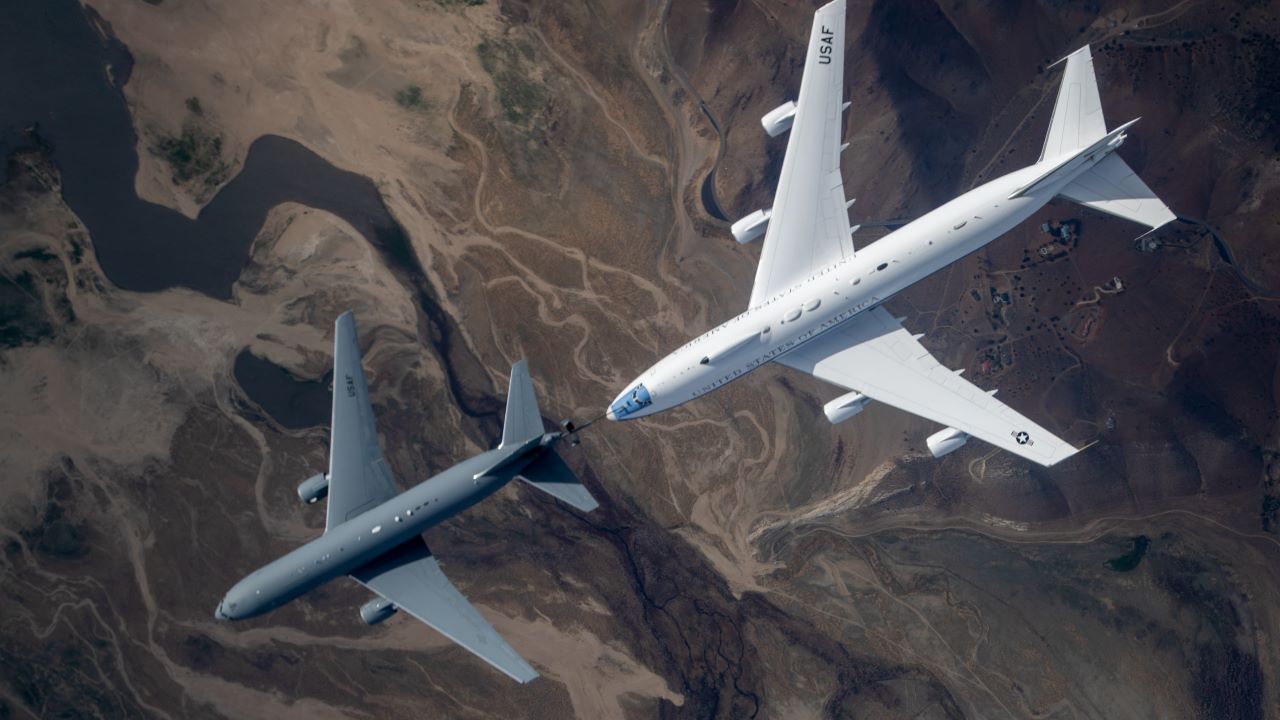
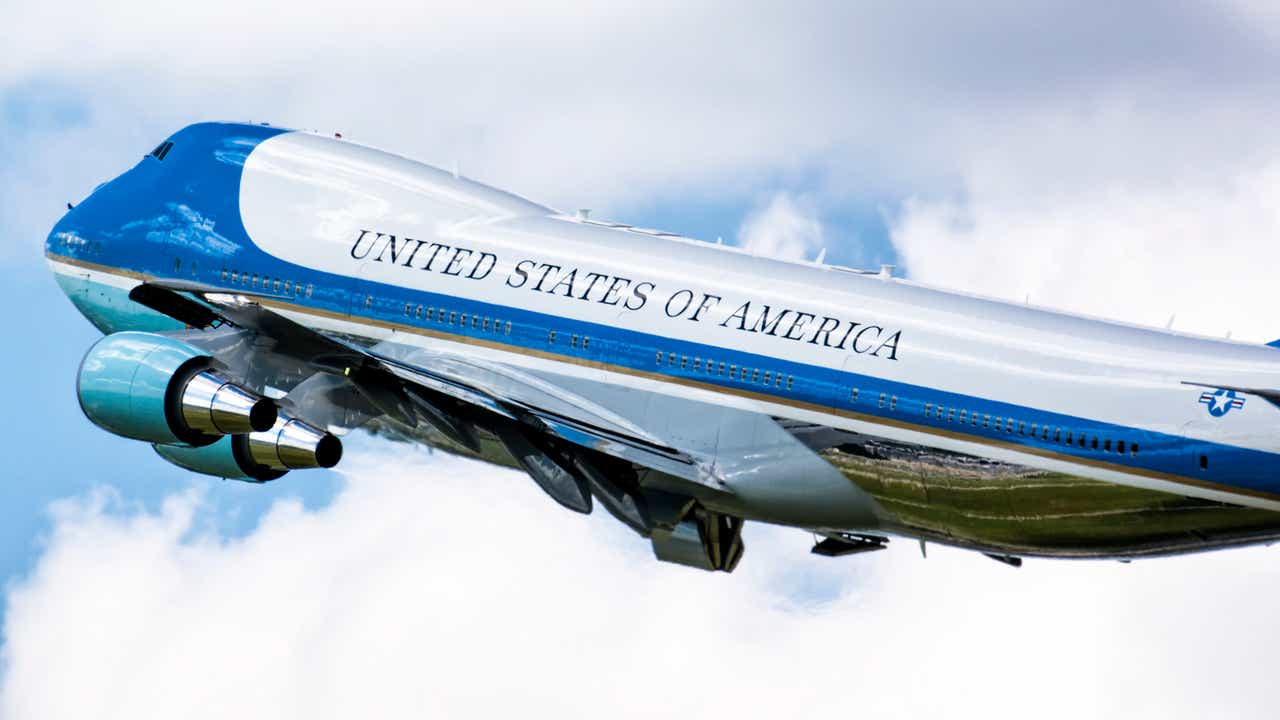
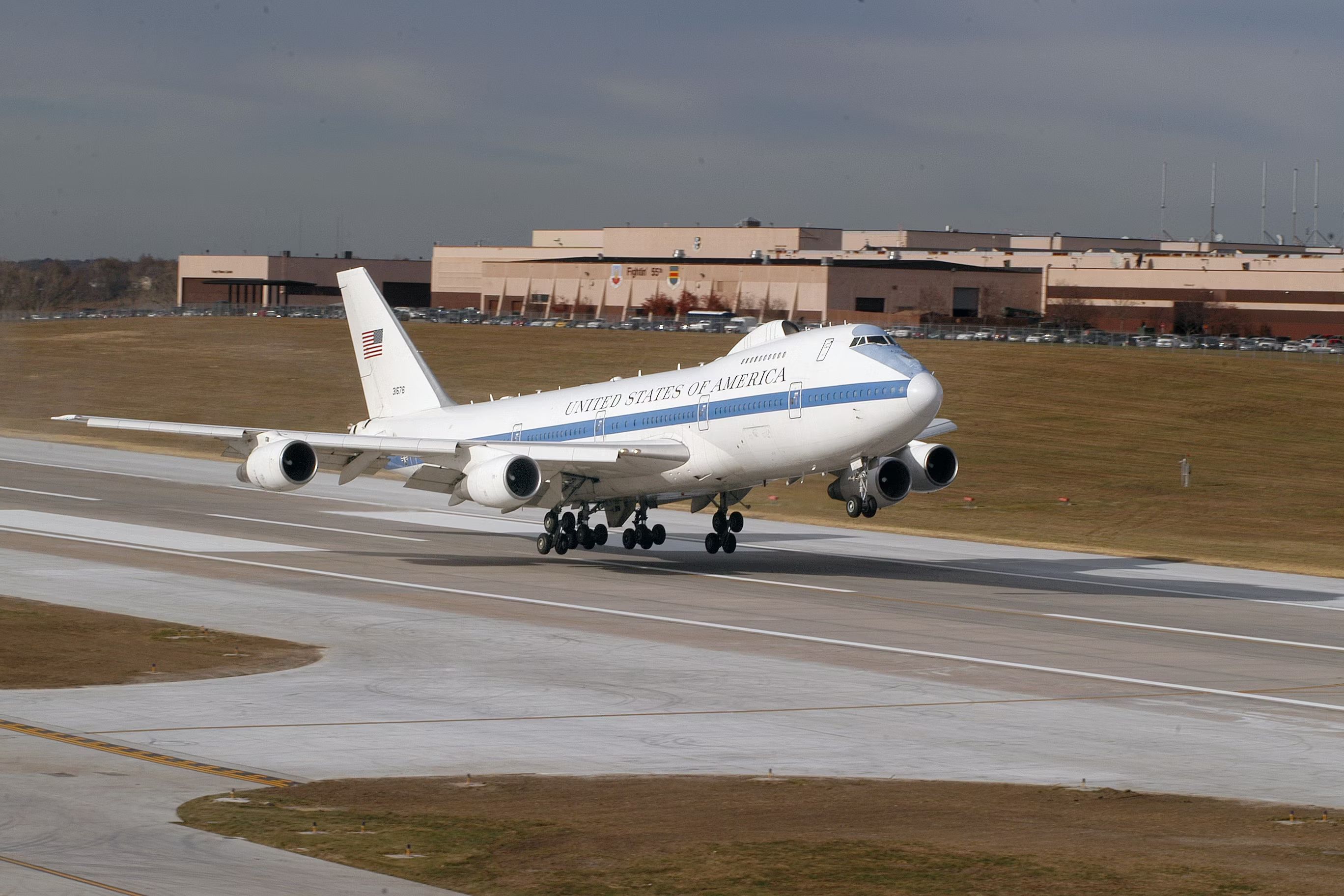
While typically used to transport the U.S. secretary of defense, the E-4B is designed as a mobile command post capable of withstanding nuclear blasts and electromagnetic effects, allowing U.S. leaders to deliver orders to the military in the event of a national emergency.
The Air Force currently operates four E-4B aircraft with at least one on alert at all times. The fleet of highly-modified Boeing 747-200 jumbo jets date from the 1970s, and have become increasingly difficult and expensive to maintain as parts become obsolete.
The E-4B is expected to reach the end of its service life in the early 2030s.
Boeing eliminated from Air Force 'doomsday plane' competition (NYSE:BA) |  Seeking Alpha

__________________________________________________________________________
Boeing Bows Out Of Competition For The New E-4B 'Nightwatch' Doomsday Plane
Boeing eliminated from Air Force's 'Doomsday Plane' competition
Boeing Exits Air Force's 'Doomsday Plane' Competition (Updated)

UPDATE: From a Boeing spokesperson to The War Zone confirming the company is no longer competing for the SAOC contract:

“We are approaching all new contract opportunities with added discipline to ensure we can meet our commitments and support the long-term health of our business. We remain confident our SAOC approach is the most comprehensive, technically mature and lowest-risk solution for the customer and Boeing. Our proposal is based on 60 years of military commercial derivative aircraft knowledge and experience including the design, development, and sustainment of the E-4B Nightwatch, which currently serves the national security command and control mission.”


Boeing Exits Air Force’s ‘Doomsday Plane’ Competition (Updated)

The ejection of Boeing from the Survivable Airborne Operations Center competition would leave Sierra Nevada Corporation poised for success.

BYTHOMAS NEWDICK|
Boeing Exits Air Force’s ‘Doomsday Plane’ Competition (Updated)

In a surprising development in the program, Boeing has reportedly been dropped from the competition to build a successor to the U.S. Air Force’s E-4B Nightwatch ‘Doomsday Plane.’ 
If true, the latest move would appear to leave the door wide open for Sierra Nevada Corporation (SNC) to provide the Survivable Airborne Operations Center (SAOC) that will supersede the E-4B, which is based on a Boeing 747-200 airframe. 
However, the new aircraft platform will almost certainly still be a Boeing product.
  • According to a recent report from Reuters, Boeing told the news agency that the Air Force has “eliminated” it from the SAOC competition. 
  • Valued at over $8 billion over the next five years, a contract award for SAOC is expected in early 2024.
Personnel at Offutt Air Force Base, Nebraska, move an E-4B Nightwatch command and control aircraft out of a hangar.&nbsp;<em>U.S. Air Force</em>
Personnel at Offutt Air Force Base, Nebraska, move an E-4B Nightwatch command and control aircraft out of a hangar. U.S. Air Force

This would appear to leave the privately owned SNC as the only company still in contention for SAOC. The Air Force would not confirm or deny to Reuters whether or not any other firms were now involved.

“We cannot discuss an active source selection and detailed program information is classified,” an Air Force spokesperson told the news agency.

Two unnamed sources meanwhile confirmed to Reuters the apparent reason why Boeing — the original manufacturer of the E-4B, and the 747 airliner on which it’s based — was out of the running. 
  • Namely, Boeing and the Air Force “were unable to come to an agreement on data rights and contract terms, with the U.S. plane-maker refusing to sign onto any fixed-price agreement that locks it into paying costs above an agreed limit.”
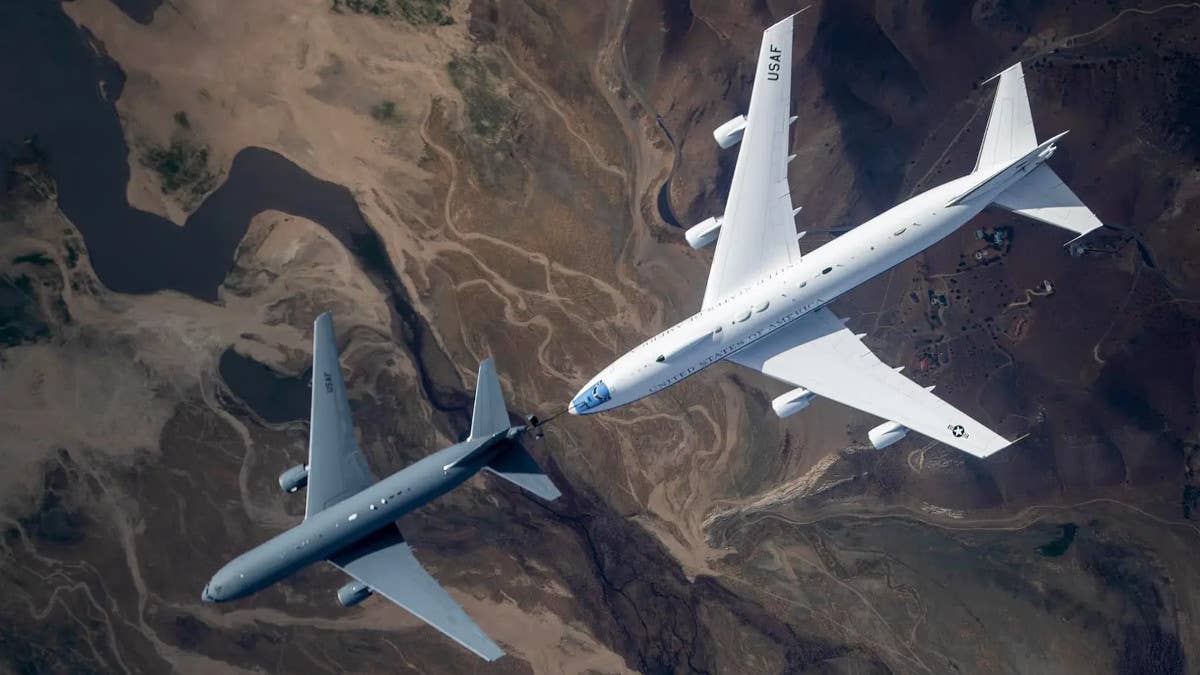
A KC-46A tanker and an E-4B flying above Southern California during an aerial refueling trial.&nbsp;<em>U.S. Air Force</em>
A KC-46A tanker and an E-4B flying above Southern California during an aerial refueling trial. U.S. Air Force
In a statement provided to the news agency, Boeing said: “We are approaching all new contract opportunities with added discipline to ensure we can meet our commitments and support the long-term health of our business.”
  • In a comment seemingly at odds with it being “eliminated” from the SAOC competition, the company added: “We remain confident our SAOC approach is the most comprehensive, technically mature, and lowest-risk solution for the customer and Boeing.”

If Boeing is really out of the competition, it seems likely that the company’s relatively terrible experience with previous fixed-price agreements was a critical factor in the decision.

This year alone, Boeing’s defense unit has reportedly lost $1.3 billion on fixed-price development efforts, including the high-profile VC-25B Presidential Airlift Replacement program, which you can read more about here. Other programs include the T-7 trainer, KC-46 tanker, MQ-25 carrier-based tanker drone, and MH-139 support helicopter, all of which have cratered profitability. Stretching back to 2014, the company has lost $16.3 billion on fixed-price programs.

An artist’s concept of the Air Force’s future VC-25B presidential aircraft. <em>U.S. Air Force</em>
An artist’s concept of the Air Force’s future VC-25B presidential aircraft. U.S. Air Force USAF

In October this year, in an apparent effort to reassure its investors, Boeing’s chief financial officer, Brian West, confirmed that the company had not signed any more fixed-price development contracts, nor would it in the future.

Congressional Incompetence Could Doom Key Low-Income Broadband Program | Techdirt

The program is poised to run out of funding by April if Congress can’t get its act together. And despite bipartisan approval for renewal, it remains entirely unclear if that’s going to happen.
If it doesn’t, millions of Americans getting temporary relief from telecom monopolization in the form of monthly discounts will suddenly be thrown right back into the fire.


from the dysfunction-junction dept

Americans pay some of the highest prices in the developed world for broadband due to consolidated monopoly power and feckless regulators. It’s a problem the U.S. government lacks the competence or political integrity to fix. So what we usually get are strange Band-Aids that treat the symptoms of the underlying problem (unchecked corporate power muting competition).

Case in point: during the peak of the pandemic, the FCC launched the Emergency Broadband Benefit (EBB program), giving lower income Americans a $50 ($75 for those in tribal lands) discount off of their broadband bill. Under the program, the government gave money to ISPs, which then doled out discounts to low income users if they qualified.

The EBB was rebranded the Affordable Connectivity Program (ACP) as part of the Infrastructure Bill (the payout was dropped to $30 a month). 22 million Americans are currently receiving the discount; but bumbling incompetence in Congress means the program is at risk of not being renewed, notes Gigi Sohn (whose FCC nomination was recently demolished by a telecom industry smear campaign):

“Congress is on the verge of letting the program run out of money if swift action is not taken to extend ACP funding,” Sohn said. “I urge Congress to meet the moment and invest at least $6 billion to keep this program funded through 2024, giving policymakers time to find ACP funding a permanent home,” Sohn’s statement said.

I’m of dual minds about the program.

On one hand, government is basically throwing millions of dollars at regional telecom monopolies and duopolies to temporarily lower prices that wouldn’t be high in the first place if these exact same companies hadn’t spent the last 30 years undermining all competition and lobbying government oversight into a pathetic and purposeless goo.

On the other hand, more than 22 million low income Americans (it’s projected to be closer to 25 million by April) are currently subscribed to the program. And ripping it out from underneath their feet doesn’t seem fair to those families. Especially in context of the billions of dollars we routinely throw at industry in exchange for half-completed networks or a giant bucket of layoffs.

Ideally, you’d have lawmakers and regulators with the courage to tackle the real cause of expensive U.S. broadband: monopoly power, unchecked corporate political influence (corruption), and a lack of meaningful competition. Breaking the monopoly logjam by supporting things like publicly-owned open access fiber networks would go a long way to driving competition to market.


We don’t have public officials like that (again, please see the coordinated industry smear campaign against Gigi Sohn to understand why), so instead we get programs like the ACP. Or efforts by the FCC to apply “nutrition labels” to broadband, which demand that big telecom monopolies are transparent about how they rip you off, but, again, do nothing about the underlying cause of high prices in the first place.

This kind of regulatory theater is often kind of silly. But in this case it resulted in a program that’s genuinely helping low-income Americans, even if it’s probably going about it the wrong way. 

Filed Under: 

Gaza on the agenda as Russian President Vladimir Putin heads to UAE, Sau...