Friday, December 08, 2023

From Real CIA Life to Fictional Incredible Television

Does CIA training give you a leg up at that kind of thing in later life? 

Does it make you better at grasping dark human complexities, thus at writing layered and contradictory characters? 

It turned out I had it backward. 
  • The secret to writing success goes deeper than on-the-job training. 
  • It requires a willingness to pursue your monomanias wherever they lead. It requires, Weisberg eventually divulged, finding a good enemy. 

“When I was younger, having an enemy gave me a purpose, because the purpose is to fight the enemy,” he told me. 
“It’s hard to describe how alluring that was. 
  • If you have an enemy, everything makes sense.” 
There it was: scratch the affability, uncover a gladiator. If I wanted to understand Weisberg, and maybe human creativity generally, I realized I’d have to understand the symbolic function of The Enemy.

DEC 5, 2023 6:00 AM 

WIRED
PHOTOGRAPH: VINCENT TULLO
The Spy Who Dumped the CIA, Went to Therapy, and Now Makes Incredible  Television | WIRED

The Spy Who Dumped the CIA, Went to Therapy, and Now Makes Incredible Television

Joe Weisberg—the geopolitically entangled, heavily therapized creator of The Americans and The Patient—is the trickiest character he’s written (so far).


“DID YOU LEARN things in CIA training about withstanding interrogation that are going to make it harder for me to interview you?” I asked Joe Weisberg, creator of the TV espionage drama The Americans and onetime CIA agent. He looked momentarily startled, as though he’d expected this to be easier. 
  • Good, I had him where I wanted him: off-balance. I saw him taking my measure. 
  • Then he laughed affably, but I mistrusted the affability, since I knew from his own books that affability is among the qualities the CIA recruits for: people who can get other people to trust them, or at least want to have lunch with them.

I suppose I had certain fantasies about interviewing an ex-spook (was he equally profiling me? more skillfully?), no doubt the result of having read too many John le Carré novels. As it happens, reading le Carré had a lot to do with propelling Weisberg himself to spycraft

Sure, he knew it was a fantasy world being depicted, but it was still a world he felt he belonged in. There was also his consuming obsession with bringing down the Soviet Union, which unfortunately for his career aspirations was soon to collapse on its own.

Weisberg, who is 57 and on the short side, has a sharp, possibly even hawkish visage along with an invitingly squishy-liberal midsection, which in combination externalize the essential duality in his being, one that’s both shaped his life story to date and yielded one of the most complex married couples in television history, the Russian sleeper agents Elizabeth and Philip Jennings. 
  • The Americans aired on FX from 2013 to 2018, but everyone I know seems to be compulsively binge-streaming it lately—maybe the fear that your neighbors are plotting to bring down democracy somehow resonates again with the mental state of the country? 
  • Loosely based on the FBI’s 2010 arrest of a network of Soviet spies living under assumed identities in the US, the series springs at least as much from the depths of Weisberg’s psyche. Elizabeth, a cold warrior to her core, is, Weisberg says semi-jokingly, him pre-therapy; the détente-curious Philip is him after.
  • Therapy also figures significantly in his more recent limited-run series, The Patient, created with his writing partner Joel Fields (they were showrunners together on both series) and starring Steve Carell as a shrink horribly unlucky in his clientele. 
Something haunts me about both these shows, and not just because they feel like case studies in American paranoia. At a time when most scripted television specializes in moral preening—trafficking in sentimentality, pandering to liberal do-gooderism, leaving us feeling better about ourselves and the world—Weisberg’s shows put you through a merciless psychological and spiritual wringer. They’re willing to leave you floundering. . .

. . .  He doesn’t think he really learned much, other than a phrase one of the trainers wore on his hat:
 “Admit nothing, deny everything, make counter accusations.” “I may do that,” he said, apropos our interview.

The other takeaway was to always have a cover story prepared.

___________________________________________________________________________________

Weisberg left the CIA after three and a half years, still feeling positively toward it, he says, though a review of his 2008 novel An Ordinary Spy in the CIA’s house organ, Studies in Intelligence, suggests otherwise. 
  • “A nasty and poorly executed look at our world,” snarls the reviewer, a veteran CIA agent specializing in counterintelligence. 
  • Quoting a le Carré character’s statement that what spies do—however unscrupulously—is vital to the “safety of ordinary, crummy people like you and me,” the reviewer insists this is a truth “few people in the intelligence profession would dispute.”

An Ordinary Spy disputes precisely that. The first-person account of Mark Ruttenberg, a bookish, sweaty, newly minted CIA case officer not entirely unlike Weisberg, it’s also rather a takedown. Mark, though no Lothario (he hasn’t had sex for a year), ends up in bed with Daisy, an embassy worker he’d been trying and failing to recruit. And is then left in deep shit after she imparts a useful piece of postcoital intel. Unfortunately for Mark, this is not the daring world of sexy spies familiar from movies and airport paperbacks; the real CIA (as depicted in the novel) is a rule-bound bureaucracy where crossing lines or bedding a “developmental” gets you summarily fired. Weisberg’s other realist gesture was covering the pages with blacked-out redactions—his having worked at the CIA meant the book did actually have to be vetted by its publications review board (as would every Americans script) ----the effect of which is a sly indictment of institutional ass-covering about a botched operation. . .

___________________________________________________________________________________

IN THE COLD War years, a good enemy wasn’t hard to locate. Though only 14 when the Soviets invaded Afghanistan and not especially political, Weisberg was outraged over the brutality and injustice of the war and saw the mujahideen (some factions of which would become the Taliban) as heroes. Maybe it had to do with his father reading aloud nightly from the Russian classics to Joe and Jacob—Tolstoy, Turgenev, Gogol, Dostoevsky—from when he was 5 on, meaning that the romantic world of imperial Russia was lodged deep in his imagination. Maybe it was the Sunday school inculcations about the oppression of Soviet Jewry. Either way, his fantasy life—he’d been writing novels from the time he was 12—became devoted to saving innocents from repression, and what he knew more than anything was that America needed to liberate the freedom-loving people of Afghanistan. . . 

. . .Weisberg remains convinced that every American’s ideas about Russia are psychological projections, though given recent events—the Ukraine invasion, the blatant assassinations and poisonings of Putin’s critics—he wonders if he’d seen the potential for rapprochement too optimistically. 

But he’s also over his former optimism about America as a beacon of hope for the world. Having once thought, “We don’t invade, take over, and colonize—we liberate,” the realization that he’d gotten it so wrong on Iraq (he was pro-invasion) was a painful turning point. He looks back now on those fantasies of fighting and nation-building and wonders what the fuck he was thinking. 

The US shoulders some not insignificant portion of responsibility for the Ukraine war, he also now says, given NATO’s expansion toward Russia’s borders: 
“Any nation would feel threatened and fight back. Certainly we would have.” 

This was startling to hear from an ex-cold warrior, but being susceptible to extreme political swings could also be, I was coming to understand, the putty of great creative bravura. . .

WE’D BEEN TALKING during the writers’ strike, so Weisberg and Fields weren’t working on anything together at the moment. Weisberg was using the downtime to work on a novel. When I asked if he was cultivating any new obsessions for his next act, he said there was something he kept pitching but had so far gone nowhere. The backpacks.

He wouldn’t say more about the idea but agreed to walk me through his collection, pointing out the pockets on one, the mesh on another, the special sunglasses holder. “Look at that material and the color scheme!” He reeled off the manufacturers of various zippers and buckles. “Just try that zipper pull,” he enthused, zipping a zipper back and forth. I agreed it was a very smooth pull.

I asked how many backpacks he had in total. He said he didn’t want to answer that, but also he didn’t know. I tried surreptitiously counting them but gave up after discovering a second layer underneath the first, along with a bunch of smaller ones. “Don’t you lose stuff in all these pockets?” I asked. “I don’t really use them,” he replied. “I just like having them. I want to feel that I could use them.”

I did my best impersonation of a shrink: “That’s quite suggestive.”

“Yes, it’s odd,” said Weisberg.

 “What does it suggest to you? Is it obvious what it suggests?”

“Well … like ‘baggage’?” 
I was thinking of those mental health fascists on dating sites who demand “No baggage” of potential mates. 
  • Yet here was someone who loves his baggage and its many secret compartments (even when empty) and plumbs them for a living, I thought enviously, wondering if I should try to love mine more.

“So that’s it for the backpacks?” I said.

“Well, that’s as much as I’m going to show you,” he replied.

Later I asked Weisberg whether he still needed enemies or if therapy had cured him of all that. 
  • He said he’d never thought he had enemies in real life (this seemed like a 180!), then rethought the question: “There’s a lot of passion. And a lot of hatred. And, of course, a lot of judgment. 
  • And a lot of effort to destroy.” 

I could have said “Destroy what?” but left it there, thinking that, as with his riveting onscreen alter egos, people are most profusely themselves when their cover stories are a little glitchy.

The Spy Who Dumped the CIA, Went to Therapy, and Now Makes Incredible  Television | WIRED

_

US Space Force Activates New Europe & Africa Component; Orders 21 Spy Satellites!!!!!!!!!!!!!!!!!!!!!

Skills + Play Styles: Spoilers: the Maker Skill Tree will make you OP

 Survivability is a must at the beginning of your journey through Pandora

Best Skills to get in Avatar Frontiers of Pandora


Avatar Frontiers of Pandora has a lot of helpful skills that are essential for your survival in the brutal world of Pandora. In this guide, I'll take you through some of the best skills to get.

Best Skills in Avatar Frontiers of Pandora

Survivability is a must at the beginning of your journey through Pandora. These are the skills I highly recommend you choose while there's still a bountiful amount of Tarsyu, Tarsyu Samplings, and Side Quests.

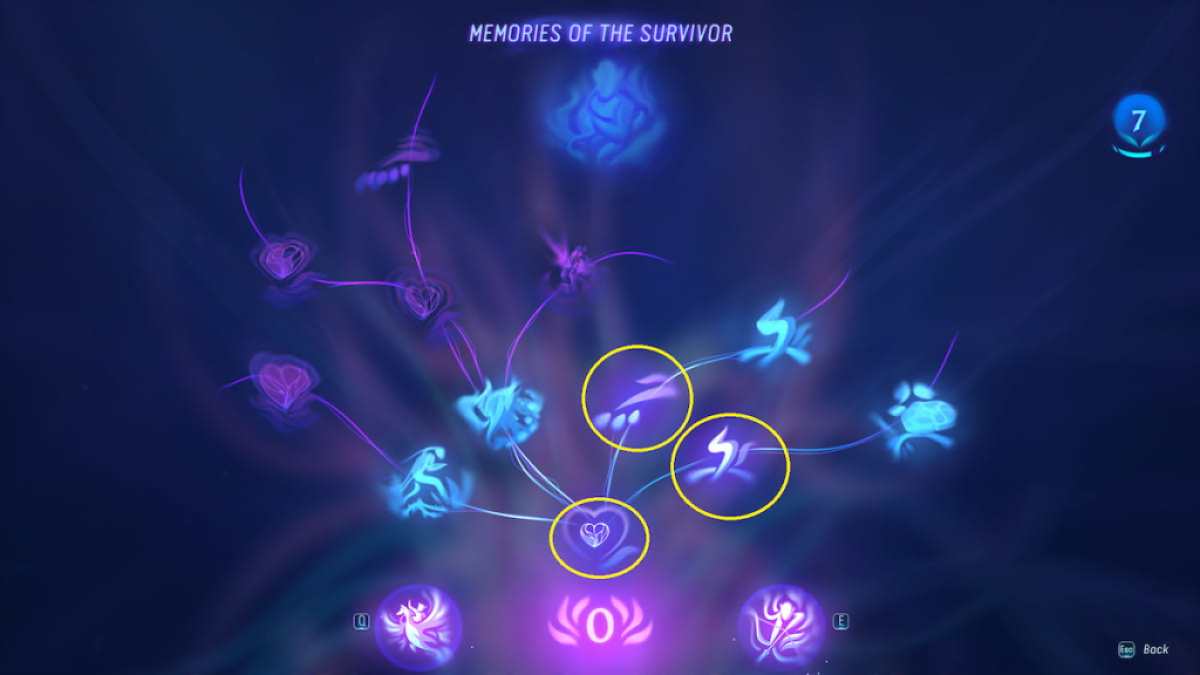
Survivor Skill Tree

Image by Pro Game Guides

As the name of the skill tree implies, all of these skills will help you survive more when dealing with higher-level enemies. For the Survivor Skill Tree, I recommend getting these three skills immediately:

  • Vitality I - Increases your health by 30
  • Large Healing Pouch I - Increases your health pouch capacity by 1
  • Vigor I - Adds 50% base energy

Vitality I and Large Healing Pouch I are recommended to have more sustainable health while fighting enemies. Vigor I's purpose is to help you manage your food consumption in the early stages of the game, where you'll be stuck with eating raw food.

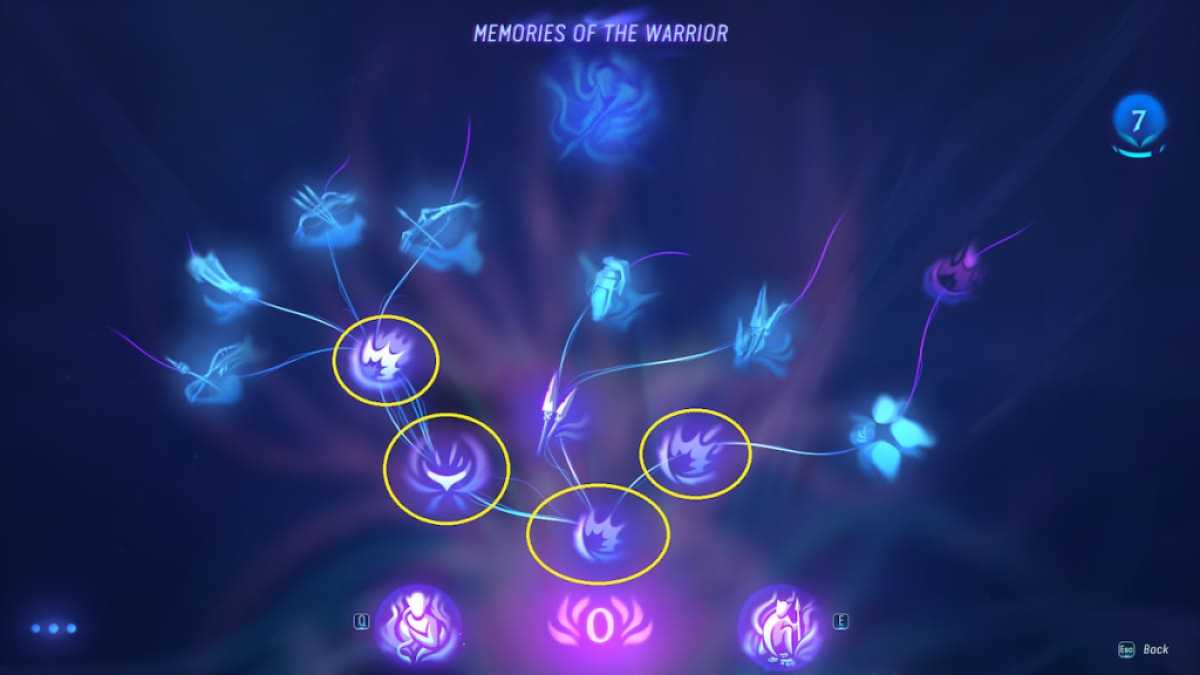
Warrior Skill Tree

Image by Pro Game Guides

This skill tree focuses on the combat aspect of the game, and these are the skills I highly recommend for the early game:

  • Strength I - Increases base damage by 5%
  • Tactical Awareness I - Deal 15% more damage to tagged enemies
  • Extra Ammo I - Doubles your ammo-carry capacity (arrows, spears, gun ammo)

For these skills, you want to focus on the Extra Ammo I skill early on in your playthrough, so you don't have to craft your arrows in the middle of a fight constantly. Strength I and Tactical Awareness I will grant you some needed damage buff for the early game.

Related: How to solve Sarentu Totems in Avatar Frontiers of Pandora

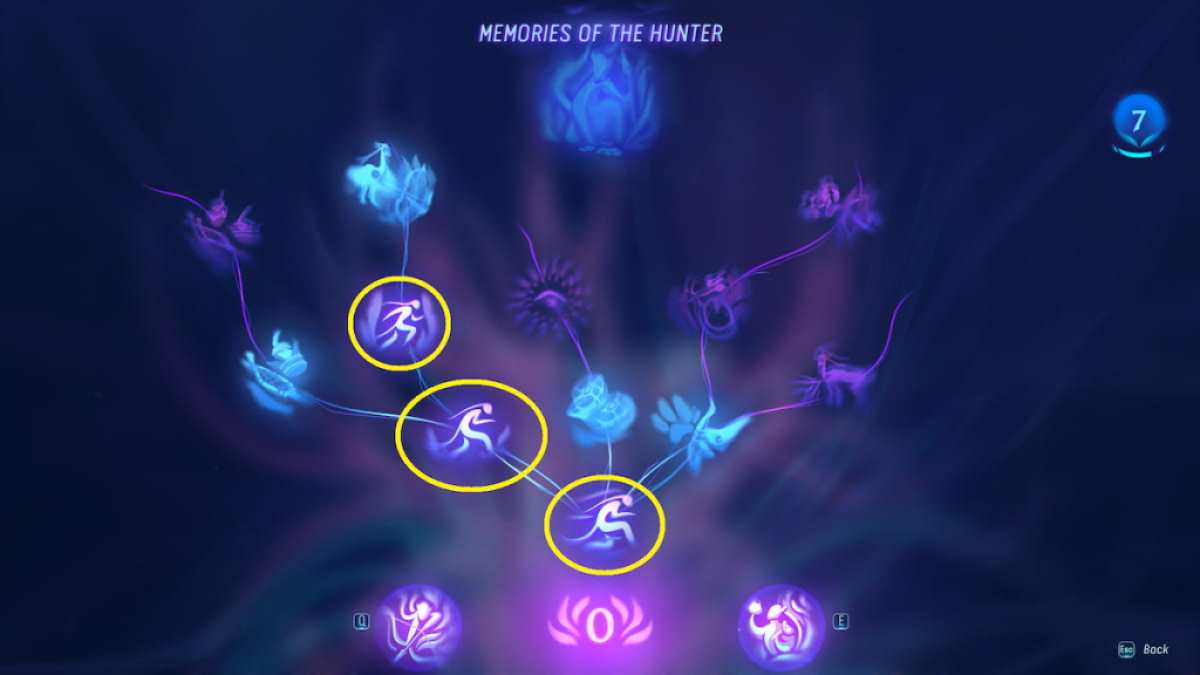
Hunter Skill Tree

Image by Pro Game Guides

The Hunter Skill Tree revolves around the "Stealth" mechanic of the game if you can call it that. In my experience, stealth in Frontiers of Pandora is barely rewarding and mostly ends up in a chaotic shootout. Regardless of an underwhelming stealth aspect, here are the skills I recommend you pick up in the Early game:

  • Shadow Hunter - Makes you harder to detect while crouching and improves your crouching move speed.
  • Light-Footed I - Eliminates all noise you make while crouching
  • Light-Footed II - Your Avatar makes no noise while running
  • Damage Bonus - Wildlife - Increases damage done by bows and spears by 25%

These skills will help you when hunting wild animals, allowing for clean/merciful kills and rewarding you with higher chances of gathering superior and exquisite materials. In turn, you'll get the chance to craft higher-quality equipment even while you're still in the early game.

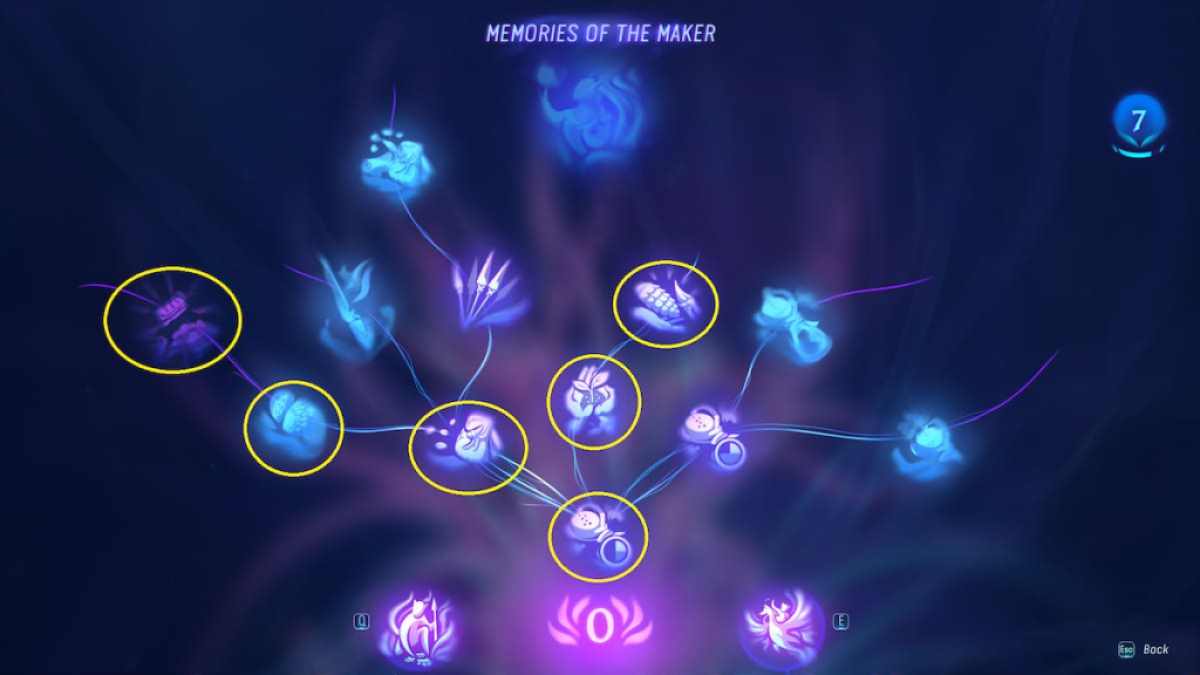
Maker Skill Tree

Image by Pro Game Guides

This is one of my favorite skill trees in the game, as it has the most beneficial passives in the long run. Here are the essential skills I recommend:

  • Connoisseur I - Increases Food Buff duration by 25%
  • Expert Food Forager I - Increases your pouch capacity for cooking and crafting materials by five (5).
  • Stable Hands + Renowned Crafter (Optional Skills 1) - Makes gathering easier to perform and allows you to claim exquisite materials from Na'Vi NPCs in exchange for Clan Favor.
  • Skillful Gatherer + Scavenging Expert (Optional Skills 2) - Doubles the amount of cooking ingredients from gathering, and you now have a chance to loot spare parts from AMPs.

Connoisseur and Expert Food Forager are essential skills for survival as they allow you to store more items and buff yourself for the entirety of the game.

For the optional skills, it's a matter of what playstyle you prefer. If you like using bows and spears, I recommend you go after Optional Skills 1; on the other hand, if you're more of a gun personOptional Skills 2 is the way to go.

Related: How to change appearance in Avatar Frontiers of Pandora

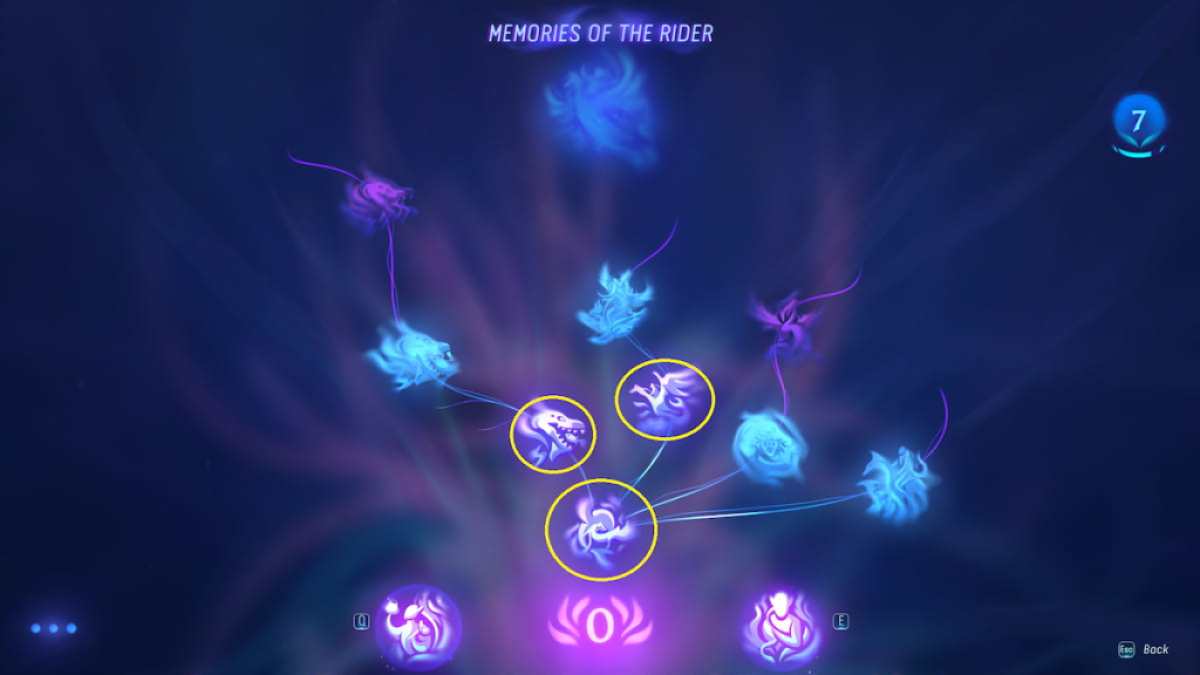
Rider Skill Tree

Image by Pro Game Guides

The last skill tree you unlock in the early game is the Memories of the Rider. These skills focus on the capabilities of your Ikran, and here are some essentials you should instantly get upon unlocking the skill tree:

  • Barrel Roll - Flight Dodge Skill (Players can not dodge while flying without this skill)
  • Aerial Fishing I - Allows your Ikran to catch a fish when flying over water.
  • Experienced Flier - Halves your Ikran's stamina cost for barrel rolls and flight boosts.

These three Ikran skills are essential to maximize your flight potential while exploring or battling aerial choppers. Aerial Fishing allows your Ikran to have almost infinite stamina without expending some of your precious exquisite meat.

For more guides in Avatar Frontiers of Pandora, check out Where to store items in Avatar Frontiers of Pandora in Pro Game Guides

About the Author

John Carlo or "Jay" is a content writer for almost two years, specializing in video game guides, reviews, optimized PC settings. He's mainly fond of genres such as ARPGs, JRPGs, Indie games, FPS and TPS. Some of his main go-to games are Overwatch 2, Final Fantasy series, SoulsBorne games, and Call of Duty Modern Warfare: 2019. He is also fond of PC building, as well as benchmarking PC game performances and creating optimized settings.

CARTOON CAROUSEL The nation’s cartoonists on the week in politics


Political cartoon

RJ Matson - Caglecartoons.com

___________________________________________________________________________________

Political cartoon

M.Wuerker - Politico

CARTOON CAROUSEL

The nation’s cartoonists on the week in politics

Every week political cartoonists throughout the country and across the political spectrum apply their ink-stained skills to capture the foibles, memes, hypocrisies and other head-slapping events in the world of politics. The fruits of these labors are hundreds of cartoons that entertain and enrage readers of all political stripes. Here's an offering of the best of this week's crop, picked fresh off the Toonosphere. Edited by Matt Wuerker.


12/08/2023 05:00 AM EST

___________________________________________________________________________________

Political cartoon

David Horsey - Seattle Times

Pat Byrnes - Caglecartoons.com

NYT Columnist Thomas Friedman: “The World Will Push Back” Against Trump ...

    Jan 27, 2026 #amanpourpbs From ICE's violent crackdown in Minneapolis to President ...