Russia’s invasion of Ukraine is making several countries in Europe reassess their military defenses. Several members of the North Atlantic Treaty Organization (NATO) have even said that they will be increasing their numbers of conscripted soldiers, the latest of which were Denmark (announced 13 March, 2024) and Norway (announced Tuesday).
But what are the sentiments of people living in NATO states on the topic?
Data from a NATO survey shows that while support is high when it comes to the question of relying on allies to come to their country’s aid, respondents were less sure of helping others to defend themselves. For example, where 70 percent of respondents in the United States were of the opinion that the country should be defended by its allies in the event of an attack, 60 percent said that they thought that the country should answer the call of their allies.
As the following chart shows, out of the member states selected for this chart, a lack of solidarity is particularly evident in southeastern Europe.
In Greece, Hungary, Bulgaria and Montenegro, less than half of those surveyed agree that their home country should defend others, while 58 to 71 percent of survey participants want to be protected. Iceland has the biggest gap between the two questions:
78 percent think NATO should defend the island state, while only 47 percent support their backing of others. In the survey,
Norwegians showed the strongest leaning towards solidarity.
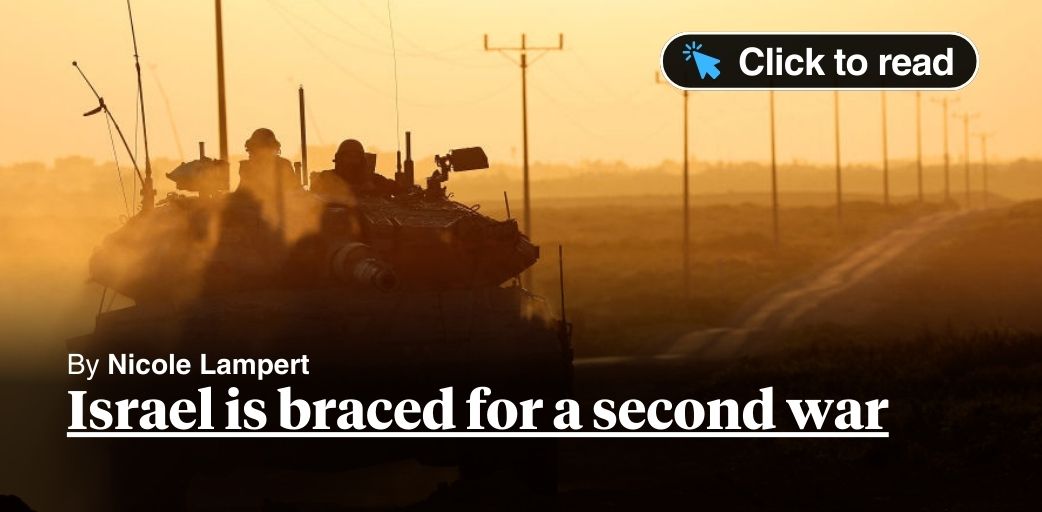
Even after an Israeli drone strike tragically killed seven aid workers this week, many feel that their soldiers should own up to the mistake and continue their operation — the idea of ending the war before Hamas is defeated and the hostages are freed is inconceivable. “Everyone is very upset about what happened to the aid workers,”adds Matt.
“No one wants people coming to help being killed. But mistakes happen in warzones: we have lost our own soldiers through friendly fire incidents.” “We are making a much bigger effort than any other military in our situation,” insists military historian and retired Brigadier General Eran Ortal.
“No one else is demanded to provide supplies to its enemy after this kind of massacre.
No one.
Google a photograph of liberated Mosul; no one demanded humanitarian efforts when the Iraqis and allies liberated it from Isis.
We have gone an extra mile but it has no influence on public opinion in many countries so we will carry on doing what we are doing.”
The implication here is grimly straightforward: if the Israelis have to go it alone, they will. And yet, the eternally confused nature of this war means that the mood is never settled. . .
When Finland applied for NATO membership in May 2022, Russia first tried to downplay the significance. Nonetheless, after the northern European country formally entered the transatlantic alliance in April 2023, Moscow’s tone became increasingly aggressive, and it has engaged in certain actions intended to create problems for Finland.
The Finnish Interior Ministry highlighted the potential threat posed by hundreds of third-country nationals attempting to enter Finland from Russia without proper documentation. This decision comes after over 1,300 migrants entered the country in the last three months of 2021, prompting the initial closure of the 830-mile land border.
One year ago, Finland abandoned its longstanding tradition of neutrality and became NATO’s 31st member. This entry into the transatlantic military alliance marked a turning point in Finland’s approach to foreign and security policy.
It effectively saw Helsinki walking away from its post-WWII approach to Moscow, through which the Nordic country had always sought to preserve decent ties with the Kremlin.
Finland’s decision to join was the result of Russia’s full-scale invasion of Ukraine in February 2022. Moscow’s actions towards Ukraine prompted policymakers in Helsinki and the majority of Finnish citizens to view NATO membership as the best way to deter Russia from ever invading their own country.
“The war [in Ukraine] led to a major threat evaluation caused by Russia’s vocal demands for sphere of influence, its appetite for risk-taking and readiness to use military force at a massive scale, as well as its nuclear coercion,” Matti Pesu, a leading researcher at the Finnish Institute of International Affairs (FIIA), specialising in Northern European security, told Al Jazeera.
“NATO membership emerged as the only viable solution to fill this perceived ‘deterrence deficit’ in Finnish security. Currently, the prevailing view on Russia in Finland across the society is overwhelmingly negative, and Finland calls for hardline solutions both in EU and NATO,” explained Pesu.
Tuomas Iso-Markku, a senior research fellow at FIIA, said the move would require Finland’s foreign policy leadership and the Finnish Defence Forces to “adjust their way of thinking and doing things”.
“Now, for the first time ever, Finland is part of a formal military alliance and can, and should, organise its defence jointly with others,” he told Al Jazeera.
Despite being an EU member since 1995 and having a history of close military cooperation with the US and other members of the Western alliance, a major pillar of Helsinki’s foreign policy was self-reliance and the country’s approach to global affairs had a largely national orientation.
“As an ally, Finland will have to view its efforts in the context of the alliance’s collective needs and objectives. That said, even as an ally, Finland will, of course, continue to build on a strong national defence that is seen as the basis for its NATO policy,” said Iso-Markku.
The Vaalimaa border check point between Finland and Russia in Virolahti, Finland, which remains closed, on January 14, 2024 [Lehtikuva/Lauri Heino/via Reuters]
Finnish-Russian tensions Given Moscow’s perception of NATO’s eastward and northward expansion as posing a threat to Russia’s geopolitical and security interests, the Kremlin unsurprisingly saw Finland’s entry into the transatlantic alliance as a blow for Moscow.
When Finland applied for NATO membership in May 2022, Russia first tried to downplay the significance. Nonetheless, after the northern European country formally entered the transatlantic alliance in April 2023, Moscow’s tone became increasingly aggressive, and it has engaged in certain actions intended to create problems for Finland. “Russia tries to destabilise Finland by facilitating or at leastallowingmore illegal migration,” explained Wolfgang Pusztai, a senior adviser at the Austrian Institute for European and Security Policy. “There is even information that Russian border authorities are actively assisting migrants without proper documents in reaching the border zone. Finnish officials consider this as a form of payback for Finland’s NATO accession,” he added. Finland has a small Russian minority of 100,000 who are mostly living in the south and southeast near the Finnish-Russian border, which is currently closed. However, Pusztai said that this minority is “not very receptive to Russian propaganda” and ultimately “Putin’s means to make life difficult for Finland – short of a military escalation – are limited.” At this juncture, relations between Finland and Russia are essentially non-existent and will probably stay that way unless Moscow’s actions towards Ukraine change.
“Due to Russia’s war on Ukraine, Finland has severed almost all economic ties to Russia and there is no political dialogue between the two countries. As long as Russia continues to wage its war against Ukraine, it is unlikely that the Finnish side will resume any kind of political engagement with Russia,” said Iso-Markku.Sign up for Al Jazeera
Weekly Newsletter
protected by reCAPTCHA
Norway’s Prime Minister Jonas Gahr Store and Finland’s President Alexander Stubb are briefed by Lieutenant Colonel Morgan Long of the US Marine Corps during Nordic Response military exercise in Alta, Norway, on March 7, 2024 [NTB/Heiko Junge via Reuters]
What Helsinki brings to the Western alliance Sharing a border more than 1,300 kilometres (more than 800 miles) long with Russia, Finland contributes significantly to NATO in various ways from geography and capabilities to defence expertise and valuable experience. “It is a Baltic-Arctic strategic bulwark offering additional strategic depth to its allies in the southern and western directions,” said Pesu. “It has a capable military force beefing up the alliance’s capacity, particularly in the land and air domains.” Furthermore, he added, Finland has been “incessantly” building up deterrents and defences against Russia for decades, and can share valuable lessons with its allies. “Due to Finland’s climate, the country’s defence forces also have a lot of know-how about Arctic warfare. Finland’s new NATO allies have also been very interested in Finland’s model of comprehensive security, which aims at involving all sectors of the society in preparing for crises to allow for a rapid response and to maintain a high level of societal resilience,” Iso-Markku told Al Jazeera. “Finally, Finland is known for a rather pragmatic, low-key and constructive foreign policy-making style, which should help it navigate the world of alliance politics, and could prove useful for NATO as a whole,” added Iso-Markku. From a regional standpoint, Finland’s NATO membership has significantly altered northern Europe’s geostrategic position, prompting Moscow to view any potential confrontation with the Western alliance as much riskier, analysts said. “St Petersburg, Russia’s main harbour in the Baltic and the second-largest city of the country is now only 150km (93 miles) away from two NATO countries – in the west, Estonia and, in the north, now Finland.” Finland’s membership in NATO particularly leaves Murmansk, the naval bases of the Russian northern fleet in the Barents Sea and possibly also in the White Sea vulnerable, Pusztai said.
“Together [they] are home to more than half of Russia’s ballistic missile submarines,” he added.
“If Murmansk and the Kola Peninsula would be lost, Russian efforts in the North Atlantic could not be sustained and Russian strategic deterrence would suffer a heavy blow.
“Consequently, Moscow would need to plan for the costly deployment of a very significant number of troops to protect the northern flank, troops that can’t be used in Eastern Europe.”