A brief timeline - starting with a speech a few days ago.
President Joe Biden’s upcoming address in Normandy, France, to mark the 80th anniversary of D-Day on June 6 will focus on the threat of Russia invading Europe, National Security Advisor Jake Sullivan told reporters on Tuesday.
Jake Sullivan: Biden’s D-Day Address to Focus on Russia
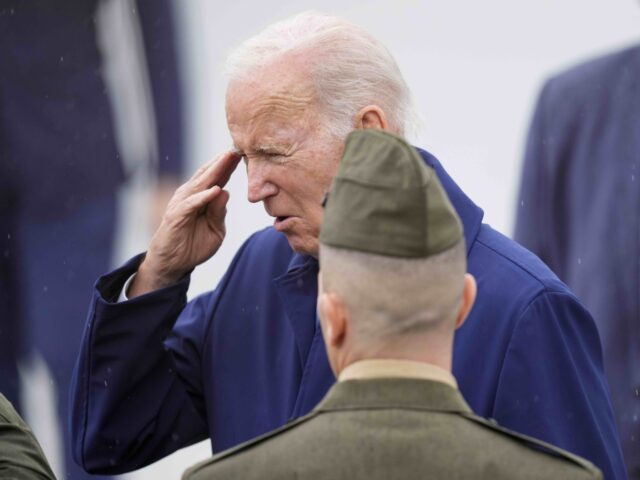
Sullivan, a key player in the “Russia collusion” hoax, previewed the president’s speech in a press gaggle aboard Air Force One. He said that Biden’s address would focus on drawing lessons from history to apply to threats today.
Past presidential addresses at D-Day commemorations have tended to avoid attacking Russia or the Soviet Union — even at the height of the Cold War — due to the fact that the USSR helped defeat Nazi Germany. . .By the time the Allies landed on the beaches of France in 1944, the Soviets had lost millions of citizens fighting to repel the Nazi invasion.
Here is what President Ronald Reagan said in 1984, in what is considered one of the best orations in U.S. history:
It’s fitting to remember here the great losses also suffered by the Russian people during World War II: 20 million perished, a terrible price that testifies to all the world the necessity of ending war.
I tell you from my heart that we in the United States do not want war.
We want to wipe from the face of the Earth the terrible weapons that man now has in his hands.
And I tell you, we are ready to seize that beachhead.
We look for some sign from the Soviet Union that they are willing to move forward, that they share our desire and love for peace, and that they will give up the ways of conquest.
There must be a changing there that will allow us to turn our hope into action.
We will pray forever that some day that changing will come. But for now, particularly today, it is good and fitting to renew our commitment to each other, to our freedom, and to the alliance that protects it. . .
And what ended World War2 with the surrender of Japan?
Atomic Bombing of Hiroshima and Nagasaki (Minute by Minute)
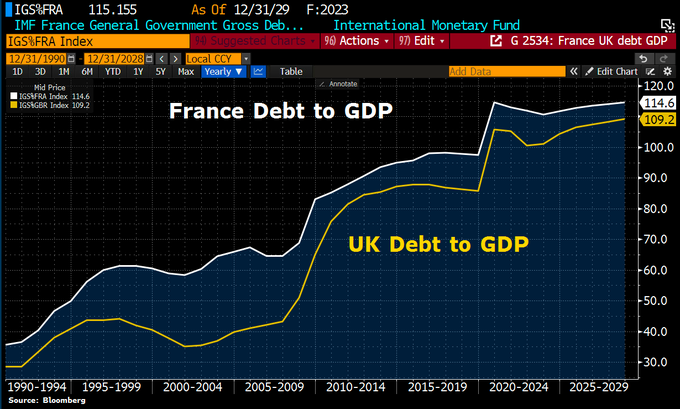
In case you missed it: S&P Global has cut its rating on #France by one notch to AA-, below the credit rating level of the UK, citing a larger-than-expected budget deficit. The rating company projects France's debt will rise to 112% of GDP in the next three years, from 109% last year.
D-Day 80 Years on...Soviet Forces advancing from The East finally Brought An End To The Third Reich
By the end of August 1944 all of northern France was liberated, and the invading forces reorganized for the drive into Germany, where they would eventually meet with Soviet forces advancing from the east to bring an end to the Nazi Reich.
The St Petersburg International Economic Forum kicks off in Russia’s second city of St Petersburg. Russian President Vladimir Putin holds a bilateral meeting with Bolivian President Luis Arce.
The St. Petersburg International Economic Forum (SPIEF), Russia’s premier business and investment event, kicked off in the country’s second-largest city on Wednesday with a focus on Russia’s place in a “multipolar” world, partnerships with the Global South and, increasingly, on domestic business deals.
Once dubbed the “Russian Davos,” SPIEF had long attracted leading Western businesspeople, investors and officials to President Vladimir Putin’s hometown, serving as a venue for major international deals like the Nord Stream gas pipeline.
But since Russia’s 2022 invasion of Ukraine, its lineup has reflected Moscow’s pivot toward Asia and Africa amid its diplomatic and economic isolation from Kyiv’s Western allies.
Nobody in US has Ukraine’s interests at heart – Putin
Washington is only fighting for its own global leadership, the Russian president has said
The US only cares about its own grandeur and is involved in the Ukraine crisis in order to fulfil its global ambitions, Russian President Vladimir Putin told the leaders of global media agencies ahead of the Saint Petersburg International Economic Forum (SPIEF) on Wednesday.
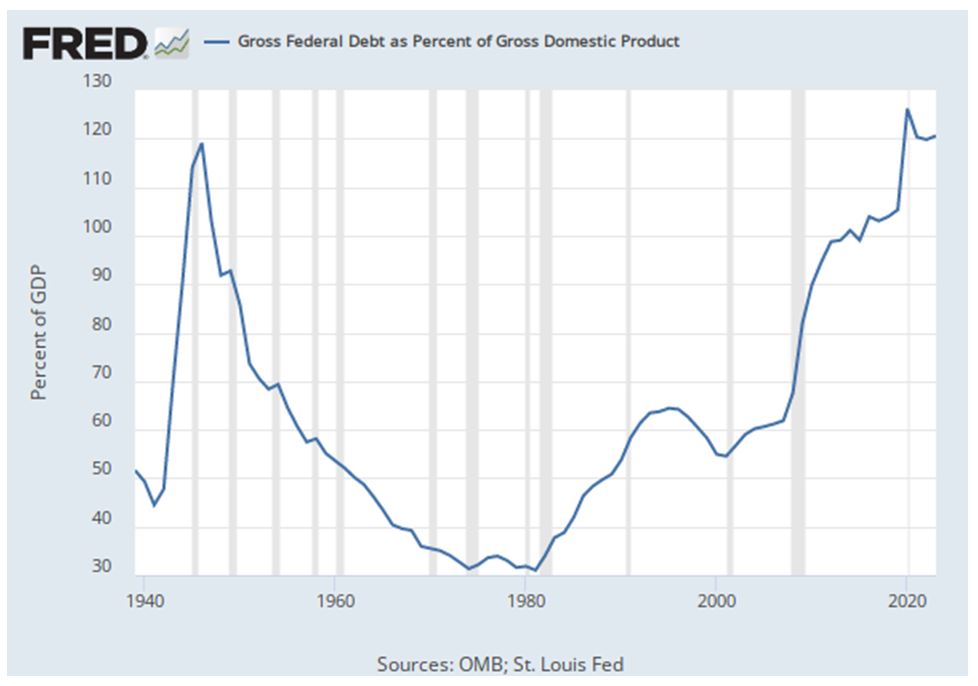
Washington has provided tens of billions of dollars in military aid to Kiev since the beginning of Russia's special military operation in Ukraine. When asked about a potential shift in US policy towards Russia, Putin said that it is largely dependent on Washington itself and its perception of reality. America is currently obsessed with globalist ambitions that are “destroying the US from within,” the president said. US involvement in the Ukraine conflict is just one manifestation of that globalist policy, he told journalists. “Nobody in the US cares about Ukraine's interests,” Putin said. Americans are “not fighting for Ukraine or the Ukrainian people, they are fighting for their own grandeur and global leadership.” According to Putin, the current administration is not so much interested in helping Kiev prevail in the ongoing standoff but is rather “determined to prevent any Russian success precisely because they believe it would damage US leadership [positions].” Those globalist ambitions are harmful to America itself, Putin maintained, naming “high inflation and a huge debt” among the biggest challenges the US is currently facing. A future administration could reverse this destructive trend by focusing on “strengthening the US from within, strengthening its economy and finances, and building up normal relations with the world,” he said, adding that such policies could then bring some “real change” in relations between Moscow and Washington as well.
The president’s words came just a day after the Kremlin called the US an “enemy” for the first time. Presidential spokesman Dmitry Peskov referred to Washington as such while speaking to journalists on Tuesday.
“We are now an enemy country for them – much like they are for us,” Peskov said at that time, describing the two nations’ attitudes toward each other. The Kremlin has previously referred to the US as an “unfriendly state” or “opponent.”
Peskov was commenting on Washington’s decision not to allow former US marine, UN weapons inspector and RT contributor Scott Ritter to travel to St. Petersburg to take part in several SPIEF panel discussions.
Earlier, the US also let Kiev use American-supplied weapons against targets inside Russia, beyond what the US considers Ukrainian territory.
Moscow has repeatedly warned that such actions, alongside continued weapons shipments to Kiev, only lead to further escalation and increase the risk of an all-out war between Russia and NATO, which can easily spiral into World War III.
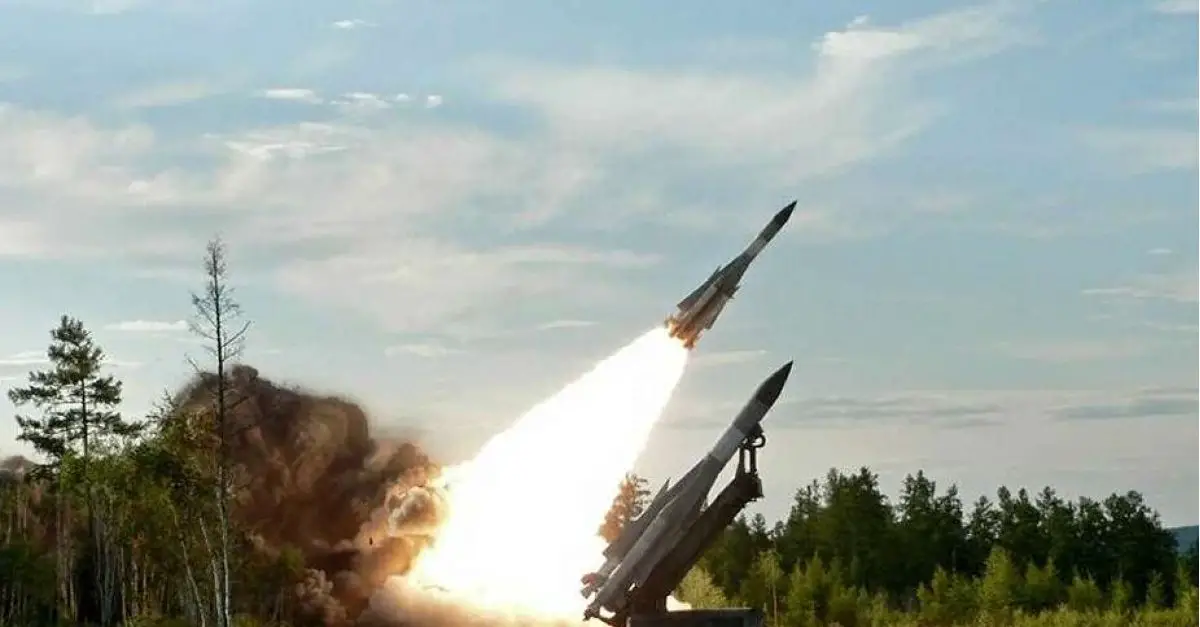
According to information published by the Polish Defense magazine Defence24, on June 5, 2024, Poland delivered an S-200 surface-to-air missile to Ukraine, a NATO code-named SA-5 Gammon. Poland received S-200 systems from the Soviet Union during the Cold War to bolster its air defense capabilities as part of the Warsaw Pact.
The country now relies on modern air defense systems, such as the Patriot missile system, which offers enhanced capabilities and interoperability with NATO forces. In recent developments, the Ukrainian armed forces have ingeniously adapted the Soviet-era S-200 missile system to bolster their capabilities in the ongoing conflict with Russia.
Originally designed as a long-range surface-to-air missile system, the S-200 has been modified by Ukraine for a ground-attack role. This involves adjustments to its guidance systems, enabling the missiles to strike land-based targets effectively.
Ukraine's adaptation of the S-200 air defense missile system, a significant development in the ongoing conflict with Russia, has been a testament to their strategic and tactical ingenuity. By repurposing the S-200 system, Ukraine has effectively enhanced both defensive and Offensive operations, demonstrating their resourcefulness in leveraging existing military hardware.
This innovative use of the S-200 not only highlights Ukraine's commitment to defending its territory but also showcases their ability to counter the advances of Russian forces through strategic adaptation. The S-200 (NATO designation: SA-5 Gammon) is a Soviet-made, long-range, high-altitude surface-to-air missile system. It was specifically designed to counter high-speed and high-altitude threats, such as bombers and reconnaissance aircraft.
The system's primary combat capabilities include engaging aerial targets at distances of up to 300 kilometers (186 miles) and altitudes ranging from 300 meters to 40,000 meters (984 feet to 131,234 feet). It utilizes a combination of semi-active radar homing and radio-command guidance, which allows for accurate tracking and interception of fast-moving aerial targets.
Key features of the S-200 air defense system include its large and powerful missiles, high-explosive fragmentation warheads weighing around 217 kilograms (478 pounds), and a two-stage solid-fuel rocket motor.
The system is typically deployed in fixed sites, comprising multiple launchers and associated radar and command units. The S-200's engagement range and high-altitude capability make it suitable for targeting strategic assets such as high-altitude bombers, surveillance aircraft, and other high-value aerial targets,