Good morning. Welcome to the Saturday Read, the best of the New Statesman, in print and online this week. This is Finn with Nicholas and George.
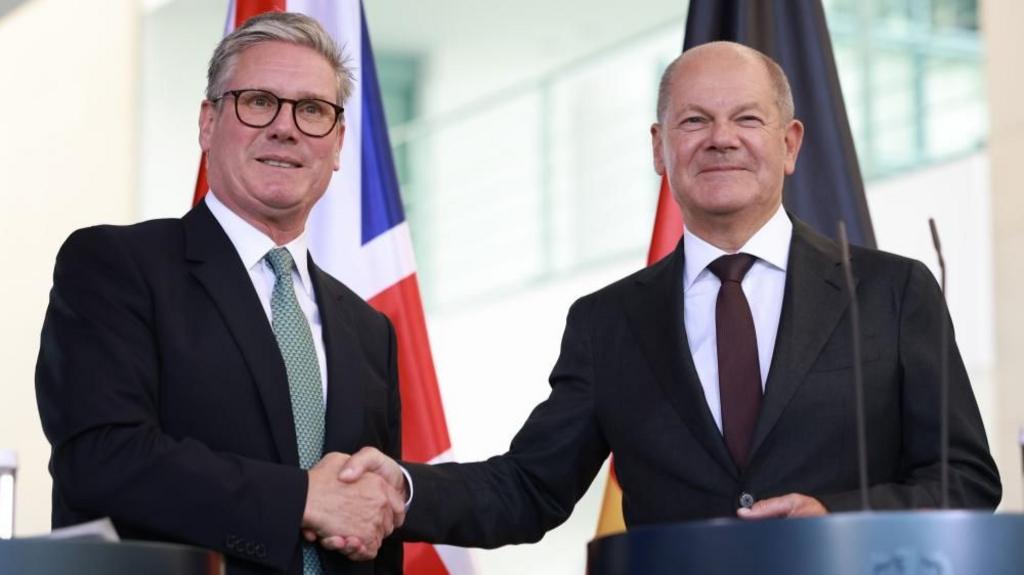
And here is Starmer as Martin Luther… accompanied by Andrew’s analysis
on the Prime Minister’s Reformation. The child of progressive legalism
is abandoning his heritage, and nailing his new hard-nosed theses to the
door of Number 10. FMcR
Let’s
take, instead, a step back. Starmer still has a huge majority and more
than four years to play with. There is a reshuffle coming but both he
and Reeves know that, though she has made some serious political
mistakes, no Prime Minister can sack his Chancellor this early. He has
largely purged his party of the left. He is also doing quite well in
handling the unpredictable Trump, emphasising personal friendliness,
avoiding confrontations. There is no single obvious alternative leader
within Labour. The most active organisers on the back benches – the Blue
Labour and Red Wall people – are essentially on Starmer’s side. So when
we say, “It can’t go on like this,” the honest response is: but it
probably will.
It is a delight, of course, to have Tom Holland in these pages, and on such a seminal text! He contends that Suetonius’s The Lives of the Caesars
offers the true blueprint for writing about power. I contend that these
12 biographies are a mandatory read for a basic political education. FMcR
And
so they remain to this day. That Rome tends to live more vividly in
people’s imaginings than other ancient empires owes an inordinate amount
to Suetonius. Pharaohs and shahs may have presided over civilisations
as brilliant and influential, but no one ever wrote about them as
Suetonius wrote about the Caesars. His subjects seem familiar to us as
few other rulers from antiquity do. They wrestle with funding
shortfalls, foreign policy crises and sex scandals. We are shown their
tastes, their foibles, their eccentricities. The chilly marble of their
portrait busts is transfigured into flesh and blood.
Via
Thomas Jefferson’s Declaration of Independence, America wrote itself
into existence; it has an above average sense of self-definition. But it
is no beacon of freedom, writes Hans Kundnani. Thanks to the Trump presidency, the imperial realpolitik that really drives the country is visible to all. NH
Franz Kafka never visited America. But at the beginning of his unfinished novel Amerika,
Karl Rossmann, a 17-year-old German boy, is exiled after being seduced
by a maid and getting her pregnant. Arriving in New York Harbor, “he
suddenly saw the Statue of Liberty, which had already been in view for
some time, as though in an intenser sunlight. The sword in her hand
seemed only just to have been raised aloft, and the unchained winds blew
about her form.” It is not clear if Kafka knew the Statue of Liberty
holds a torch, not a sword. But the image of the statue with a sword is
evocative and resonant – especially since Donald Trump became president
again last month. Like Kafka’s protagonist, we seem to be seeing the US
in an “intenser sunlight” – and what we see is an America that threatens
rather than offers hope.
Are
there any better or more durable subjects for satire? In recent years,
television has taken up some of the slack literary fiction has left
behind in this field – Succession, but also The White Lotus. Rachel Cooke relishes another glorious dose of emptiness and greed. NH
After two triumphant series, we know what to expect from The White Lotus’s
sharp-eyed puppetmaster, Mike White. Another group of rich and
obnoxious Americans will arrive by boat at an island resort whose waving
staff proffer first garlands, and then the golf buggies in which
they’ll be transported to their adult playgrounds (believe me when I
tell you that the words en suite hardly touch the sides of the bathrooms
here) – cue more trouble in paradise. Somehow, though, this has
surprisingly little effect on one’s relish for what lies ahead. As I
watched, I caught myself gleefully rubbing my hands together. Part of
the show’s intense satisfaction has to do with schadenfreude, and having
just shelled out for a new boiler, I can hardly wait for them all to
get it.
Since
Brexit, no silhouette has so dominated Westminster’s imagination as the
strategist Spad with the PM’s ear. Cummings and now McSweeney have had
even their “most gnomic utterance studied for significance”. Jason shines light on dark arts. GM
It’s
never wise for a special adviser to become the story but this happened
to Cummings, whose defining role in the Vote Leave campaign was
reimagined by James Graham in the TV drama Brexit: The Uncivil War – and is now happening to McSweeney, the principal character of Get In.
Through his work at Labour Together, then as head of Starmer’s
leadership campaign and, later, the party’s election strategist, “the
Irishman”, as Maguire and Pogrund call him, did more than any elected
politician to create the conditions for Labour’s victory.
To enjoy our latest analysis of politics, news and events, in addition to world-class literary and cultural reviews, click here to subscribe to the New Statesman. You'll enjoy all of the New Statesman's online content, ad-free podcasts and invitations to NS events.