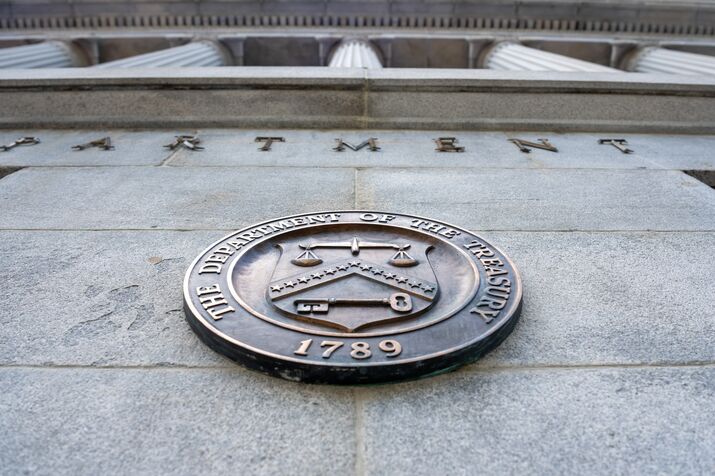
Why Europe’s leaders should think the unthinkable


12:0001.06.2025




Europe Day with New Dimensions
Transatlantic Tensions Demand A New Geoeconomic Strategy For Europe.

Seventy-five years after the Schuman declaration aimed to forge a united, peaceful and prosperous Europe – an ambition aided by the Marshall Plan and a stabilising US presence – the transatlantic
relationship has soured. Today, this complex dynamic frames the EU’s contemporary strategic debates.
Europe Navigates Trade Turbulence
How Europe should respond to the trade conflict initiated by the US is a crucial question. It must be recognised that the EU, as a more open economy than the US, holds a trade surplus, unlike America’s deficit. Consequently, the EU’s response demands firmness and clarity, tempered with moderation. When designing counter-measures, symbolism should be combined with efforts to boost domestic production opportunities or substitution from countries still committed to open and fair trade. Simultaneously, the EU must undertake the uphill battle to uphold the multilateral trading system and seek partners in this endeavour.
However, the challenge confronting Europe extends beyond trade in goods and services. We are witnessing the erosion of an international order built on multilateral agreements, institutions, open trade, and liberal values once championed by the US. The transition to a new global model may be protracted, carrying a significant risk of regression to 19th-century power politics dominated by large states (the US, China, alongside a strategically limited Russia). These powers might engage in conflict or negotiation over global zones of influence to secure markets and critical resources. Even if a balance of global power could largely hold, this is an uncomfortable prospect for Europe.
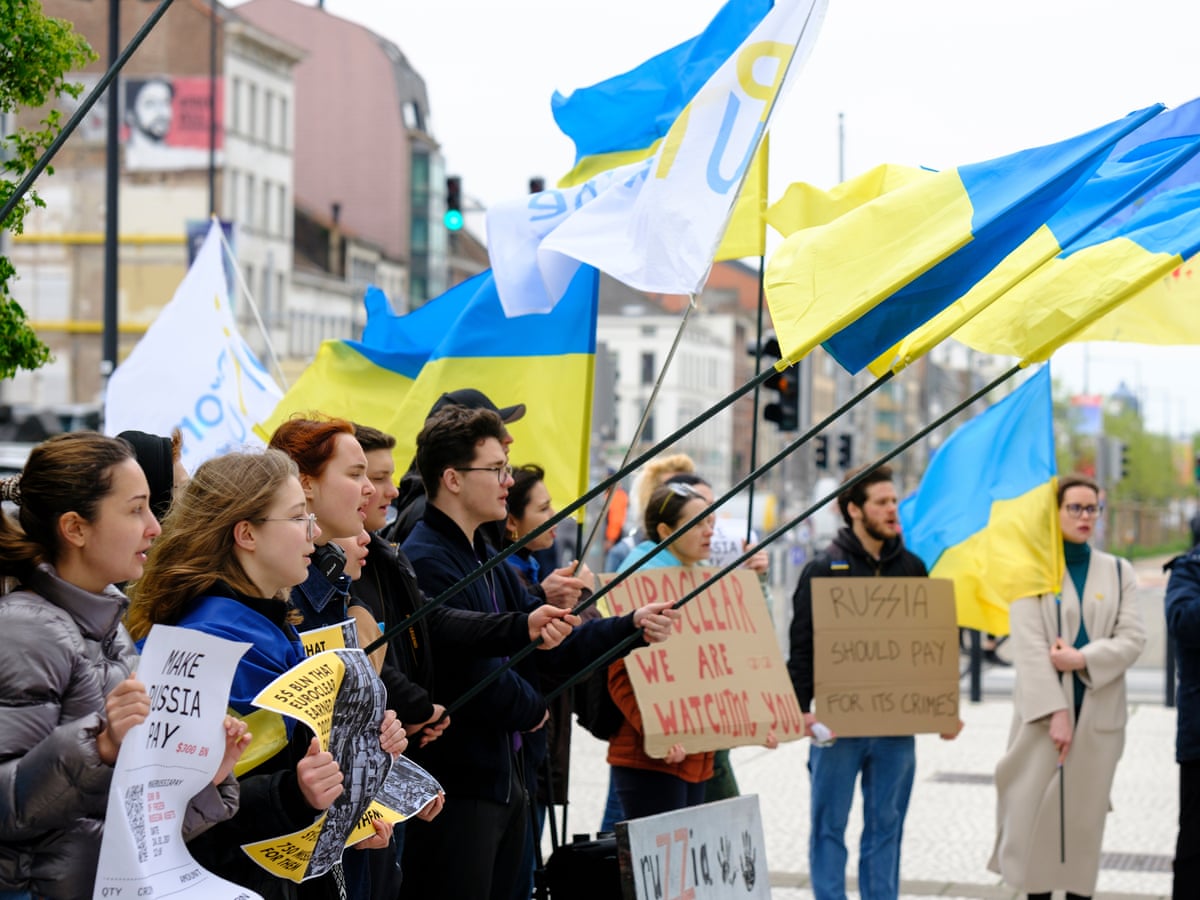
Particularly concerning is the new US administration’s approach to Ukraine, which has become, to put it mildly, overtly transactional. Reports suggest the Trump administration pressured Ukraine into a controversial mineral agreement, while demanding, in effect, tribute from European allies for security contributions. Contrary to campaign promises, President Trump failed spectacularly to end the Russia-Ukraine war. This conflict has reshaped Europe’s trajectory, and its resolution will be equally momentous for the bloc.
The EU cannot remain a bystander while major decisions concerning Ukraine are made. The bloc has largely demonstrated remarkable unity in resisting Russian aggression and maintained solidarity with Ukraine. Ukraine’s status as an EU candidate country underscores the seriousness of this commitment. The most pressing task now is to ensure reconstruction commences, enabling Ukraine to begin converging with EU economic and social standards.
Towards a Geoeconomic Strategy
The US presents Europe with simultaneous security and economic dilemmas. This juncture will determine whether European strategic autonomy will either be realised or become merely a buried concept. However, wielding power requires understanding its sources. Geopolitics must be grounded in geoeconomics.
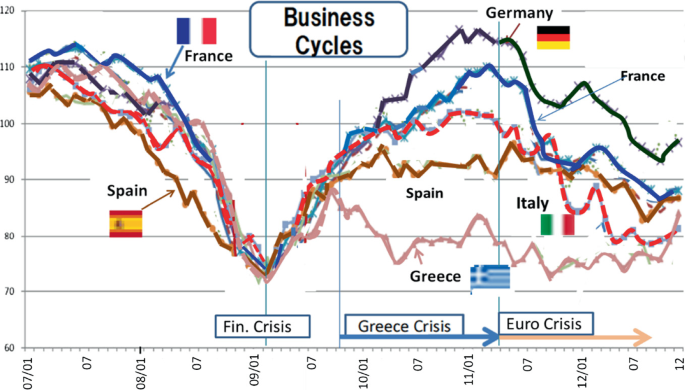
The primary source of European economic power remains the Single Market, established in the 1990s. To enhance resilience against transatlantic challenges, the EU has the potential to boost internal demand within the Single Market – a potential that must now be tapped. Given heightened global volatility, the EU should bolster internal stabilisation instruments. Revisiting an investment stabilisation tool from the Juncker-Oettinger era, upgrading the European Globalisation Adjustment Fund (EGF), and establishing a reinsurance scheme for unemployment benefits could be considered. Such tools could help avoid repeating the self-inflicted damage of the 2010-11 crisis.
This is also a moment for a significant push to enhance the euro’s international role, aligning with de-dollarisation efforts by other global players. Plans for euro-denominated safe assets and a digital euro require completion and practical implementation. The erraticism of recent US policy underscores the need for a “new Bretton Woods” – a participatory, multilateral effort to rebalance the global economy towards sustainability and multipolarity, replacing unilateral arrangements. The EU must begin preparations for such a scenario, not least by fulfilling its role as a stabiliser and addressing its own external imbalances. This would necessitate more active demand management within the single market and a transition towards a social, environmental, and equitable growth model.
While the transatlantic outlook appears strained, the EU should, for now, assume institutional continuity within bodies like NATO, the OSCE and other organisations in which the US participates. Simultaneously, on economic, financial, and currency matters, EU leaders must engage beyond the US, talking not only to neighbours like Canada, Switzerland, and Norway. The goal is not to replicate US hegemony or a “Pax Americana”, but to cultivate deeper ties with the “Global South”, paving the way for a sustainable global system. Questions remain about whether the current EU leadership is prepared for this shift, which necessitates shedding inherited Eurocentric perspectives.
Within the broader BRICS group, nations such as Brazil, India, and South Africa are already important EU partners. These relationships should be strengthened, building on shared democratic values and a mutual interest in balanced multilateral structures. This new phase must avoid creating fresh imbalances and dependencies. With a strengthened international profile, the EU might also attempt to bring China into monetary cooperation frameworks. Ultimately, stable international monetary relations, essential for an open trading system, will require Chinese participation. Such initiatives would likely find broad global support, potentially including progressive elements within the US itself. The prospect of the US eventually returning to a more constructive, cooperative international role should not be dismissed; it could become a partner in building a multilateral equilibrium.
Industrial Revival and Social Cohesion
For the EU to meet these challenges, its economic governance framework requires reform. Enhancing fiscal room for manoeuvre is critical in the coming period. Significantly, critical decisions are emerging not from Brussels, but from Berlin, where recent political developments suggest Germany has begun to loosen the straitjacket of its own fiscal rules.
The renowned Schuldenbremse (debt brake) was introduced in 2009 during the great financial crisis. Its foundation rests on debatable premises, including the linguistic link in German between “debt” (Schuld) and “guilt” (Schuld). A more fundamental issue is a reductionist notion of “stability” that underestimates investment’s role in driving growth, shaping future markets, and delivering public goods. In practice, this arguably arbitrary limitation has acted as a brake on investment, costing Germany, and indirectly Europe, significant potential over the past 15 years.
Regrettably, this fiscal rethinking in Germany appears spurred more by the shock of a potential US security withdrawal under a returned Donald Trump than by the Covid-19 pandemic, green investment needs, or rising social and territorial inequalities. Calls from EU leaders for rearmament quickly highlighted the incompatibility of existing EU and German fiscal rules with the proposed military build-up.
However, major decisions require careful deliberation, not haste. Instead of potentially counterproductive measures (such as advising citizens on 72-hour survival kits), EU leaders should prioritise rigorous strategic analysis. While war on Europe’s borders is a stark reality, an overemphasis on the military dimension of security should be avoided. A more holistic security approach, reminiscent of Javier Solana’s earlier European security doctrine, may offer valuable insights.
In Germany, where political shifts are enabling preparations for a significant investment programme, steps are being taken to ensure additional investment serves multiple goals: defence production and procurement, public goods like infrastructure, and climate objectives. Progressive forces elsewhere should similarly strive to reconcile defence efforts with civilian and social investment priorities. The EU must address the security crisis alongside other pressing issues, such as housing.
Furthermore, progressive voices must ensure that increased defence spending does not displace vital social and climate investment or development aid. Defending Europe means safeguarding not only territory but also its political values and social standards. The current momentum should be used to highlight the added value of European coordination. Future investments must transcend national boundaries. To prevent new imbalances and tensions within the Eurozone, recovery efforts must be Europeanised, potentially leveraging a reinforced Cohesion Policy as a vehicle.
Call for Progressive Leadership
Following the 2024 European Parliament elections, which saw the European People’s Party (EPP) emerge strengthened, there is no guarantee that the EU leadership will avoid repeating past mistakes. Commission President Ursula von der Leyen appears to be selectively following the guidance of the recent Draghi Report on competitiveness. For von der Leyen and others in the EPP, the competitiveness imperative often translates into deregulation and financialisation, potentially contradicting recent policy trends, including some of her own initiatives during her last term.
The tendency to benchmark EU performance against the US sometimes extends to viewing America as an idealised economic, social, and political model, ignoring its own internal tensions and challenges. A European inferiority complex risks facilitating a return to discredited neoliberal policies. Few in Europe seem willing to challenge the dominant “overregulation” narrative, now being used to justify various forms of deregulation and potentially dilute social and environmental commitments. “Simplification” is frequently used as a euphemism for deregulation, potentially masking plans to weaken key policies such as the EU’s pivotal cohesion policy.
Notably, a Eurobarometer survey from early 2025 confirmed that top public concerns remain the risk of declining living standards, inflation, and the cost of living crisis, alongside peace, security, and general economic competitiveness. Crucially, seventy-six percent of respondents believed the EU needs greater resources to effectively address future challenges like the green transition and technological change.
Citizens continue to expect the EU to foster social cohesion and support local initiatives. EU leaders must heed these calls and seek paths towards not just industrial, but also political, revival.

Latest news bulletin | June 1st – Midday
Europe


Brussels, my love? War in Gaza - what's Netanyahu's endgame?
Friedrich Merz will meet Trump in person for the first time next week
09:40
05.31.2025
Hamas responds to US proposal by demanding permanent Gaza ceasefire
As part of its counter-proposal, Hamas has agreed to release 10 living Israeli hostages and 18 deceased ones for 125 Palestinian prisoners and 1,111 detained Gazans.
Read full articleIran's spying game: How does Tehran get Israelis to betray their homeland?

Israeli officials say 20 Iran-related espionage cases have been filed in Israel over the past year and 30 indictments have been issued. Although these files have different stories, their pattern and that of the Iranian intelligence services' target society for recruiting sources is nearly identical.
Read full article09:09 05.31.2025
This is from 2022